HYPE, the native token of decentralized derivatives exchange Hyperliquid, reached a new record high as institutional interest in related exchange-traded funds continued to grow. Recent regulatory filings show that 30 firms held a combined $74.9 million in Hyperliquid ETF exposure as of June 30.
The disclosed holders include major names from traditional finance, such as UBS, Jane Street, and Bank of Montreal. Their involvement signals that HYPE is becoming more accessible to investors that prefer buying crypto exposure through regulated brokerage products rather than directly holding tokens on-chain.
Large Firms Build HYPE ETF Positions

The largest reported holder was Brazil-based Wealth High Governance Asset Management, which held around $23.95 million in shares of the 21Shares Hyperliquid ETF, known as THYP. The position represented more than 632,000 shares, making the firm the biggest disclosed investor among the group..
OLP Capital Management was the next-largest reported holder, with roughly $10.5 million in exposure. UBS held about $7.5 million, while Bank of Montreal reported around $6.7 million and Jane Street disclosed approximately $4.4 million.
Together, the five largest holders accounted for about 70.8% of the total institutional exposure reported in the filings. The other 25 firms shared the remaining portion, showing that interest extends beyond a small number of large buyers.
ETFs Offer a Familiar Route to HYPE
Spot HYPE ETFs give investors a way to gain exposure to Hyperliquid’s token using standard investment accounts. This structure may appeal to institutions with internal custody rules, compliance requirements, or limits on direct interaction with crypto wallets and decentralized exchanges.
Three U.S.-listed funds provide spot exposure to HYPE: 21Shares’ THYP, Bitwise’s BHYP, and Grayscale’s HYPE. The funds hold the token directly and offer a more traditional route for investors to participate in HYPE market performance.
For many firms, ETFs can reduce operational friction. Rather than managing private keys, wallet security, and token transfers, an investor can buy and sell fund shares through a regulated securities platform.
Why Hyperliquid Is Drawing Attention

Hyperliquid is known for its on-chain perpetual futures exchange, where traders can speculate on crypto price moves without an expiry date. Its HYPE token is closely watched because it is connected to the network and its broader trading ecosystem.
The token has stood out during a volatile year for digital assets. Earlier reporting showed HYPE rising about 160% year to date and trading near record levels, while its fully diluted valuation approached $69 billion.
That performance has increased attention on Hyperliquid’s business model. Investors are not only buying a token; they are also making a market bet on whether decentralized exchanges can compete with centralized crypto platforms in speed, liquidity, and user experience.
Record ETF Flows Supported Momentum
HYPE’s price strength has also coincided with growing demand for its ETF products. In May, U.S. spot HYPE ETFs recorded strong early inflows, with 21Shares’ THYP leading daily purchases during one reported trading session.
By mid-June, the three spot HYPE ETFs had reportedly attracted $161 million in net inflows during their first month of trading. Those flows suggested that buyers were using funds to gain exposure to Hyperliquid’s on-chain exchange model rather than treating HYPE as a short-term altcoin trade alone.
Institutional holdings disclosed through 13F filings do not necessarily reveal why each firm owns an ETF. Some positions may reflect market-making, hedging, client activity, or other trading strategies instead of a simple long-term investment view. Still, the filings show that HYPE-focused products have reached a broader group of financial firms.
Risks Remain for HYPE Investors
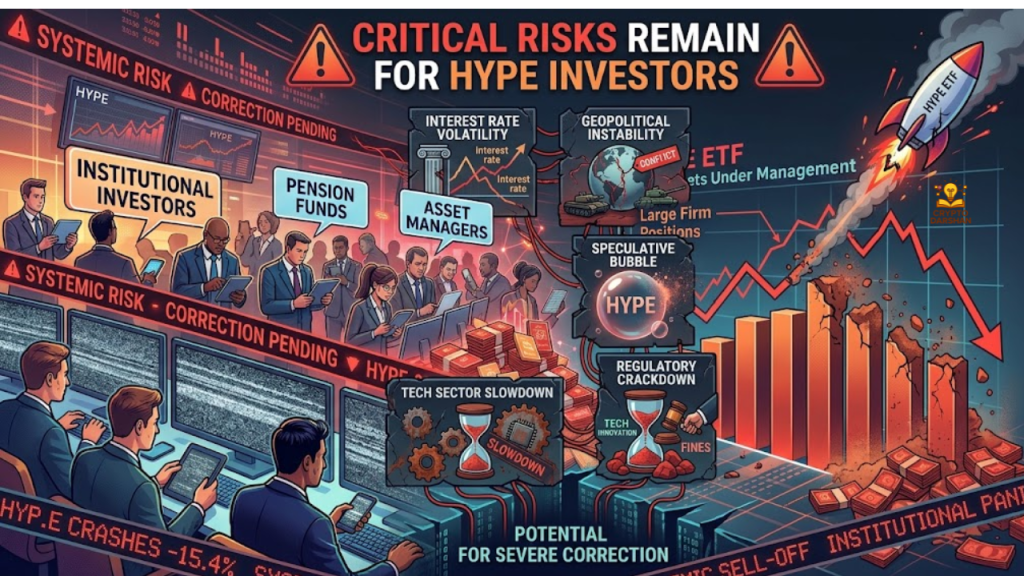
Despite the positive headline, HYPE remains a crypto asset with significant risk. Token prices can move sharply, and ETF inflows can change quickly when market sentiment shifts. Investors should also remember that ownership of an ETF is not the same as direct participation in Hyperliquid’s blockchain ecosystem.
Hyperliquid also operates in a competitive market. Centralized exchanges, decentralized rivals, regulatory changes, and shifts in derivatives trading activity could all affect demand for the platform and its token.
The latest filings nevertheless mark another milestone for HYPE. As more firms use ETFs to access the token, Hyperliquid is moving closer to the mainstream financial market infrastructure that has already helped Bitcoin and other digital assets reach institutional investors.