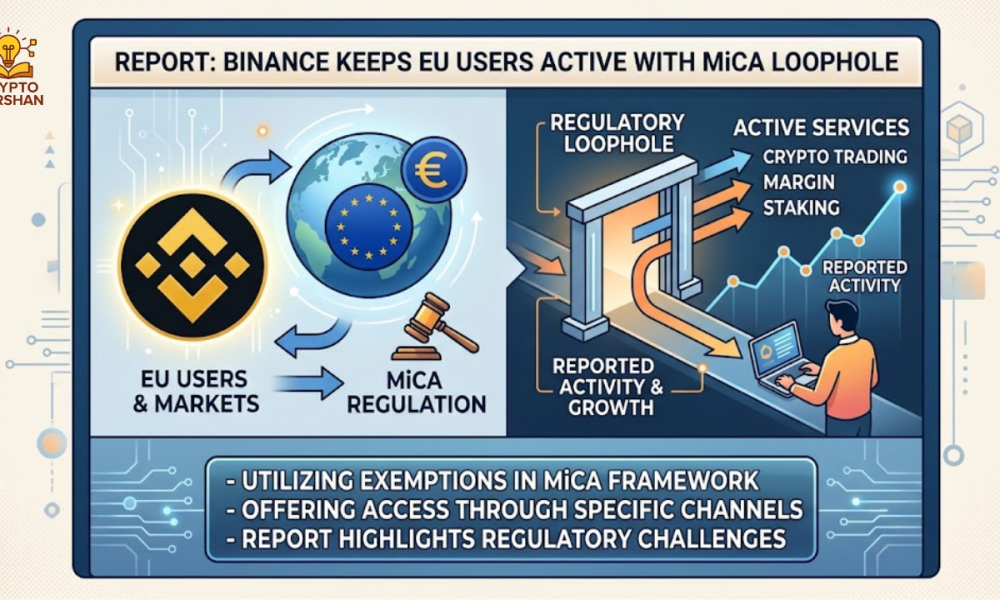
Binance is still serving and onboarding some European Union customers even though it missed the bloc’s July 1 MiCA licensing deadline, according to a new report. The exchange is using a mix of regulatory exemptions and offshore routing to maintain parts of its EU business while it pursues formal authorization.
What the report claims
A Bloomberg-backed investigation found that Binance has continued operating in portions of the 27-member EU more than two months after the Markets in Crypto-Assets (MiCA) rules took full effect. Instead of a full shutdown, the company is relying on two main workarounds:
- Reverse solicitation: MiCA allows limited services when a customer approaches an unlicensed firm on their own initiative, without marketing or solicitation from the firm. People familiar with the matter say Binance interprets this to mean it can still onboard new EU users who independently seek out the platform.
- Offshore routing: Some EU-based trading has been routed through a Binance entity in Abu Dhabi, which operates under a different regulatory regime, enabling continued activity for certain customers.
Binance says it follows local regulations and remains committed to operating in the EU “on a long-term, compliant basis,” adding that it is “actively working toward becoming MiCA-authorised.”
How Binance stayed accessible after July 1
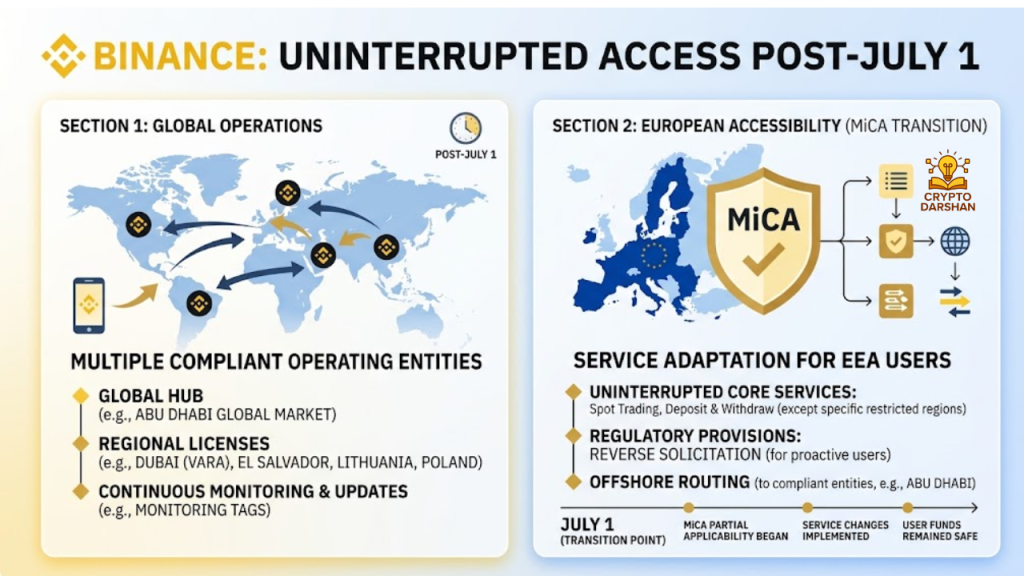
MiCA requires crypto-asset service providers to obtain authorization from a national regulator in one EU member state. Once approved, that license can be “passported” to offer covered services across the bloc. Binance had sought approval via Greece but withdrew its application in mid-June, entering July without the needed authorization.
Despite that, independent tests in August found that new users in countries including Austria, France, Germany, Spain, and Belgium could still:
- Complete registration and identity verification (KYC)
- Fund accounts with cryptocurrency deposits
- Access core platform features without explicit warnings about the missing MiCA license
As of late August, Binance did not appear on the European Securities and Markets Authority (ESMA) register of authorized crypto providers, which listed around 330 firms.
What MiCA required—and what changed for users
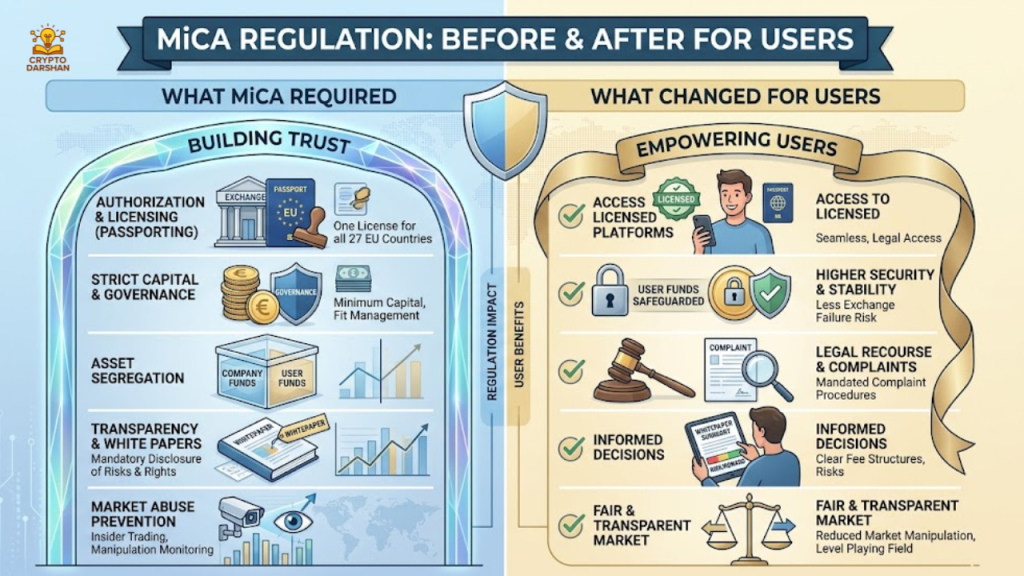
Before the July 1 deadline, ESMA instructed unauthorized providers to stop onboarding new EU customers and to limit remaining services to what was needed for clients to exit. For Binance, the impact varied by country:
- In France, Spain, Italy, Poland, Sweden, and Lithuania, where Binance previously ran local entities, many users received notices to leave the platform.
- Most affected accounts were restricted to withdrawals only, though some customers were later allowed back under Binance’s reading of reverse solicitation.
- In France, spot and margin trading were disabled after July 1, while withdrawals remained possible.
App availability also shifted. In late July, the Binance app disappeared from Google Play in some EU markets (including reports from Spain and Latvia) but remained available in others such as Poland. Binance attributed some changes to Google Play policy updates affecting crypto apps in certain regions.
Why the Greek license bid failed
Binance had aimed to secure MiCA authorization through Greece, which would have granted EU-wide access via passporting. However, scrutiny intensified in June. The Hellenic Capital Market Commission was expected to consider the application around June 17, but Binance withdrew it on June 16, so no decision was made.
Reports cited by Bloomberg indicated that European Central Bank President Christine Lagarde intervened behind the scenes to prevent approval, though the ECB declined to comment. Binance maintained that it had met MiCA requirements and warned that delays could affect competition and liquidity. With the Greek path closed, the exchange said it would pursue another EU route, but it has not publicly confirmed the next member state.
Regulators are watching
ESMA has sought confirmation from Binance that it is appropriately winding down EU operations where it lacks authorization, according to people familiar with the matter. ESMA itself noted that national regulators are responsible for enforcing sanctions over non-compliance.
Legal experts say the situation is nuanced. Nina-Luisa Siedler, a MiCA compliance adviser at the Berlin University of Applied Sciences, told Bloomberg that not getting a license “does not necessarily mean that they need to close all accounts they have for European customers.” Still, the reverse solicitation exemption is narrow: it hinges on the customer initiating contact without being solicited by the provider.
Market impact: Binance still dominant
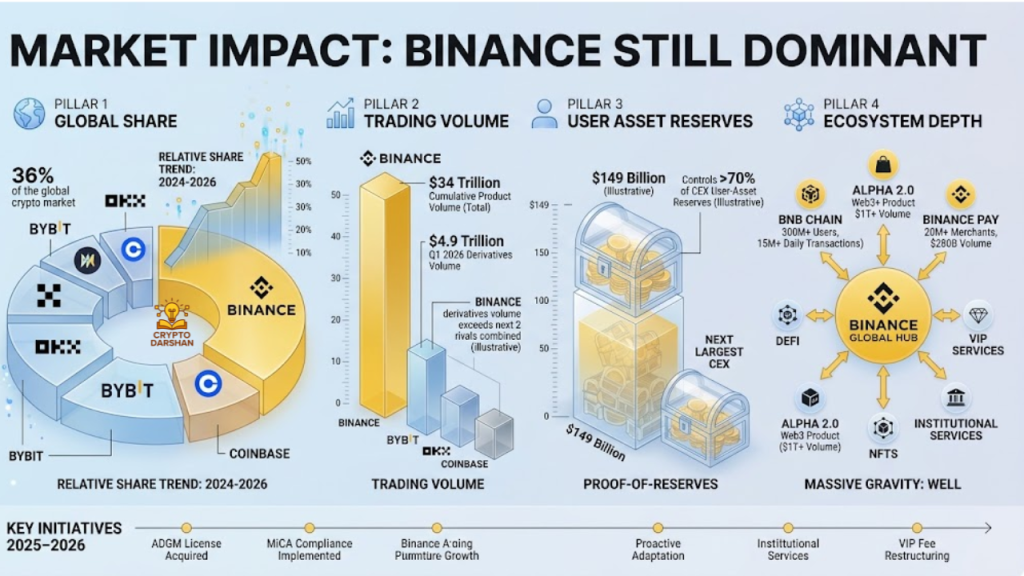
The regulatory setback has not materially dented Binance’s global standing. Data cited by Bloomberg showed Binance accounted for more than 45% of global spot crypto trading volume in late August. Its share of euro-denominated trading hovered between 3% and 4%, roughly in line with pre-deadline levels, though that metric does not capture all transactions involving EU users.
Binance also remained among the most downloaded crypto trading apps on Apple’s App Store in the EU, with little change in position over recent months. Meanwhile, licensed rivals such as Coinbase can use MiCA passporting rights to offer covered services across EU member states.
What this means for EU users
For EU customers, the practical takeaway is mixed:
- Access may still be possible, but it depends on country, onboarding path, and how Binance applies reverse solicitation.
- Protections differ from those offered by MiCA-authorized firms, which must meet capital, governance, and consumer-safeguard requirements.
- Service features can change without notice, especially if regulators push back on current interpretations.
Users who prioritize regulatory coverage and consistent access across the EU may prefer platforms already listed on ESMA’s MiCA register.
Binance’s next move
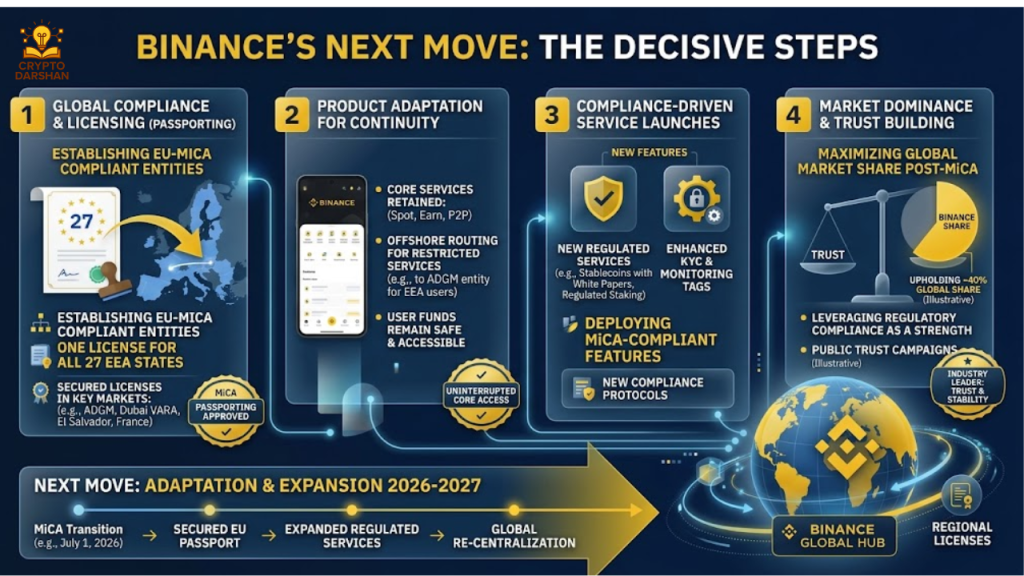
Binance says it is working toward MiCA authorization and views it as key to providing a “consistent, regulated, and trusted service across the European market.” The exchange has significantly increased compliance spending in recent years and reports handling hundreds of thousands of law-enforcement requests globally.
The open question is which EU member state will handle its next application—and whether regulators will accept its current use of reverse solicitation and offshore routing in the interim