
The financial world is undergoing a transformation unlike any seen before. The rise of digital currencies, blockchain technology, and decentralized finance has reshaped how investors view wealth creation and preservation. Among the most significant developments in this evolution is a field that bridges traditional finance with the digital economy. In 2026, Crypto Asset Management has emerged as the fastest-growing area within the broader financial industry, attracting institutional investors, hedge funds, and retail participants alike.
The rapid expansion of crypto asset management is not a coincidence. It reflects a convergence of technological innovation, regulatory clarity, and shifting investor sentiment. As blockchain-based assets mature, they are no longer viewed as speculative instruments but as legitimate components of diversified portfolios. This article explores why Crypto Asset Management has become the fastest-growing segment of traditional finance in 2026, examining its drivers, challenges, opportunities, and future outlook.
The Evolution of Digital Assets and Their Integration into Finance

The journey of digital assets began with the creation of Bitcoin in 2009. Initially dismissed as a niche experiment, cryptocurrencies have evolved into a trillion-dollar market. Over time, the ecosystem expanded beyond Bitcoin to include Ethereum, stablecoins, decentralized finance (DeFi) tokens, and non-fungible tokens (NFTs). Each innovation introduced new ways to store, transfer, and generate value.
Traditional financial institutions initially approached cryptocurrencies with skepticism. However, as blockchain technology proved its resilience and transparency, attitudes began to shift. The reliability of blockchain networks depends heavily on the mechanisms used to validate transactions and maintain security. Learn more in Blockchain Consensus 2026: How Networks Reach Agreement, where we explain how decentralized networks achieve trust without central authorities. By 2026, major banks, asset managers, and pension funds have integrated Crypto Asset Management into their service offerings. This integration marks a pivotal moment in financial history, where digital and traditional assets coexist within unified investment frameworks.
The evolution of crypto asset management mirrors the broader adoption of digital assets. Early adopters focused on speculative trading, but as the market matured, the emphasis shifted toward structured investment strategies, risk management, and long-term value creation. This shift has positioned crypto asset management as a cornerstone of modern portfolio theory in the digital age.
Understanding Crypto Asset Management

Crypto asset management is the practice of purchasing and selling digital assets to be used as investments while managing a portfolio to experience an overall growth in value. It involves strategies similar to those used in traditional asset management—portfolio diversification, risk assessment, and performance optimization—but applied to the unique characteristics of digital assets.
The core objective of crypto asset management is to maximize returns while minimizing risks associated with volatility, liquidity, and regulatory uncertainty. Managers use a combination of quantitative models, blockchain analytics, and algorithmic trading to achieve these goals. The field encompasses various services, including:
- Portfolio Management: Constructing diversified portfolios of digital assets.
- Custody Solutions: Ensuring secure storage of cryptocurrencies through institutional-grade custodians.
- Staking and Yield Generation: Earning passive income through blockchain participation.
- Tokenized Assets: Managing investments in tokenized versions of real-world assets like real estate or commodities.
- Risk Management: Implementing hedging strategies to mitigate exposure to market fluctuations.
By 2026, this field has evolved into a sophisticated discipline supported by advanced analytics, artificial intelligence, and decentralized infrastructure. It serves both institutional and retail investors seeking exposure to the digital economy.
The Growth Drivers Behind Crypto Asset Management in 2026

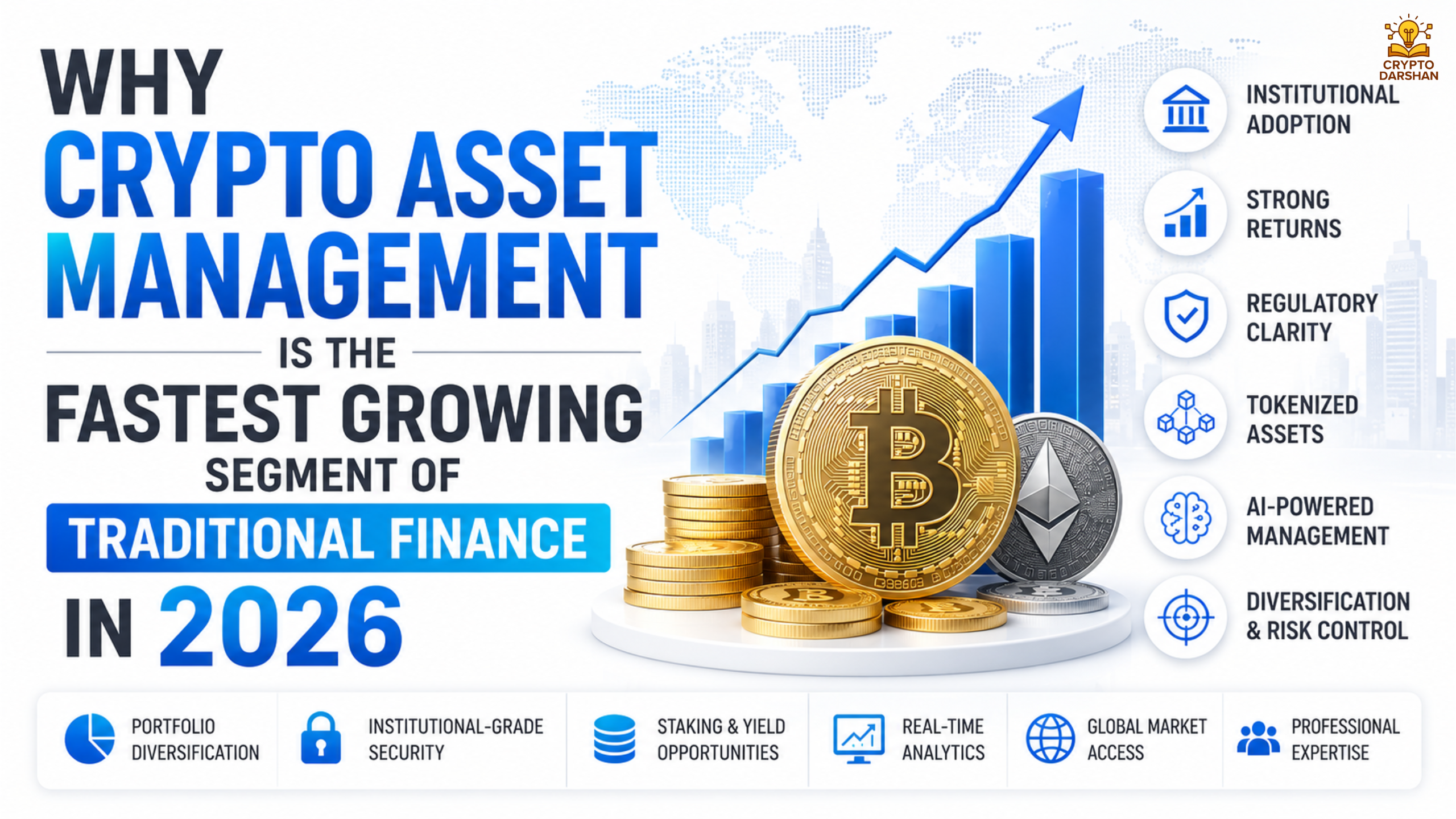
Several factors have contributed to the explosive growth of crypto asset management in 2026. These drivers span technological, economic, and regulatory dimensions, creating a perfect environment for expansion.
1. Institutional Adoption
Institutional investors have become the primary catalysts for growth. Pension funds, endowments, and sovereign wealth funds now allocate a portion of their portfolios to digital assets. The entry of these large players has legitimized crypto asset management and increased demand for professional management services. Institutions seek exposure to cryptocurrencies not only for potential returns but also for diversification benefits.
2. Regulatory Clarity
Regulatory uncertainty was once a major barrier to adoption. However, by 2026, many jurisdictions have established clear frameworks for digital asset management. Governments and financial authorities have introduced licensing regimes, compliance standards, and tax guidelines that provide confidence to investors. This regulatory clarity has allowed crypto asset management firms to operate transparently and attract institutional capital.
3. Technological Advancements
Blockchain technology has matured significantly. Innovations such as layer-2 scaling solutions, cross-chain interoperability, and decentralized identity systems have enhanced the efficiency and security of digital asset transactions. These advancements have made crypto asset management more reliable and accessible, enabling seamless integration with traditional financial systems.
4. Tokenization of Real-World Assets
The tokenization of assets, converting physical or traditional financial assets into digital tokens has expanded the scope of crypto asset management Investors can now hold tokenized shares, bonds, real estate, and commodities within their digital portfolios. This development has blurred the lines between traditional and digital finance, creating new opportunities for diversification and liquidity.
5. Rising Demand for Alternative Investments
In an era of low interest rates and market volatility, investors are seeking alternative assets that offer higher returns and lower correlation with traditional markets. Cryptocurrencies and blockchain-based assets fit this profile perfectly. As a result, crypto asset management has become a preferred avenue for accessing these opportunities in a structured and secure manner.
6. Integration with Decentralized Finance (DeFi)
DeFi platforms have revolutionized how financial services are delivered. Through smart contracts, investors can lend, borrow, and trade assets without intermediaries. Crypto Asset Management firms leverage DeFi protocols to enhance yield generation and liquidity management. This integration has created hybrid models that combine the best of centralized and decentralized finance. Monitoring liquidity flows and on-chain activity is essential when evaluating DeFi opportunities. Learn how advanced analytics can uncover market trends in Build a Crypto Screener With On-Chain Volume & Breakout Signals.
The Role of Institutional Investors in Shaping the Market

Institutional participation has transformed Crypto Asset Management from a niche service into a mainstream financial discipline. Large asset managers and hedge funds have established dedicated crypto divisions, while traditional custodians have launched digital asset services. This institutional involvement has several implications:
- Market Stability: Institutional investors bring long-term capital, reducing volatility and speculative behavior.
- Professionalization: The entry of experienced portfolio managers and analysts has elevated the standards of crypto asset management.
- Liquidity Growth: Increased trading volumes and market depth have improved liquidity across major cryptocurrencies.
- Product Innovation: Institutions have driven the creation of new financial products such as crypto ETFs, futures, and structured notes.
By 2026, institutional investors account for more than 60% of assets under management in the crypto asset management sector. Their participation has accelerated the convergence of digital and traditional finance, making crypto assets an integral part of global investment strategies.
The Impact of Regulation on Crypto Asset Management

Regulation plays a pivotal role in shaping the trajectory of Crypto Asset Management. In the early years, the absence of clear rules created uncertainty and limited institutional participation. However, as governments recognized the economic potential of digital assets, they began crafting comprehensive regulatory frameworks.
By 2026, most major economies have implemented regulations covering:
- Licensing and Registration: Requiring firms to obtain licenses similar to traditional asset managers.
- Anti-Money Laundering (AML) Compliance: Mandating strict KYC and transaction monitoring procedures.
- Custody Standards: Defining security protocols for storing digital assets.
- Taxation Policies: Clarifying how gains from digital assets are taxed.
- Investor Protection: Establishing disclosure requirements and risk warnings.
These regulations have fostered trust and transparency, encouraging more investors to participate. They have also facilitated collaboration between regulators and industry players, ensuring that innovation continues without compromising financial stability.
The Role of Technology in Advancing Crypto Asset Management

Technology is the backbone of this financial revolution. From blockchain infrastructure to artificial intelligence, technological innovation drives efficiency, transparency, and scalability.
Blockchain Analytics
Blockchain analytics tools allow managers to track transactions, assess risk exposure, and verify asset ownership in real time. This transparency enhances decision-making and compliance.
Artificial Intelligence and Machine Learning
AI-powered algorithms analyze market trends, sentiment data, and on-chain metrics to optimize portfolio performance. Machine learning models can predict price movements, identify arbitrage opportunities, and automate trading strategies within crypto asset management frameworks.
Smart Contracts
Smart contracts automate processes such as yield distribution, rebalancing, and fee collection. They reduce operational costs and eliminate human error, making crypto asset management more efficient.
Decentralized Infrastructure
Decentralized storage and computing solutions enhance data security and resilience. Managers can operate across multiple blockchains, ensuring interoperability and flexibility.
Tokenization Platforms
Tokenization platforms enable the creation and management of digital representations of real-world assets. This technology expands the investment universe available to crypto asset management firms, allowing them to offer diversified portfolios that include both digital and traditional assets.
The Rise of Retail Participation

While institutional investors dominate in terms of capital, retail investors have played a crucial role in popularizing crypto asset Management. The democratization of finance through mobile apps, decentralized exchanges, and robo-advisors has empowered individuals to access professional-grade investment tools.
Retail investors are drawn to this market for several reasons:
- Accessibility: Low entry barriers and user-friendly platforms make it easy to invest in digital assets.
- Transparency: Blockchain technology provides real-time visibility into asset performance.
- Passive Income Opportunities: Staking, yield farming, and liquidity provision offer attractive returns.
- Education and Awareness: Increased financial literacy and media coverage have demystified digital assets.
By 2026, retail investors collectively manage billions of dollars through crypto asset management platforms, contributing to the sector’s exponential growth.
The Convergence of Traditional and Digital Finance

The boundaries between traditional finance and digital assets are rapidly dissolving. Banks, brokerages, and asset managers now offer hybrid products that combine conventional securities with cryptocurrencies. This convergence has given rise to a new financial ecosystem where digital asset management serves as the bridge.
Examples of this integration include:
- Crypto ETFs: Exchange-traded funds that track baskets of digital assets.
- Tokenized Bonds: Debt instruments issued and traded on blockchain networks.
- Digital Custody Services: Banks providing secure storage for cryptocurrencies.
- Cross-Asset Portfolios: Investment strategies that blend equities, bonds, and digital assets.
This hybridization enhances portfolio diversification and risk-adjusted returns. It also positions crypto asset management as a central pillar of the future financial system.
Challenges Facing Crypto Asset Management

Despite its rapid growth, crypto asset management faces several challenges that must be addressed to sustain momentum.
Market Volatility
Cryptocurrencies remain highly volatile, which can deter risk-averse investors. Effective risk management and hedging strategies are essential to mitigate this challenge within crypto asset management.
Regulatory Fragmentation
While some regions have clear regulations, others remain ambiguous or restrictive. This inconsistency complicates cross-border operations for crypto asset management firms.
Security Risks
Cyberattacks, phishing, and smart contract vulnerabilities pose ongoing threats. Continuous investment in cybersecurity is critical to maintaining investor confidence in crypto asset management. Secure custody solutions play a critical role in reducing cybersecurity risks. Learn more in How Crypto Cold Storage Actually Works at the Hardware Level Most Users Never Understand, where we explore the technologies used to safeguard digital assets.
Talent Shortage
The demand for professionals skilled in both finance and blockchain technology exceeds supply. Building a qualified workforce is vital for the continued growth of crypto asset management.
Market Manipulation
The relatively nascent nature of digital asset markets makes them susceptible to manipulation. Enhanced surveillance and transparency measures are needed to ensure fair trading practices in crypto asset management.
Opportunities in the Future of Crypto Asset Management

The future of crypto asset management is filled with opportunities that could redefine global finance.
Expansion into Emerging Markets
Developing economies are embracing digital assets as tools for financial inclusion. Firms can tap into these markets by offering localized solutions and education programs.
Integration with Artificial Intelligence
AI-driven predictive analytics will further enhance portfolio optimization and risk management, making crypto asset management more adaptive and intelligent.
Sustainable Investing
Environmental, social, and governance (ESG) principles are gaining traction in the crypto space. Green blockchains and carbon-neutral tokens align with the growing demand for sustainable investments within crypto asset management.
Institutional Partnerships
Collaborations between traditional financial institutions and crypto-native firms will accelerate innovation and expand market reach.
Tokenization of New Asset Classes
Beyond real estate and commodities, tokenization could extend to intellectual property, art, and even human capital. This expansion will broaden the scope of crypto asset management.
The Economic Impact of Crypto Asset Management

The rise of crypto asset management has significant macroeconomic implications. It contributes to capital formation, job creation, and technological innovation. By channeling funds into blockchain projects and startups, crypto asset management fuels economic growth and digital transformation.
Moreover, this field enhances financial inclusion by providing access to investment opportunities previously reserved for wealthy individuals or institutions. Through decentralized platforms, anyone with an internet connection can participate in global markets.
The sector also strengthens financial resilience. Diversified portfolios that include digital assets can hedge against inflation, currency devaluation, and geopolitical risks. One of the most effective methods for managing macroeconomic risk exposure is the use of derivatives. Crypto Futures Trading explains how futures contracts help investors hedge against volatility and protect portfolio value. As a result, crypto asset management plays a vital role in stabilizing the global financial ecosystem.
Case Studies: Leading Players in Crypto Asset Management

Several firms have emerged as leaders in crypto asset management, setting benchmarks for innovation and performance.
Grayscale Investments
Grayscale pioneered institutional-grade crypto investment products, offering exposure to Bitcoin, Ethereum, and other assets through regulated trusts. Its success demonstrated the viability of crypto asset management within traditional frameworks.
Fidelity Digital Assets
Fidelity’s entry into the digital asset space marked a turning point for institutional adoption. The firm provides custody, trading, and advisory services, integrating crypto asset management into its broader wealth management offerings.
Galaxy Digital
Founded by former hedge fund manager Mike Novogratz, Galaxy Digital combines investment banking, trading, and asset management under one roof. Its diversified approach exemplifies the potential of crypto asset management in bridging traditional and digital finance.
BlackRock
As the world’s largest asset manager, BlackRock’s foray into digital assets through ETFs and blockchain research has legitimized crypto asset management on a global scale.
These case studies highlight how established financial institutions are embracing digital assets, validating the long-term potential of this market.
The Role of Education and Awareness

Education is a cornerstone of sustainable growth in crypto asset management. As digital assets become mainstream, investors must Education is a cornerstone of sustainable growth in Crypto Asset Management. As digital assets become mainstream, investors must understand their risks, benefits, and underlying technologies. Financial institutions, universities, and online platforms are offering courses and certifications to bridge the knowledge gap.
Educational initiatives focus on:
- Blockchain fundamentals
- Portfolio diversification strategies
- Regulatory compliance
- Risk management techniques
- Ethical investing in digital assets
By fostering financial literacy, these programs empower investors to make informed decisions and contribute to the responsible growth of Crypto Asset Management. Investor education also plays a key role in identifying legitimate projects and avoiding fraudulent schemes. ICO Crypto: Scams and Hidden Gems explores the due diligence process required for evaluating early-stage blockchain investments.
The Future Outlook of Crypto Asset Management

Looking ahead, crypto asset management is poised to become a dominant force in global finance. Several trends will shape its trajectory:
Mainstream Integration
By 2030, digital assets are expected to represent a significant portion of global wealth. Crypto Asset Management will be fully integrated into traditional financial systems, with seamless interoperability between fiat and crypto markets.
Automation and AI
Automation will streamline operations, while AI will enhance predictive analytics and decision-making. This evolution will make crypto asset management more efficient and accessible.
Global Standardization
International cooperation will lead to standardized regulations, enabling cross-border investment and reducing compliance complexity for crypto asset management firms.
Expansion of Tokenized Economies
Entire industries will adopt tokenization, from supply chains to entertainment. Crypto Asset Management will play a central role in managing these digital economies.
Enhanced Investor Protection
As the industry matures, stronger safeguards and insurance mechanisms will protect investors from fraud and technical failures within crypto asset management.
FAQ: Why Crypto Asset Management Is the Fastest Growing Segment of Traditional Finance in 2026

1. What is Crypto Asset Management?
Crypto Asset Management refers to the professional management of cryptocurrency investments on behalf of individuals, institutions, family offices, and corporations. It includes portfolio construction, risk management, custody solutions, tax optimization, and performance monitoring across digital assets such as Bitcoin, Ethereum, stablecoins, and tokenized securities.
2. Why is Crypto Asset Management growing so rapidly in 2026?
Several factors are driving growth:
- Increased institutional adoption of cryptocurrencies.
- Approval and expansion of crypto ETFs and regulated investment products.
- Greater demand for professional portfolio management.
- Improved regulatory clarity across major markets.
- Rising interest in tokenized real-world assets (RWAs).
- Growing participation from pension funds and wealth managers.
As digital assets become mainstream, investors increasingly prefer professional management over self-custody.
3. How does Crypto Asset Management differ from traditional asset management?
Traditional asset managers focus on stocks, bonds, commodities, and real estate. Crypto Asset Management adds unique capabilities such as:
- Blockchain-based portfolio tracking.
- On-chain analytics.
- Digital asset custody.
- Staking and yield generation.
- DeFi investment strategies.
- 24/7 market monitoring.
These features require specialized expertise beyond traditional finance.
4. Who uses Crypto Asset Management services?
Common users include:
- Retail investors with large crypto holdings.
- High-net-worth individuals.
- Family offices.
- Hedge funds.
- Pension funds.
- Corporate treasuries.
- Endowments and foundations.
Professional management helps these investors navigate market volatility and security risks.
5. What services do Crypto Asset Managers provide?
Typical services include:
- Portfolio diversification.
- Risk assessment.
- Asset allocation.
- Custody solutions.
- Staking management.
- Tax reporting.
Many firms also provide exposure to emerging blockchain sectors.
6. Why are institutions entering Crypto Asset Management?
Institutions are attracted by:
- Portfolio diversification opportunities.
- Long-term growth potential.
- Inflation hedging capabilities.
- Access to tokenized assets.
- Increasing client demand.
- Maturing regulatory frameworks.
Many institutions now view digital assets as a permanent asset class rather than a speculative trend.
7. How does Crypto Asset Management reduce investment risk?
Professional managers reduce risk through:
- Diversified portfolios.
- Position sizing rules.
- Stop-loss frameworks.
- Custody security measures.
- Market research.
- Active portfolio monitoring.
These strategies help protect capital during periods of extreme market volatility.
8. What role does regulation play in Crypto Asset Management growth?
Regulatory clarity is one of the biggest growth catalysts in 2026. Clear compliance standards encourage:
- Institutional participation.
- Investor confidence.
- Licensed crypto investment products.
- Cross-border capital inflows.
- Improved custody infrastructure.
Regulation helps bridge the gap between traditional finance and digital assets.
Conclusion
The rise of crypto asset management in 2026 represents a paradigm shift in global finance. What began as a niche market for tech enthusiasts has evolved into a sophisticated, regulated, and rapidly expanding sector. Its growth is driven by institutional adoption, technological innovation, regulatory clarity, and the democratization of finance.
As traditional and digital finance converge, crypto asset management stands at the forefront of this transformation. It offers investors new avenues for diversification, resilience, and growth in an increasingly digital world. The future of finance is not merely digital—it is managed, strategic, and inclusive, powered by the principles and practices of crypto asset management.