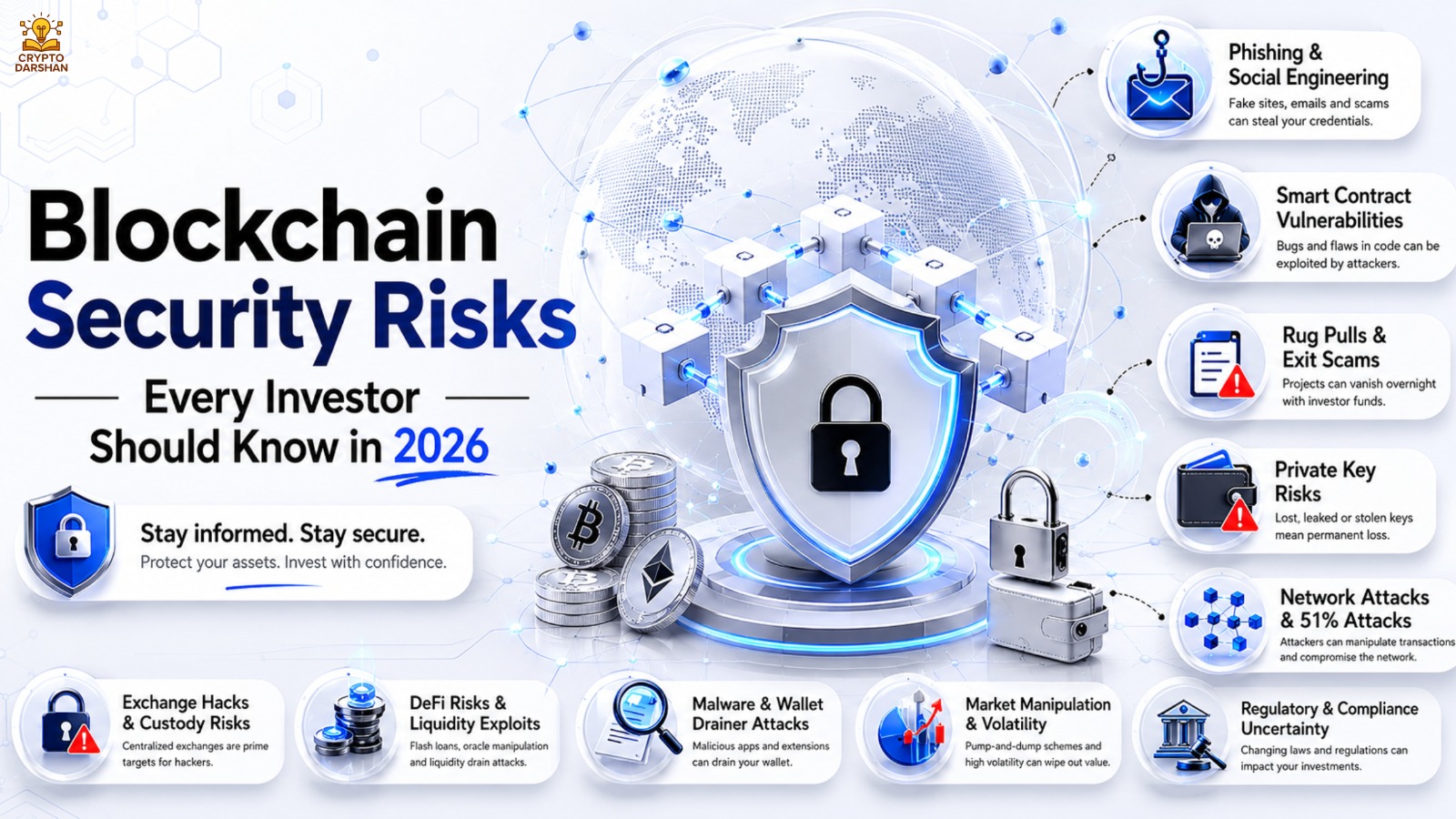
Blockchain technology has transformed the global financial landscape, offering transparency, decentralization, and efficiency. From cryptocurrencies to decentralized finance (DeFi) and non-fungible tokens (NFTs), blockchain has become a cornerstone of digital innovation. However, as adoption grows, so do the threats. Blockchain security is now one of the most critical concerns for investors, developers, and regulators alike.
In 2026, the blockchain ecosystem faces new and evolving risks. Cybercriminals are becoming more sophisticated, exploiting vulnerabilities in smart contracts, wallets, and consensus mechanisms. Investors must understand these risks to protect their assets and make informed decisions. This comprehensive guide explores the major blockchain security risks every investor should know in 2026, along with strategies to mitigate them.
1. Understanding Blockchain Security
1.1 What Is Blockchain Security?
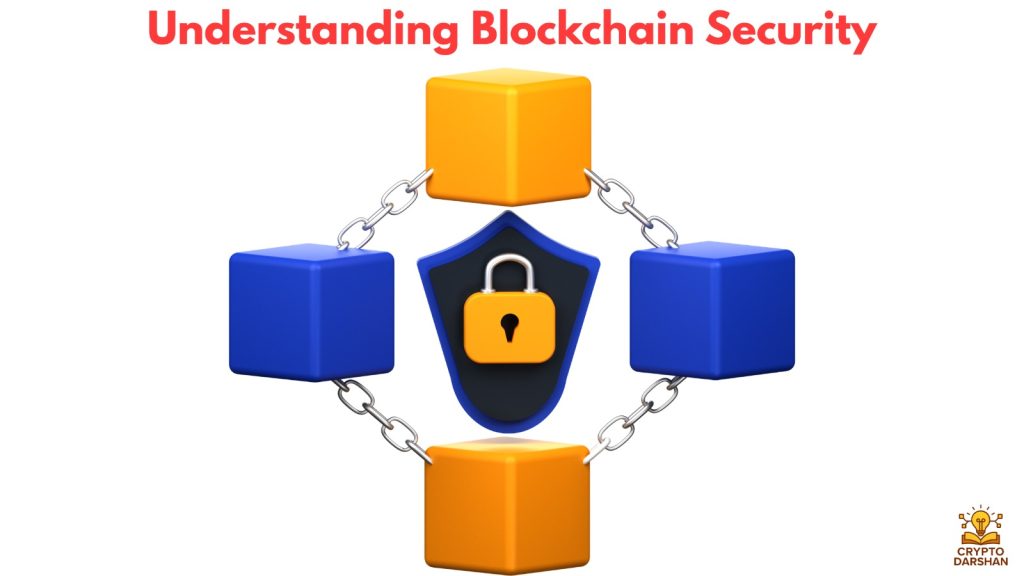
Blockchain security refers to the combination of technologies, protocols, and practices designed to protect blockchain networks from attacks, fraud, and unauthorized access. It ensures the integrity, confidentiality, and availability of data stored on distributed ledgers.
Unlike traditional databases, blockchain operates on a decentralized network where each participant maintains a copy of the ledger. This structure makes it resistant to single points of failure but introduces new types of vulnerabilities.
Key components of blockchain security include:
- Cryptographic algorithms for data encryption and transaction verification.
- Consensus mechanisms like Proof of Work (PoW) and Proof of Stake (PoS) to validate transactions.
- Smart contract auditing to detect and fix vulnerabilities.
- Network monitoring to identify suspicious activities.
1.2 Why Blockchain Security Matters for Investors
Investors rely on blockchain networks to store and transfer digital assets securely. A breach in blockchain security can lead to massive financial losses, reputational damage, and loss of trust in the ecosystem.
For example, a single vulnerability in a DeFi protocol can result in millions of dollars being stolen within minutes. As blockchain adoption expands into sectors like healthcare, supply chain, and real estate, the potential impact of security failures becomes even more significant.
2. Common Blockchain Security Risks in 2026
2.1 Smart Contract Vulnerabilities
Smart contracts are self-executing programs that run on blockchain networks. They automate transactions based on predefined conditions. However, coding errors or design flaws can expose them to attacks.
Common smart contract vulnerabilities include:
- Reentrancy attacks: Hackers repeatedly call a function before the previous execution completes, draining funds.
- Integer overflow/underflow: Mathematical errors that allow manipulation of token balances.
- Logic flaws: Poorly designed conditions that can be exploited to bypass rules.
In 2026, smart contracts are more complex than ever, powering decentralized exchanges (DEXs), lending platforms, and NFT marketplaces. Without proper auditing, these contracts can become prime targets for hackers.
2.2 51% Attacks
A 51% attack occurs when a single entity gains control of more than half of a blockchain’s computational power or stake. This allows them to manipulate transactions, double-spend coins, or block new transactions.
While large networks like Bitcoin and Ethereum are relatively secure, smaller blockchains remain vulnerable. In 2026, the rise of new altcoins and private blockchains increases the risk of such attacks, especially when network participation is low. Anyone new to crypto should read Recovering From a Crypto Hack: What to Do After Losing Funds to learn the immediate steps after a wallet compromise
2.3 Phishing and Social Engineering
Phishing remains one of the most effective methods for stealing digital assets. Attackers trick users into revealing private keys or seed phrases through fake websites, emails, or social media messages.
In 2026, phishing campaigns have become more sophisticated, using AI-generated content and deepfake technology to impersonate trusted figures in the crypto community. Investors must remain vigilant and verify all communications before taking action.
2.4 Wallet Security Risks

Digital wallets are essential for storing cryptocurrencies and tokens. However, they are also a major target for cybercriminals.
Types of wallet-related risks include:
- Hot wallet hacks: Online wallets connected to the internet are vulnerable to malware and phishing.
- Hardware wallet theft: Physical devices can be stolen or tampered with.
- Seed phrase exposure: Losing or sharing recovery phrases can lead to permanent loss of funds.
In 2026, multi-signature wallets and biometric authentication have improved blockchain security, but human error remains a significant factor.
2.5 Sybil Attacks
A Sybil attack occurs when an attacker creates multiple fake identities to gain control over a network. This can disrupt consensus mechanisms, manipulate voting systems, or flood the network with spam transactions.
Decentralized governance platforms and DAOs (Decentralized Autonomous Organizations) are particularly vulnerable to Sybil attacks. Implementing identity verification and reputation systems can help mitigate this risk.
2.6 Cross-Chain Bridge Exploits
Cross-chain bridges allow assets to move between different blockchains. However, they have become one of the biggest blockchain security risks in recent years.
Bridges often rely on complex smart contracts and external validators, creating multiple points of failure. In 2026, several high-profile bridge hacks have resulted in billions of dollars in losses. Strengthening bridge protocols and using decentralized validation methods are essential for reducing these risks.
2.7 Rug Pulls and Exit Scams
Rug pulls occur when developers abandon a project after collecting investor funds, leaving tokens worthless. These scams are common in DeFi and NFT projects.
In 2026, rug pulls have evolved into more sophisticated forms, often disguised as legitimate projects with fake audits and influencer endorsements. Investors must conduct thorough due diligence before investing in any new blockchain venture.
2.8 Insider Threats
Not all threats come from external hackers. Insider threats—such as employees or developers with privileged access—pose a serious blockchain security risk.
These individuals can manipulate code, leak sensitive data, or steal private keys. Implementing strict access controls, regular audits, and transparent governance can help prevent insider attacks.
2.9 Quantum Computing Threats
Quantum computing poses a long-term threat to blockchain security. Quantum computers could potentially break existing cryptographic algorithms, allowing attackers to forge digital signatures or decrypt private keys.
While this threat is still theoretical in 2026, researchers are actively developing quantum-resistant cryptography to safeguard future blockchain networks.
2.10 Regulatory and Compliance Risks
Regulatory uncertainty can also impact blockchain security. Inconsistent laws across jurisdictions make it difficult to enforce security standards.
In 2026, governments are introducing stricter compliance requirements for crypto exchanges and DeFi platforms. Non-compliance can lead to penalties, shutdowns, or loss of investor confidence.
3. Emerging Blockchain Security Trends in 2026

3.1 Zero-Knowledge Proofs (ZKPs)
Zero-Knowledge Proofs allow users to verify transactions without revealing sensitive information. This enhances privacy while maintaining transparency.
In 2026, ZKPs are widely used in privacy-focused blockchains and identity verification systems, strengthening blockchain security by reducing data exposure.
3.2 AI-Powered Threat Detection
Artificial intelligence is revolutionizing blockchain security by detecting anomalies and predicting attacks in real time. AI algorithms analyze transaction patterns to identify suspicious behavior before damage occurs.
3.3 Decentralized Identity (DID) Systems
Decentralized identity systems give users control over their personal data. By eliminating centralized databases, DIDs reduce the risk of large-scale data breaches.
In 2026, DIDs are integrated into DeFi platforms, NFT marketplaces, and supply chain systems to enhance trust and security.
3.4 Multi-Party Computation (MPC)
MPC technology allows multiple parties to jointly compute a function without revealing their private inputs. This is particularly useful for securing private keys and digital signatures.
MPC wallets are becoming a standard in 2026, offering enhanced blockchain security for institutional investors.
3.5 Post-Quantum Cryptography
To counter the threat of quantum computing, researchers are developing post-quantum cryptographic algorithms. These new encryption methods are designed to withstand attacks from quantum computers, ensuring long-term blockchain security.
4. How Investors Can Protect Their Assets

1. Conduct Comprehensive Research
Before investing in any blockchain project, it is essential to perform detailed research. Investors should review the project’s whitepaper, understand its goals, and verify the credibility of the development team. Checking for third-party audits, community feedback, and the project’s long-term sustainability helps identify potential red flags. A well-researched investment minimizes exposure to scams and poorly managed projects.
Developers building in Web3 should also read What Web3 Builders Need Before Mass Adoption Happens to understand why security remains critical for mainstream adoption.
2. Use Secure and Reputable Wallets
Choosing the right wallet is a critical step in maintaining blockchain security. Hardware wallets, which store private keys offline, offer the highest level of protection against online threats. For frequent transactions, using trusted software wallets with strong encryption and two-factor authentication (2FA) is recommended. Avoid storing large amounts of cryptocurrency on exchanges, as they are common targets for hackers.
3. Enable Multi-Layer Authentication
Adding multiple layers of authentication significantly enhances account security. Two-factor authentication (2FA), biometric verification, and hardware security keys make it harder for attackers to gain unauthorized access. Investors should also use unique, complex passwords for each platform and update them regularly to reduce the risk of credential theft.
4. Diversify Investment Portfolios
Diversification is a proven strategy to reduce risk. Instead of concentrating funds in a single cryptocurrency or project, investors should spread their assets across different blockchains, tokens, and sectors. This approach ensures that even if one investment fails or is compromised, the overall portfolio remains stable and secure.
5. Stay Informed About Security Threats
The blockchain landscape evolves rapidly, and new vulnerabilities emerge frequently. Staying updated on the latest blockchain security news, regulatory changes, and technological advancements helps investors make informed decisions. Following credible sources, joining blockchain communities, and attending webinars can provide valuable insights into emerging risks and protection strategies.
6. Verify Project Transparency and Governance
Transparent projects with open-source code, regular audits, and active governance are generally more trustworthy. Investors should favor platforms that allow community participation in decision-making and disclose their financial operations. Transparent governance reduces the likelihood of insider manipulation and builds long-term trust in the project.
7. Practice Safe Key and Data Management
Private keys are the gateway to digital assets, and losing them means losing access permanently. Investors should store keys securely in offline environments, such as hardware wallets or encrypted storage devices. Backup copies should be kept in multiple secure locations. Avoid sharing seed phrases or private keys with anyone, and never input them into suspicious websites or applications.
By following these seven key practices, investors can strengthen their blockchain security, minimize risks, and ensure the long-term safety of their digital assets in an increasingly complex and evolving blockchain environment.
5.The Role of Blockchain Security in Cryptocurrency

Blockchain security plays a vital role in the stability, trust, and growth of the cryptocurrency ecosystem. Cryptocurrencies rely on decentralized networks where transactions are recorded on distributed ledgers. Without strong blockchain security, these systems would be vulnerable to manipulation, fraud, and theft. Security ensures that digital assets remain safe, transactions are verified accurately, and the integrity of the entire network is maintained.
1. Protecting Transaction Integrity
Every cryptocurrency transaction is recorded on a blockchain, forming a permanent and immutable record. Blockchain security ensures that once a transaction is confirmed, it cannot be altered or deleted. This immutability prevents double-spending, where the same coin could be used more than once. Cryptographic hashing and consensus mechanisms like Proof of Work (PoW) or Proof of Stake (PoS) verify each transaction, maintaining trust among participants.
2. Preventing Fraud and Hacking
The decentralized nature of blockchain makes it resistant to traditional hacking methods. However, without proper blockchain security, attackers could exploit vulnerabilities in wallets, exchanges, or smart contracts. Security protocols such as encryption, multi-signature authentication, and regular audits protect users from fraud and unauthorized access. These measures ensure that funds and private keys remain safe from cybercriminals.
3. Ensuring Network Consensus and Stability

Consensus mechanisms are the backbone of blockchain networks. They allow participants to agree on the validity of transactions without relying on a central authority. Blockchain security ensures that these mechanisms function correctly, preventing malicious actors from gaining control of the network. For example, in a 51% attack, if one entity controls most of the network’s power, it could manipulate transactions. Strong security protocols prevent such scenarios, maintaining network stability.
4. Safeguarding User Privacy and Data
While blockchain transactions are transparent, user identities are protected through cryptographic techniques. Blockchain security ensures that sensitive information, such as private keys and personal data, remains confidential. Advanced encryption and privacy-focused technologies like Zero-Knowledge Proofs (ZKPs) allow users to verify transactions without revealing their identities, balancing transparency with privacy.
5. Building Trust in Decentralized Systems
Trust is the foundation of any financial system. In cryptocurrencies, trust is established through blockchain security rather than intermediaries like banks. The transparent and tamper-proof nature of blockchain records gives users confidence that their transactions are legitimate. This trust encourages wider adoption of cryptocurrencies and supports the growth of decentralized finance (DeFi) and other blockchain-based innovations.
6. Supporting Regulatory Compliance
As governments and institutions adopt blockchain technology, compliance with security standards becomes essential. Blockchain security helps ensure that transactions meet regulatory requirements for anti-money laundering (AML) and know-your-customer (KYC) processes. Secure and auditable blockchain systems make it easier for regulators to monitor activities without compromising decentralization.
7. Enabling Smart Contract Reliability
Smart contracts automate transactions based on predefined conditions. However, coding errors or vulnerabilities can lead to financial losses. Blockchain security ensures that smart contracts are audited, tested, and deployed safely. Secure coding practices and continuous monitoring prevent exploits, ensuring that automated agreements execute as intended.
8. Protecting Against Emerging Threats
As technology evolves, new threats such as quantum computing and AI-driven attacks emerge. Blockchain security plays a proactive role in developing quantum-resistant cryptographic algorithms and advanced threat detection systems. These innovations ensure that cryptocurrencies remain secure even as cyber threats become more sophisticated.
6. Case Studies of Blockchain Security Breaches

6.1 The DAO Hack
The 2016 DAO hack remains one of the most infamous blockchain security incidents. A vulnerability in a smart contract allowed attackers to drain millions of dollars in Ether. This event led to the Ethereum hard fork, creating Ethereum and Ethereum Classic.
6.2 Poly Network Exploit
In 2021, hackers exploited a vulnerability in the Poly Network cross-chain bridge, stealing over $600 million. Although the funds were later returned, the incident highlighted the risks of interoperability protocols.
6.3 Ronin Bridge Hack
In 2022, the Ronin Network, used by the popular game Axie Infinity, suffered a $600 million breach due to compromised validator nodes. This attack emphasized the importance of decentralization and validator security.
6.4 Wormhole Bridge Attack
The Wormhole bridge exploit in 2022 resulted in the loss of $320 million. The attacker exploited a vulnerability in the smart contract’s signature verification process, underscoring the need for rigorous code audits.
7. The Future of Blockchain Security

7.1 Integration of AI and Machine Learning
AI-driven systems will play a crucial role in automating threat detection and response. Machine learning models can analyze vast amounts of blockchain data to identify patterns of malicious activity.
7.2 Global Regulatory Collaboration
By 2026, international cooperation among regulators is improving. Unified frameworks for compliance and security standards are being developed to protect investors and ensure the stability of blockchain ecosystems.
7.3 Enhanced User Education
Education remains one of the most effective tools for improving blockchain security. As more people enter the crypto space, awareness campaigns and training programs will help reduce human error and scams.
7.4 Quantum-Resistant Blockchains
The next generation of blockchains will incorporate quantum-resistant algorithms to future-proof their networks. These innovations will ensure that even as technology evolves, blockchain remains secure.
8. Best Practices for Blockchain Developers

8.1 Regular Code Audits
Developers should conduct regular audits using both automated tools and manual reviews. Third-party audits add an extra layer of credibility and trust.
8.2 Implement Bug Bounty Programs
Bug bounty programs encourage ethical hackers to identify vulnerabilities before malicious actors exploit them. This proactive approach strengthens blockchain security.
8.3 Secure Key Management
Private keys should be stored securely using hardware modules or MPC solutions. Developers must avoid hardcoding keys into applications.
8.4 Continuous Monitoring
Real-time monitoring tools can detect unusual network activity, helping developers respond quickly to potential threats.
9. FAQ: Blockchain Security Risks Every Investor Should Know in 2026

1. What are the biggest blockchain security risks in 2026?
The biggest blockchain security risks in 2026 include smart contract exploits, phishing attacks, fake crypto apps, bridge hacks, wallet compromises, rug pulls, AI-powered scams, and private key theft. Investors also face risks from social engineering and malicious DeFi protocols.
2. Why are crypto hacks still happening despite better technology?
Many crypto hacks happen because attackers target human mistakes instead of blockchain technology itself. Weak wallet security, poor smart contract audits, fake websites, and compromised devices remain major vulnerabilities.
3. How do phishing scams target crypto investors?
Phishing scams trick investors into revealing wallet seed phrases, passwords, or signing malicious transactions. Scammers often use fake exchange websites, impersonated social media accounts, and fraudulent wallet pop-ups.
4. What is a smart contract exploit?
A smart contract exploit happens when hackers find vulnerabilities in blockchain code and manipulate it to steal funds or drain liquidity pools. Even audited projects can still face unexpected exploits.
5. Are hardware wallets still safe in 2026?
Hardware wallets remain one of the safest ways to store crypto, but users must still protect their recovery phrases and avoid connecting wallets to malicious applications or fake firmware updates.
6. What are bridge hacks in crypto?
Bridge hacks occur when attackers exploit vulnerabilities in cross-chain bridges that transfer assets between blockchains. These attacks have caused billions of dollars in losses across the crypto industry.
7. How can investors avoid rug pulls?
Investors can reduce rug pull risks by researching project teams, checking liquidity locks, reviewing token distribution, verifying audits, and avoiding projects promising unrealistic returns.
8. What role does AI play in crypto scams?
AI is increasingly used to create fake videos, cloned voices, phishing emails, and automated scam bots that appear highly convincing. This makes crypto fraud harder to detect than in previous years.
10. Conclusion
Blockchain security is the foundation of trust in the decentralized world. As blockchain technology continues to evolve in 2026, so do the risks associated with it. From smart contract vulnerabilities to quantum computing threats, investors must remain vigilant and proactive.
By understanding the key security risks, adopting best practices, and staying informed about emerging trends, investors can protect their assets and contribute to a safer blockchain ecosystem. The future of blockchain depends not only on innovation but also on the collective commitment to security, transparency, and resilience.