
The rise of decentralized finance (DeFi) has transformed the cryptocurrency landscape, introducing innovative ways for investors to earn passive income. Among these innovations, yield farming has emerged as one of the most popular and profitable trends. Yield farming allows users to earn rewards by providing liquidity to decentralized platforms, effectively turning their crypto holdings into income-generating assets.
However, as the DeFi ecosystem expands across multiple blockchains, interoperability has become a crucial factor in the evolution of yield farming. The ability for different blockchain networks to communicate and share liquidity seamlessly is essential for maximizing returns and ensuring a smooth user experience. This guide explores how yield farming became a major crypto trend, the role of interoperability in its growth, and the challenges and opportunities that lie ahead.
Understanding Yield Farming
What Is Yield Farming?
Yield farming, also known as liquidity mining, is a process where users deposit their cryptocurrencies into decentralized finance protocols to earn rewards. These rewards often come in the form of additional tokens, transaction fees, or governance tokens. Essentially, farming allows investors to put their idle crypto assets to work by providing liquidity to decentralized exchanges (DEXs), lending platforms, or other DeFi applications.
For example, when a user provides liquidity to a DEX like Uniswap or PancakeSwap, they receive liquidity provider (LP) tokens representing their share of the pool. These LP tokens can then be staked or used in other protocols to earn additional rewards, creating a compounding effect.
The Origins of Yield Farming
Yield farming gained mainstream attention in 2020 during the “DeFi Summer,” when platforms like Compound, Aave, and Yearn Finance introduced token-based incentives for liquidity providers. Compound’s COMP token distribution model was one of the first to reward users for participating in the protocol, sparking a wave of similar projects. This innovation led to explosive growth in DeFi, with total value locked (TVL) in DeFi protocols skyrocketing from under $1 billion to over $10 billion within months.
How Yield Farming Works
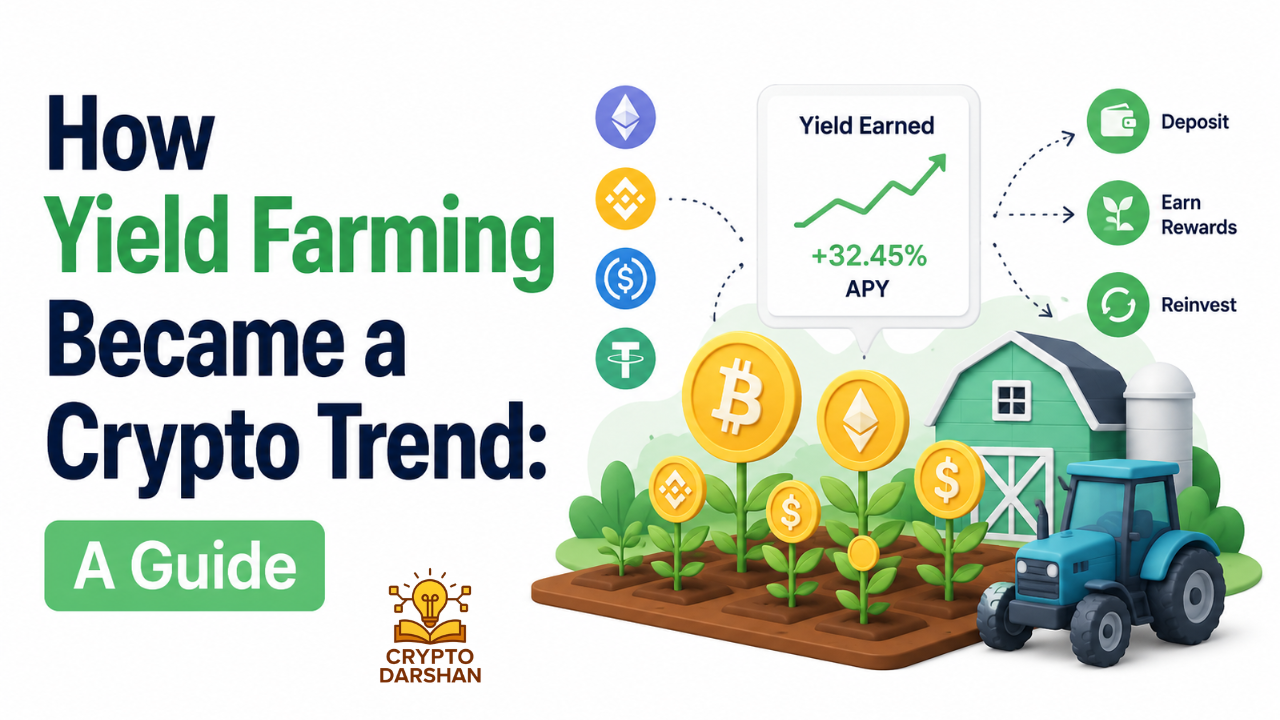
Yield farming typically involves three main components:
- Liquidity Provision: Users deposit tokens into liquidity pools on decentralized exchanges or lending platforms.
- Reward Distribution: In return, they earn rewards in the form of native tokens, governance tokens, or a share of transaction fees.
- Reinvestment: Many yield farmers reinvest their rewards into other pools or protocols to maximize returns through compounding.
The process can be simple or highly complex, depending on the strategy. Some farmers use automated yield aggregators like Yearn Finance or Beefy Finance, which optimize returns by automatically moving funds between the most profitable pools.
The Role of Interoperability in Yield Farming

Why Interoperability Matters
As yield farming expanded beyond Ethereum to other blockchains like Binance Smart Chain, Avalanche, and Polygon, interoperability became a critical factor. Interoperability allows users to move assets and liquidity across different blockchains seamlessly. Without it, yield farming would remain fragmented, limiting opportunities and efficiency.
For example, a user might find a high-yield opportunity on Avalanche but hold assets on Ethereum. Without interoperability, transferring those assets would require multiple steps, high fees, and potential security risks. Interoperability bridges and cross-chain protocols solve this problem by enabling direct asset transfers and communication between blockchains.
Interoperability and Liquidity Flow
Liquidity is the lifeblood of yield farming. The more liquidity a protocol has, the more stable and efficient it becomes. Interoperability enhances liquidity flow by connecting isolated ecosystems. When assets can move freely between chains, liquidity providers can chase the best yields without being restricted to a single network. This cross-chain liquidity movement increases efficiency and helps stabilize yields across the DeFi landscape.
Cross-Chain Yield Farming
Cross-chain yield farming is an emerging trend that leverages interoperability to maximize returns. Platforms like Multichain, Synapse, and LayerZero enable users to farm yields across multiple blockchains simultaneously. This approach allows investors to diversify their strategies, reduce risk, and access a wider range of opportunities.
For instance, a user could stake Ethereum-based tokens on a Polygon farm while simultaneously providing liquidity on Binance Smart Chain. Interoperability protocols make this possible by bridging assets and ensuring smooth communication between networks.
How Yield Farming Became a Crypto Trend
1. The Birth of DeFi Summer (2020)
Yield farming exploded into mainstream consciousness during the summer of 2020, a period known as “DeFi Summer.” This was triggered by Compound Finance’s decision to distribute its COMP governance tokens to users who borrowed or lent assets on the platform. This innovative incentive model created a gold rush mentality, as users realized they could earn substantial returns simply by participating in DeFi protocols. The total value locked in DeFi protocols surged from under $1 billion to over $10 billion within months, marking the beginning of yield farming as a major trend.
2. High Returns Attracted Early Adopters
The promise of extraordinarily high annual percentage yields (APYs) drew crypto investors to yield farming. Early participants reported returns ranging from 100% to over 1000% APY on certain platforms. These eye-catching numbers created massive FOMO (fear of missing out) within the crypto community. While many of these yields were unsustainable and eventually normalized, the initial hype established it as a legitimate strategy for generating passive income from crypto holdings, attracting both retail and institutional investors.
3. Liquidity Mining Incentivized Participation
Protocols introduced liquidity mining programs to bootstrap their platforms and compete for users. By rewarding liquidity providers with native governance tokens, platforms like SushiSwap, PancakeSwap, and Curve Finance created powerful incentives for users to deposit their assets. This “pay-to-play” model solved the cold-start problem that many DeFi platforms faced—they needed liquidity to function, but users wouldn’t provide liquidity without existing volume. Liquidity mining created a virtuous cycle where rewards attracted liquidity, which attracted traders, which generated fees for liquidity providers.
4. Automated Market Makers (AMMs) Simplified Access

The rise of automated market makers like Uniswap revolutionized how people could participate in yield farming. Unlike traditional exchanges that required complex order books and market makers, AMMs allowed anyone to become a liquidity provider by simply depositing token pairs into pools. This democratization of market making meant that ordinary users could earn trading fees and rewards without specialized knowledge or large capital requirements. The simplicity of AMMs made yield farming accessible to a broader audience, accelerating its adoption.
5. Yield Aggregators Made Farming Effortless
As yield farming strategies became increasingly complex, yield aggregators emerged to automate the process. Platforms like Yearn Finance, founded by Andre Cronje, automatically moved users’ funds between different protocols to maximize returns. These “set it and forget it” solutions removed the need for constant monitoring and manual rebalancing. Yield aggregators also pooled gas fees across many users, making yield economically viable even for smaller investors who would otherwise be priced out by high Ethereum transaction costs.
6. Multi-Chain Expansion Multiplied Opportunities
Yield initially dominated Ethereum, but high gas fees and network congestion pushed users to explore alternative blockchains. Networks like Binance Smart Chain, Polygon, Avalanche, and Fantom launched their own DeFi ecosystems with lower fees and faster transactions. Each new chain brought fresh farming opportunities and often offered higher rewards to attract users from Ethereum. This multi-chain expansion transformed it from an Ethereum-exclusive activity into a cross-chain phenomenon, with interoperability bridges enabling users to farm yields across multiple networks simultaneously.
7. Community Governance Created Ownership Culture
Yield farming introduced a new paradigm where users weren’t just customers—they became stakeholders and governors of the protocols they used. Governance tokens distributed through yield farming gave participants voting rights on protocol decisions, fee structures, and future development. This sense of ownership fostered strong communities around DeFi projects and aligned incentives between developers and users. The governance aspect transformed yield farming from a purely financial activity into a form of active participation in building the future of decentralized finance.
8. Media Coverage and Social Proof Amplified Growth
As early yield farmers shared their success stories on social media, crypto forums, and YouTube, the trend gained massive visibility. Influencers and content creators produced countless tutorials, strategy guides, and yield farming comparisons, making the concept more accessible to newcomers. The combination of social proof (seeing others profit), educational content, and fear of missing out created a powerful feedback loop. Mainstream crypto media coverage legitimized it as a serious investment strategy rather than a passing fad, cementing its place as a fundamental component of the DeFi ecosystem.
The Evolution of Yield Farming Platforms

Early Yield Farming Platforms
The first generation of yield farming platforms, such as Compound and Aave, focused on lending and borrowing. Users could deposit assets to earn interest or borrow against their holdings. These platforms introduced governance tokens, allowing users to participate in decision-making while earning rewards.
Uniswap and SushiSwap later popularized automated market makers (AMMs), which replaced traditional order books with liquidity pools. This innovation made it easier for users to provide liquidity and earn trading fees, further fueling the yield farming boom.
The Rise of Yield Aggregators
As yield farming strategies became more complex, yield aggregators emerged to simplify the process. Platforms like Yearn Finance, Autofarm, and Beefy Finance automatically move funds between different pools to maximize returns. These aggregators rely heavily on interoperability to access multiple blockchains and protocols efficiently.
By leveraging interoperability, yield aggregators can optimize yields across chains, reducing the need for manual intervention. This automation has made yield farming more accessible to everyday investors.
Multi-Chain DeFi Ecosystems
The growth of multi-chain ecosystems has further expanded yield farming opportunities. Networks like Avalanche, Polygon, and Fantom have developed their own DeFi ecosystems, each offering unique yield opportunities. Interoperability bridges connect these ecosystems, allowing users to move assets and liquidity freely.
For example, a user can bridge stablecoins from Ethereum to Avalanche using the Avalanche Bridge, then deposit them into a high-yield liquidity pool. This seamless movement of assets across chains is made possible by interoperability protocols.
Benefits of Yield Farming

1. Passive Income Generation
Yield farming allows investors to earn passive income from their crypto holdings. Instead of letting assets sit idle in a wallet, users can stake or lend them to earn rewards.
2. Liquidity Provision
By providing liquidity to decentralized exchanges, yield farmers help maintain market efficiency and reduce price volatility. This benefits both traders and the broader DeFi ecosystem.
3. Decentralized Governance
Many yield farming platforms reward users with governance tokens, giving them voting rights on protocol decisions. This promotes community-driven development and decentralization.
4. Interoperability-Driven Opportunities
Interoperability expands yield farming opportunities by connecting multiple blockchains. Users can access higher yields, diversify their portfolios, and reduce risk by farming across different ecosystems.
5. Innovation and Experimentation
Yield farming has driven innovation in DeFi, leading to the creation of new financial instruments, automated strategies, and cross-chain protocols that rely on interoperability.
Risks and Challenges of Yield Farming

1. Smart Contract Vulnerabilities
Yield farming relies on smart contracts, which can contain bugs or vulnerabilities. Exploits or hacks can lead to significant losses for liquidity providers.
2. Impermanent Loss
When providing liquidity to AMMs, users face the risk of impermanent loss, which occurs when the price of deposited assets changes relative to each other. This can reduce overall returns.
3. High Gas Fees
On networks like Ethereum, high gas fees can eat into profits, especially for small investors. Interoperability solutions that connect to lower-cost chains help mitigate this issue.
4. Rug Pulls and Scams
Some yield farming projects are fraudulent, with developers withdrawing liquidity and disappearing. Conducting due diligence and using reputable platforms is essential.
5. Regulatory Uncertainty
DeFi operates in a largely unregulated environment. As governments develop frameworks for digital assets, yield farming platforms may face new compliance requirements.
The Importance of Interoperability in DeFi Growth

Connecting Isolated Ecosystems
Without interoperability, DeFi ecosystems remain isolated, limiting liquidity and innovation. Interoperability bridges these gaps, allowing assets and data to move freely between blockchains. This connectivity enhances efficiency and fosters collaboration between projects.
Enhancing User Experience
Interoperability simplifies the user experience by enabling seamless cross-chain transactions. Users no longer need to navigate multiple wallets or exchanges to move assets between networks. This ease of use is critical for mainstream adoption of yield farming and DeFi.
Expanding Market Access
Interoperability opens access to new markets and opportunities. Yield farmers can explore high-yield pools on emerging blockchains without being restricted by network boundaries. This flexibility increases competition and drives innovation across the DeFi space.
Supporting Cross-Chain Governance
As DeFi protocols expand across multiple blockchains, interoperability enables unified governance. Token holders can participate in decision-making processes across chains, ensuring consistent development and policy alignment.
Building a Sustainable DeFi Ecosystem
Interoperability is essential for building a sustainable and scalable DeFi ecosystem. It allows protocols to share resources, reduce redundancy, and create a more resilient financial infrastructure.
The Future of Yield Farming and Interoperability

Layer 0 and Cross-Chain Protocols
Layer 0 solutions like Polkadot and Cosmos are designed to enhance interoperability at the foundational level. These protocols connect multiple blockchains, enabling seamless communication and shared security. As yield farming expands, Layer 0 networks will play a crucial role in facilitating cross-chain liquidity and governance.
Interoperable Yield Aggregators
Future yield aggregators will leverage interoperability to optimize returns across multiple blockchains automatically. These platforms will use smart routing algorithms to identify the best yields and move assets efficiently, reducing manual effort and maximizing profits.
Integration with Web3 and the Metaverse
As Web3 and the metaverse evolve, interoperability will connect DeFi, NFTs, and gaming ecosystems. Yield farming could extend into virtual economies, where users earn rewards by providing liquidity for in-game assets or metaverse tokens.
Institutional Adoption
Interoperability will also drive institutional adoption of yield farming. By enabling secure cross-chain transactions and compliance-friendly frameworks, interoperability can attract traditional financial institutions seeking exposure to DeFi yields.
Enhanced Security and Regulation
Future interoperability solutions will focus on improving security and regulatory compliance. Decentralized bridges, zero-knowledge proofs, and standardized protocols will reduce risks and increase trust in cross-chain yield farming.
FAQ: How Yield Farming Became a Crypto Trend: A Guide

1. What is yield farming in crypto?
Yield farming is a way for crypto users to earn rewards by providing liquidity to decentralized finance (DeFi) platforms.
2. How does yield farming work?
Users deposit cryptocurrencies into liquidity pools, and in return they receive rewards such as trading fees, interest, or governance tokens.
3. Why did yield farming become so popular?
Yield farming became popular because it offered high potential returns compared to traditional savings accounts and introduced new passive income opportunities in crypto.
4. What are liquidity pools?
Liquidity pools are collections of crypto assets locked in smart contracts that help decentralized exchanges process trades without traditional intermediaries.
5. Is yield farming the same as staking?
No. Staking usually helps secure a blockchain network, while yield farming mainly focuses on providing liquidity to DeFi protocols for rewards.
6. What are the risks of yield farming?
Major risks include smart contract vulnerabilities, impermanent loss, rug pulls, token volatility, and platform hacks.
7. What is impermanent loss?
Impermanent loss happens when the value of tokens in a liquidity pool change compared to simply holding the assets in a wallet.
8. Which blockchains are popular for yield farming?
Popular yield farming ecosystems include Ethereum, BNB Chain, Solana, and Polygon.
Conclusion
Yield farming has become one of the defining trends in the cryptocurrency world, offering investors new ways to earn passive income and participate in decentralized finance. Its rapid growth has been fueled by innovation, community participation, and the expansion of multi-chain ecosystems. However, the true potential of yield farming can only be realized through interoperability.
Interoperability connects fragmented blockchain networks, enhances liquidity flow, and enables cross-chain yield farming strategies. It simplifies user experiences, fosters innovation, and builds a more inclusive and efficient DeFi ecosystem. As the crypto industry continues to evolve, interoperability will remain at the heart of yield farming’s future—driving the next wave of growth, collaboration, and financial freedom in the decentralized world.