
The internet is evolving into a new era known as Web3, a decentralized, blockchain-powered ecosystem that promises to transform how people interact, transact, and share information online. Unlike Web2, which is dominated by centralized platforms, Web3 aims to give users ownership of their data, digital assets, and online identities. However, despite its potential, Web3 has not yet achieved mass adoption. The technology remains complex, fragmented, and misunderstood by the general public.
For this transformation to succeed, Web3 Builders , the developers, entrepreneurs, and innovators creating decentralized applications (dApps) and infrastructure- must overcome several challenges. These include improving scalability, simplifying user experience, ensuring regulatory compliance, enhancing interoperability, and educating users. This article explores what Web3 Builders need for mass adoption, analyzing the technological, social, and economic factors that will shape the future of decentralized systems.
Understanding Web3 and Its Core Principles
Web3 represents the third generation of the internet, built on blockchain technology and decentralized networks. It shifts control from centralized corporations to individuals, enabling peer-to-peer interactions without intermediaries.
Key Principles of Web3
- Decentralization – Data and applications are distributed across networks rather than stored on centralized servers.
- Ownership – Users own their digital identities, assets, and content through cryptographic keys.
- Transparency – Blockchain ensures that transactions and operations are verifiable and immutable.
- Interoperability – Different blockchains and decentralized applications can communicate seamlessly.
- Incentivization – Tokens and cryptocurrencies reward participation and contribution to the ecosystem.
Web3 Builders must design systems that uphold these principles while ensuring accessibility and scalability for mainstream users.
The Current State of Web3 Adoption

Although Web3 has gained attention through NFTs, DeFi, and DAOs, its adoption remains limited compared to traditional Web2 platforms. Millions of users have experimented with blockchain applications, but billions still rely on centralized systems.
Barriers to Adoption
- Complex User Experience: Wallets, private keys, and gas fees are confusing for non-technical users.
- Scalability Issues: Many blockchains struggle to handle large transaction volumes efficiently.
- Regulatory Uncertainty: Governments are still defining how to regulate decentralized systems.
- Security Concerns: Hacks, scams, and smart contract vulnerabilities deter new users.
- Lack of Education: Many people do not understand how blockchain works or why decentralization matters.
Web3 Builders must address these barriers to make decentralized technologies accessible and trustworthy for everyone.
The Role of Blockchain Infrastructure

A strong blockchain infrastructure is the foundation of Web3. Without scalable, secure, and interoperable blockchains, decentralized applications cannot function effectively.
Scalability and Performance
Scalability remains one of the biggest challenges in blockchain technology. Networks like Ethereum have faced congestion and high gas fees, limiting accessibility. Layer 2 solutions, sidechains, and sharding are being developed to improve throughput.
Web3 Builders must focus on creating scalable architectures that can handle millions of transactions per second without compromising decentralization or security.
Interoperability
For Web3 to thrive, different blockchains must communicate seamlessly. Projects like Polkadot, Cosmos, and Cardano’s sidechain initiatives aim to create bridges between ecosystems. Interoperability ensures that users can move assets and data across platforms without friction.
Security and Reliability
Security is paramount in decentralized systems. Builders must implement rigorous auditing, formal verification, and secure coding practices to prevent exploits. A single vulnerability can destroy user trust and slow adoption.
Web3 Builders who prioritize security and reliability will create ecosystems that users and investors can trust.
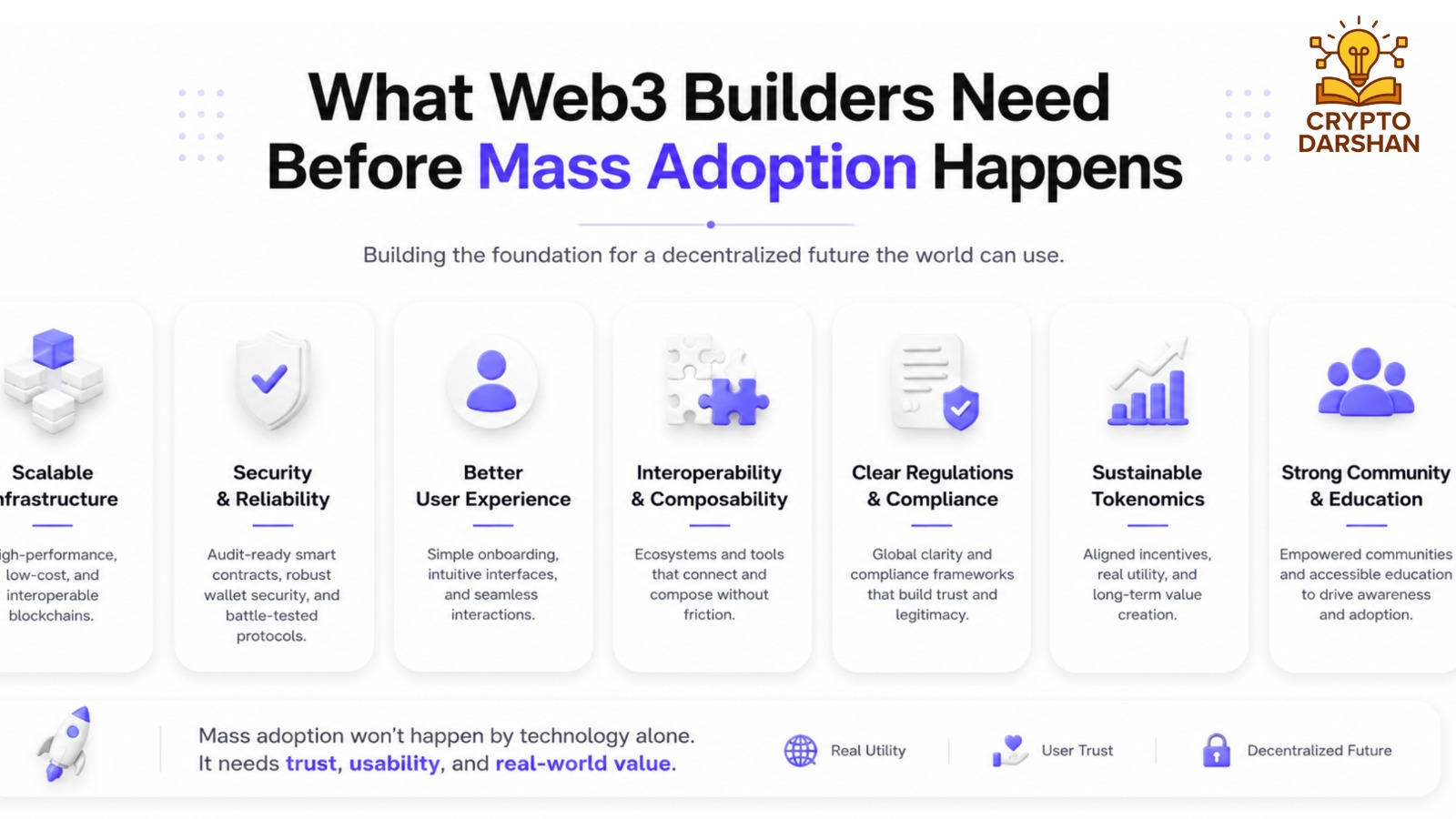
What Web3 Builders Need Before Mass Adoption Happens

Mass adoption of Web3 will not happen automatically. It requires a combination of technological maturity, user trust, education, and real-world utility. Below are the key elements Web3 Builders must focus on before Web3 can reach billions of users.
1. Scalable and Reliable Infrastructure
Scalability is one of the biggest barriers to Web3 adoption. Current blockchain networks often struggle to handle large transaction volumes, leading to slow processing times and high fees. For example, Ethereum’s network congestion during NFT booms showed how scalability issues can limit user experience.
Web3 Builders need to:
- Develop Layer 2 solutions such as rollups and sidechains to increase transaction throughput.
- Implement sharding to divide the blockchain into smaller, manageable parts.
- Explore modular blockchain architectures that separate consensus, execution, and data availability layers.
A scalable infrastructure ensures that millions of users can interact with decentralized applications without delays or high costs. Without this, Web3 cannot compete with the speed and efficiency of Web2 systems.
2. Simplified User Experience (UX)
The current Web3 experience is too technical for the average user. Managing private keys, understanding gas fees, and navigating decentralized wallets can be intimidating. For mass adoption, Web3 must become as simple as using a social media app or online banking platform.
Web3 Builders should focus on:
- User-friendly wallets that hide technical complexity while maintaining security.
- Gasless transactions or fee abstraction to make payments seamless.
- Single sign-on systems that allow users to access multiple dApps with one identity.
- Mobile-first design, since most users access the internet through smartphones.
A smooth and intuitive user experience will make Web3 accessible to non-technical audiences, paving the way for mainstream adoption.
3. Interoperability Between Blockchains
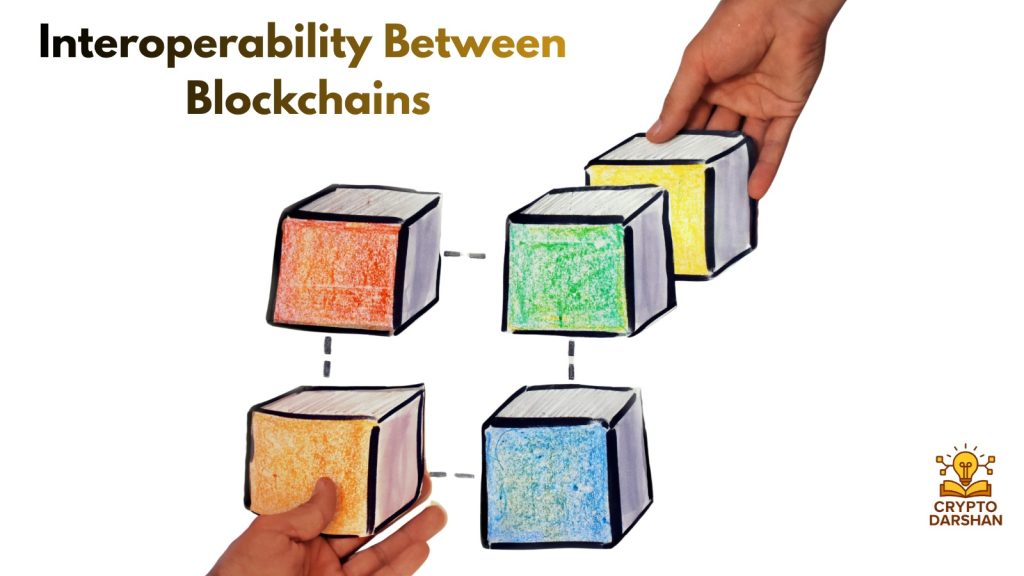
Currently, the Web3 ecosystem is fragmented. Different blockchains operate in isolation, making it difficult for users and developers to move assets or data between them. This lack of interoperability limits the potential of decentralized applications.
Web3 Builders need to:
- Create cross-chain bridges that allow tokens and data to move securely between blockchains.
- Adopt universal standards for smart contracts and data formats.
- Build multi-chain applications that can operate across several networks.
Interoperability will make Web3 more connected and efficient, allowing users to interact with multiple ecosystems without friction. This is essential for creating a unified decentralized internet.
4. Strong Security and Trust Mechanisms
Security is the foundation of Web3. However, the industry has faced numerous hacks, scams, and smart contract vulnerabilities that have damaged user trust. For mass adoption, users must feel confident that their assets and data are safe.
Web3 Builders must prioritize:
- Smart contract audits and formal verification to prevent vulnerabilities.
- Decentralized identity systems that protect user privacy.
- Multi-signature wallets and hardware security modules for asset protection.
- Bug bounty programs to encourage ethical hacking and continuous improvement.
Trust is earned through transparency, reliability, and security. Without it, users will hesitate to adopt decentralized technologies.
5. Clear and Supportive Regulation
Regulation is one of the most significant factors influencing Web3’s future. Governments around the world are still defining how to regulate cryptocurrencies, NFTs, and decentralized finance (DeFi). Unclear or restrictive regulations can slow innovation and discourage participation.
Web3 Builders should:
- Engage with policymakers to help shape fair and balanced regulations.
- Implement compliance tools that meet Know Your Customer (KYC) and Anti-Money Laundering (AML) requirements.
- Design transparent governance models that align with legal frameworks.
Clear regulations will attract institutional investors, increase user confidence, and create a stable environment for innovation. Without regulatory clarity, Web3 will struggle to gain mainstream acceptance.
6. Education and Awareness
Many people still associate blockchain only with cryptocurrency speculation. They do not understand its broader potential in areas like identity, supply chain, and digital ownership. Education is essential for mass adoption.
Web3 Builders must invest in:
- Educational content such as tutorials, webinars, and online courses.
- Community-driven learning through forums, hackathons, and open-source projects.
- Partnerships with universities to integrate blockchain education into academic programs.
When users and developers understand how Web3 works and why it matters, adoption will grow naturally. Education bridges the gap between innovation and real-world use.
7. Real-World Use Cases
Technology alone cannot drive adoption. People adopt new systems when they solve real problems. Web3 must demonstrate practical value beyond speculation.
Web3 Builders should focus on creating applications that address real-world needs, such as:
- Decentralized Finance (DeFi): Providing financial services to the unbanked and underbanked.
- Non-Fungible Tokens (NFTs): Empowering creators to monetize their work and prove ownership.
- Decentralized Identity (DID): Giving users control over their personal data.
- Supply Chain Management: Ensuring transparency and authenticity in global trade.
- Gaming and Metaverse: Creating immersive digital economies where users own in-game assets.
When users see tangible benefits, they are more likely to adopt Web3 technologies in their daily lives.
User Experience: The Gateway to Adoption

No matter how advanced the technology, mass adoption will not occur if the user experience remains complex. Web3 applications must become as intuitive as traditional apps.
Simplifying Wallets and Keys
Managing private keys and seed phrases is intimidating for new users. Builders are exploring solutions like social recovery wallets, biometric authentication, and custodial options to simplify onboarding. As Web3 platforms grow, enterprise-level wallet protection such as multi-signature security solutions will become increasingly important.
Reducing Transaction Friction
Gas fees and transaction delays frustrate users. Layer 2 scaling solutions and fee abstraction mechanisms can make transactions faster and cheaper, improving usability.
Seamless Integration with Web2

Bridging Web2 and Web3 experiences can ease the transition for users. For example, allowing users to log in with familiar credentials while maintaining decentralized control can lower entry barriers.
Web3 Builders who focus on user experience will play a crucial role in making decentralized applications mainstream.
- Regulation and Compliance
Regulation is one of the most significant factors influencing Web3’s future. Governments worldwide are grappling with how to regulate cryptocurrencies, NFTs, and decentralized finance.
The Need for Clear Frameworks
Uncertainty around taxation, securities classification, and anti-money laundering (AML) compliance creates hesitation among investors and developers. Clear, consistent regulations will encourage institutional participation and user trust.
Balancing Innovation and Protection
Regulators must strike a balance between fostering innovation and protecting consumers. Overregulation could stifle growth, while underregulation could lead to fraud and instability.
Global Coordination
Because blockchain is borderless, international cooperation is essential. Harmonized standards will prevent regulatory arbitrage and promote global adoption.
Web3 Builders must engage with policymakers to shape fair and forward-thinking regulations that support innovation while ensuring consumer protection.
Education and Awareness
Education is a cornerstone of mass adoption. Many people still associate blockchain solely with cryptocurrency speculation, overlooking its broader potential.
Building Knowledge Through Community
Web3 communities play a vital role in educating users. Workshops, online courses, and open-source documentation can demystify blockchain concepts.
Developer Education
Developers need accessible tools, SDKs, and tutorials to build decentralized applications efficiently. Platforms like Ethereum, Solana, and Cardano are investing in developer education to expand their ecosystems.
Public Awareness Campaigns
Mainstream awareness campaigns can highlight real-world use cases of Web3, such as decentralized identity, supply chain transparency, and digital ownership. As understanding grows, so does adoption.
Web3 Builders must invest in education to empower both developers and users to participate confidently in the decentralized economy.
Interoperability: The Key to a Unified Web3

Interoperability ensures that different blockchains and dApps can communicate and share data seamlessly. Without it, Web3 risks becoming fragmented.
Cross-Chain Bridges
Cross-chain bridges allow assets to move between blockchains. However, they must be secure and efficient to prevent exploits. Builders are developing advanced bridge protocols to enhance interoperability while maintaining security.
Standardization
Developing universal standards for data formats, smart contracts, and communication protocols will simplify integration across ecosystems.
Multi-Chain Ecosystems
The future of Web3 is likely to be multi-chain, with users interacting with multiple blockchains without even realizing it. This seamless experience will be crucial for mass adoption.
Web3 Builders who prioritize interoperability will create a more connected and efficient decentralized world.
Security and Trust
Trust is the foundation of any digital ecosystem. In Web3, trust is established through code, cryptography, and community governance.
Smart Contract Security
Smart contracts must be thoroughly audited to prevent vulnerabilities. Formal verification and continuous testing can reduce the risk of exploits.
Decentralized Governance
Decentralized Autonomous Organizations (DAOs) enable community-driven decision-making. Transparent governance builds trust and aligns incentives among participants.
Data Privacy
While transparency is a strength of blockchain, privacy must also be protected. Zero-knowledge proofs and privacy-preserving technologies can balance openness with confidentiality.
Web3 Builders who prioritize security and trust will attract long-term users and investors, ensuring sustainable growth.
Economic Incentives and Tokenomics
Economic incentives drive participation in decentralized ecosystems. Tokenomics — the design of a token’s supply, distribution, and utility — plays a crucial role in sustaining Web3 projects.
Reward Mechanisms
Tokens reward users for contributing to networks, whether through staking, governance, or providing liquidity. Well-designed reward systems encourage long-term participation.
Sustainable Models
Projects must design token economies that avoid inflationary pressures and speculative bubbles. Sustainable tokenomics ensures long-term viability.
Market Dynamics
Market trends, investor sentiment, and technological milestones all influence token prices. Builders must design ecosystems that can withstand market volatility.
Web3 Builders who understand tokenomics can create balanced ecosystems that reward users while maintaining economic stability.
Real-World Use Cases Driving Adoption
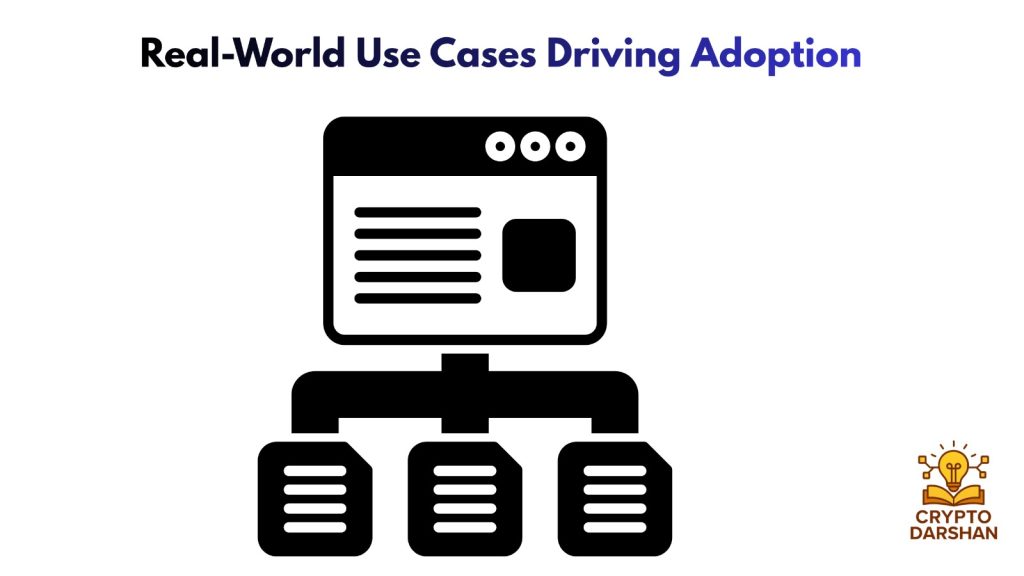
Web3’s success depends on real-world applications that solve tangible problems.
Decentralized Finance (DeFi)
DeFi platforms enable users to lend, borrow, and trade without intermediaries. These systems offer transparency and accessibility, especially in regions underserved by traditional banks.
Non-Fungible Tokens (NFTs)
NFTs revolutionize digital ownership, enabling creators to monetize art, music, and collectibles. They also have potential in gaming, real estate, and intellectual property.
Decentralized Identity (DID)
DID solutions give users control over their personal data. They can verify identity without relying on centralized authorities, enhancing privacy and security.
Supply Chain Transparency
Blockchain enhances traceability in supply chains, ensuring authenticity and ethical sourcing. These practical applications demonstrate Web3’s potential beyond speculation.
Web3 Builders who focus on solving real-world problems will drive meaningful adoption and long-term growth.
The Role of Community and Governance

Community engagement is vital for Web3’s growth. Decentralized governance ensures that users have a voice in shaping the ecosystem.
Community-Driven Development
Open-source collaboration accelerates innovation. Communities contribute to research, development, and governance proposals, ensuring transparency and inclusivity.
DAOs and Decision-Making
DAOs enable transparent, democratic decision-making. They represent the future of organizational structure in Web3.
Incentivizing Participation
Rewarding community contributions through tokens or reputation systems fosters loyalty and growth.
Web3 Builders who nurture strong communities will create resilient ecosystems that can adapt and thrive over time.
The Importance of Sustainability

Sustainability is becoming a major consideration in blockchain development. Energy-intensive proof-of-work systems face criticism for their environmental impact.
Energy Efficiency
Proof-of-stake (PoS) systems consume significantly less energy than traditional mining. This eco-friendly approach appeals to environmentally conscious users and investors.
Green Initiatives
Many Web3 projects are integrating carbon offset programs and sustainable practices to align with global environmental goals.
Long-Term Viability
Sustainability extends beyond energy use. Economic and social sustainability, ensuring fair access and equitable participation, are equally important for mass adoption.
Web3 Builders who prioritize sustainability will attract broader support and ensure the long-term success of decentralized ecosystems.
The Future of Web3: Trends and Predictions

The Web3 landscape is evolving rapidly, with several trends shaping its future trajectory.
Integration with Artificial Intelligence
AI and blockchain integration can enhance automation, data analysis, and decision-making in decentralized systems.
Growth of Decentralized Social Media
Platforms that reward users for content creation and engagement are emerging as alternatives to centralized social networks.
Expansion of Metaverse Ecosystems
The metaverse will rely heavily on Web3 infrastructure for digital ownership, identity, and commerce.
Institutional Adoption
As regulations mature, institutional investors are likely to enter the Web3 space, driving liquidity and stability.
Web3 Builders who anticipate these trends will be better positioned to lead innovation and capture new opportunities.
Challenges That Still Remain

Despite progress, several challenges must be addressed before Web3 achieves mass adoption.
- Scalability: Networks must handle billions of transactions efficiently.
- Usability: Interfaces must be intuitive for non-technical users.
- Security: Continuous innovation in security is essential.
- Regulation: Clear global frameworks are needed.
- Interoperability: Seamless cross-chain communication must become standard.
Web3 Builders must collaborate across ecosystems to overcome these challenges and unlock the full potential of decentralized technology.
FAQ: What Web3 Builders Need Before Mass Adoption Happens

1. What does mass adoption mean in Web3?
Mass adoption in Web3 refers to blockchain applications becoming easy and useful enough for everyday users, not just crypto enthusiasts. It means millions of people using decentralized apps, wallets, NFTs, or DeFi services without needing deep technical knowledge.
2. Why is user experience important for Web3 adoption?
Most users leave Web3 platforms because wallets, gas fees, and onboarding processes feel complicated. Simple interfaces, fast transactions, and easy account recovery systems are essential for mainstream growth.
3. How can Web3 builders improve onboarding for beginners?
Builders can simplify onboarding by offering social logins, gasless transactions, clear tutorials, and mobile-friendly interfaces. Reducing friction helps new users feel comfortable entering the ecosystem.
4. Why does scalability matter for Web3 projects?
Scalability ensures blockchain networks can handle millions of users without high fees or slow transactions. Without scalable infrastructure, mainstream adoption becomes difficult during periods of heavy activity.
5. What role does regulation play in Web3 adoption?
Clear regulations help businesses and users trust blockchain platforms. Regulatory clarity can encourage institutional investment, improve compliance, and reduce uncertainty around crypto services.
6. Why is security critical for Web3 builders?
Security breaches and smart contract exploits damage user trust. Web3 builders must prioritize audits, multi-signature protection, bug bounty programs, and secure wallet integrations to protect users.
Conclusion
Web3 represents a paradigm shift toward a more open, transparent, and user-centric internet. However, mass adoption requires more than technological innovation. Web3 Builders must focus on scalability, user experience, regulation, education, interoperability, and sustainability.
By addressing these challenges, Web3 Builders can create systems that are secure, efficient, and accessible to everyone. The journey toward mass adoption is complex, but the destination promises a more equitable and decentralized digital world. Those who build with purpose, inclusivity, and innovation will lead the next wave of technological transformation, shaping the future of the internet for generations to come.