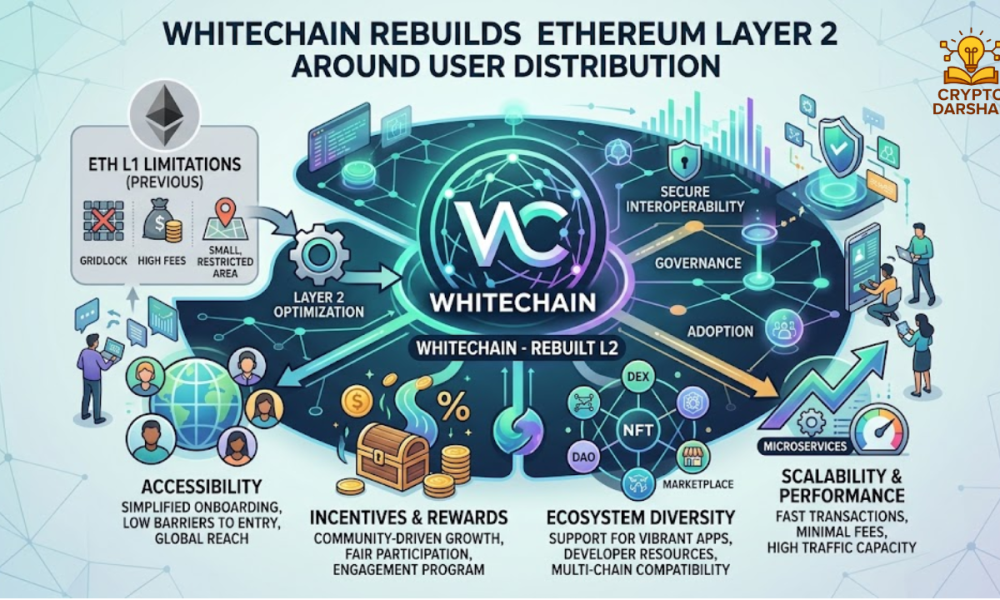
Whitechain is relaunching as an Ethereum Layer 2 network designed to help Web3 projects solve one of their biggest problems: reaching real users. Backed by W Group and cryptocurrency exchange WhiteBIT, the network is placing user distribution, liquidity, and ecosystem growth at the center of its strategy.
The project is built on the OP Stack, a technology framework used to create Ethereum-based Layer 2 networks. Instead of focusing only on faster transactions and lower fees, Whitechain aims to connect blockchain infrastructure with the reach of an established fintech and crypto ecosystem.
Whitechain Shifts Focus Beyond Scalability
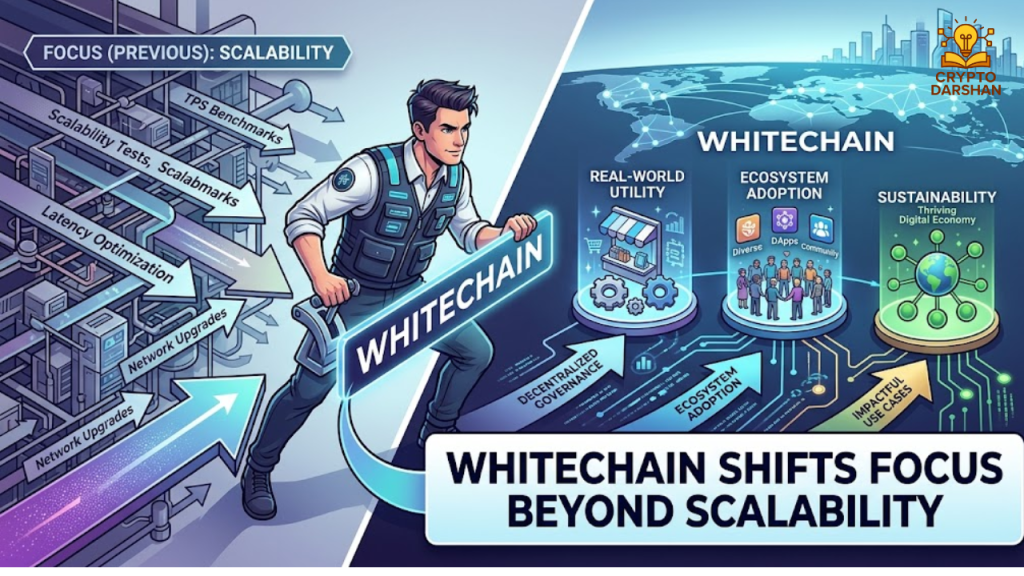
Layer 2 networks were initially developed to help Ethereum handle more transactions at lower costs. These networks process activity away from Ethereum’s main chain before settling transactions back on Ethereum. This approach can improve speed and reduce fees for users and decentralized applications.
However, technical performance is only one part of building a successful Web3 project. Many protocols can launch smart contracts, decentralized applications, and tokens, but struggle to attract users, liquidity, and consistent activity.
Whitechain’s relaunch is based on the idea that distribution may be just as important as infrastructure. The network is designed to give builders access to Ethereum-compatible technology while connecting them with the wider user base and resources associated with W Group.
“Great technology does not automatically translate into adoption,” Volodymyr Nosov, founder and president of W Group and founder and CEO of WhiteBIT, said in the announcement. He added that Whitechain aims to support products that are ready to grow by combining technical infrastructure with the group’s distribution capabilities.
Backing From W Group and WhiteBIT

Whitechain is part of W Group, a global fintech ecosystem that reaches more than 40 million users worldwide, according to the company. Its ecosystem also includes WhiteBIT, a cryptocurrency exchange with more than 10 million users.
This relationship is central to Whitechain’s model. The network is not launching as an isolated blockchain that expects projects to build their communities from scratch. Instead, it aims to provide selected projects with access to a broader network of users, liquidity, partnerships, and promotional opportunities.
For developers, this could offer a different route to adoption. A project may have strong code and a useful product, but it still needs distribution channels to attract its first users and remain active over time.
Whitechain is positioning itself as a bridge between on-chain infrastructure and the existing reach of a crypto-focused financial ecosystem.
Three Paths for Web3 Projects
The relaunch includes three support tracks for projects at different stages of development. Each track is aimed at a different type of builder or protocol.
Builder Program
The Builder Program targets early-stage teams working from testnet development toward their first users. Eligible applicants may receive discretionary funding of up to $300,000 per project, with payments released according to agreed milestones.
The program is intended to help teams develop their products, test their applications, and begin user acquisition. This type of milestone-based support can give early builders access to capital while linking funding to measurable progress.
Strategic Ecosystem Deals
The second track focuses on established protocols with proven total value locked and active user communities. Support may include smart-contract migration assistance, liquidity migration, co-marketing, and direct collaboration with the Whitechain team.
This approach is designed for projects that already have market activity and may benefit from expanding to another Ethereum-compatible network. Rather than treating every protocol the same way, Whitechain says it will tailor support to each project’s needs.
Chain Expansion Support
The third track is aimed at multichain protocols that want to access an additional audience without abandoning their existing networks.
Whitechain says this support will focus on incremental user growth and will not require exclusivity, subject to individual deal terms. This could make the network more attractive to protocols that want to test another ecosystem while preserving their current deployments elsewhere.
Public Testnet Opens for Builders

Whitechain plans to open its public testnet, funding applications, and migration track on August 18. The programs are available to Web3 teams ranging from early-stage builders to established protocols and multichain projects.
A public testnet allows developers and users to test the network before the mainnet launch. It can reveal technical issues, provide feedback on the developer experience, and help projects prepare their applications for broader use.
For users, the testnet may provide an early opportunity to explore Whitechain-based applications. Testnet assets generally have no real market value, so participants should avoid treating testnet activity as an investment opportunity.
Planned Infrastructure at Mainnet
As Whitechain moves toward mainnet, it plans to introduce several core blockchain services. These are expected to include a native decentralized exchange, an oracle, and a bridge.
A decentralized exchange could allow users to trade tokens directly through smart contracts. An oracle would help applications access external data, such as asset prices. A bridge could support the movement of assets and liquidity between Whitechain and other blockchain networks.
These services are often important for a new ecosystem. Developers need access to trading markets, reliable data feeds, and mechanisms for transferring assets before they can build more advanced decentralized finance applications.
Because Whitechain is built on the OP Stack, projects can also use existing wallet, indexing, and developer infrastructure. This may reduce the time required to create tools that support applications and users.
Distribution Could Define the Network
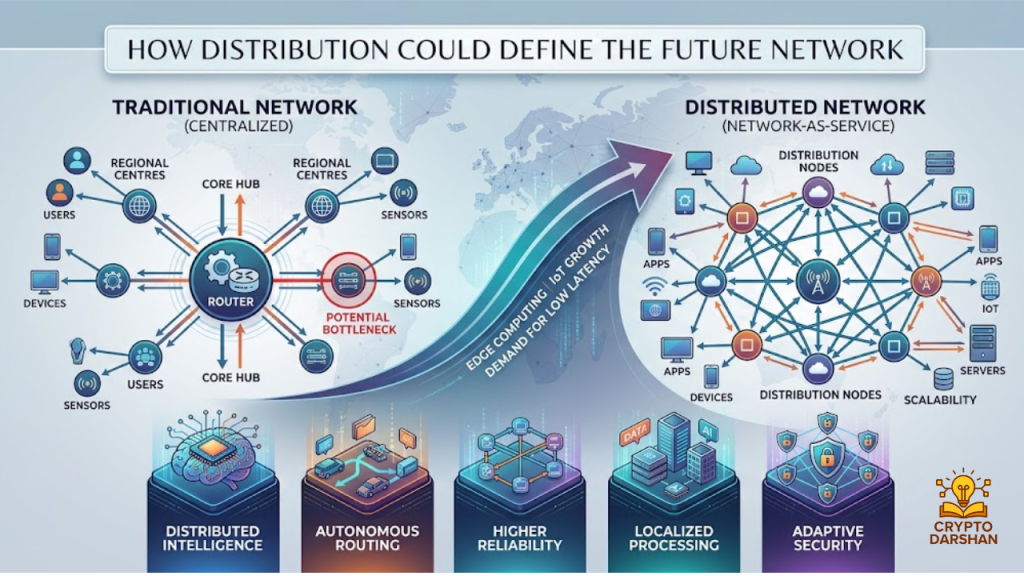
Whitechain’s strategy reflects a broader change in the Ethereum Layer 2 market. Many networks compete on transaction speed, fees, security, and compatibility. As more Layer 2 platforms enter the market, attracting developers and users may become increasingly difficult.
Whitechain is attempting to differentiate itself through distribution. Its success will depend on whether the network can convert its connections to users and liquidity into sustained activity for the projects that build on it.
The project’s upcoming testnet and ecosystem programs will provide an early test of that strategy. Developers will likely assess the network’s reliability, tools, funding process, liquidity support, and ability to generate meaningful user engagement.
For now, Whitechain’s relaunch presents a model that treats blockchain growth as more than a technical challenge. The network is betting that the next stage of Layer 2 competition will be shaped not only by how efficiently transactions are processed, but also by how effectively projects reach the people they are built to serve.
This article is for informational purposes only and does not constitute investment advice.