
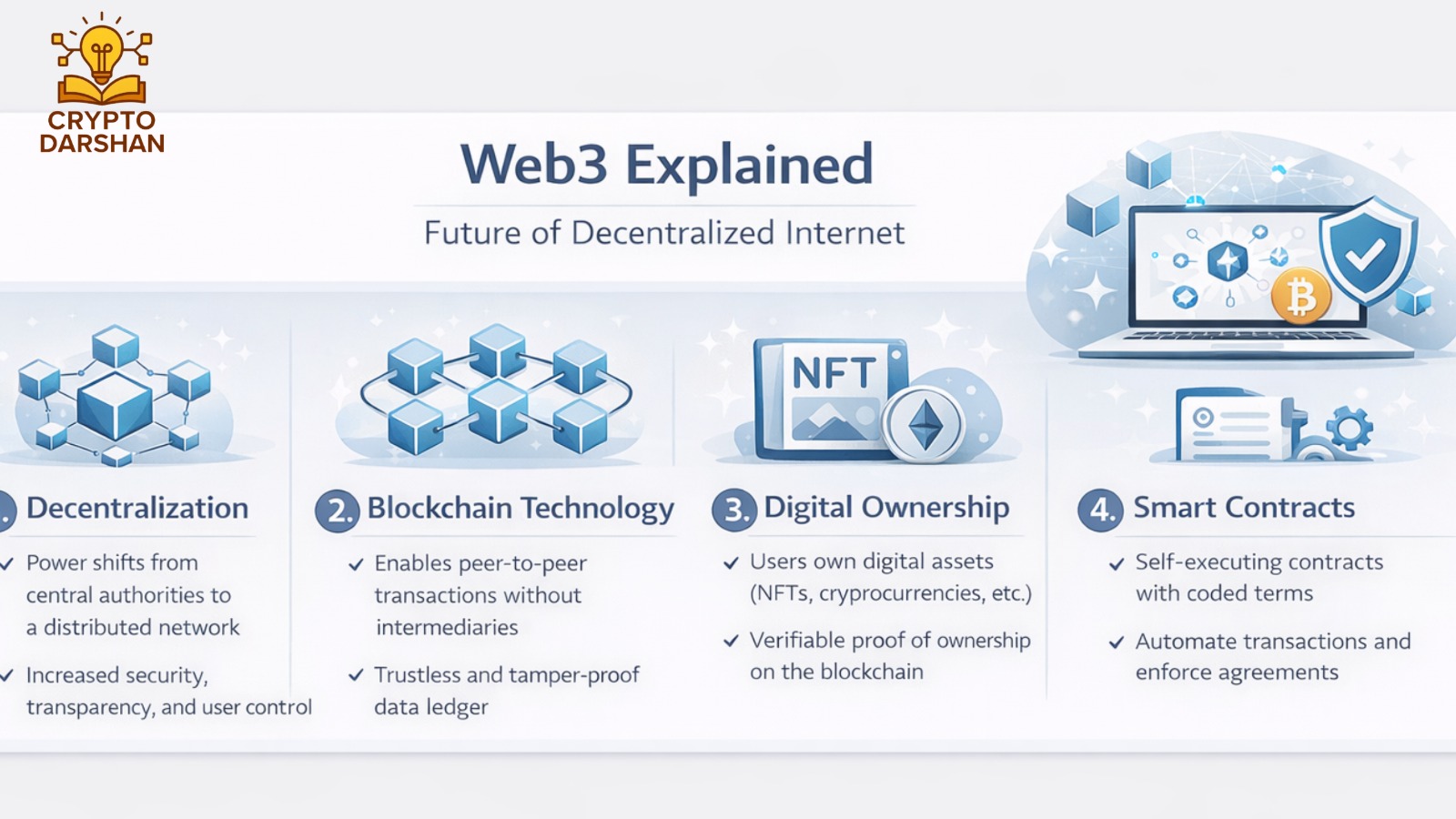
Web3 explained shows the decentralized internet’s evolution, replacing centralized platforms with blockchain-powered networks where users own their data and identities. The internet has changed the world in ways no one could have imagined. From connecting people across continents to enabling instant communication and global commerce, it has become the backbone of modern life. However, the internet as we know it today, often called Web2 is controlled by a few large corporations that own and manage most of the data, platforms, and services.
Enter Web3, the next generation of the internet. Web3 promises a decentralized, user-owned, and transparent digital world based on blockchain technology. It aspires to return power to users by allowing them to own their data, digital assets, and online identities. This guide explains Web3 in simple terms, delves into how it works, and analyzes why it is regarded as the internet’s future.
What Is Web3?

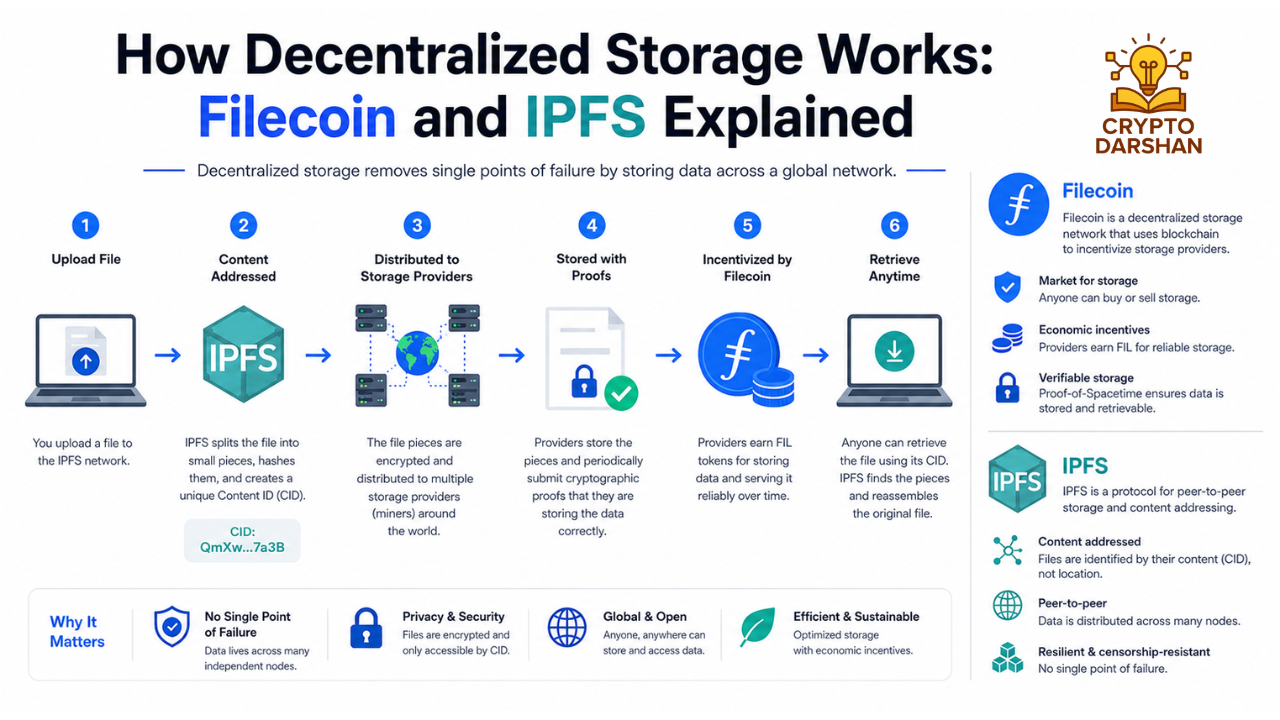
Web3 refers to the third generation of the internet, built on decentralized technologies like blockchain, smart contracts, and cryptocurrencies. Unlike Web2, where data is stored on centralized servers owned by companies, Web3 operates on peer-to-peer networks where users interact directly without intermediaries.
In simple words, Web3 is the internet where users have control over their data, digital assets, and online interactions. It’s powered by blockchain technology, which ensures transparency, security, and decentralization.
The Evolution of the Web.

To understand Web3, it’s important to look at how the internet has evolved.
Web1: The Static Web (1990s–early 2000s)
- Web1 was the first version of the internet.
- Websites were static, meaning users could only read information but not interact.
- There were no social media platforms or user-generated content.
- Examples: Early websites like Yahoo, MSN, and basic HTML pages.
Web2: The Social Web (2004–Present)
- Web2 introduced interactivity and user-generated content.
- Platforms like Facebook, YouTube, and Twitter allowed users to create and share content.
- However, these platforms are centralized companies own the servers and control user data.
- Users became the product, as companies monetized their data through ads and analytics.
Web3: The Decentralized Web (Emerging Now)
- Web3 removes intermediaries and gives users ownership of their data and digital assets.
- It uses blockchain technology to create trustless systems where transactions and interactions are verified by the network, not a central authority.
- Users can own digital tokens, participate in decentralized applications (dApps), and control their online identity.
Key Features of Web3 explained.
Web3 introduces several groundbreaking features that make it different from the traditional internet.
1. Decentralization
In Web3, data is stored across multiple computers (nodes) instead of centralized servers. This makes the system more secure, transparent, and resistant to censorship.
2. Blockchain Technology
Blockchain is the foundation of Web3. It’s a distributed ledger that records transactions in a secure and transparent way. Every transaction is verified by the network, making it nearly impossible to alter or hack.
3. Ownership and Control

People can control their personal data, online assets, and identity. In Web3, individuals can directly own digital art or cryptocurrency without depending on banks, companies, or any central authority.
4. Smart Contracts
Smart contracts are self-executing programs that run on the blockchain. They automatically execute actions when certain conditions are met, removing the need for intermediaries.
5. Tokenization
Web3 introduces digital tokens that represent ownership, access, or value. Tokens can be used for governance, payments, or rewards within decentralized ecosystems.
6. Interoperability
Web3 platforms are designed to work together seamlessly. Users can move assets and data across different applications without restrictions.
7. Privacy and Security
Web3 uses cryptographic methods to protect user data. Users can interact anonymously while maintaining full control over their information.
How Web3 Works?

Web3 operates through a combination of blockchain networks, decentralized applications (dApps), and digital wallets. Here’s how these components work together.
1. Blockchain Networks
Blockchains like Ethereum, Solana, and Polkadot form the backbone of Web3. They store data in blocks that are linked together, creating a transparent and tamper-proof record of transactions.
2. Decentralized Applications (dApps)
dApps are applications built on blockchain networks. Unlike traditional apps, they don’t rely on centralized servers. Instead, they use smart contracts to manage operations. Examples include decentralized exchanges (Uniswap), NFT marketplaces (OpenSea), and decentralized social networks (Lens Protocol).
3. Digital Wallets
Digital wallets like MetaMask or Trust Wallet allow users to store cryptocurrencies, NFTs, and other digital assets. They also serve as login tools for Web3 applications, replacing traditional usernames and passwords.
4. Cryptographic Keys
Every user in Web3 has a pair of cryptographic keys:
- Public Key: Like an address that others can see and send assets to.
- Private Key: A secret code that gives access to the user’s assets. It must be always kept safe.
5. Consensus Mechanisms
Web3 networks use consensus mechanisms like Proof of Work (PoW) or Proof of Stake (PoS) to verify transactions. These systems ensure that all participants agree on the state of the blockchain without needing a central authority.
Web3 technologies are closely connected to decentralized finance (DeFi) platforms, enabling users to lend, borrow, and trade digital assets without intermediaries. To understand how these platforms fit into the crypto ecosystem, check out our guide From Bitcoin to DeFi: A Deeper Look into the Crypto Ecosystem
Benefits of Web3.

Web3 brings a new way of using the internet that focuses on freedom, ownership, and fairness. It changes how people interact online by giving users more control over their data and digital lives.
1. True Ownership
In Web3, you own your data, digital assets, and identity. Whether it’s cryptocurrency, NFTs, or online content, no company can take it away or delete it. You have full control.
2. More Privacy
Web3 uses blockchain and cryptography to protect your information. You can interact online without sharing personal details, keeping your identity safe from misuse.
3. No Middlemen
Web3 removes intermediaries like banks, social media companies, or payment processors. You can send money, share content, or trade assets directly with others, saving time and fees.
4. Transparency and Trust

All transactions on the blockchain are public and verifiable. This means no hidden changes or secret data collection everything is open and traceable.
5. Fair Rewards for Creators
Artists, writers, and developers can earn directly from their audience without platforms taking large commissions. For example, NFT creators get paid instantly when their work sells.
6. Censorship Resistance
Because Web3 is decentralized, no single company or government can easily remove content or block access. Users have the freedom to express themselves without fear of censorship.
7. Global Access
Anyone with an internet connection can use Web3. It doesn’t matter where you live—everyone has equal access to financial tools, apps, and opportunities.
8. Community Governance
Web3 projects often use Decentralized Autonomous Organizations (DAOs), where users vote on decisions. This gives communities real power to shape the platforms they use.
9. Enhanced Security
Blockchain technology makes Web3 highly secure. Data is stored across many computers, making it nearly impossible for hackers to alter or steal information.
Challenges and Limitations of Web3.

While Web3 has great potential, it also faces several challenges that need to be addressed for mass adoption.
1. Scalability
Current blockchain networks can handle only a limited number of transactions per second, leading to slow speeds and high fees during peak times.
2. User Experience
Web3 applications can be complex for beginners. Managing private keys and wallets requires technical understanding, which can be intimidating.
3. Regulation
Governments are still figuring out how to regulate decentralized systems. Unclear regulations can slow down innovation and adoption.
4. Energy Consumption
Some blockchains, especially those using Proof of Work, consume large amounts of energy. However, newer systems like Proof of Stake are more eco-friendly.
5. Security Risks
Although blockchain technology is designed to be secure, users can still face risks. Scammers may trick people through phishing links or fake websites, and if users lose their private keys, they can permanently lose access to their cryptocurrency.
6. Fragmentation
Different blockchains often operate independently, making it difficult for users to move assets between them. Interoperability solutions are still being developed.
Real-World Applications of Web3.

Web3 isn’t just a futuristic idea; it’s already making an impact across multiple industries. From finance to gaming, digital art, and supply chain management, businesses and individuals are using Web3 technologies to create more secure, transparent, and decentralized systems.
1. Decentralized Finance (DeFi)
DeFi platforms allow users to borrow, lend, trade, and earn interest on cryptocurrencies without banks. Examples include Aave, Compound, and Uniswap.
2. Non-Fungible Tokens (NFTs)
NFTs represent ownership of unique digital items like art, music, or collectibles. They have revolutionized the creative industry by giving artists direct access to buyers.
3. Decentralized Autonomous Organizations (DAOs)
DAOs are community-led organizations governed by smart contracts. Members use tokens to vote on proposals and decisions, ensuring transparency and fairness.
4. Gaming and the Metaverse
Web3 gaming allows players to own in-game assets as NFTs and trade them freely. Games like Axie Infinity and Decentraland are early examples of this model.
5. Supply Chain Management
Blockchain technology can monitor products at every stage, from manufacturing to delivery, making supply chains more transparent. This ensures that customers receive authentic products and helps prevent fraud or counterfeit goods.
6. Identity and Authentication

Web3 supports self-sovereign identities, meaning users fully control their personal information and can choose when, how, and with whom their data is shared, instead of relying on centralized platforms.
7. Content Creation and Social Media.
Decentralized social platforms like Lens Protocol and Mirror.xyz allow creators to own their content and earn directly from their audience.
The Role of Cryptocurrencies in Web3.

Cryptocurrencies are the backbone of Web3. They power the decentralized internet by enabling secure, transparent, and borderless transactions without the need for banks or middlemen. In Web3, cryptocurrencies are more than just digital money; they are tools that help build and run the entire ecosystem.
1. Medium of Exchange
Cryptocurrencies act as digital money in Web3. They allow users to buy, sell, and trade goods or services directly. For example, you can pay for digital art, game items, or online services using crypto instead of traditional currency.
2. Powering Decentralized Applications (dApps)
Most Web3 applications run on blockchain networks that use cryptocurrencies to function. Users pay small fees (called gas fees) in crypto to perform actions like sending tokens, minting NFTs, or executing smart contracts.
3. Governance and Voting
Many Web3 projects use governance tokens that give holders the right to vote on decisions. This allows users to help shape the future of the platform deciding on updates, rules, or new features.
4. Incentives and Rewards
Cryptocurrencies are used to reward users who contribute to the network. For example, people who validate transactions, provide liquidity, or create content can earn tokens as a reward for their participation.
5. Ownership and Tokenization
In Web3, cryptocurrencies represent ownership. Tokens can stand for anything digital art, real estate, or even shares in a project. This process, called tokenization, makes it easy to buy, sell, or trade assets securely on the blockchain.
6. Enabling Decentralized Finance (DeFi)
Cryptocurrencies make DeFi possible, financial systems without banks. Users can lend, borrow, earn interest, or trade directly using crypto, all through smart contracts that run automatically.
7. Supporting the Creator Economy
Creators can earn directly from their audience using crypto payments or NFTs. This removes the need for platforms that take large commissions, giving artists and developers more control over their income.
8. Building Trust and Transparency
Every crypto transaction is recorded on the blockchain, making it public and verifiable. This transparency builds trust among users and reduces fraud.
How to Get Started with Web3.

Web3 might sound complicated at first, but getting started is easier than you think. It’s all about learning how to use decentralized tools that give you control over your data, money, and digital identity. Follow these simple steps to begin your Web3 journey.
1. Learn the Basics
Before diving in, understand what Web3 is. It’s the next version of the internet built on blockchain technology, where users own their data and interact directly without middlemen. Spend some time reading about blockchain, cryptocurrencies, NFTs, and decentralized apps (dApps) to get familiar with the terms.
2. Set Up a Digital Wallet
A digital wallet is your key to Web3. It stores your cryptocurrencies, NFTs, and other digital assets. It also acts as your login tool for decentralized apps.
Popular wallets include:
- MetaMask (browser extension and mobile app)
- Trust Wallet (mobile app)
- Coinbase Wallet
When setting up your wallet:
- Write down your seed phrase (a list of 12–24 words).
- Store it safely offline, never share it with anyone.
- Losing your seed phrase means losing access to your wallet forever.
3. Buy Some Cryptocurrency
To interact with Web3 apps, you’ll need some crypto (like Ethereum, Solana, or Polygon).
You can buy crypto from trusted exchanges such as Binance, Coinbase, or Kraken.
Once purchased, transfer your crypto to your wallet. This will allow you to pay for transactions (called gas fees) and use decentralized apps.
4. Explore Decentralized Applications (dApps)
dApps are the heart of Web3. They work like regular apps but run on blockchain networks.
Some popular dApps to explore:
- Uniswap – for decentralized trading
- OpenSea – for buying and selling NFTs.
- Aave – for decentralized lending and borrowing.
- Decentraland – for exploring the metaverse.
5. Try Out NFTs and DAOs
- NFTs (Non-Fungible Tokens): Represent ownership of digital art, music, or collectibles. You can buy, sell, or create your own NFTs on platforms like OpenSea or Rarible.
- DAOs (Decentralized Autonomous Organizations): Community-led groups where members vote on decisions using tokens. Joining a DAO helps you experience decentralized governance firsthand.
6. Stay Safe and Secure
Security is everything in Web3.
- Never share your private key or seed phrase.
- Avoid clicking on suspicious links or connecting your wallet to unknown websites.
- Double-check URLs to make sure you’re on official platforms.
- Use hardware wallets for extra protection if you hold large amounts of crypto.
7. Keep Learning
Web3 is constantly evolving. Stay updated by following trusted crypto news sites, joining online communities, and exploring educational resources. The more you learn, the more confident you’ll become in using decentralized tools.
The Future of Web3.

The future of Web3 looks bright and full of possibilities. It’s still developing, but it’s already changing how people use the internet. Web3 aims to create a world where users truly own their data, digital assets, and online identity instead of relying on big tech companies.
1. Easier Access and Mass Adoption
Right now, Web3 can feel complicated, but in the future, it will become as easy to use as regular apps. Wallets, decentralized apps (dApps), and blockchain tools will have simpler designs so anyone can use them without technical knowledge.
2. Growth of the Metaverse
Web3 will power the metaverse, a shared digital world where people can work, play, and socialize using digital assets like NFTs. Everything you own in the metaverse will truly belong to you, not a company.
3. Decentralized Governance
Communities and organizations will use Decentralized Autonomous Organizations (DAOs) to make decisions together. This means users, not corporations, will control how platforms grow and operate.
4. Better Interoperability
In the future, different blockchains will connect smoothly. You’ll be able to move your assets, identity, and data across platforms easily, just like sending an email today.
5. Integration with Artificial Intelligence (AI)
AI and Web3 will work together to create smarter, more personalized, and decentralized systems. For example, AI could help manage decentralized networks or improve user experiences in dApps.
6. Eco-Friendly Blockchain Solutions

New technologies like Proof of Stake (PoS) are making Web3 more energy-efficient. Future blockchains will be faster, cheaper, and better for the environment.
7. Real-World Adoption
Web3 will expand beyond crypto and NFTs. It will be used in finance, healthcare, education, supply chains, and government systems, making them more transparent and efficient.
Conclusion.
Web3 represents a major shift in how the internet works. It’s not just a technological upgrade it’s a movement toward a fairer, more open, and user-controlled digital world. By combining decentralization, blockchain, and token-based economies, Web3 empowers individuals to take control of their data, assets, and online identities.
While challenges like scalability and regulation remain, the progress being made is undeniable. As more people embrace Web3, the dream of a decentralized internet where users truly own their digital lives will become a reality.