
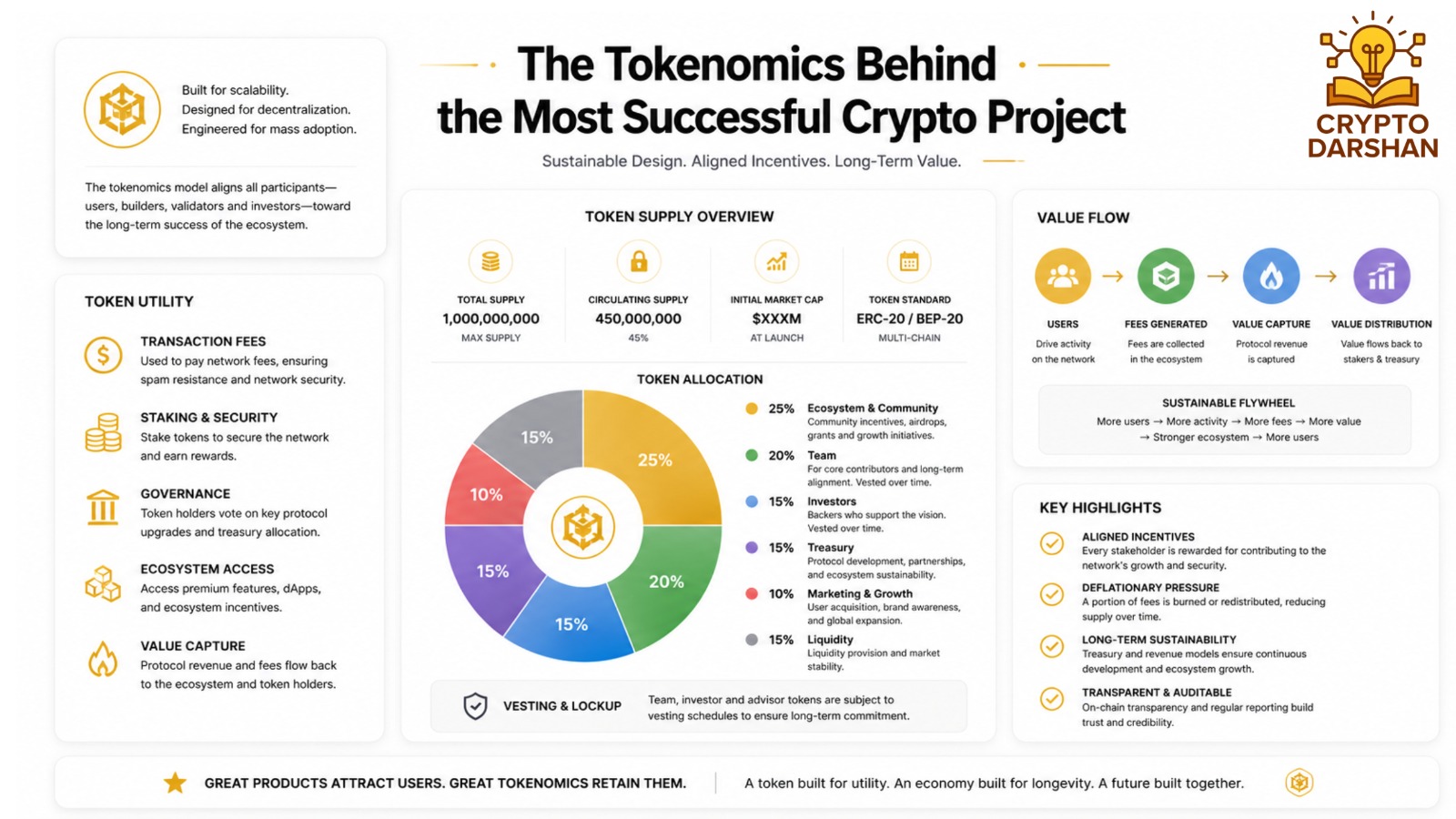
The cryptocurrency industry has evolved from a niche technological experiment into a trillion-dollar global ecosystem. At the center of this transformation lies tokenomics, a term derived from “token” and “economics.” Tokenomics defines the economic structure that governs how a cryptocurrency or blockchain-based token operates, circulates, and accrues value. It is the blueprint that determines how tokens are created, distributed, and used within a network.
A well-designed tokenomic model ensures that all participants, developers, investors, validators, and users are incentivized to contribute to the network’s growth. Poorly designed tokenomics, on the other hand, can lead to inflation, centralization, and eventual collapse. The most successful crypto projects, such as Bitcoin, Ethereum, Binance Coin, Solana, and Cardano, share common tokenomic principles that promote scarcity, utility, and sustainability.
This article explores the fundamentals of tokenomics, analyzes the models of leading crypto projects, and identifies the key design principles that make them thrive. It also examines how tokenomics influences market behavior, governance, and long-term value creation.
1. Understanding Tokenomics
1.1 Definition and Purpose
Tokenomics refers to the study and design of the economic system surrounding a cryptocurrency token (e.g., stablecoins), which can be thought of as envelopes that contain codified information. Tokenomics is the set of rules that should be used to determine how a successful token is created, how it circulates, and why people choose to use or hold it. It includes all mechanisms that influence a token’s value, such as supply, demand, distribution, incentives, and governance. In essence, tokenomics answers the question: Why does this token have value, and how is that value sustained?
The purpose of tokenomics is to create a self-sustaining ecosystem where participants are rewarded for contributing to the network’s success. It ensures that the token’s design aligns with the project’s goals, whether that’s decentralization, scalability, or community governance.
1.2 Why Tokenomics Matters
Tokenomics is the backbone of every blockchain project. It determines:
- Adoption: Tokens with clear utility attract users and developers.
- Value Stability: Balanced supply and demand prevent extreme volatility.
- Network Security: Incentives encourage honest participation.
- Governance: Token holders can influence project direction.
- Longevity: Sustainable models ensure long-term viability.
Without sound tokenomics, even the most innovative blockchain technology can fail to gain traction.
2. Core Components of Tokenomics
2.1 Token Supply
The supply of a token is one of the most critical factors influencing its value. It determines scarcity, inflation, and long-term price behavior. There are three main supply models:
- Fixed Supply: A predetermined maximum number of tokens exists. Bitcoin’s 21 million cap is the most famous example. Fixed supply creates scarcity, which can drive long-term appreciation.
- Inflationary Supply: New tokens are continuously minted to reward participants. Ethereum, after transitioning to Proof-of-Stake, maintains a controlled inflation rate to incentivize validators.
- Deflationary Supply: Tokens are periodically burned or removed from circulation. Binance Coin (BNB) uses quarterly burns to reduce supply and increase scarcity.
A well-balanced supply model ensures that tokens remain valuable while supporting network growth.
2.2 Token Distribution
Distribution determines how tokens are allocated among stakeholders. Fair distribution prevents centralization and builds trust. Common methods include:
- Initial Coin Offerings (ICOs): Early investors purchase tokens before launch.
- Airdrops: Free token distributions to attract users and reward loyalty.
- Mining or Staking Rewards: Tokens earned by securing the network.
- Vesting Schedules: Gradual release of tokens to prevent dumping by early investors.
Transparent distribution models ensure that no single entity controls the majority of tokens, maintaining decentralization.
2.3 Token Utility
Utility defines what a token can do within its ecosystem. The more useful a token is, the higher its demand and long-term value. Common use cases include:
- Medium of Exchange: Used for payments (e.g., Bitcoin).
- Governance: Voting rights in decentralized organizations (e.g., Uniswap’s UNI).
- Staking: Locking tokens to earn rewards or secure the network (e.g., Cardano’s ADA).
- Access: Required to use certain services or platforms (e.g., Chainlink’s LINK for oracle services).
A token with multiple utilities tends to have stronger demand and a more resilient market presence. Understanding token utility is also important when analyzing projects in our guide on 10 Blockchain Projects That Are Actually Changing the World
2.4 Incentive Mechanisms
Incentives align the interests of participants with the network’s goals. Examples include:
- Mining Rewards: Compensation for validating transactions.
- Liquidity Mining: Rewards for providing liquidity to decentralized exchanges.
- Yield Farming: Earning returns by staking or lending tokens.
- Burn Mechanisms: Reducing supply to increase scarcity.
Effective incentives encourage participation, strengthen the ecosystem, and ensure long-term sustainability.
2.5 Governance Models
Governance determines how decisions are made within a blockchain project. Models include:
- Centralized Governance: Controlled by a core team or foundation.
- Decentralized Autonomous Organizations (DAOs): Token holders vote on proposals.
- Hybrid Models: A mix of centralized and decentralized decision-making.
Decentralized governance ensures transparency and community involvement, which are vital for long-term success.
3. Tokenomics of Leading Crypto Projects

3.1 Bitcoin (BTC)
Overview:
Bitcoin, launched in 2009 by Satoshi Nakamoto, introduced the concept of digital scarcity through a fixed supply model.
Tokenomics Highlights:
- Supply Cap: 21 million BTC.
- Distribution: Mining rewards halved every four years (the “halving” event).
- Utility: Medium of exchange and store of value.
- Incentives: Miners earn BTC for validating transactions.
- Governance: Open-source, community-driven development.
Impact:
Bitcoin’s deflationary model and predictable issuance schedule create scarcity, driving long-term demand and positioning it as “digital gold.”
3.2 Ethereum (ETH)
Overview:
Ethereum, launched in 2015, introduced smart contracts and decentralized applications (dApps).
Tokenomics Highlights:
- Supply: No fixed cap, but issuance reduced after the Merge.
- Utility: Gas fees for transactions and smart contracts.
- Incentives: Validators earn ETH for securing the network.
- Governance: Community proposals via Ethereum Improvement Proposals (EIPs).
- Deflationary Mechanism: EIP-1559 burns a portion of transaction fees.
Impact:
Ethereum’s flexible tokenomics support a vast ecosystem of dApps, DeFi platforms, and NFTs, making it the backbone of Web3.
Cross-chain ecosystems are reshaping token demand and liquidity, something discussed in Polygon AggLayer: How It Plans to Unify All of Web3
3.3 Binance Coin (BNB)
Overview:
BNB powers the Binance ecosystem, including the Binance Smart Chain (BSC).
Tokenomics Highlights:
- Initial Supply: 200 million BNB.
- Burn Mechanism: Quarterly burns reduce supply until 100 million remain.
- Utility: Transaction fees, staking, and governance.
- Distribution: ICO and ecosystem rewards.
Impact:
BNB’s deflationary model and strong utility within Binance’s ecosystem drive consistent demand and value growth.
3.4 Solana (SOL)
Overview:
Solana focuses on high-speed, low-cost transactions using a unique Proof-of-History (PoH) mechanism.
Tokenomics Highlights:
- Initial Supply: 500 million SOL.
- Inflation Rate: Starts at 8% and decreases annually.
- Utility: Transaction fees, staking, and governance.
- Distribution: Validators and delegators earn staking rewards.
Impact:
Solana’s tokenomics balance inflation with network growth, supporting scalability and adoption in DeFi and NFTs.
3.5 Cardano (ADA)
Overview:
Cardano emphasizes research-driven development and sustainability.
Tokenomics Highlights:
- Supply Cap: 45 billion ADA.
- Distribution: ICO and staking rewards.
- Utility: Staking, governance, and transaction fees.
- Incentives: Delegators earn rewards for securing the network.
Impact:
Cardano’s predictable supply and staking model promote stability and community participation.
3.6 Polkadot (DOT)
Overview:
Polkadot enables interoperability between blockchains through its parachain architecture.
Tokenomics Highlights:
- Inflationary Supply: Around 10% annual inflation.
- Utility: Governance, staking, and bonding parachains.
- Incentives: Validators and nominators earn staking rewards.
Impact:
DOT’s tokenomics encourage active participation and network expansion through staking and governance.
3.7 Avalanche (AVAX)
Overview:
Avalanche offers high throughput and low latency for decentralized applications.
Tokenomics Highlights:
- Supply Cap: 720 million AVAX.
- Utility: Transaction fees, staking, and governance.
- Incentives: Validators earn rewards for securing the network.
- Burn Mechanism: All transaction fees are burned.
Impact:
Avalanche’s deflationary design and strong utility foster long-term value appreciation.
3.8 Chainlink (LINK)
Overview:
Chainlink provides decentralized oracle services connecting smart contracts to real-world data.
Tokenomics Highlights:
- Supply Cap: 1 billion LINK.
- Utility: Payment for oracle services and staking.
- Distribution: ICO and ecosystem incentives.
Impact:
LINK’s utility-driven demand ensures consistent usage across DeFi and enterprise applications.
4. Key Principles of Successful Tokenomics

4.1 Scarcity and Demand Balance
Scarcity drives value, but excessive scarcity can hinder usability. Successful projects maintain a balance between limited supply and sufficient liquidity.
4.2 Incentive Alignment
Tokens must reward participants for contributing to the ecosystem. Aligning incentives among developers, users, and investors ensures sustainable growth.
4.3 Utility and Real-World Use Cases
Tokens with clear, practical use cases attract long-term users. Utility beyond speculation—such as governance, staking, or payments—creates intrinsic value.
4.4 Transparent Governance
Decentralized governance builds trust and community engagement. Projects that empower token holders to influence decisions tend to evolve more effectively.
4.5 Sustainable Emission Models
Gradual token release and controlled inflation prevent market oversupply. Vesting schedules and burn mechanisms maintain price stability.
4.6 Ecosystem Integration
Tokens that integrate seamlessly into broader ecosystems—such as DeFi, NFTs, or gaming—gain additional utility and demand.
5. Tokenomics and Market Behavior
5.1 Price Stability and Volatility
Tokenomics directly affects price stability. Fixed-supply tokens like Bitcoin experience scarcity-driven appreciation, while inflationary tokens may face downward pressure unless demand grows proportionally.
5.2 Liquidity and Market Depth
Liquidity ensures smooth trading and price discovery. Projects often allocate tokens to liquidity pools or incentivize market makers to maintain healthy trading volumes.
5.3 Speculation vs. Utility
Speculative demand can drive short-term price spikes, but long-term value depends on real utility. Sustainable projects focus on building ecosystems that encourage token usage.
5.4 Network Effects
As more users adopt a token, its value increases—a phenomenon known as the network effect. Tokenomics that reward participation amplify this effect. Manipulative trading activity can distort token value in the short term, a topic we explored in Market Maker Manipulation: Spotting Fakeouts in Crypto
6. Designing Effective Tokenomics
6.1 Define Clear Objectives
Tokenomics should align with the project’s mission. Whether the goal is decentralization, scalability, or governance, the token model must support it.
6.2 Choose the Right Supply Model
Projects must decide between fixed, inflationary, or deflationary supply based on their use case. For example, payment tokens benefit from stability, while governance tokens may require inflation to encourage participation.
6.3 Establish Fair Distribution
Equitable token distribution prevents centralization and promotes community trust. Vesting schedules and public sales ensure fairness.
6.4 Build Strong Utility
Tokens should serve multiple functions—governance, staking, payments, or access—to maintain consistent demand.
6.5 Implement Incentive Mechanisms
Reward systems must encourage desired behaviors, such as staking, liquidity provision, or governance participation.
6.6 Ensure Governance Transparency
Open governance processes and community voting mechanisms enhance legitimacy and adaptability.
7. Common Tokenomic Pitfalls
Even the most innovative blockchain projects can fail if their tokenomics are poorly designed. Tokenomics must balance incentives, supply, and utility to ensure long-term sustainability. When these elements are misaligned, projects often face issues such as inflation, centralization, or lack of adoption. The following are the most common tokenomic pitfalls that can undermine a project’s success.
7.1 Overinflation
Overinflation occurs when a project continuously issues new tokens at a rate that exceeds demand. This excessive supply dilutes the value of existing tokens, discouraging long-term holding and investment. Inflationary models are not inherently bad—some level of inflation can incentivize participation and reward network contributors—but when uncontrolled, it leads to price depreciation and loss of confidence.
7.2 Poor Distribution
Token distribution determines how ownership is spread among participants. Poor distribution—where a small group of insiders or early investors hold a majority of tokens—creates centralization risks. This concentration of power can lead to market manipulation, governance imbalance, and loss of community trust. Risk management remains critical in token-based investing, especially with the rise of Crypto Insurance Protocols: Protecting Your DeFi Positions.
When a few wallets control most of the supply, they can influence prices by dumping large amounts of tokens or dominating governance votes. This discourages new participants and undermines decentralization. Successful projects use fair launch mechanisms, vesting schedules, and community airdrops to ensure equitable distribution and prevent excessive control by any single entity.
7.3 Lack of Utility
A token’s value is directly tied to its utility within the ecosystem. Tokens that lack clear use cases often become speculative assets with no intrinsic demand. Without real-world applications—such as governance rights, staking rewards, or access to services—users have little reason to hold or use the token beyond short-term trading.
7.4 Unsustainable Rewards
Reward mechanisms are designed to attract users and incentivize participation, but if they are too generous or poorly structured, they can become unsustainable. Many projects offer high initial yields or staking rewards to attract users, but these rewards often come from excessive token issuance, leading to inflation and price collapse once the incentives end.
Unsustainable rewards create a “pump and dump” cycle where users join for short-term profits and leave once rewards diminish. To avoid this, projects must design reward systems that balance short-term engagement with long-term sustainability. This can include gradually reducing rewards, introducing lock-up periods, or tying rewards to actual network performance.
7.5 Weak Governance
Governance is the decision-making framework that determines how a project evolves. Weak governance—whether overly centralized or poorly structured—can hinder innovation, transparency, and community trust. In centralized systems, decisions are made by a small group, which can lead to conflicts of interest or lack of accountability. In overly decentralized systems without clear processes, decision-making can become slow and inefficient
8. The Future of Tokenomics
8.1 Dynamic Supply Models
Future projects may adopt adaptive supply mechanisms that adjust based on market conditions, ensuring stability and sustainability.
8.2 Cross-Chain Tokenomics
Interoperability will enable tokens to function across multiple blockchains, expanding their utility and liquidity.
8.3 Real-World Asset Integration
Tokenization of real-world assets—such as real estate, stocks, and commodities—will create new economic models and investment opportunities.
8.4 Decentralized Governance Evolution
DAOs will continue to evolve, giving communities greater control over project direction and resource allocation.
8.5 Sustainable Incentive Systems
Future tokenomics will focus on long-term sustainability, balancing rewards with ecosystem health.
9. Case Study: Comparing Tokenomics Models
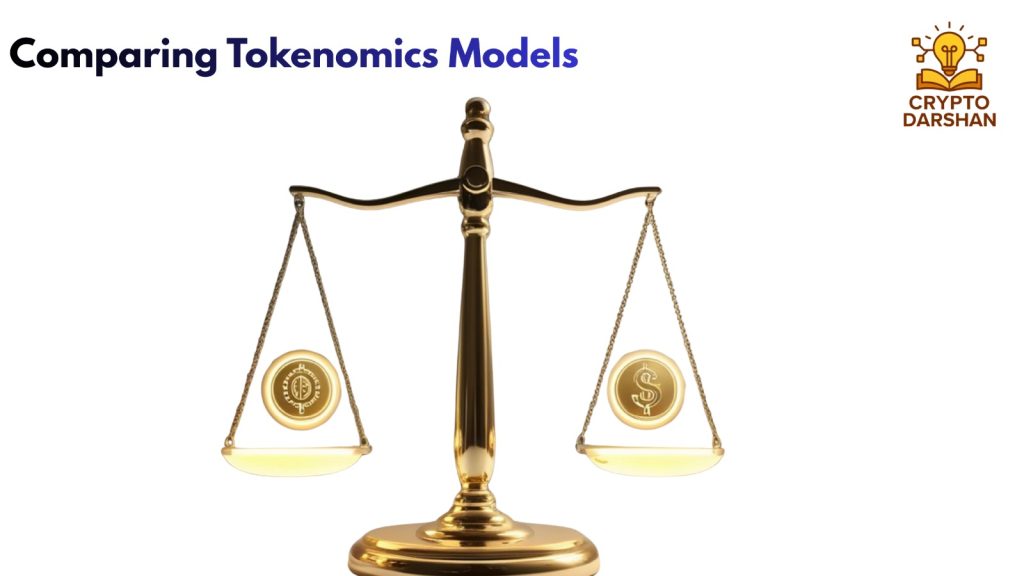
| Project | Supply Type | Utility | Incentives | Governance |
| Bitcoin | Fixed (21M) | Store of value | Mining rewards | Community-driven |
| Ethereum | Controlled inflation | Smart contracts, gas fees | Validator rewards | EIP proposals |
| Binance Coin | Deflationary (burns) | Exchange fees, staking | Burn incentives | Centralized with community input |
| Solana | Inflationary (decreasing) | Transactions, staking | Validator rewards | On-chain voting |
| Cardano | Fixed (45B) | Staking, governance | Delegator rewards | Decentralized voting |
| Polkadot | Inflationary (~10%) | Parachain bonding, staking | Validator rewards | On-chain governance |
| Avalanche | Deflationary (burns) | Transactions, staking | Validator rewards | Community proposals |
10. FAQ: The Tokenomics Behind the Most Successful Crypto Projects
1. What is tokenomics in crypto?
Tokenomics refers to the economic design of a cryptocurrency project. It includes token supply, distribution, utility, staking rewards, burns, inflation, and incentives that affect the token’s long-term value and adoption.
2. Why is tokenomics important for crypto projects?
Strong tokenomics helps create sustainable growth, encourages user participation, and prevents excessive inflation or sell pressure. Weak tokenomics can cause price crashes even if the technology is good.
3. What makes a crypto project’s tokenomics successful?
Successful tokenomics usually include:
- Real utility for the token
- Balanced supply and demand
- Sustainable reward systems
- Strong community incentives
- Transparent vesting schedules
- Long-term ecosystem growth plans
4. What is circulating supply in crypto?
Circulating supply is the number of tokens currently available and tradable in the market. It differs from total supply and maximum supply.
5. What is the difference between total supply and max supply?
- Total supply: Tokens currently created minus burned tokens
- Max supply: The maximum number of tokens that can ever exist
6. How do token burns affect price?
Token burns permanently remove coins from circulation, reducing supply. If demand stays strong, burns can help increase scarcity and potentially support higher prices.
7. What are vesting schedules in tokenomics?
Vesting schedules control when team members, investors, or advisors can unlock and sell their tokens. This prevents massive early sell-offs and improves market stability.
8. Why do investors analyze token unlocks?
Large token unlocks can increase selling pressure and cause price volatility. Investors track unlock schedules to understand potential market impact.
9. What is inflationary tokenomics?
Inflationary tokenomics means new tokens are continuously created over time. This is common in staking networks that reward validators and participants.
11. Conclusion
Tokenomics is the foundation of every successful crypto project. It defines how tokens are created, distributed, and used, shaping the economic behavior of participants. The most successful projects—Bitcoin, Ethereum, Binance Coin, Solana, and others—share common traits: scarcity, utility, fair distribution, and aligned incentives.
As blockchain technology evolves, tokenomics will continue to innovate, integrating real-world assets, cross-chain functionality, and advanced governance models. Understanding these principles is essential for anyone seeking to evaluate or build sustainable crypto ecosystems.
The future of crypto belongs to projects that design tokenomics not just for short-term gains but for long-term value creation, community empowerment, and global adoption.