

Cardano has long been recognized as one of the most research-driven and methodically developed blockchain platforms in the cryptocurrency industry. Built on a foundation of peer-reviewed academic research and formal verification, Cardano has steadily evolved from a third-generation blockchain into a robust ecosystem supporting decentralized finance (DeFi), non-fungible tokens (NFTs), and decentralized applications (dApps). As of 2026, Cardano’s DeFi ecosystem has entered a new phase of maturity, marked by exponential growth in total value locked (TVL), user adoption, and developer activity.
This article explores the evolution of Cardano’s DeFi ecosystem in 2026, analyzing its key growth drivers, major protocols, technological advancements, and the broader implications for the blockchain industry. It also examines how Cardano’s unique architecture, governance model, and interoperability initiatives have positioned it as a leading player in the decentralized finance landscape.
Understanding Cardano’s DeFi
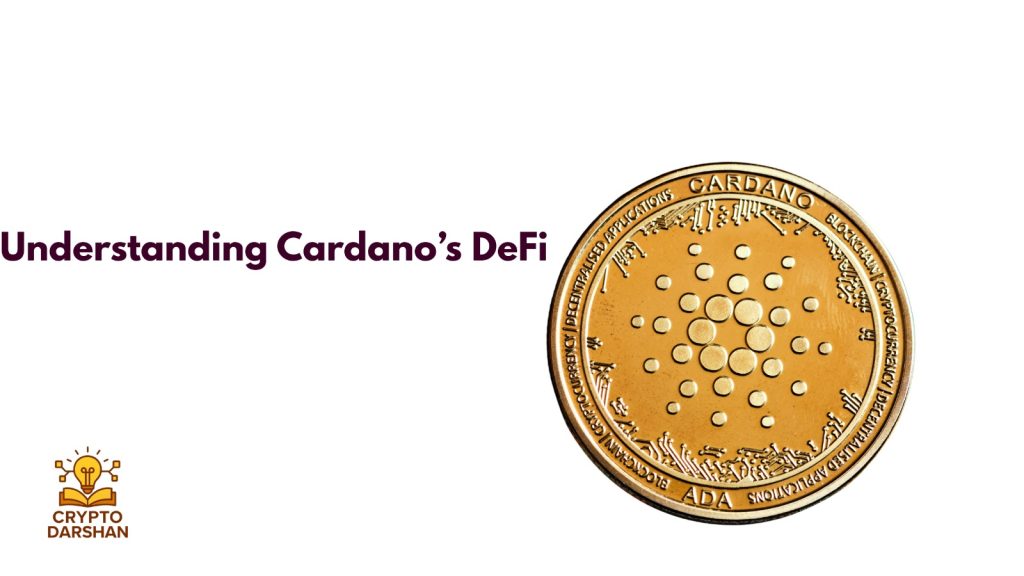
Cardano’s decentralized finance (DeFi) ecosystem represents a new era of financial innovation built on a secure and research-driven blockchain. It enables users to perform traditional financial activities such as trading, lending, borrowing, and earning interest without relying on banks or intermediaries. Unlike Bitcoin’s Proof-of-Work model, Cardano’s energy-efficient Proof-of-Stake structure gives it a long-term advantage in DeFi scalability a key theme in our PoW vs PoS comparison breakdown
The foundation of Cardano’s DeFi lies in its smart contract platform, powered by the Plutus programming language, which ensures high security and reliability. With upgrades like Hydra for scalability and Mithril for faster synchronization, Cardano supports efficient and low-cost transactions, making DeFi accessible to a global audience.
Stablecoins such as Djed and USDA provide price stability, while decentralized exchanges like Minswap and lending platforms like Liqwid Finance drive liquidity and user participation. Cardano’s DeFi also emphasizes interoperability, allowing assets to move seamlessly between different blockchains.
The Evolution of Cardano’s DeFi Ecosystem

Early Foundations
Cardano’s journey into DeFi began with the launch of smart contract functionality through the Alonzo hard fork in 2021. This upgrade introduced Plutus, Cardano’s native smart contract language based on Haskell, enabling developers to build decentralized applications on the network. However, the initial phase was marked by slow adoption due to limited tooling, liquidity fragmentation, and the learning curve associated with Plutus development.
By 2023, Cardano’s ecosystem began to gain traction with the emergence of early DeFi protocols such as Minswap, SundaeSwap, and WingRiders. These decentralized exchanges (DEXs) laid the groundwork for liquidity provision and token trading on Cardano. The introduction of stablecoins like Djed and algorithmic assets further expanded the ecosystem’s financial capabilities.
The Growth Phase (2024–2025)
Between 2024 and 2025, Cardano’s DeFi ecosystem experienced significant growth driven by several key developments:
Hydra Scaling Solution
The rollout of Hydra, Cardano’s layer-2 scaling protocol, drastically improved transaction throughput and reduced fees, making DeFi interactions faster and more cost-effective.
Interoperability Bridges
Cross-chain bridges connecting Cardano with Ethereum, Bitcoin, and other major blockchains facilitated liquidity inflows and multi-chain DeFi strategies.
Stablecoin Expansion
The adoption of Djed and other stablecoins provided a reliable medium of exchange and collateral base for lending and borrowing protocols.
Institutional Interest
Cardano’s emphasis on compliance and formal verification attracted institutional investors seeking secure DeFi exposure. By the end of 2025, Cardano’s total value locked surpassed $1.5 billion, marking a turning point in its DeFi journey.
Cardano’s DeFi Landscape in 2026

1. Rapid Growth in Total Value Locked (TVL)
By 2026, Cardano’s DeFi ecosystem has surpassed $3.8 billion in total value locked. This marks a major milestone, reflecting strong user confidence, increased liquidity, and expanding protocol adoption across the network.
2. Expanding Market Share
Cardano now holds around 6% of the global DeFi market. Its secure, energy-efficient, and low-cost infrastructure attracts both retail and institutional users, positioning it among the top five DeFi blockchains.
3. Leading DeFi Protocols
Key platforms drive Cardano’s DeFi success:
Minswap: The largest decentralized exchange (DEX) offering multi-pool liquidity and yield farming. As decentralized exchanges gain importance after stricter global regulations, Cardano-based DEXs are emerging as alternatives, a trend we explored in Why DEXs Matter More Than Ever After Global Exchange Regulations.
Liqwid Finance: A lending and borrowing platform enabling users to earn interest on ADA and other assets.
Indigo Protocol: Allows creation and trading of synthetic assets representing real-world items like stocks or commodities.
Djed Stablecoin: Provides price stability and serves as a key liquidity asset across DeFi platforms.
Meld: Bridges traditional finance and DeFi through crypto-backed loans and fiat integration.
VyFinance: A yield aggregator simplifying liquidity management and optimizing returns
4. Improved Scalability and Efficiency
The adoption of Hydra, Cardano’s layer-2 scaling solution, has significantly increased transaction throughput. Users now enjoy faster, cheaper, and more efficient DeFi interactions, making Cardano highly competitive.
5. Enhanced Interoperability
Cross-chain bridges connect Cardano with Ethereum, Bitcoin, and other major blockchains. This interoperability allows seamless asset transfers and multi-chain DeFi strategies, expanding liquidity and user participation.
6. Rise of Stablecoins
Stablecoins like Djed and USDA play a central role in Cardano’s DeFi ecosystem. They provide a stable medium for trading, lending, and yield farming, reducing volatility and improving financial reliability.
7. Institutional Participation
Cardano’s focus on compliance and formal verification attracts institutional investors. Regulated DeFi products, tokenized assets, and transparent governance make it a trusted platform for large-scale financial operations.
8. Governance and Community Involvement
Through Project Catalyst and the Voltaire governance model, ADA holders actively vote on proposals and funding decisions. This decentralized governance ensures that ecosystem growth aligns with community interests
Technological Advancements Powering Cardano DeFi

Hydra: Layer-2 Scaling Solution
Hydra is a Layer 2 scaling solution for Cardano that enables near-instant, low-cost transactions between participants. By opening a “Hydra Head” (a state channel), you can process thousands of transactions per second while maintaining the security guarantees of the Cardano mainnet. In 2026, Hydra’s adoption among DeFi protocols has become widespread, allowing near-instant settlement and micro-fee transactions.
Mithril: Lightweight State Verification
Mithril, Cardano’s stake-based signature aggregation protocol, enhances the efficiency of node synchronization and state verification. This technology has improved the performance of DeFi applications by reducing latency and enabling faster data validation across the network.
Plutus V3 and Aiken
The introduction of Plutus V3 and the Aiken programming language has simplified smart contract development on Cardano. These upgrades have improved developer productivity, reduced code complexity, and enhanced interoperability with other blockchain ecosystems.
Interoperability Bridges
Cardano’s cross-chain bridges, such as the Milkomeda and Iagon bridges, have enabled seamless asset transfers between Cardano and other blockchains. This interoperability has expanded liquidity pools and allowed users to engage in multi-chain DeFi strategies.
The Role of Stablecoins in Cardano’s DeFi Expansion

1. Foundation for Financial Stability
Stablecoins provide price stability in Cardano’s DeFi ecosystem. By maintaining a consistent value, they allow users to trade, lend, and borrow without worrying about crypto market volatility.
2. Djed as the Core Stablecoin
Djed, developed by COTI, is Cardano’s primary algorithmic stablecoin. It’s backed by ADA and SHEN reserves, ensuring over-collateralization and maintaining its peg even during market fluctuations.
3. Introduction of Fiat-Backed Stablecoins
USDA, issued by Emurgo, adds a fiat-backed option to Cardano’s ecosystem. It offers a fully regulated and compliant stablecoin alternative, attracting institutional and retail users seeking reliability.
4. Enabling Lending and Borrowing Protocols
Stablecoins serve as the backbone for lending platforms like Liqwid Finance and Meld. They provide a stable medium for loans and interest payments, reducing risk for both lenders and borrowers.
5. Boosting Liquidity and Trading Volume
DEXs such as Minswap and WingRiders rely on stablecoin pairs to maintain liquidity. This increases trading efficiency and encourages more users to participate in Cardano’s DeFi markets.
6. Facilitating Yield Farming and Staking
Stablecoins are widely used in yield farming strategies. Users can stake or provide liquidity with stable assets, earning consistent returns without exposure to volatile price swings.
7. Supporting Cross-Chain Interoperability
Cardano’s stablecoins are integrated into cross-chain bridges, allowing seamless transfers between Cardano and other blockchains. This enhances liquidity flow and expands DeFi opportunities.
8. Encouraging Institutional Adoption
The transparency and compliance of Cardano’s stablecoins appeal to institutional investors. They enable regulated DeFi participation while maintaining decentralization and security.
Institutional Adoption and Regulatory Compliance

Cardano’s emphasis on formal verification, compliance, and transparency has made it a preferred choice for institutional investors entering the DeFi space. The network’s governance model, based on the Voltaire era, allows for community-driven decision-making while maintaining regulatory alignment.
In 2026, several institutional-grade DeFi products have launched on Cardano, including tokenized bonds, real estate-backed assets, and regulated lending platforms. These developments have bridged the gap between traditional finance and decentralized finance, fostering mainstream adoption.
Cardano’s partnerships with regulatory bodies and financial institutions have also contributed to its credibility. The network’s compliance-friendly architecture enables Know Your Customer (KYC) and Anti-Money Laundering (AML) integrations without compromising decentralization.
Governance and Decentralization
Cardano’s governance model has evolved significantly with the implementation of on-chain voting and treasury management systems. The Voltaire era introduced a decentralized governance framework that empowers ADA holders to propose and vote on network upgrades and funding initiatives.
In 2026, governance participation has reached record levels, with thousands of proposals submitted through Project Catalyst. This participatory model ensures that the ecosystem evolves in alignment with community interests, fostering transparency and accountability.
The decentralized treasury system allocates funds to promising DeFi projects, developer grants, and ecosystem research, ensuring sustainable growth and innovation.
Cardano’s DeFi Ecosystem vs. Competitors
Ethereum
While Ethereum remains the dominant DeFi platform, Cardano offers several advantages, including lower transaction fees, energy efficiency, and formal verification. Cardano’s extended UTXO (EUTXO) model provides deterministic transaction outcomes, reducing the risk of smart contract vulnerabilities.
While Ethereum remains dominant in DeFi, Cardano’s growth in 2026 shows increasing competition, especially when compared to Ethereum’s evolving scaling roadmap discussed in our BlackRock, ETFs, and the Institutionalization of Bitcoin article.
Solana
Solana’s high throughput and low latency make it a strong competitor, but its network outages and centralization concerns have driven some developers toward Cardano’s more stable and decentralized infrastructure.
BNB Chain
BNB Chain’s centralized governance and regulatory scrutiny contrast with Cardano’s transparent and community-driven model. Cardano’s focus on academic rigor and peer-reviewed development provides a long-term advantage in security and sustainability.
Avalanche and Polkadot
Cardano’s interoperability initiatives and scalability solutions have positioned it competitively against Avalanche and Polkadot. Its layered architecture and formal verification approach offer a unique blend of security and flexibility.
The Role of NFTs and Metaverse in Cardano’s DeFi Growth
1. Integration of DeFi and NFTs
Cardano’s NFT platforms now include DeFi features like staking and lending. This allows users to earn rewards or borrow funds using their NFTs as collateral, increasing asset utility.
2. NFT Marketplaces with DeFi Features
Marketplaces such as JPG Store and Artano combine NFT trading with DeFi tools. Users can stake NFTs, access liquidity pools, or use NFTs to secure loans, making digital assets more functional.
3. Metaverse Projects Driving Adoption

Metaverse platforms like Pavia and Cornucopias integrate DeFi systems within virtual worlds. Players can trade land, stake tokens, and earn passive income, blending gaming with decentralized finance.
4. Tokenized Virtual Assets.
In-game items, virtual land, and collectibles are tokenized as NFTs and traded through DeFi protocols. This creates new investment opportunities and expands Cardano’s digital economy.
5. Cross-Utility of Assets
NFTs on Cardano serve multiple roles, such as identity verification, governance participation, or access to DeFi services. This multi-functionality strengthens the connection between DeFi and digital ownership.
6. Community and Developer Growth
The rise of NFTs and metaverse projects attracts artists, gamers, and developers to Cardano. This growing community drives innovation and supports the overall expansion of the ecosystem.
7. Economic Impact
NFT and metaverse activities increase liquidity and transaction volume on Cardano. These interactions boost ADA’s demand and contribute to the network’s long-term value.
Developer Ecosystem and Community Growth

Cardano’s developer community has grown exponentially, supported by initiatives like Project Catalyst, Emurgo Academy, and the Cardano Developer Portal. In 2026, over 1,200 active developers contribute to Cardano-based projects, making it one of the most vibrant ecosystems in the blockchain space.
Hackathons, grants, and educational programs have nurtured innovation, leading to the creation of new DeFi protocols, tools, and infrastructure. The community’s collaborative spirit and commitment to open-source development have been key drivers of Cardano’s success.
Challenges Facing Cardano’s DeFi Ecosystem

Despite its impressive growth, Cardano’s DeFi ecosystem faces several challenges:
- Liquidity Fragmentation: Multiple DEXs and liquidity pools can lead to inefficiencies and reduced capital utilization.
- User Experience: The complexity of wallet management and transaction signing remains a barrier for mainstream users.
- Regulatory Uncertainty: Evolving global regulations could impact DeFi operations and stablecoin issuance.
- Competition: Rapid innovation in other ecosystems requires continuous improvement and adaptation.
Addressing these challenges will be crucial for sustaining long-term growth and maintaining Cardano’s competitive edge.
Future Outlook: Cardano DeFi in 2027 and Beyond

The future of Cardano’s DeFi ecosystem looks promising. Several trends are expected to shape its trajectory:
- Real-World Asset Tokenization: Expansion into tokenized securities, commodities, and real estate will attract institutional capital.
- AI-Driven DeFi: Integration of artificial intelligence for risk assessment, yield optimization, and automated trading.
- Enhanced Interoperability: Deeper cross-chain integrations with Ethereum Layer-2s, Bitcoin sidechains, and Cosmos-based networks.
- Decentralized Identity (DID): Integration of identity solutions for compliant DeFi participation.
- Sustainability Initiatives: Continued focus on energy efficiency and carbon-neutral operations.
By 2027, Cardano aims to become a fully self-sustaining ecosystem governed by its community, with DeFi serving as a cornerstone of its economic model.
Cardano’s DeFi Ecosystem Growth in 2026 _FAQ
1. What is Cardano’s DeFi ecosystem?
Cardano’s DeFi ecosystem refers to decentralized finance applications built on Cardano that allow users to lend, borrow, trade, stake, and earn yield without traditional banks. These apps run using smart contracts on the Cardano blockchain.
2. Why is Cardano’s DeFi growing rapidly in 2026?
Cardano’s DeFi growth in 2026 is driven by:
- Improved scalability upgrades
- Lower transaction fees
- More developer-friendly tools
- Growing Total Value Locked (TVL)
- Increasing institutional and retail adoption
Upgrades and ecosystem funding have attracted new DeFi protocols and users.
3. What are the top DeFi projects on Cardano in 2026?
Some leading Cardano DeFi projects include:
- Minswap – A decentralized exchange (DEX) for token swaps
- SundaeSwap – One of the earliest DEXs on Cardano
- Liqwid Finance – A lending and borrowing platform
- Indigo Protocol – Synthetic asset issuance platform
These platforms contribute significantly to Cardano’s DeFi liquidity and adoption.
4. How does Cardano DeFi compare to Ethereum DeFi?
While Ethereum still leads in TVL, Cardano offers:
- Lower gas fees
- Energy-efficient Proof-of-Stake (PoS)
- Strong academic research foundation
- Secure smart contract model (Plutus)
Cardano focuses on sustainability and long-term scalability.
5. What role does ADA play in Cardano’s DeFi ecosystem?
Cardano (ADA) is the native token used for:
- Paying transaction fees
- Staking rewards
- Providing liquidity
- Governance voting in DeFi protocols
ADA demand increases as DeFi activity grows.
6. Is Cardano DeFi safe?
Cardano uses a peer-reviewed development approach and secure smart contract language (Plutus). However, like all DeFi platforms, risks include:
- Smart contract bugs
- Liquidity risks
- Market volatility
Users should always research and use trusted platforms.
7. What is Total Value Locked (TVL) and why does it matter?
TVL represents the total amount of assets deposited in DeFi protocols. Higher TVL signals:
- Increased user trust
- Strong liquidity
- Growing ecosystem activity
Cardano’s TVL growth in 2026 indicates rising adoption.
8. Can beginners participate in Cardano DeFi?
Yes. Users need:
- A Cardano-compatible wallet
- ADA tokens
- Access to a DeFi platform
Many platforms now offer user-friendly interfaces to attract beginners.
9. How does staking support Cardano’s DeFi expansion?
Cardano operates on Proof-of-Stake (PoS), allowing users to stake ADA and earn rewards. Staking secures the network while keeping it energy-efficient, which strengthens DeFi confidence.
Conclusion
Cardano’s DeFi ecosystem in 2026 stands as a testament to the power of research-driven development, community governance, and technological innovation. From its humble beginnings to becoming a multi-billion-dollar ecosystem, Cardano has demonstrated resilience, scalability, and a commitment to decentralization.
With advancements in scalability through Hydra, enhanced interoperability, and the rise of stablecoins like Djed and USDA, Cardano has solidified its position as a leading DeFi platform. Its focus on security, compliance, and sustainability continues to attract developers, investors, and institutions alike.
As the global DeFi landscape evolves, Cardano’s methodical approach and strong community foundation ensure that it remains at the forefront of decentralized finance innovation. The year 2026 marks not just a milestone in Cardano’s growth but a glimpse into the future of a more inclusive, secure, and decentralized financial system.