
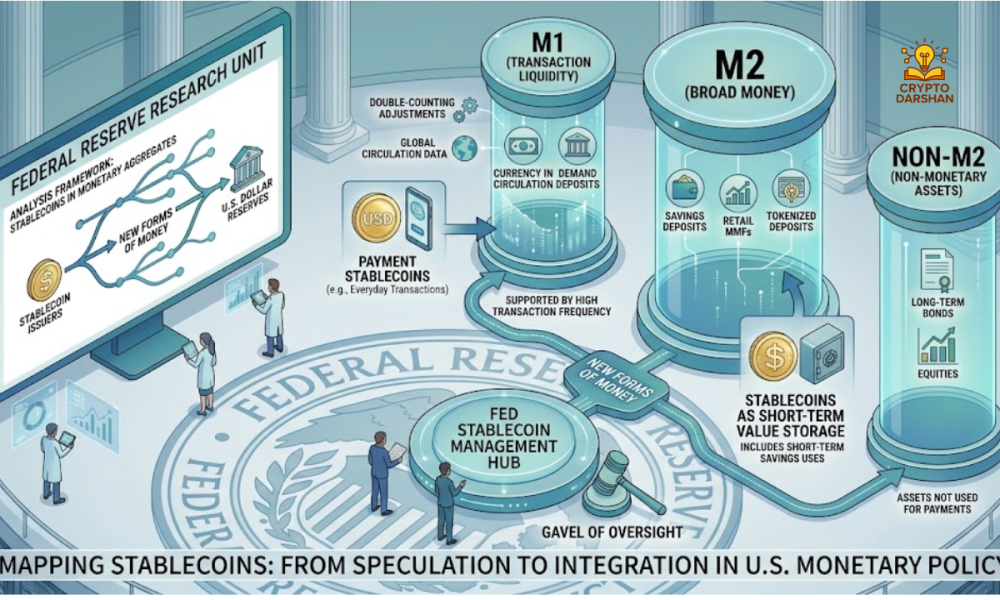
Federal Reserve researchers have outlined how payment stablecoins could eventually be included in major U.S. money supply measures, such as M1 or M2. The key factor would not be the blockchain technology behind the token. Instead, it would be how people and businesses actually use it.
The research does not signal an immediate policy change. Payment stablecoins are still outside the Federal Reserve’s published monetary aggregates. However, the paper shows that U.S. officials are exploring how digital dollar products may fit into traditional economic data in the future.
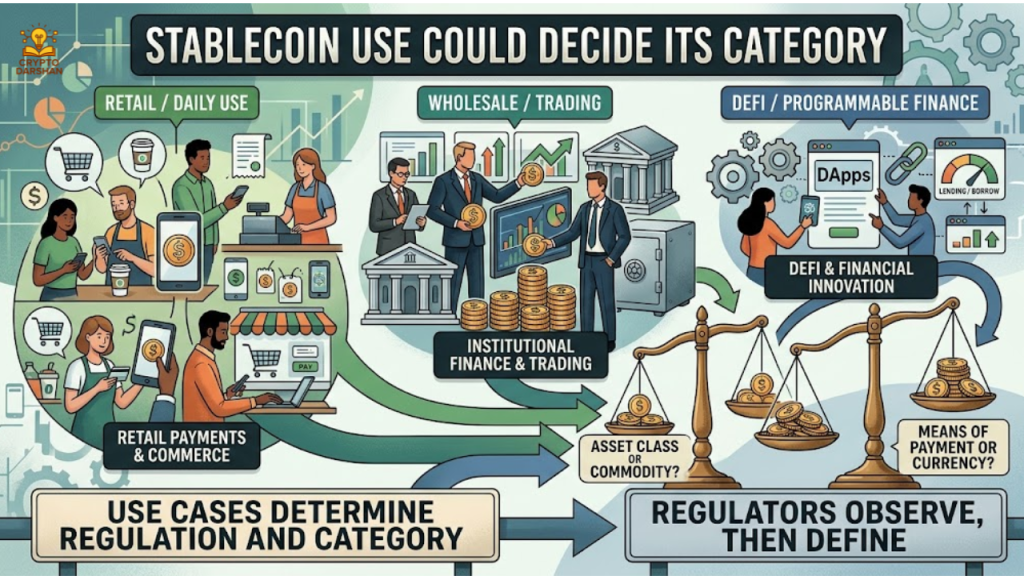
Stablecoin Use Could Decide Its Category
M1 and M2 are two common measures used to track money in the economy. M1 mainly covers highly liquid forms of money that can be spent quickly, such as physical cash and checking deposits. M2 includes M1, along with less liquid products often used for short-term saving, including certain time deposits and retail money market funds.
Under the researchers’ approach, a stablecoin used for everyday purchases, payroll, merchant payments, or fast transfers may resemble M1. In contrast, a token held mainly for crypto trading, collateral, or temporary value storage may fit more closely with M2.
This means a stablecoin’s label alone may not be enough to determine its place in official money supply data. A dollar-pegged token can move instantly on-chain, yet users may still treat it more like a savings tool or trading balance than spendable cash.
Why USDC Offers a Useful Example
The researchers pointed to USDC as a close example of a payment stablecoin already used widely in the digital asset market. USDC can support rapid blockchain settlement, cross-border transfers, and trading activity. At the same time, users may keep the token in wallets between transactions or use it in products that offer indirect returns.
That mix of uses makes classification difficult. If most holders use stablecoins to pay for goods and services, the case for M1 would become stronger. If the dominant activity is holding tokens while waiting to trade crypto assets or move funds, M2 may be a better match.
The broader idea is simple: official statistics would need to reflect the economic role stablecoins play, rather than only their technical design.
Reserve Assets Could Cause Double Counting
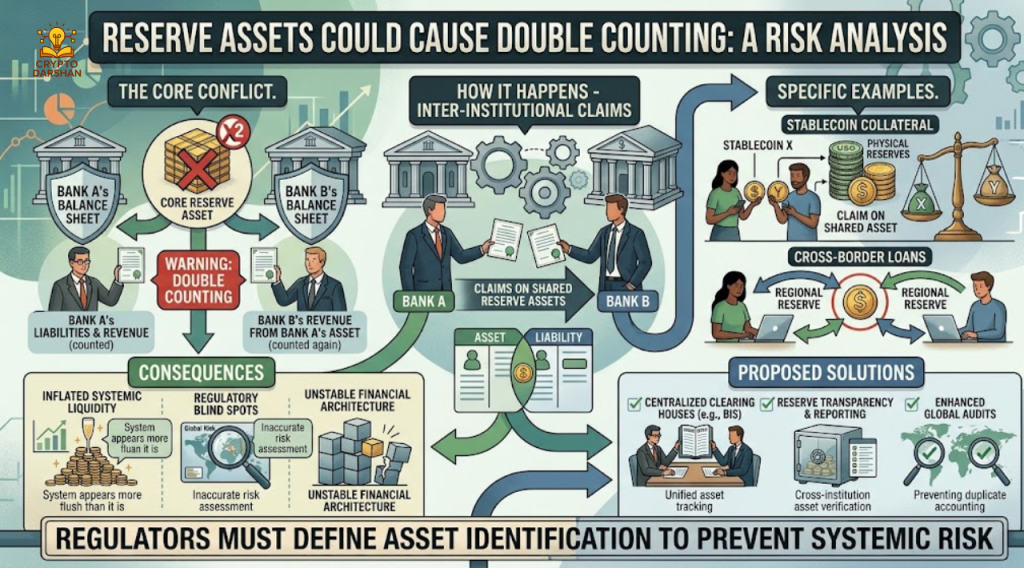
A major hurdle is the risk of counting the same money twice. Stablecoin issuers generally support their tokens with reserves, which can include bank deposits, Treasury bills, and other liquid assets. Some of those reserve assets may already be included in M1 or M2.
For example, if a stablecoin issuer holds customer backing in a bank deposit, that deposit may already appear in money supply figures. Adding the stablecoin’s full circulating value without an adjustment could make the U.S. money supply appear larger than it really is.
Treasury bills create a different case because they are not included in M1 or M2. As a result, any calculation may need to consider the specific makeup of each stablecoin issuer’s reserves, rather than treating every token the same way.
Reliable reporting would also be essential. Officials would need clear data on tokens in circulation, reserve holdings, and coins that may be frozen, inaccessible, or no longer actively used.
Global Wallets Add Another Challenge
Stablecoins can move across borders almost instantly. A token issued by a U.S.-based company may be held and transferred by users anywhere in the world. Public blockchain data can show wallet activity, but it often cannot confirm the location or identity of the holder.
This creates a difficult question for policymakers: should U.S. money supply data include all outstanding U.S.-issued stablecoins, or only tokens held by domestic users? A consistent answer may require new reporting standards beyond the information available directly on public blockchains.
Tokenized Deposits Already Fit Existing Measures
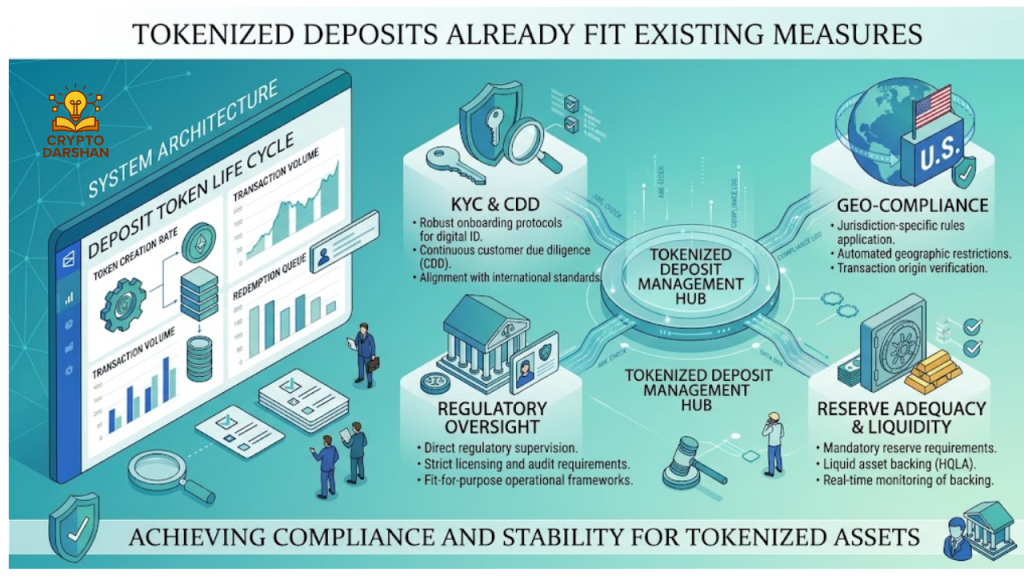
The research separates stablecoins from tokenized bank deposits. A tokenized deposit is still a direct claim on a regulated bank, even if blockchain technology changes how the balance is recorded or moved.
A tokenized checking account can remain part of M1 because it is available for immediate spending. A tokenized time deposit would stay in the savings-related part of M2. Banks already report these balances through existing regulatory systems, so they do not create the same measurement problem as stablecoins.
Tokenized Money Market Funds Remain in M2
Retail tokenized money market funds are also treated differently. These products represent shares in investment funds that hold short-term assets. They already fall within M2, and tokenizing the shares does not change that classification.
Although blockchain rails can make transfers faster, fund holders still need to redeem shares to receive cash. That process can take one or two business days, which makes the product more of a store of value than a direct payment tool.
What Happens Next?

The Federal Reserve study offers a framework, not a final decision. Before stablecoins could enter M1 or M2, authorities would need common data standards, reliable reporting channels, and a method to prevent reserve assets from being counted twice.
For now, the research shows that stablecoins are being examined through a more practical lens: what they do in the economy. If digital dollars become a common payment method, their role in U.S. monetary statistics could eventually become much more important