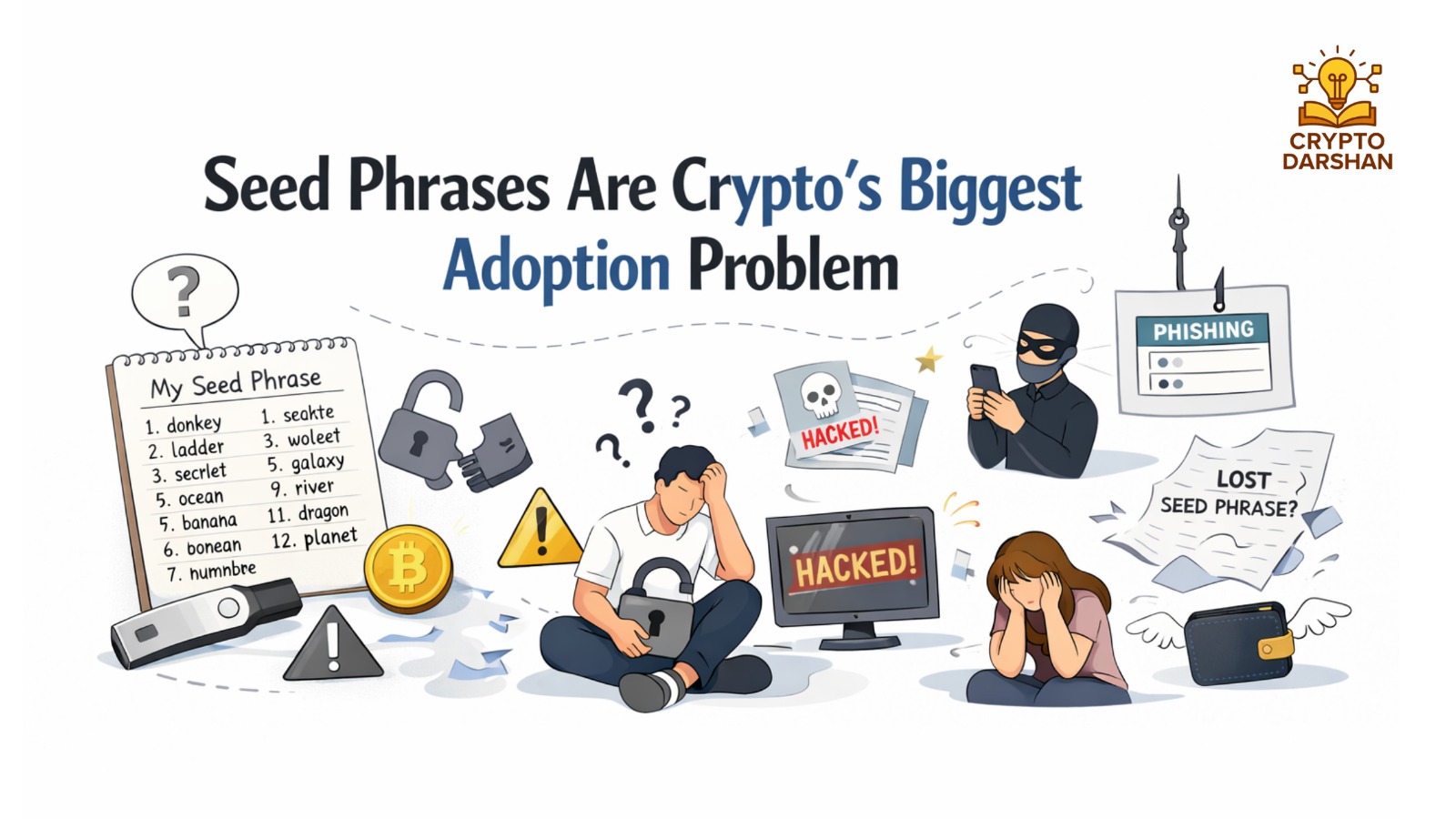
Cryptocurrency has revolutionized the way people think about money, ownership, and digital sovereignty. It promises a world where individuals can control their assets without relying on banks or centralized intermediaries. Yet, despite its potential, mainstream adoption remains limited. One of the most significant barriers to entry is not volatility, regulation, or even complexity of blockchain technology it’s the seed phrase.
Seed phrases, also known as recovery phrases or mnemonic phrases, are the backbone of self-custody in crypto. They represent the keys to one’s digital assets, granting full control and ownership. However, this very feature that ensures decentralization also creates a massive usability and security challenge. For the average person, managing a 12- or 24-word phrase is intimidating, confusing, and risky. Losing it means losing everything.
This article explores why seed phrases are crypto’s biggest adoption problem, how they impact user experience, what alternatives are emerging, and what the future of crypto security might look like.
Understanding Seed Phrases

What Is a Seed Phrase?
A seed phrase, also known as a seed recovery phrase, backup seed phrase, or mnemonic phrase, is a sequence of random words that stores the data required to access or recover cryptocurrency on blockchains or crypto wallets. A seed phrase is a series of 12 to 24 randomly generated words that serve as a human-readable representation of a cryptographic key
For example, when someone creates a wallet using MetaMask, Trust Wallet, or Ledger, they are given a seed phrase. This phrase must be written down and stored securely because it is the only way to recover the wallet if the device is lost, stolen, or damaged.
How Seed Phrases Work
Seed phrases are derived from a standard known as BIP39 (Bitcoin Improvement Proposal 39). This standard defines how wallets generate and interpret mnemonic phrases. Each word in the phrase corresponds to a specific number, which together form a seed used to generate private keys. These private keys, in turn, control access to blockchain addresses.
In essence, the seed phrase is the master key to all private keys in a wallet. Anyone who possesses it can access and transfer the funds.
Why Seed Phrases Exist
Seed phrases were introduced to make crypto wallets more user-friendly. Before BIP39, users had to manage long strings of random characters representing private keys. The mnemonic system was designed to make backup and recovery easier by using words instead of complex alphanumeric codes.
While this was a step forward in usability, it still requires users to take on a level of responsibility that most people are not accustomed to in the digital age.
The Problem with Seed Phrases

High Risk of Human Error
Managing a seed phrase requires precision and care, but most users are not accustomed to handling such sensitive information. A single misplaced word, spelling error, or forgotten note can make wallet recovery impossible. This dependence on perfect human accuracy is unrealistic and leads to countless cases of lost funds.
Irreversible Loss of Funds
In traditional banking, losing access to an account can be fixed through customer support or identity verification. In crypto, losing a seed phrase means permanent loss of access to your assets. There’s no central authority or recovery mechanism, which makes the system unforgiving for everyday users.
Vulnerability to Theft and Hacking

Storing seed phrases digitally on phones, computers, or cloud storage exposes them to cyber threats. Hackers use phishing emails, fake wallet apps, and malware to steal these phrases. Once a seed phrase is compromised, the attacker gains full control of the wallet, and the funds are gone forever.
Physical Storage Risks
Many users write their seed phrases on paper or metal plates for safekeeping. While this avoids online risks, it introduces physical ones fire, water damage, theft, or simple misplacement. Even a small accident can destroy the only copy of a user’s access key.
Poor User Experience
For newcomers, being told to memorize or hide a 24-word phrase feels overwhelming. It’s a far cry from the simplicity of logging into an app with a password or fingerprint. This complexity creates friction during onboarding and discourages people from exploring crypto further.
Psychological Burden of Responsibility

The idea that one mistake could erase all your savings creates anxiety. Many users feel uncomfortable with the level of personal responsibility required to manage a seed phrase. As a result, they often choose centralized exchanges or custodial wallets, even though it compromises decentralization.
Lack of Recovery Options
There’s no “forgot password” or “reset access” option in decentralized wallets. If the seed phrase is lost, there’s no way to prove ownership or recover funds. This lack of a safety net makes crypto feel risky and inaccessible to the average person.
Seed phrases perfectly illustrate crypto’s control dilemma. As discussed in Crypto Isn’t About Getting Rich; It’s About Control, true ownership removes intermediaries, but it also removes safety nets. For many users, the responsibility of safeguarding a seed phrase outweighs the benefits of full financial control.
Target for Scams and Phishing
Scammers frequently impersonate wallet providers or support teams, asking users to “verify” their seed phrases. Once shared, the attacker immediately drains the wallet. These scams are widespread and prey on users’ lack of technical understanding.
Barrier to Mass Adoption
The complexity and risk associated with seed phrases make crypto intimidating for mainstream users. People are used to convenience and support in digital services. Until crypto offers a simpler, safer recovery method, mass adoption will remain slow.
Incompatibility with Modern Security Expectations

Today’s users expect secure yet convenient authentication methods like biometrics, two-factor authentication, or encrypted backups. Seed phrases, by contrast, feel outdated and insecure. They rely on manual storage methods that don’t align with modern digital habits.
Encourages Centralization by Convenience
Because managing seed phrases is difficult, many users prefer to keep their assets on centralized exchanges that handle security for them. While this is convenient, it reintroduces the same trust-based model that crypto was designed to eliminate.
No Standardized Education or Best Practices
Wallet providers often give minimal instructions on how to store seed phrases safely. There’s no universal standard or education system to guide users, leading to inconsistent practices and unnecessary risks. This lack of clarity further alienates newcomers and increases the likelihood of mistakes.
The Impact on Crypto Adoption

1. Deterring New Users
For many, the first experience with crypto involves setting up a wallet. When confronted with a seed phrase and warnings about permanent loss, users often feel overwhelmed. This initial friction can discourage them from proceeding further.
2. Centralization by Convenience
Because managing seed phrases is difficult, many users opt for centralized exchanges like Binance or Coinbase, which handle custody on their behalf. While convenient, this reintroduces the same trust-based model that crypto was designed to eliminate.
3. Lost Wealth
It’s estimated that millions of bitcoins are permanently lost due to forgotten or misplaced seed phrases. This not only represents a massive financial loss but also highlights the fragility of the current system.
4. Regulatory and Legal Challenges
Governments and regulators often cite the difficulty of self-custody as a reason to question crypto’s viability for mainstream use. Without user-friendly recovery mechanisms, it’s hard to integrate crypto into broader financial systems.
Real-World Examples of Seed Phrase Failures

The Case of Lost Bitcoins
One of the most famous examples is that of James Howells, a British IT worker who accidentally threw away a hard drive containing the private keys to 7,500 bitcoins. Without the seed phrase, those coins are unrecoverable worth hundreds of millions of dollars today.
Phishing Scams and Fake Wallets
Countless users have fallen victim to phishing scams where fake wallet websites or apps prompt them to enter their seed phrases. Once entered, the attackers immediately transfer all funds to their own addresses.
Hardware Wallet Mismanagement
Even hardware wallets, considered the gold standard of security, rely on seed phrases for recovery. If the paper backup is lost or destroyed, the hardware wallet becomes useless in case of malfunction.
Why Seed Phrases Are a UX Nightmare

Complexity vs. Convenience
The crypto industry often prioritizes security over usability. While this is understandable, it alienates non-technical users. A truly decentralized system must be both secure and simple to use.
Lack of Standardized Education
Most wallet providers give minimal guidance on how to store seed phrases safely. Users are left to figure it out themselves, leading to inconsistent practices and increased risk.
Fear of Responsibility
Managing a seed phrase means taking full responsibility for one’s assets. This level of personal accountability is unfamiliar to most people accustomed to traditional financial systems where institutions handle security and recovery.
Emerging Alternatives to Seed Phrases

1. Social Recovery Wallets
Social recovery wallets, such as those developed by Argent and Safe (formerly Gnosis Safe), allow users to designate trusted contacts or devices as “guardians.” If access is lost, these guardians can collectively approve a recovery process without needing a seed phrase.
2. Multi-Party Computation (MPC)
MPC wallets split a private key into multiple encrypted parts stored across different devices or servers. No single entity ever has access to the full key. This approach enhances security and eliminates the need for a single seed phrase.
3. Account Abstraction
Account abstraction, a concept gaining traction in Ethereum, allows wallets to function more like smart contracts. This enables features like programmable recovery, multi-signature access, and two-factor authentication—all without relying on seed phrases.
4. Biometric Authentication
Some wallet providers are experimenting with biometric security, such as fingerprint or facial recognition, combined with secure enclave technology. While this raises privacy concerns, it offers a more intuitive user experience.
5. Encrypted Cloud Backups
Solutions like Apple’s iCloud Keychain or Google’s encrypted backups can store wallet recovery data securely. When implemented correctly, this can provide a balance between convenience and security.
The Role of Custodial and Semi-Custodial Solutions

Ease of Use for Beginners
Custodial wallets simplify crypto management by handling private keys and recovery processes on behalf of users, making them ideal for newcomers who find seed phrases confusing or risky
Trade-Off Between Control and Convenience
Custodial solutions require users to trust a third party with their assets, which introduces counterparty risk. Semi-custodial wallets aim to balance this by allowing shared control between the user and the service provider.
Trade-Off Between Control and Convenience
Custodial solutions require users to trust a third party with their assets, which introduces counterparty risk. Semi-custodial wallets aim to balance this by allowing shared control between the user and the service provider.
Enhanced Security Through Shared Responsibility
Semi-custodial models often use multi-signature or encrypted key-sharing systems, ensuring that no single entity can access funds independently, improving both security and recoverability.
Bridging the Gap to Mass Adoption
By offering user-friendly interfaces and recovery options, custodial and semi-custodial wallets help onboard mainstream users, serving as a transitional step toward full self-custody solutions in the future.
The Future of Crypto Security

Towards a Seedless Future
The industry is gradually moving toward seedless wallets that use advanced cryptography and smart contract logic for recovery. These innovations aim to make crypto as user-friendly as traditional finance without compromising decentralization.
Integration with Web3 Identity
Decentralized identity (DID) systems could play a key role in replacing seed phrases. By linking wallets to verifiable digital identities, users could recover access through trusted identity providers or on-chain credentials.
Centralized platforms gained users precisely because they abstract away seed phrases. In Coinbase’s Role in Mainstream Crypto Adoption, we examined how familiar login systems and recovery options lowered barriers that self-custody wallets still struggle to overcome.
Education and Awareness
Even with better technology, user education remains critical. People must understand the importance of security, privacy, and self-custody. Simplified onboarding processes and clear communication can help bridge the gap.
Industry Perspectives

Developers’ Viewpoint
Developers recognize that seed phrases are a temporary solution. Many are working on wallet standards that prioritize usability and recovery without compromising decentralization.
Investors’ Concerns
Institutional investors often cite key management as a major risk factor. The lack of robust recovery mechanisms makes large-scale adoption challenging for enterprises.
Regulators’ Stance
Regulators are increasingly focusing on consumer protection. They argue that without safe and recoverable systems, crypto cannot be considered a reliable financial tool for the masses.
Case Studies of Innovation

Argent Wallet
Argent uses social recovery and smart contract-based security. Users can recover their wallets through trusted contacts or devices, eliminating the need for a seed phrase.
ZenGo
ZenGo employs MPC technology to remove the single point of failure associated with seed phrases. The private key is never fully generated or stored in one place.
Safe (Gnosis Safe)
Safe offers multi-signature wallets that require multiple approvals for transactions and recovery, providing both flexibility and security.
Challenges in Replacing Seed Phrases

Technical Complexity
Implementing alternatives like MPC or account abstraction requires advanced cryptographic infrastructure and blockchain compatibility.
Privacy Concerns
Solutions involving biometrics or cloud backups raise questions about data privacy and potential centralization.
Adoption Resistance
Many in the crypto community value the purity of self-custody and resist changes that introduce third-party dependencies, even if they improve usability.
The Path Forward

1. Simplified Onboarding
Wallets must guide users through setup and recovery in a way that feels natural and intuitive. Visual cues, tutorials, and built-in safety checks can reduce errors.
2. Hybrid Security Models
Combining multiple recovery methods such as social recovery, biometrics, and encrypted backups—can create a more resilient system.
3. Open Standards and Collaboration
The crypto industry should collaborate on open standards for seedless recovery to ensure interoperability across wallets and blockchains.
4. Regulatory Alignment
Working with regulators to establish secure recovery frameworks can help build trust and encourage mainstream adoption.
Frequently Asked Questions (FAQ)

Why are seed phrases such a problem for crypto adoption?
Seed phrases place full responsibility for security on users. Losing or exposing a seed phrase means losing funds permanently, with no recovery option. For everyday users accustomed to password resets and customer support, this level of risk feels intimidating and unsafe.
What exactly is a seed phrase in crypto?
A seed phrase is a set of 12–24 randomly generated words that acts as the master key to a crypto wallet. Anyone with access to the seed phrase can control the funds, which makes it both powerful and dangerous.
Are seed phrases more secure than passwords?
Technically, yes, but practically, no. While seed phrases are cryptographically strong, most users store them insecurely (screenshots, cloud notes, emails). This human factor turns a security feature into a major vulnerability.
What happens if a user loses their seed phrase?
If the seed phrase is lost and the wallet isn’t backed up elsewhere, the funds are unrecoverable. There is no “forgot password” option in self-custody wallets, which is a major barrier for mainstream users.
Do seed phrases cause more hacks and scams?
Yes. Phishing attacks, fake wallet apps, and social engineering scams often target seed phrases directly. Many high-profile losses occur not because of protocol flaws, but because users are tricked into revealing their recovery words.
Are there alternatives to seed phrases?
Yes. New approaches like social recovery wallets, multi-party computation (MPC), smart contract wallets, hardware-backed keys, and passkey-based authentication aim to reduce or eliminate reliance on seed phrases.
Why hasn’t crypto moved away from seed phrases yet?
Seed phrases are simple, standardized, and deeply embedded in wallet design. Replacing them requires balancing decentralization, security, and usability—something the industry is still actively experimenting with.
Do centralized exchanges solve the seed phrase problem?
They reduce it—but at a cost. Centralized exchanges manage keys on behalf of users, which improves usability but introduces custodial risk, regulatory exposure, and counterparty failures.
Will seed phrases disappear in the future?
Likely not entirely, but their role will shrink. As crypto targets mass adoption, seed phrases will increasingly be hidden behind safer, more user-friendly recovery systems rather than exposed directly to users.
Is this why crypto adoption is still slow?
It’s one of the biggest reasons. Complex key management, irreversible mistakes, and poor user experience make crypto feel risky to non-technical users despite strong underlying technology.
Conclusion
Seed phrases were a necessary innovation in the early days of cryptocurrency, providing a bridge between complex cryptography and human usability. However, as the industry matures, its limitations have become clear. They are fragile, intimidating, and incompatible with the expectations of mainstream users.
For crypto to achieve true global adoption, it must evolve beyond seed phrases. The future lies in smart contract wallets, social recovery, MPC, and decentralized identity systems that combine security with simplicity. Only then can the promise of self-sovereign finance become a reality for everyone.
The next generation of crypto users should not have to choose between security and convenience. The industry’s challenge is to design systems that offer both without relying on a piece of paper that could vanish in an instant.