

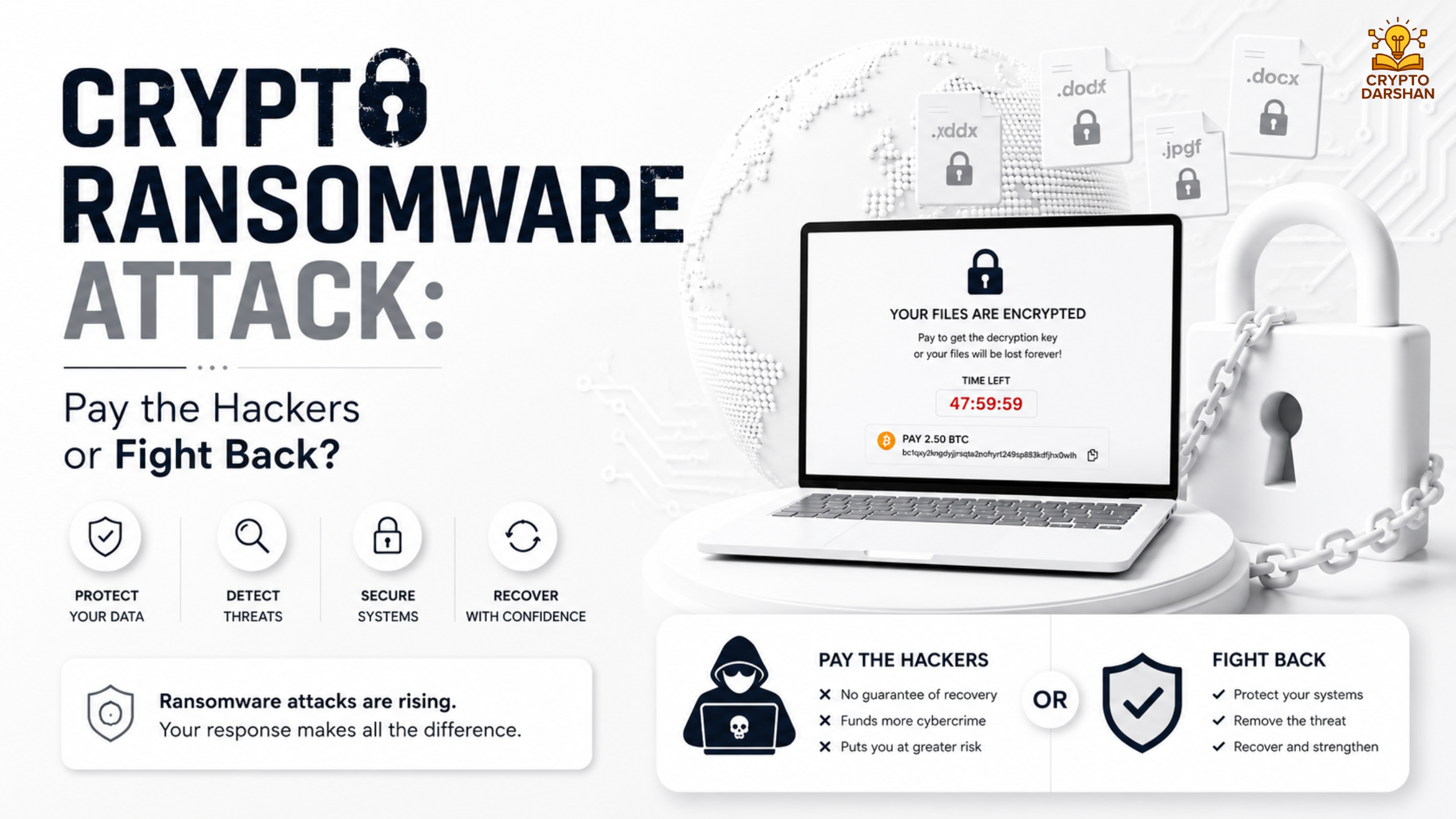
In the digital age, data is the lifeblood of every organization. From small businesses to global enterprises, information drives decisions, operations, and innovation. Yet, this dependence on data has also created a lucrative opportunity for cybercriminals. Among the most devastating threats in the cybersecurity landscape is Crypto Ransomware a malicious software that encrypts files and demands payment for their release. The dilemma it presents is both ethical and practical: should victims pay the hackers or fight back?
This comprehensive analysis explores the mechanics of Crypto Ransomware, its evolution, the psychology behind ransom payments, and the strategies organizations can adopt to defend themselves. It also examines the legal, financial, and moral implications of paying ransoms, offering a balanced perspective on one of the most pressing cybersecurity challenges of the modern era.
Understanding Crypto Ransomware
Crypto ransomware, also known as encryption ransomware, is malicious software that encrypts files and demands payment for a decryption key. Unlike traditional malware that steals or deletes data, this variant locks files using strong encryption algorithms. The attackers then demand payment often in cryptocurrency, to provide the decryption key.
The process typically unfolds in several stages:
- Infection – The ransomware infiltrates a system through phishing emails, malicious attachments, compromised websites, or software vulnerabilities.
- Encryption – Once inside, it encrypts files, databases, and sometimes entire systems.
- Ransom Demand – A message appears, instructing the victim to pay a specific amount, usually in Bitcoin or another cryptocurrency, to regain access.
- Decryption (Optional) – If the ransom is paid, the attackers may or may not provide the decryption key.
The sophistication of Crypto Ransomware has evolved dramatically. Early versions used weak encryption that cybersecurity experts could sometimes reverse-engineer. Modern variants, however, employ advanced cryptographic techniques that make decryption virtually impossible without the attacker’s key.
The Evolution of Crypto Ransomware
The first known Crypto Ransomware attack dates back to 1989, when the “AIDS Trojan” was distributed via floppy disks. It encrypted filenames and demanded payment to a P.O. box in Panama. Since then, ransomware has evolved into a global cybercrime industry worth billions.
Key Milestones
- 2013 – CryptoLocker: One of the first large-scale ransomware campaigns, CryptoLocker used RSA encryption and demanded Bitcoin payments. It infected hundreds of thousands of computers worldwide.
- 2017 – WannaCry: Exploiting a vulnerability in Microsoft Windows, WannaCry spread rapidly across networks, crippling hospitals, corporations, and government agencies.
- 2017 – NotPetya: Initially disguised as ransomware, NotPetya was later revealed to be a destructive cyberweapon targeting Ukraine but affecting global systems.
- 2020s – Double Extortion: Modern Crypto Ransomware groups not only encrypt data but also steal it, threatening to publish sensitive information if the ransom is not paid.
This evolution reflects a shift from opportunistic attacks to highly organized operations. Today’s ransomware groups function like businesses, complete with customer support, affiliate programs, and profit-sharing models.
The Psychology of Paying Ransoms

When faced with a Crypto Ransomware attack, victims often experience panic and desperation. The attackers exploit these emotions, creating a sense of urgency and fear. The ransom note typically includes a countdown timer, threatening to delete the decryption key or double the ransom if payment is delayed.
Why Victims Pay
- Business Continuity: For many organizations, downtime is more costly than the ransom itself. Hospitals, for instance, cannot afford to lose access to patient records.
- Data Sensitivity: If the encrypted data includes confidential or proprietary information, the pressure to recover it intensifies.
- Lack of Backups: Without reliable backups, victims may see payment as the only option.
- Insurance Coverage: Some cyber insurance policies cover ransom payments, indirectly encouraging compliance.
Why Victims Shouldn’t Pay
- No Guarantee: Paying does not ensure data recovery. Many victims never receive a working decryption key. Strengthening account security is equally important, and technologies like Smart Wallets Explained: The Future of Crypto Accounts can help improve asset protection.
- Encouraging Crime: Every payment funds future attacks and strengthens criminal networks.
- Legal Risks: In some jurisdictions, paying ransoms to sanctioned entities may violate laws.
- Reinfection: Attackers may target the same victim again, knowing they are willing to pay.
The decision to pay or resist is rarely straightforward. It involves balancing immediate operational needs against long-term ethical and strategic considerations.
The Financial Impact of Crypto Ransomware
The financial toll of Crypto Ransomware extends far beyond the ransom itself. According to cybersecurity reports, the average ransom demand has surged from a few hundred dollars in the early 2010s to millions today. However, the true cost includes downtime, data loss, reputational damage, and recovery expenses.
Direct Costs
- Ransom Payment: The most visible cost, often demanded in cryptocurrency.
- Incident Response: Hiring cybersecurity experts to contain and investigate the breach.
- System Restoration: Rebuilding or replacing compromised systems.
Indirect Costs
- Downtime: Lost productivity and revenue during system outages.
- Reputation Damage: Loss of customer trust and brand credibility.
- Regulatory Fines: Non-compliance with data protection laws can result in penalties.
For small businesses, a single Crypto Ransomware attack can be catastrophic. Studies show that nearly 60% of small companies close within six months of a major cyber incident.
The Legal and Ethical Dilemma

The question of whether to pay a ransom is not just a business decision it’s a moral and legal one. Governments and law enforcement agencies, including the FBI and Europol, strongly advise against paying. Their reasoning is clear: paying fuels the ransomware economy and encourages further attacks.
Legal Considerations
- Sanctions Compliance: Paying a ransom to a group linked to terrorism or sanctioned nations can violate international laws.
- Data Protection Regulations: Organizations must report breaches under laws like GDPR or HIPAA, even if they pay the ransom.
- Liability Issues: Failure to implement adequate cybersecurity measures can expose companies to lawsuits.
Ethical Considerations
- Funding Crime: Every payment supports criminal enterprises.
- Public Safety: In critical sectors like healthcare, paying may seem necessary to protect lives, but it also perpetuates the threat.
- Corporate Responsibility: Ethical leadership demands transparency and accountability, even under pressure.
The ethical path often aligns with resilience investing in prevention, detection, and recovery rather than capitulating to extortion.
Fighting Back: Strategies for Defense

Defending against Crypto Ransomware requires a multi-layered approach that combines technology, training, and policy. Prevention is always more cost-effective than recovery.
1. Strengthening Cyber Hygiene
- Regular Updates: Keep operating systems and software patched.
- Email Security: Use advanced spam filters and educate employees about phishing.
- Access Controls: Limit administrative privileges and enforce strong passwords.
- Network Segmentation: Isolate critical systems to prevent lateral movement.
2. Backup and Recovery
- Offline Backups: Store backups offline or in immutable cloud storage.
- Regular Testing: Verify that backups can be restored quickly and completely.
- Versioning: Maintain multiple backup versions to avoid overwriting clean data.
3. Endpoint Protection
- Antivirus and EDR: Deploy endpoint detection and response tools to identify suspicious activity.
- Behavioral Analysis: Detect anomalies such as mass file encryption or unauthorized access.
4. Incident Response Planning
- Response Teams: Establish a dedicated cybersecurity incident response team.
- Playbooks: Develop step-by-step procedures for containment, eradication, and recovery.
- Communication Plans: Prepare internal and external communication strategies to manage public perception.
5. Employee Awareness
Human error remains the leading cause of Crypto Ransomware infections. Regular training helps employees recognize phishing attempts, suspicious links, and social engineering tactics. Employee training is only one part of a comprehensive defense strategy. Understanding broader blockchain security risks can help organizations identify vulnerabilities before attackers exploit them. Read Blockchain Security Risks Every Investor Should Know in 2026.
The Role of Cyber Insurance
Cyber insurance has become a critical component of modern risk management. Policies often cover costs related to Crypto Ransomware, including forensic investigations, legal fees, and even ransom payments. However, this coverage is controversial.
Pros
- Financial Protection: Helps mitigate the immediate financial impact.
- Expert Support: Insurers often provide access to cybersecurity specialists.
- Business Continuity: Enables faster recovery from disruptions.
Cons
- Moral Hazard: Coverage may encourage complacency or willingness to pay.
- Premium Increases: Frequent claims can lead to higher premiums.
- Policy Limitations: Some insurers exclude payments to sanctioned entities or require proof of preventive measures.
Organizations should view insurance as a safety net, not a substitute for robust cybersecurity practices.
Case Studies: Lessons from Real Attacks

Case 1: Colonial Pipeline (2021)
A Crypto Ransomware attack forced the shutdown of one of the largest fuel pipelines in the United States. The company paid a ransom of $4.4 million to restore operations. Although the FBI later recovered part of the payment, the incident exposed vulnerabilities in critical infrastructure.
Case 2: City of Atlanta (2018)
The city’s systems were crippled by a ransomware attack demanding $51,000 in Bitcoin. Officials refused to pay, but recovery costs exceeded $17 million. The case highlighted the high price of resistance without adequate preparedness.
Case 3: Garmin (2020)
The fitness technology company suffered a Crypto Ransomware attack that disrupted services worldwide. Reports suggested a multimillion-dollar ransom was paid to restore operations. The incident underscored the global reach of ransomware groups.
These cases illustrate that both paying and resisting carry significant consequences. The key lies in preparation and resilience.
The Rise of Ransomware-as-a-Service (RaaS)
The Crypto Ransomware ecosystem has evolved into a sophisticated business model known as Ransomware-as-a-Service (RaaS). In this model, developers create ransomware tools and lease them to affiliates who carry out attacks. Profits are shared between the developers and affiliates.
Features of RaaS
- Subscription Models: Affiliates pay a fee or share a percentage of profits.
- User-Friendly Dashboards: Simplified interfaces allow even non-technical criminals to launch attacks.
- Customer Support: Some groups offer “help desks” to assist victims with payments.
RaaS has lowered the barrier to entry for cybercrime, leading to an explosion of Crypto Ransomware incidents worldwide. As ransomware operations become increasingly organized, blockchain analytics has become a critical tool for tracking illicit funds and supporting law enforcement investigations. Learn more in Blockchain Analytics Tools: How On-Chain Data Fights Fraud and Crime.
Government and Law Enforcement Response

Governments and international agencies are intensifying efforts to combat Crypto Ransomware. Initiatives include:
- Task Forces: Collaborative units like the U.S. Ransomware Task Force coordinate responses across sectors.
- Sanctions: Targeting cryptocurrency exchanges and wallets linked to ransomware groups.
- Public Awareness Campaigns: Educating businesses and individuals about prevention.
- International Cooperation: Sharing intelligence and resources to dismantle criminal networks.
Despite these efforts, enforcement remains challenging due to the anonymity of cryptocurrencies and the global nature of cybercrime.
The Future of Crypto Ransomware
The threat landscape continues to evolve. Emerging trends suggest that Crypto Ransomware will become more targeted, automated, and destructive.
Predicted Developments
- AI-Driven Attacks: Artificial intelligence may be used to identify high-value targets and optimize ransom demands.
- Data Exfiltration: Attackers will increasingly combine encryption with data theft for double extortion.
- Critical Infrastructure Targeting: Energy, healthcare, and transportation sectors will remain prime targets.
- Cryptocurrency Regulation: Governments may impose stricter controls on digital currencies to curb ransom payments.
- Quantum Computing Threats: As quantum technology advances, encryption methods may need to evolve to remain secure.
- Automation of Attacks: Future ransomware may use self-learning algorithms to adapt to defenses in real time.
The future of defense lies in proactive adaptation leveraging AI for threat detection, enhancing collaboration, and fostering a culture of cybersecurity awareness.
Building a Resilient Cybersecurity Culture

Technology alone cannot defeat Crypto Ransomware. A resilient organization integrates cybersecurity into its culture, policies, and daily operations.
Key Elements
- Leadership Commitment: Executives must prioritize cybersecurity as a strategic objective.
- Continuous Training: Regular workshops and simulations reinforce awareness.
- Transparency: Open communication about threats and incidents builds trust.
- Collaboration: Sharing threat intelligence with industry peers strengthens collective defense.
- Zero Trust Architecture: Implementing a zero-trust model ensures that every access request is verified, reducing the risk of lateral movement by attackers.
- Security by Design: Embedding security into every stage of product and system development ensures long-term protection.
A culture of vigilance transforms employees from potential vulnerabilities into the first line of defense.
The Decision Framework: Pay or Fight Back?
When confronted with a Crypto Ransomware attack, decision-makers must act swiftly yet thoughtfully. A structured framework can guide the response:
- Assess the Impact: Determine the scope of encryption and data sensitivity.
- Consult Experts: Engage cybersecurity professionals and legal advisors.
- Evaluate Alternatives: Explore backup restoration and decryption tools.
- Consider Legal Implications: Ensure compliance with sanctions and reporting laws.
- Decide Strategically: Balance short-term recovery with long-term consequences.
- Post-Incident Review: After recovery, conduct a full audit to identify weaknesses and strengthen defenses.
- Public Communication: Manage stakeholder expectations and maintain transparency to preserve trust.
In most cases, fighting back through recovery and resilience is the recommended path. Paying should be the absolute last resort, undertaken only after exhaustive evaluation and legal consultation.
The Human Factor in Ransomware Defense
While technology plays a vital role, human behavior remains the most unpredictable element in cybersecurity. Attackers often exploit trust, curiosity, or negligence to infiltrate systems. Building a human firewall is as important as deploying technical defenses.
Human-Centric Strategies
- Phishing Simulations: Regularly test employees with simulated phishing campaigns.
- Reward Systems: Recognize and reward staff who report suspicious activity.
- Psychological Training: Teach employees how social engineering manipulates emotions like fear or urgency.
- Cross-Department Collaboration: Encourage IT, HR, and management to work together on awareness initiatives.
- Incident Reporting Channels: Provide easy ways for employees to report potential threats without fear of punishment.
A well-informed workforce can drastically reduce the success rate of Crypto Ransomware attacks. Employee awareness works best when paired with secure account infrastructure. Innovations discussed in Smart Wallets Explained: The Future of Crypto Accounts can help reduce the impact of unauthorized access and human error.
Global Cooperation and the Path Forward
The fight against Crypto Ransomware cannot be won by individual organizations alone. It requires global cooperation among governments, private companies, and cybersecurity experts.
Key Areas of Collaboration
- Information Sharing: Real-time exchange of threat intelligence across borders.
- Standardized Protocols: Developing international frameworks for ransomware response.
- Public-Private Partnerships: Joint initiatives to strengthen digital infrastructure.
- Education and Research: Investing in cybersecurity education to build future expertise.
- Cross-Border Law Enforcement: Coordinated efforts to track and prosecute ransomware operators globally.
As cyber threats transcend national boundaries, collective defense becomes the cornerstone of digital resilience.
FAQ: Crypto Ransomware Attack –Pay the Hackers or Fight Back?

1. What is a crypto ransomware attack?
A crypto ransomware attack is a type of cybercrime where hackers encrypt a victim’s files or systems and demand payment, often in cryptocurrency, to restore access.
2. Why do ransomware attackers prefer cryptocurrency?
Cryptocurrencies offer fast cross-border transactions and can provide a degree of anonymity, making them a preferred payment method for cybercriminals.
3. Should victims pay the ransomware demand?
Cybersecurity experts and law enforcement agencies generally advise against paying. Payment does not guarantee file recovery and may encourage further criminal activity.
4. What are the risks of paying the hackers?
Risks include:
- No guarantee of receiving a decryption key.
- Additional extortion attempts.
- Funding future cyberattacks.
- Potential legal or regulatory complications.
5. Can files be recovered without paying the ransom?
In some cases, yes. Recovery options include:
- Restoring data from backups.
- Using publicly available decryption tools.
- Rebuilding affected systems.
- Seeking assistance from cybersecurity professionals.
6. What should be the first response to a ransomware attack?
Immediately:
- Disconnect affected devices from the network.
- Isolate infected systems.
- Preserve evidence.
- Notify IT and security teams.
- Begin incident response procedures.
7. How can organizations determine whether to pay or resist?
The decision should consider:
- Availability of backups.
- Operational impact.
- Legal obligations.
- Financial losses.
- Expert cybersecurity guidance.
8. Are ransomware payments legal?
Legality varies by jurisdiction. In some cases, paying sanctioned entities may violate regulations. Organizations should consult legal counsel before making any payment.
Conclusion
Crypto Ransomware represents one of the most formidable challenges in the digital era. Its ability to paralyze systems, extort payments, and erode trust has made it a global menace. Yet, the choice between paying hackers or fighting back is not merely technical it is a reflection of values, preparedness, and foresight.
Organizations that invest in prevention, cultivate a culture of cybersecurity, and plan for contingencies are far better equipped to withstand attacks. The ultimate defense lies not in capitulation but in resilience the determination to protect data, uphold integrity, and deny criminals the power they seek.
The battle against Crypto Ransomware is ongoing, but with vigilance, collaboration, and innovation, the tide can turn. The question is not just whether to pay or fight back, but how to build a digital future where such choices no longer define survival.