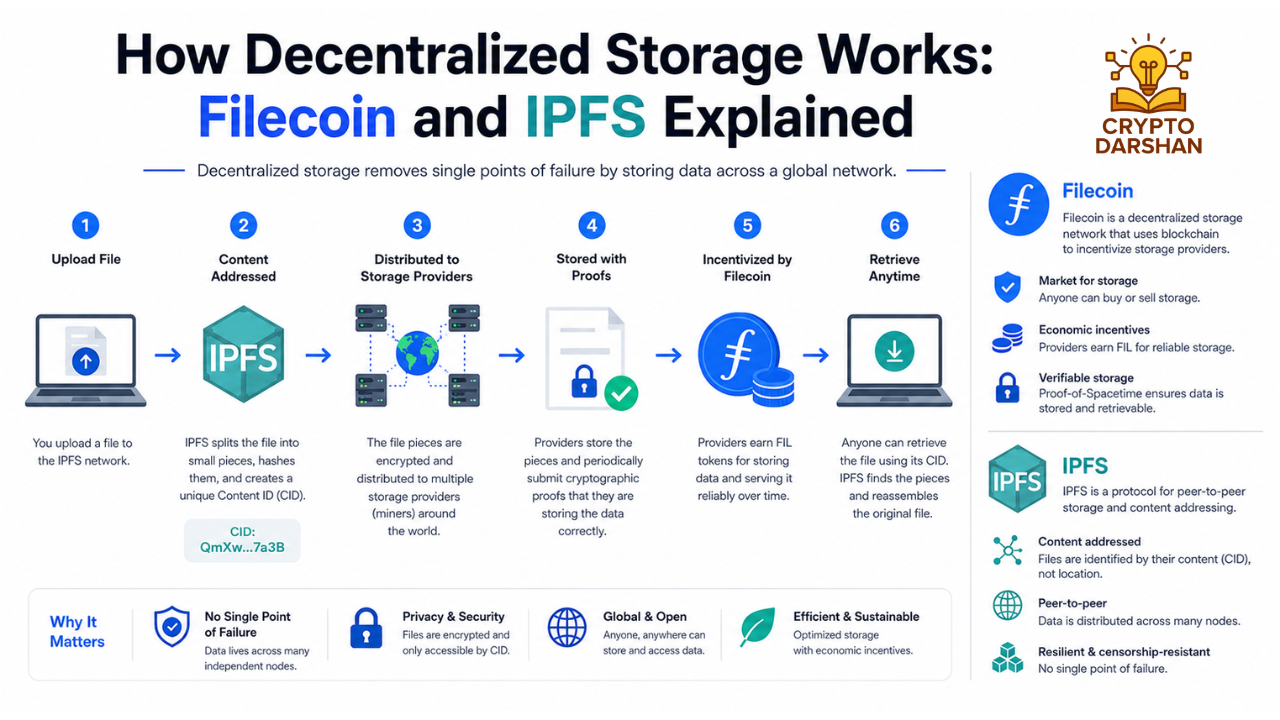
Crypto financial control defines the revolution: crypto isn’t about getting rich; it’s about control over your money, data, and future without middlemen dictating terms. Cryptocurrency is often portrayed as a quick path to wealth. Stories of early Bitcoin investors turning into millionaires dominate headlines, and social media is filled with tales of overnight success. But beneath the hype lies a deeper truth: cryptocurrency was never meant to be just a get-rich-quick scheme. It was designed to give people control over their money, data, privacy, and financial freedom. The real revolution of crypto is not about wealth accumulation; it’s about decentralization, empowerment, and independence from traditional systems of power.
This article explores how cryptocurrency shifts control from centralized authorities to individuals, why that matters, and how this transformation could redefine the global financial landscape.
The Origins of Cryptocurrency: A Quest for Freedom

The story of cryptocurrency begins with a desire for freedom, not fortune. In 2008, during the global financial crisis, trust in banks and governments was at an all-time low. The collapse of major financial institutions exposed the fragility of centralized systems. Out of this chaos emerged Bitcoin, introduced by the mysterious Satoshi Nakamoto through a whitepaper titled “Bitcoin: A Peer-to-Peer Electronic Cash System.”
The Vision Behind Bitcoin
Bitcoin was created to solve a fundamental problem: the need for a financial system that doesn’t rely on trust in third parties. Traditional banking requires intermediaries banks, payment processors, and governments to verify and approve transactions. This centralization gives these entities immense power over people’s money.
Satoshi’s vision was simple yet revolutionary: create a decentralized network where transactions could occur directly between individuals, verified by cryptographic proof instead of institutional trust. In essence, Bitcoin was about taking control back from centralized authorities.
The Illusion of Wealth: How the Narrative Changed

As Bitcoin’s price began to rise, the narrative shifted. What started as a movement for financial freedom became a speculative frenzy. Media outlets focused on price surges, investors chased profits, and the original message of empowerment faded into the background.
Control over money doesn’t automatically mean understanding it. Without education, self-custody can create new risks rather than freedom, which is why Financial Freedom ≠ Financial Literacy: The Crypto Perspective highlights the gap most users only recognize after something goes wrong.
The Speculative Era
Between 2017 and 2021, cryptocurrency markets experienced explosive growth. Bitcoin reached new all-time highs, and thousands of altcoins emerged. Many investors entered the market hoping to get rich quickly. While some succeeded, many others lost money during market crashes.
This speculative behavior overshadowed the true purpose of crypto. Instead of being seen as a tool for decentralization, it became a digital lottery. Yet, beneath the surface, the technology continued to evolve, quietly building the foundation for a new kind of financial system, one centered on control and autonomy.
Financial Control vs. Centralization: The Core Philosophy of Crypto
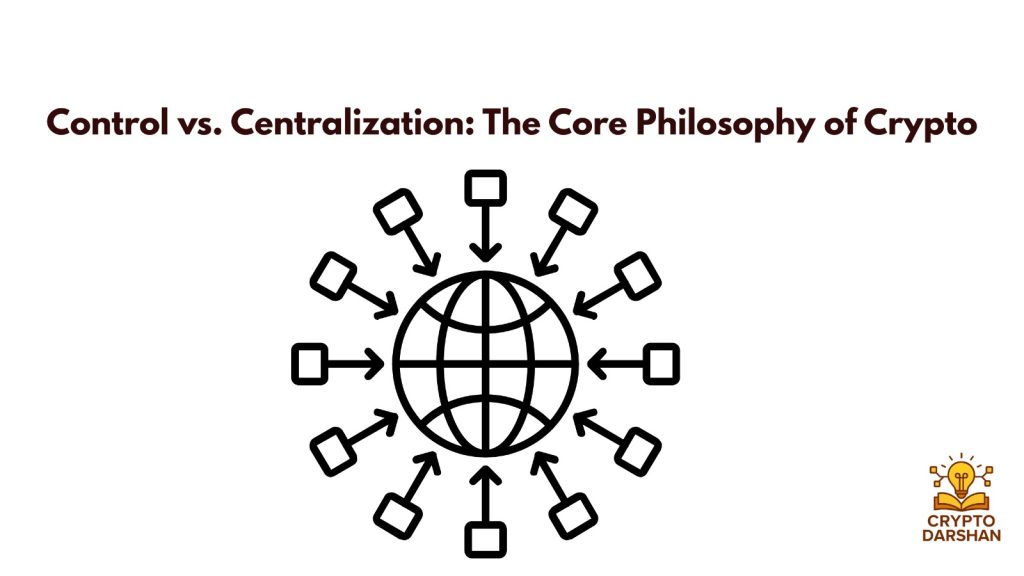
At its heart, cryptocurrency challenges the concept of centralization. In traditional systems, control is concentrated in the hands of a few banks, governments, and corporations. These entities decide who can access financial services, how money moves, and even what transactions are allowed.
How Centralized Systems Limit Control
- Censorship: Banks can freeze accounts or block transactions.
- Surveillance: Financial institutions track spending habits and personal data.
- Inflation: Governments can print money, reducing its value.
- Exclusion: Millions remain unbanked due to a lack of access or documentation.
Cryptocurrency flips this model. It gives individuals direct ownership of their assets, free from intermediaries. With crypto, users hold their own private keys, meaning they and only they control their funds.
Decentralization: The Foundation of Financial Control
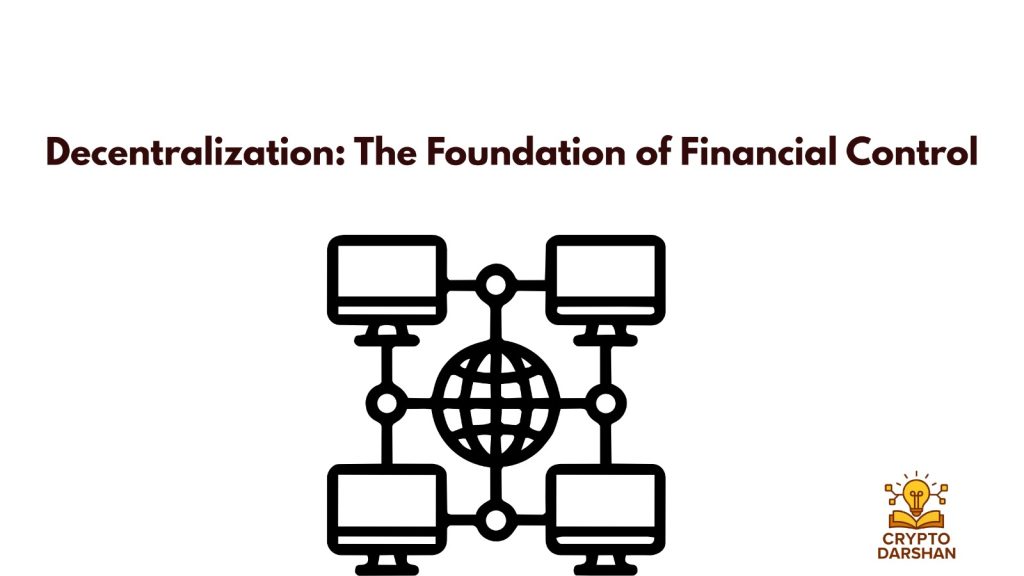
Decentralization is the cornerstone of cryptocurrency. It distributes power across a network rather than concentrating it in a single authority. This structure ensures that no one entity can manipulate or control the system.
How Decentralization Works
In a decentralized network like Bitcoin or Ethereum, thousands of computers (nodes) maintain a shared ledger called the blockchain. Every transaction is verified by consensus, meaning the majority of participants must agree before it’s added to the chain. This makes the system transparent, secure, and resistant to censorship.
Benefits of Decentralization
- Autonomy: Users control their assets without relying on banks.
- Transparency: All transactions are publicly verifiable.
- Security: No single point of failure.
- Censorship Resistance: Governments or corporations cannot easily block transactions.
Decentralization is not just a technical feature it’s a philosophical stance. It represents a shift from trust in institutions to trust in mathematics and code.
Financial Sovereignty: Taking Back Ownership
Financial sovereignty means having complete control over one’s money. For individuals, Financial Sovereignty often translates into practices like budgeting effectively, saving consistently, investing wisely, and reducing reliance on debt. It’s about building financial literacy, financial control and establishing habits that promote stability and independence. Imagine a small business owner who has cultivated Financial Sovereignty; they are less vulnerable to fluctuations in the market because they have diversified income streams and reserves to weather economic downturns.
The Power of Self-Custody
Owning cryptocurrency means holding private keys the digital equivalent of a bank vault key. Whoever controls the keys controls the funds. This eliminates the need for intermediaries and ensures that assets cannot be seized or frozen without consent.
Real-World Examples
- Economic Instability: In countries like Venezuela and Argentina, citizens use Bitcoin to escape hyperinflation.
- Censorship Resistance: Activists and journalists use crypto to receive donations when traditional payment systems block them.
- Global Access: People without bank accounts can participate in the global economy using only a smartphone.
Financial sovereignty is not about getting rich it’s about freedom from control.
Privacy and Data Ownership
In the digital age, data is as valuable as money. Traditional financial systems collect vast amounts of personal information, often shared, or sold without consent. Cryptocurrency offers an alternative to transactions that protect privacy and minimize data exposure.
Privacy Coins and Technologies
Some cryptocurrencies, like Monero and Zcash, focus specifically on privacy. They use advanced cryptographic techniques to hide transaction details, ensuring that financial activity remains confidential.
Why Privacy Matters
- Protection from Surveillance: Prevents governments and corporations from tracking spending.
- Security: Reduces the risk of identity theft.
- Freedom: Allows individuals to transact without fear of judgment or restriction.
Privacy is a form of control. It ensures that individuals not institutions decide what information to share.
The Role of Smart Contracts and Decentralized Applications

Smart contracts are self-executing agreements coded on the blockchain. They automatically enforce terms without intermediaries. This innovation extends the concept of control beyond money to entire systems of governance and business.
Decentralized Applications (dApps)
dApps run on blockchain networks and operate without central servers. They enable users to interact directly with services like lending, trading, and gaming.
Examples of Control Through dApps
- DeFi (Decentralized Finance): Users can lend, borrow, and trade assets without banks.
- DAOs (Decentralized Autonomous Organizations): Communities govern projects collectively through token-based voting.
- NFTs (Non-Fungible Tokens): Artists and creators maintain ownership and control over their digital works.
Smart contracts and dApps represent a new era of digital autonomy, where users control not just their money but also the platforms they use.
The Myth of “Getting Rich” in Crypto

While many have profited from cryptocurrency, focusing solely on wealth misses the point. The volatility of crypto markets means fortunes can rise and fall overnight. The true value lies in the technology’s ability to empower individuals.
The Dangers of Speculation
- Market Manipulation: Whales and institutions can influence prices.
- Emotional Investing: Fear and greed drive poor decisions.
- Scams and Rug Pulls: Unscrupulous projects exploit inexperienced investors.
The Real Value Proposition
Cryptocurrency’s worth is not measured in dollars but in freedom. It provides tools for financial independence, financial control, privacy, and global participation. Those who understand this see crypto not as a gamble but as a movement toward a fairer system.
Governments and the Battle for Financial Control
The relationship between governments and cryptocurrency is complex and often tense. At its core, this tension comes from one simple fact: cryptocurrency challenges government control over money.
For centuries, governments have held the power to issue, regulate, and monitor national currencies. Crypto disrupts that power by creating a system that operates outside their reach decentralized, borderless, and resistant to censorship.
This section explains why governments feel threatened by crypto, how they are responding, and what this ongoing battle means for the future of financial freedom.
1. Why Governments Want Control Over Money
Money is one of the most powerful tools a government has.
By controlling the national currency, governments can:
- Regulate the economy through monetary policy (like printing money or adjusting interest rates).
- Collect taxes and track financial activity.
- Prevent illegal activities such as money laundering or terrorism financing.
- Maintain political power by influencing financial systems.
When cryptocurrency entered the picture, it introduced a form of money that governments cannot easily control or monitor. This loss of financial control challenges their authority and traditional economic systems.
2. Why Cryptocurrency Threatens Government Control
Cryptocurrency operates on decentralized networks, no central bank, no government, no single point of financial control.
This independence means:
- People can send money across borders without approval.
- Transactions can’t easily be censored or reversed.
- Supply is fixed (like Bitcoin’s 21 million limit), so governments can’t print more.
- Users can remain anonymous or pseudonymous, making surveillance difficult.
From a government’s perspective, this undermines their ability to manage the economy, enforce laws, and collect taxes. It’s not just a financial issue it’s a political and regulatory challenge.
3. Government Reactions Around the World
Different countries have responded to cryptocurrency in different ways, depending on their economic goals and political systems.
a. Supportive Governments
Some nations see crypto as an opportunity for innovation and growth.
- El Salvador made Bitcoin legal tender in 2021, aiming to attract investment and reduce dependence on the U.S. dollar.
- Switzerland and Singapore have created clear regulations to encourage blockchain startups.
- Portugal offers tax benefits for crypto investors.
These countries view crypto as a tool for modernization and economic freedom.
b. Cautious Governments
Many governments allow crypto trading but impose strict regulations.
- The United States treats crypto as property for tax purposes and requires exchanges to follow anti-money-laundering (AML) laws.
- The European Union is developing the MiCA (Markets in Crypto-Assets) framework to regulate digital assets.
- India has fluctuated between restrictions and acceptance, taxing crypto heavily but not banning it outright.
These governments want to balance innovation with financial control.
c. Restrictive Governments
Some countries see crypto as a direct threat to their authority.
- China banned crypto trading and mining, fearing capital flight and loss of control over its financial system.
- Egypt and Morocco have declared crypto transactions illegal due to religious or economic concerns.
- Nigeria initially restricted banks from dealing with crypto but later began exploring its own digital currency.
These actions show how governments try to maintain dominance over their monetary systems.
4. Central Bank Digital Currencies (CBDCs): The Government’s Countermove
To regain control in the digital age, many governments are developing Central Bank Digital Currencies (CBDCs) digital versions of their national currencies.
What Are CBDCs?
CBDCs are government-issued digital currencies that use blockchain-like technology but remain fully centralized.
They are controlled by central banks and designed to make transactions faster and more efficient.
How CBDCs Differ from Cryptocurrencies
While CBDCs may improve payment systems, they also give governments more surveillance power. Every transaction can be tracked, and spending could be restricted or monitored. This is the opposite of what cryptocurrencies like Bitcoin stand for freedom and privacy.
5. Regulation: The Middle Ground
Governments argue that regulation is necessary to:
- Protect consumers from scams and fraud.
- Prevent money laundering and terrorism financing.
- Ensure tax compliance.
- Maintain financial stability.
However, too much regulation can destroy the decentralized nature of crypto.
If governments force all crypto activity through centralized exchanges or require identity verification for every transaction, they reintroduce the same control crypto was designed to eliminate.
The challenge is finding a balance between security and freedom—protecting users without undermining decentralization.
6. The Political Dimension of Control
Cryptocurrency is not just a financial innovation it’s a political statement.
It questions the need for centralized power and promotes individual sovereignty.
Governments, on the other hand, rely on centralized systems to maintain order and authority.
This creates a philosophical conflict:
- Crypto advocates believe in self-sovereignty, privacy, and freedom from control.
- Governments believe in regulation, oversight, and centralized stability.
The battle for control is essentially a battle between freedom and authority, decentralization and centralization.
The Role of Institutions and Corporations
Large corporations and financial institutions are entering the crypto space. While this brings legitimacy and liquidity, it also raises concerns about centralization.
Institutional Adoption
Companies like Tesla, PayPal, and major banks now offer crypto services. Institutional investors hold significant amounts of Bitcoin, influencing market dynamics.
The Risk of Re-Centralization
If a few corporations dominate crypto infrastructure exchanges, wallets, or payment systems, the original vision of decentralization could be compromised. True control requires maintaining open, permissionless systems accessible to all.
Education: The Key to Empowerment

Control comes from understanding. Many people still view cryptocurrency as complex or risky. Education is essential to help users navigate safely and make informed decisions.
Core Areas of Learning
- Blockchain Basics: Understanding how decentralized systems work.
- Security Practices: Protecting private keys and avoiding scams.
- Regulatory Awareness: Knowing local laws and compliance requirements.
- Financial Literacy: Managing assets responsibly.
Knowledge empowers individuals to use crypto as a tool for freedom rather than speculation.
The Social and Political Impact of Crypto

Cryptocurrency extends beyond finance; it’s a social and political movement. It challenges traditional power structures and promotes equality through open access.
Empowering the Unbanked
Over a billion people worldwide lack access to banking services. Crypto provides a solution by enabling peer-to-peer transactions without intermediaries.
Supporting Free Speech and Activism
In regions where governments suppress dissent, crypto allows activists to receive funding and communicate securely.
Redefining Trust
Blockchain replaces institutional trust with mathematical proof. This shift could transform governance, voting, and public accountability.
The Future of Control: Web3 and Beyond

Web3 represents the next evolution of the internet an ecosystem built on decentralization, where users own their data, identities, and digital assets.
Key Features of Web3
- Decentralized Identity: Users control their online presence.
- Tokenized Economies: Communities share ownership of platforms.
- Interoperability: Seamless interaction between different blockchains.
Web3 embodies the ultimate vision of control: a digital world governed by users, not corporations.
Challenges Ahead

While the promise of control is powerful, achieving it is not without obstacles.
Technical Barriers
Blockchain technology is still evolving. Scalability, energy consumption, and user experience remain challenges.
Regulatory Uncertainty
Governments continue to debate how to regulate crypto without stifling innovation.
Human Behavior
Greed, fear, and misinformation can undermine the principles of decentralization. True financial control requires responsibility and awareness.
Frequently Asked Questions (FAQ)

Why do most people think they don’t need crypto?
Because traditional financial systems usually work in normal conditions. If banks allow access, payments clear, and money moves freely, crypto feels optional. The need only becomes visible when those systems fail, restrict access, or move too slowly.
What does “suddenly” mean in the context of crypto adoption?
“Suddenly” often means moments of disruption, bank account freezes, capital controls, payment shutdowns, financial control, high inflation, political instability, or cross-border transfer failures. These events turn crypto from a curiosity into a necessity almost overnight.
In moments of urgency, people don’t reach for volatility—they reach for stability. This is why How Stablecoins Are Powering Global Crypto Adoption explains how stablecoins quietly become the most practical form of crypto when traditional systems fail.
Is crypto only useful during crises?
No, but crises expose its value fastest. Outside of emergencies, crypto is useful for global payments, stablecoins, self-custody, and financial control. During crises, those same features become critical rather than optional.
Why do people adopt crypto too late?
Most people wait until they’re forced to learn. Unfortunately, learning wallets, security, and self-custody during a crisis increases the risk of mistakes. Crypto is most useful when it’s understood before it’s urgently needed.
Does this mean everyone should hold crypto?
Not necessarily as an investment, but understanding crypto as a financial tool matters. Even limited exposure, like knowing how stablecoins or wallets work, can provide optionality when traditional systems become unreliable.
Why are stablecoins often the first crypto people use in emergencies?
Stablecoins offer familiarity and stability while retaining crypto’s core advantages: speed, global access, and independence from banks. When volatility is risky, stablecoins become the most practical entry point.
Is crypto meant to replace banks entirely?
No. Crypto functions more as a parallel system than a replacement. It exists as an alternative when banks are unavailable, restricted, or inefficient—not as a full substitute for everyday banking in stable conditions.
How does self-custody change the equation?
Self-custody gives individuals direct control over their funds. When third parties restrict withdrawals or access, self-custody can mean the difference between financial control, autonomy and being locked out entirely.
Conclusion
Cryptocurrency is not about getting rich it’s about reclaiming control. It empowers individuals to own their money, protect their privacy, and participate in a global, decentralized economy. The real revolution lies in freedom from centralized power, not in financial speculation.
As the world moves toward digital transformation, the question is not whether crypto will survive, but whether society will embrace its true purpose. The future of cryptocurrency depends on understanding that wealth is temporary, but financial control over one’s assets, data, and destiny is lasting.