
The cryptocurrency market has evolved far beyond simple buying and selling on centralized exchanges. One of the most revolutionary developments in this space is peer-to-peer (P2P) crypto trading. It allows users to trade digital assets directly with one another without relying on intermediaries. This method offers greater privacy, flexibility, and accessibility, especially in regions with limited access to traditional exchanges.
However, while P2P trading provides freedom and control, it also comes with risks that traders must understand. This comprehensive guide explores everything about P2P crypto trading how it works, its advantages, potential risks, and how to trade safely in 2026 and beyond.
What Is P2P Crypto Trading?

Peer-to-peer (P2P) crypto trading is a decentralized method of exchanging cryptocurrencies directly between users. Instead of using a centralized exchange that holds users’ funds, P2P platforms connect buyers and sellers who agree on trade terms and complete transactions directly.
In a P2P trade, the platform acts as a facilitator rather than a custodian. It provides an escrow service to ensure both parties fulfill their obligations. Once the buyer sends payment and the seller confirms receipt, the crypto is released from escrow to the buyer.
Example:
A user in India wants to buy Bitcoin using local currency. On a P2P platform, they can find a seller offering BTC at a preferred rate, agree on payment terms, and complete the transaction directly without involving a bank or centralized exchange.
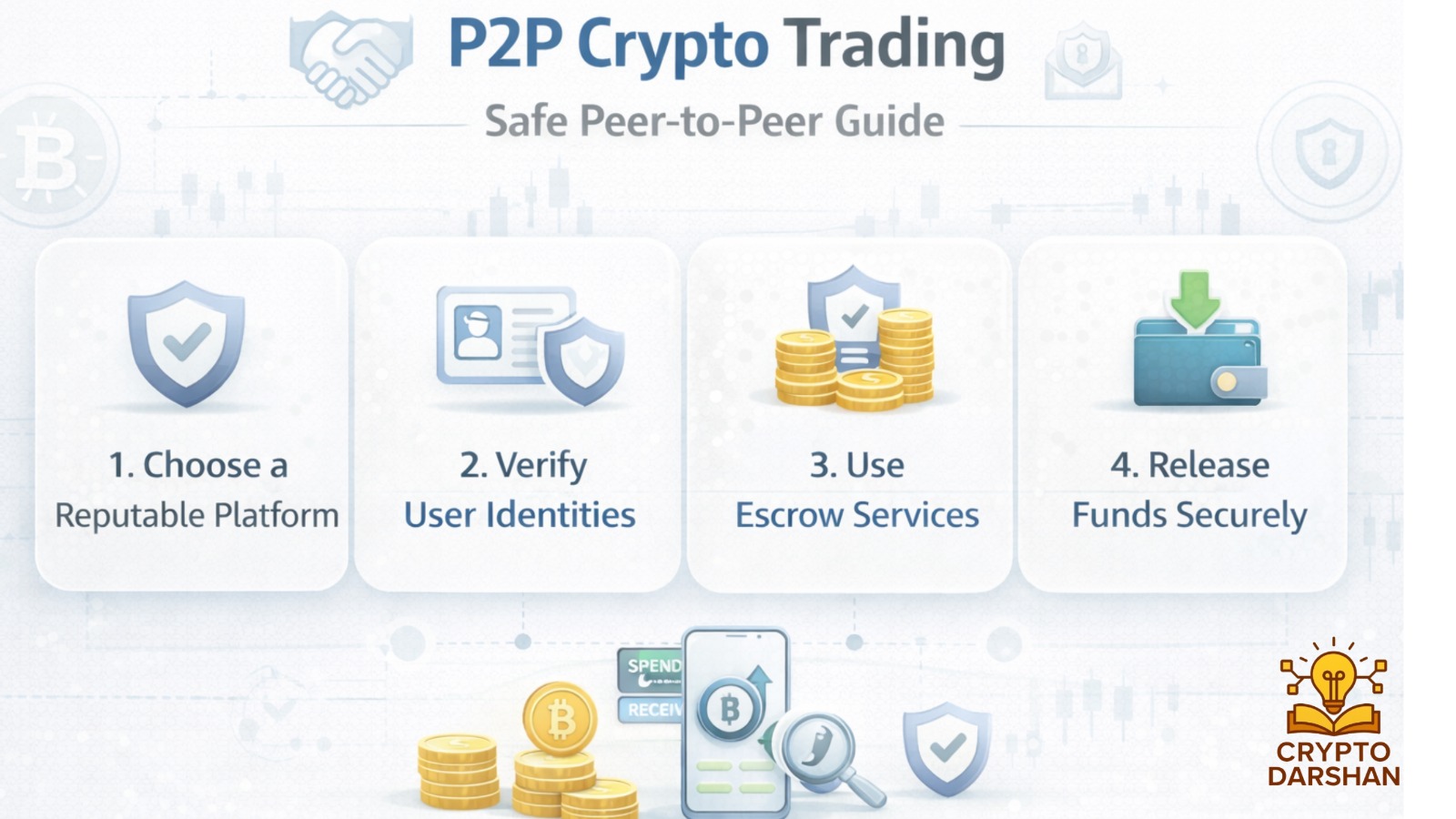
P2P Crypto Trading: Safe Peer-to-Peer Guide
Crypto P2P trading refers to the direct exchange of digital assets between users without relying on an intermediary to execute the transaction. The rise of peer-to-peer (P2P) crypto trading has transformed how people buy and sell digital assets. Instead of relying on centralized exchanges, users can now trade directly with one another, enjoying greater privacy, flexibility, and control. However, to trade safely and effectively, it’s essential to understand how P2P trading works, the step-by-step process, and how to avoid common scams.
How P2P Crypto Trading Works
P2P crypto trading allows users to exchange cryptocurrencies directly without intermediaries. The process is facilitated by a platform that connects buyers and sellers and uses an escrow system to ensure fairness and security.
Step 1: Registration and Verification
To start trading, users must register on a P2P platform such as Binance P2P, OKX P2P, or Paxful. Most platforms require identity verification (KYC) to prevent fraud and comply with regulations. Verification usually involves submitting an ID and proof of address. Once verified, users can create or respond to trade offers.
Step 2: Creating or Finding Offers
- Buyers browse listings from sellers offering specific cryptocurrencies at chosen prices.
- Sellers create offers specifying the amount of crypto, price per unit, and accepted payment methods (bank transfer, PayPal, UPI, etc.).
Each offer includes details like trade limits, payment window, and user ratings. Buyers can filter offers based on price, payment method, and location.
Step 3: Initiating a Trade
When a buyer selects an offer, the platform automatically locks the seller’s crypto in an escrow wallet. This ensures that the seller cannot withdraw or cancel the trade after the buyer sends payment. The escrow system acts as a neutral third party, holding the crypto until both sides confirm the transaction.
Step 4: Payment Transfer
The buyer sends payment directly to the seller using the agreed method. For example, if the seller accepts bank transfers, the buyer transfers the funds to the seller’s account and uploads proof of payment (such as a screenshot or transaction ID). The platform monitors the process but does not handle fiat funds directly.
Step 5: Confirmation and Release
Once the seller confirms receipt of payment, the platform releases the locked crypto from escrow to the buyer’s wallet. This step finalizes the trade. If there’s a dispute (for example, if the seller claims not to have received payment), the platform’s support team investigates using transaction records and chat logs.
Step 6: Feedback and Rating
After the trade, both parties rate each other based on their experience. Ratings help build trust and transparency within the community. Traders with high ratings are more likely to attract future deals, while low-rated users may face restrictions.
After purchasing crypto through P2P platforms, users can grow their assets using methods explained in this crypto staking guide: How to Stake Crypto? Earn Passive Income.
Advantages of P2P Crypto Trading

1. Greater Privacy
Unlike centralized exchanges that require extensive personal data, P2P trading allows users to transact with minimal disclosure. Many platforms only require basic verification, preserving user anonymity.
2. No Middlemen
P2P trading eliminates intermediaries, allowing users to control their funds directly. This reduces dependency on centralized entities that can freeze accounts or restrict withdrawals.
3. Global Accessibility
P2P platforms enable users from any part of the world to trade cryptocurrencies using local payment methods. This is especially beneficial in countries with limited access to traditional exchanges.
4. Flexible Payment Options
Users can choose from multiple payment methods, including bank transfers, mobile wallets, PayPal, and even cash. This flexibility makes P2P trading more inclusive.
5. Better Pricing Opportunities
Since users set their own prices, buyers and sellers can negotiate favorable rates. This often results in better deals compared to centralized exchanges.
6. Censorship Resistance
P2P trading operates outside centralized control, making it resistant to government restrictions or exchange shutdowns.
7. Community Trust System
Most P2P platforms use rating systems that help identify trustworthy traders. High-rated users are more likely to complete trades honestly.
Disadvantages and Risks of P2P Trading

While P2P trading offers freedom, it also carries certain risks that traders must manage carefully.
1. Scams and Fraud
Some users may attempt to deceive others by sending fake payment proofs or reversing transactions after receiving crypto.
2. Payment Disputes
Disagreements can arise if one party claims not to have received payment. Although escrow systems help, disputes can delay transactions.
3. Low Liquidity
Compared to centralized exchanges, P2P platforms may have fewer active traders, leading to slower transactions or limited offers.
4. Price Volatility
Crypto prices can fluctuate rapidly during negotiations, affecting trade value.
5. Regulatory Uncertainty
In some countries, P2P trading may face legal restrictions or unclear regulations.
6. Human Error
Mistakes such as sending funds to the wrong account or releasing crypto prematurely can result in losses.
How to Trade Safely on P2P Platforms

Safety is the most critical aspect of P2P crypto trading. Following best practices can help minimize risks and ensure smooth transactions.
1. Use Reputable Platforms
Choose well-known P2P platforms with strong security measures and positive user reviews. Examples include:
- Binance P2P
- OKX P2P
- Paxful
- LocalBitcoins (legacy platform)
- Bybit P2P
These platforms offer escrow protection, dispute resolution, and verified user systems.
2. Verify User Reputation
Always check the trader’s profile before initiating a deal. Look for:
- High completion rate (above 95%)
- Positive feedback from previous trades
- Verified identity and payment methods
3. Use Escrow Services
Never send crypto or payment directly without using the platform’s escrow system. Escrow ensures that funds are only released when both parties fulfill their obligations.
4. Avoid Off-Platform Communication
Scammers often try to move conversations outside the platform to avoid monitoring. Always communicate within the platform’s chat system.
5. Confirm Payment Before Releasing Crypto
Sellers should verify that payment has been received and cleared before releasing crypto. Screenshots or pending transactions are not sufficient proof.
6. Beware of Chargebacks
When using reversible payment methods like PayPal or credit cards, ensure the buyer is trustworthy. Chargebacks can result in loss of funds.
7. Stay Updated on Regulations
Understand local laws regarding cryptocurrency trading. Some regions may require tax reporting or restrict certain payment methods.
8. Enable Two-Factor Authentication (2FA)
Protect accounts with 2FA to prevent unauthorized access.
9. Avoid Emotional Decisions
Scammers often use urgency or emotional manipulation to rush decisions. Always verify details calmly before proceeding.
10. Keep Records of Transactions
Maintain screenshots, chat logs, and payment confirmations for dispute resolution.
Popular P2P Crypto Trading Platforms

1. Binance P2P
Binance P2P is one of the largest and most trusted platforms globally. It supports multiple cryptocurrencies and local payment methods.
Features:
- Zero trading fees
- Escrow protection
- Verified traders
- 24/7 customer support
2. OKX P2P
OKX offers a user-friendly P2P marketplace with support for various fiat currencies.
Advantages:
- Wide range of payment options
- Strong security measures
- Competitive pricing
3. Paxful
Paxful is known for its global reach and flexibility, supporting over 300 payment methods.
Highlights:
- Escrow protection
- Peer rating system
- Educational resources for beginners
4. Bybit P2P
Bybit’s P2P platform provides fast transactions and a secure trading environment.
Benefits:
- No transaction fees
- Verified merchants
- 24/7 dispute resolution
5. LocalCryptos
LocalCryptos (formerly LocalEthereum) focuses on privacy and decentralization.
Key Features:
- Non-custodial escrow
- End-to-end encrypted messaging
- Supports multiple cryptocurrencies
Step-by-Step Guide to P2P Trading

Trading on a P2P platform is straightforward once the process is understood. The following steps explain how to execute a safe and successful trade.
Step 1: Create an Account
Sign up on a reputable P2P platform and complete KYC verification if required. Verified accounts are more trusted and often have access to higher trading limits.
Step 2: Set Up Payment Methods
Add preferred payment options such as bank transfer, PayPal, UPI, or mobile wallets. Ensure that the payment method matches the name on the verified account to avoid disputes.
Step 3: Browse Offers
Navigate to the marketplace and browse available buy or sell offers. Each listing shows the trader’s price, available amount, payment methods, and completion rate. Compare multiple offers to find the best deal.
Step 4: Initiate Trade
Once an offer is selected, enter the amount of crypto to buy or sell. The platform locks the seller’s crypto in escrow, ensuring that the funds are safe until the transaction is complete.
Step 5: Make Payment
The buyer transfers the agreed amount using the selected payment method. Always double-check payment details before sending funds. After payment, upload proof (such as a transaction receipt) within the platform’s chat system.
Step 6: Confirm and Release
After verifying that payment has been received, the seller releases the crypto from escrow to the buyer’s wallet. The platform notifies both parties once the transaction is complete.
Step 7: Leave Feedback
Rate the other party and leave a short review. Positive feedback helps build a trustworthy trading environment and assists other users in identifying reliable traders.
Example:
A buyer wants to purchase 0.05 BTC using a bank transfer. They find a seller with a 98% completion rate and initiate a trade. The platform locks the BTC in escrow. The buyer sends payment, uploads proof, and the seller confirms receipt. The BTC is released to the buyer’s wallet, and both parties leave positive feedback.
Common Scams in P2P Trading and How to Avoid Them

While P2P crypto trading is generally safe when using reputable platforms, scams can occur if traders are careless. Understanding common scams and how to avoid them is essential for protecting funds.
1. Fake Payment Proofs
Scammers may send edited screenshots or falsified transaction receipts to trick sellers into releasing crypto before receiving actual payment.
How to Avoid:
- Always verify that funds have arrived in your account before releasing crypto.
- Do not rely solely on screenshots or messages claiming payment has been made.
- Wait for the payment to clear, especially for bank transfers.
2. Chargeback Fraud
Buyers using reversible payment methods like PayPal or credit cards can reverse transactions after receiving crypto, leaving sellers with losses.
How to Avoid:
- Prefer irreversible payment methods such as bank transfers or cash deposits.
- Trade only with verified users who have a strong reputation.
- Avoid accepting payments from third-party accounts.
3. Phishing Links and Fake Websites
Scammers may send links to fake P2P platforms or impersonate official websites to steal login credentials.
How to Avoid:
- Always access the platform directly through its official website or app.
- Never click on links shared by traders in chat.
- Check the website’s URL for authenticity and security (https://).
4. Impersonation Scams
Some scammers pretend to be verified traders or platform support staff to gain trust.
How to Avoid:
- Verify usernames carefully before trading.
- Communicate only through the platform’s official chat system.
- Never share personal information or passwords.
5. Off-Platform Deals

Scammers often suggest completing trades outside the platform to avoid fees or speed up transactions. Once the trade moves off-platform, escrow protection no longer applies.
How to Avoid:
- Never agree to trade outside the platform.
- Escrow protection is only valid for on-platform transactions.
- Report users who suggest off-platform deals.
6. Overpayment or Refund Scams
A scammer may intentionally overpay and then request a refund, claiming it was a mistake. The original payment may later be reversed, leaving the victim with a loss.
How to Avoid:
- Never send refunds for overpayments.
- Wait for the payment to fully clear before taking any action.
- Report suspicious behavior to platform support.
7. Fake Support Agents
Scammers may impersonate customer support agents and ask for sensitive information or request crypto transfers.
How to Avoid:
- Contact support only through official platform channels.
- Never share private keys, passwords, or wallet addresses with anyone claiming to be support.
Legal and Regulatory Aspects of P2P Trading

Regulations around P2P crypto trading vary by country. Some nations encourage it as part of financial innovation, while others impose restrictions.
Key considerations:
- KYC/AML Compliance: Many platforms require identity verification to prevent money laundering.
- Tax Obligations: Profits from P2P trading may be subject to capital gains tax.
- Local Restrictions: Some countries restrict crypto-to-fiat transactions.
Example:
In India, P2P crypto trading remains popular despite regulatory uncertainty, as it allows users to trade crypto using INR without centralized exchanges.
Benefits of P2P Crypto Trading for Emerging Markets
P2P trading plays a vital role in regions with limited banking infrastructure or strict financial controls.
Advantages for emerging markets:
- Enables financial inclusion for unbanked populations.
- Provides access to global crypto markets.
- Offers alternative payment solutions during currency instability.
Example:
In Africa and Latin America, P2P platforms like Paxful and Binance P2P have become essential tools for cross-border remittances and savings.
Future of P2P Crypto Trading

The future of P2P trading looks promising as blockchain technology continues to evolve.
Emerging trends:
- Decentralized Escrow Systems: Smart contracts will automate escrow services, reducing reliance on centralized platforms.
- Integration with DeFi: P2P trading may merge with decentralized finance protocols for lending and staking.
- AI-Powered Fraud Detection: Artificial intelligence will enhance security by identifying suspicious behavior.
- Cross-Chain Trading: Interoperability between blockchains will allow seamless asset exchange across networks.
- Mobile-First Platforms: Increased smartphone adoption will drive mobile-based P2P trading apps.
Tips for Successful P2P Crypto Trading
- Start with small trades to build experience.
- Trade only with verified users.
- Double-check payment details before sending funds.
- Keep communication professional and within the platform.
- Stay informed about market trends and price movements.
- Use secure internet connections when trading.
Conclusion
P2P crypto trading represents the true spirit of decentralization, empowering individuals to trade freely, securely, and globally. It eliminates intermediaries, offers flexible payment options, and provides access to crypto markets for millions worldwide.
However, safety must always come first. By using reputable platforms, verifying traders, and following best practices, users can minimize risks and enjoy the benefits of peer-to-peer trading.
As blockchain technology advances, P2P crypto trading will continue to evolve, offering even greater transparency, automation, and accessibility. For those seeking financial independence and privacy in the digital age, P2P crypto trading stands as one of the most powerful tools in the cryptocurrency ecosystem.