

Crypto has always been social. Before most people understood what a blockchain was, they were already joining Telegram groups, lurking in Discord servers, and following anonymous founders on Twitter. In the early days, community was the product: a token launched, a chat room formed, memes spread, and liquidity followed.
But the social layer of crypto is changing again—fast. We’re moving from off‑chain community hubs (Discord, Telegram, X) toward on‑chain communities where identity, reputation, membership, and even conversation can be verified, owned, and monetized. This shift isn’t just cultural; it’s structural. And it’s rewriting how discovery works.
For marketers, founders, and content teams, this evolution creates a new SEO reality: Crypto SEO is no longer only about ranking pages—it’s about ranking narratives across social graphs, wallets, and protocols. The communities that win attention will increasingly be the ones that can prove participation, reward contribution, and turn members into distribution engines.
In other words, the projects that capture attention in the next phase of crypto will not only build technology—they will build verifiable communities that reward participation and turn members into long-term advocates.
Community governance is already influencing the direction of many blockchain ecosystems, a dynamic explored in our guide on Blockchain Governance Wars: Forks, Votes, and Behind-the-Scenes Power.
This article explores how we got here, what “on‑chain community” really means, and how the new social layer changes the playbook for crypto SEO—without relying on hype or shortcuts.
The Old Social Layer: Discord as the Default Community Stack

For years, Discord servers functioned like the operating system of crypto communities. They offered:
- Instant communication (channels, threads, voice)
- Role-based access (mods, OGs, whitelists)
- Event coordination (AMAs, launches, raids)
- Culture formation (memes, inside jokes, lore)
- Support and onboarding (FAQs, ticketing bots)
Discord became the place where “real” community lived, while websites served as static brochures. If you wanted to understand a project, you didn’t read the docs—you joined the server.
Why Discord worked so well for crypto
Crypto communities needed speed, anonymity, and coordination. Discord delivered all three. It also supported the “always online” nature of token markets: price moves, governance votes, and breaking news happen in real time.
Why Discord also created SEO blind spots
From an SEO perspective, Discord is mostly a black box:
- Content is not indexable in a meaningful way.
- Valuable discussions are locked behind invites.
- Knowledge is fragmented across channels.
- Search engines can’t easily interpret community health, sentiment, or expertise.
So while Discord built loyalty, it didn’t reliably build search visibility. Projects often ended up with a paradox: huge communities but weak organic discovery outside crypto-native circles.
The Limits of Off‑Chain Communities

Discord and Telegram are powerful, but they were never designed for ownership-based communities. Over time, several pain points became impossible to ignore:
a) Identity is fragile
A Discord username isn’t a durable identity. People can change handles, create alts, or disappear. Reputation doesn’t transfer across communities.
b) Membership is hard to verify
Roles and gating bots help, but they’re still off‑chain. If a user holds an NFT or token, Discord needs a third-party integration to verify it. That verification can break, be spoofed, or become outdated.
c) Contribution is difficult to measure
Who actually helped? Who wrote the best guides? Who onboarded new users? Discord can’t natively turn contribution into portable reputation.
d) Incentives are messy
Crypto communities run on incentives—airdrops, points, whitelists, bounties. Off‑chain platforms can track activity, but they can’t enforce transparent reward logic without external systems.
e) Data and distribution are platform-owned
Discord owns the social graph. Telegram owns the channels. X owns the feed. Communities can be throttled, banned, or algorithmically buried.
Crypto, by nature, pushes against that. If money can be owned, why can’t community be owned too?
What “On‑Chain Community” Actually Means

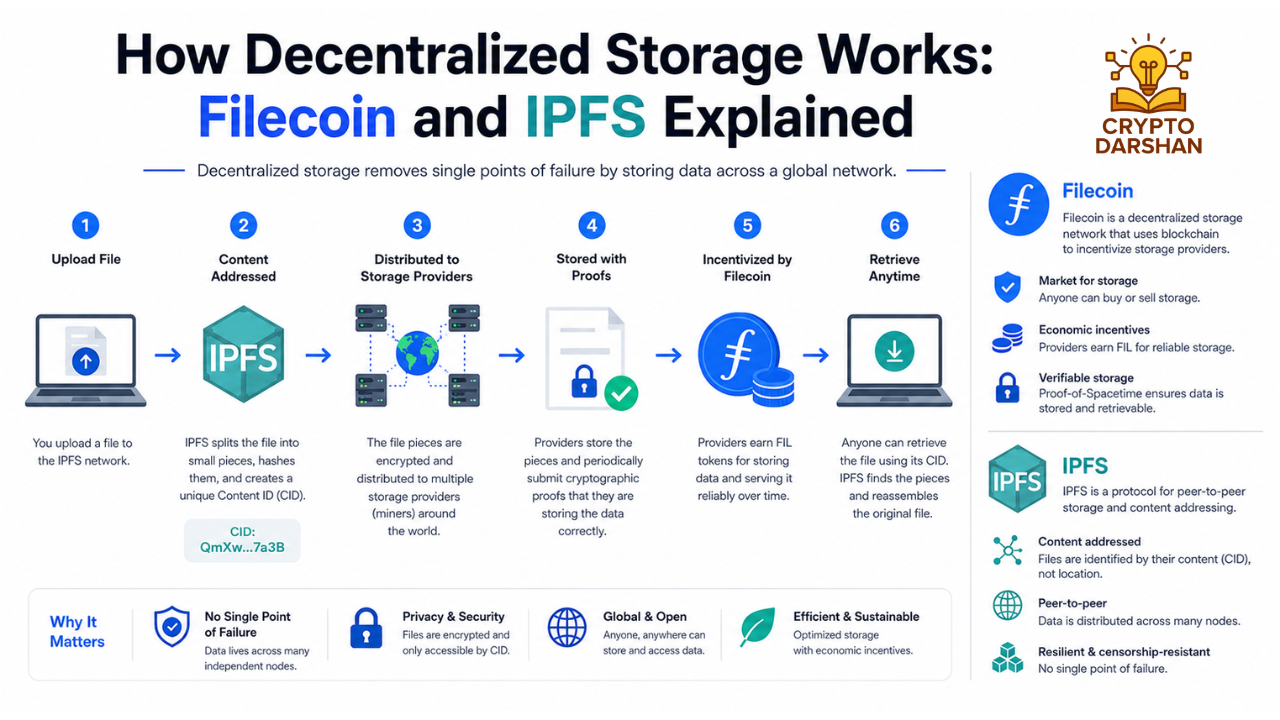
The term onchain refers to transactions that occurred on a blockchain and have been verified and authenticated. An on‑chain community isn’t just “a Discord with wallets.” It’s a community where key social primitives are represented on-chain or cryptographically verifiable:
- Identity: wallets, ENS, decentralized identifiers
- Membership: NFTs, tokens, attestations, soulbound credentials
- Reputation: contribution proofs, badges, on-chain history
- Governance: proposals, votes, delegation
- Incentives: transparent rewards, streaming payments, bounties
- Coordination: DAOs, multisigs, on-chain task systems
Not everything needs to live on-chain. But the source of truth shifts from a platform database to a protocol layer.
The key difference: portability
In an on‑chain community, your membership and reputation can travel. You can prove you were an early contributor to a protocol, a governance participant, or a builder—without relying on screenshots or moderator roles.
That portability changes how communities grow, how trust forms, and how discovery happens.
The New Social Layer: Wallets as Profiles, Protocols as Platforms

In Web2, social identity is tied to accounts. In crypto, identity increasingly ties to wallets—and wallets are not just payment tools. They’re becoming:
- Profiles (names, avatars, social links)
- Access keys (token-gated content, events, tools)
- Reputation ledgers (transaction history, attestations)
- Distribution nodes (referrals, affiliate rewards, on-chain invites)
This creates a new social layer where communities can form around:
- shared holdings (token communities)
- shared actions (contributors, voters, stakers)
- shared credentials (badges, attestations)
- shared outcomes (builders, grant recipients)
Instead of “Join our Discord,” the call-to-action becomes “Connect your wallet,” “Mint membership,” “Claim your badge,” or “Verify your contribution.”
Why This Matters for Crypto SEO: Search Is Becoming Social Again

SEO used to be mostly about pages and links. Then social platforms captured attention and discovery. Now crypto is blending the two: on-chain actions create verifiable signals, and those signals can influence what content gets shared, trusted, and referenced.
Even if Google doesn’t directly rank “wallet reputation,” the ecosystem does:
- Influencers amplify projects with strong contributor graphs.
- Communities rally around protocols that reward participation.
- Builders link to resources that are recognized by on-chain credentials.
- Aggregators and dashboards surface projects with measurable activity.
In other words, the new SEO is partly off Google. It’s about being discoverable across:
- crypto-native search (Dune dashboards, explorers, aggregators)
- social feeds (X, Farcaster, Lens)
- community hubs (guilds, DAOs, token-gated forums)
- on-chain credential networks (badges, attestations)
- developer ecosystems (GitHub, docs, grants)
Traditional SEO still matters, but it’s no longer sufficient. Crypto SEO now includes community architecture.
Discord SEO vs On‑Chain Community SEO: A Practical Comparison

Let’s compare the two models through an SEO lens.
Discord-first community growth
Strengths
- Fast onboarding
- High engagement loops
- Real-time coordination
- Strong culture formation
SEO weaknesses
- Content not indexable
- Knowledge trapped in chat
- Hard to cite and link
- Reputation not portable
On‑chain community growth
Strengths
- Verifiable membership and contribution
- Portable identity and reputation
- Transparent incentives
- Easier to build public artifacts (badges, proposals, bounties)
SEO advantages
- More linkable public pages (proposals, dashboards, credential pages)
- More structured data (transactions, attestations, token metadata)
- More third-party references (explorers, analytics, community tools)
- Stronger trust signals within crypto-native discovery channels
The best strategy is rarely “either/or.” Most winning projects will run hybrid stacks: Discord for conversation, on-chain for identity and incentives, and public content for indexing.
The Rise of Token-Gated Content and Its SEO Tradeoffs

Token gating is one of the most common bridges between off-chain and on-chain communities. It can unlock:
- premium research
- alpha channels
- early product access
- governance forums
- private events
But token gating introduces an SEO tension:
- Gated content builds exclusivity and retention
- Public content builds discovery and inbound traffic
If everything valuable is gated, search engines see a thin site. If everything is public, you may lose the incentive to hold membership assets.
A balanced approach: “Public spine, gated depth”
A strong crypto content strategy often looks like this:
- Publish public pillar pages (guides, explainers, comparisons)
- Offer gated deep dives (templates, dashboards, playbooks)
- Use on-chain credentials to unlock depth (NFTs, attestations)
- Encourage members to share public pages as canonical references
This creates a flywheel: public content attracts newcomers; gated depth converts them into members; members amplify public content.
On‑Chain Reputation as a New Trust Layer
In SEO, trust shows up as backlinks, brand searches, and engagement. In crypto, trust also shows up as:
- governance participation
- long-term holding behavior
- contribution history
- attestations from credible entities
- transparent funding and treasury actions
On-chain communities can encode trust in ways Web2 communities can’t. For example:
- A contributor badge can prove someone shipped work.
- A governance NFT can prove someone voted.
- An attestation can prove someone attended an event or completed a course.
These signals don’t automatically translate into Google rankings, but they translate into human trust, and human trust drives:
- citations
- links
- mentions
- referrals
- collaborations
In other words, the inputs may be crypto-native, but the outcomes still resemble classic SEO signals.
As wallet-based identity becomes more important in these ecosystems, onboarding tools are also evolving to reduce friction for new users—a trend explored in Social Logins for Crypto Wallets: Are Seed Phrases Finally Dying?
Community-Led Content: The Most Underrated Crypto SEO Engine

Crypto projects often try to “do SEO” by publishing blog posts. But the strongest organic growth usually comes from community-led content:
- tutorials written by users
- ecosystem roundups
- integration guides
- governance explainers
- case studies and postmortems
- translations and localized content
On-chain communities make it easier to coordinate and reward this work:
- bounties for articles
- rewards for translations
- badges for documentation contributions
- retroactive airdrops for high-impact guides
This turns content into a community sport, not a marketing chore.
The SEO benefit: diversified authorship
Search engines and readers both respond well to diverse, authentic voices. A single brand blog can feel promotional. A network of community-authored resources feels like an ecosystem.
The New Distribution Channels: Farcaster, Lens, and Crypto-Native Social Graphs

While Discord remains central, crypto-native social platforms are growing because they align with on-chain identity:
- Farcaster emphasizes portable identity and open clients.
- Lens builds social graphs on-chain.
- Other emerging networks experiment with tokenized feeds and creator monetization.
For SEO, these platforms matter because they create:
- new sources of referral traffic
- new places where links circulate
- new “search engines” inside social apps
- new reputation loops tied to wallets
A post that performs well on crypto-native social can generate:
- backlinks from newsletters and blogs
- citations in docs and forums
- inclusion in ecosystem roundups
- long-tail search demand (“brand + keyword” queries)
This is how social becomes SEO again.
On‑Chain Events, IRL Meetups, and Proof of Attendance as Content Assets

Events have always been community accelerators. On-chain communities add a new layer: verifiable attendance.
Proof-of-attendance mechanisms (often NFTs or attestations) can turn events into:
- credential pages
- shareable collectibles
- community milestones
- segmentation tools (who attended what)
From a content perspective, events can generate:
- recap posts
- speaker highlights
- workshop notes
- community photo galleries
- governance follow-ups
When paired with on-chain attendance proofs, these assets become more than marketing—they become part of the community’s permanent record.
How to Build a Crypto SEO Strategy for On‑Chain Communities

Here’s a practical framework that aligns SEO with the new social layer.
Step 1: Define your community primitives
Decide what is on-chain vs off-chain:
- What proves membership?
- What proves contribution?
- What proves expertise?
- What actions should be rewarded?
Keep it simple. Over-engineering kills adoption.
Step 2: Create public, indexable knowledge hubs
Even if your community is token-gated, you need public pages that search engines can crawl:
- “What is [protocol]?”
- “How to stake [token]”
- “Bridge to [chain] safely”
- “Best wallets for [ecosystem]”
- “Troubleshooting common errors”
- “Security checklist”
These pages should be updated frequently and written for clarity, not just keywords.
Step 3: Turn community activity into linkable artifacts
Discord chat is not linkable. But these are:
- governance proposals and summaries
- public roadmaps
- grant pages
- bounty boards
- dashboards and analytics
- contributor spotlights
- case studies
Make sure each artifact has a stable URL and is easy to share.
Step 4: Incentivize community content creation
Use bounties or retroactive rewards for:
- tutorials
- translations
- integration guides
- video walkthroughs
- glossary contributions
Reward outcomes (quality, usefulness), not just volume.
Step 5: Build a “credential-to-content” loop
Let credentials unlock deeper content, but keep the entry points public:
- Public: beginner guide
- Credentialed: advanced playbook, templates, private workshops
- Public again: community case studies and success stories
This keeps discovery open while preserving exclusivity.
Step 6: Measure what matters
Traditional SEO metrics still apply:
- impressions, clicks, rankings
- backlinks and referring domains
- brand search volume
- time on page and engagement
But add crypto-native metrics:
- wallet connections
- membership mints/claims
- governance participation
- bounty completions
- community retention cohorts
The goal is not just traffic—it’s qualified community growth.
Common Mistakes Projects Make During This Transition

Mistake 1: Gating everything too early
If newcomers can’t learn without paying or holding, they bounce. Build public education first.
Mistake 2: Treating Discord as the only source of truth
If your best answers live in chat, you’re leaking value. Convert recurring questions into public docs and guides.
Mistake 3: Over-rewarding shallow engagement
Points systems can create spam. Reward meaningful contributions: bug reports, guides, integrations, governance work.
Mistake 4: Ignoring security and trust messaging
Crypto users search for safety: “Is this legit?”, “Is it a scam?”, “How to avoid phishing?” If you don’t address these queries publicly, someone else will—possibly inaccurately.
Mistake 5: Confusing hype with community
A large follower count isn’t a community. A community is coordinated action over time. On-chain tools can measure that—use them.
The Future: Communities as Composable Networks, Not Walled Gardens

The direction is clear: crypto communities are becoming more composable.
Instead of one giant Discord server, you’ll see networks of:
- contributor guilds
- local chapters
- builder collectives
- token-holder councils
- education cohorts
- partner communities
Each group can have its own identity and incentives, but still connect through shared on-chain primitives.
For SEO, this means:
- more niche content hubs
- more long-tail queries
- more ecosystem-level linking
- more community-owned distribution
The projects that win won’t just publish content—they’ll architect participation.
FAQ: From Discord Servers to On-Chain Communities

1. What are on-chain communities in crypto?
On-chain communities are groups of users that organize, interact, and make decisions directly on a blockchain instead of relying only on platforms like Discord or Telegram. Membership, governance votes, reputation, and contributions are recorded on-chain, making the community more transparent and decentralized.
2. How are on-chain communities different from Discord crypto communities?
Discord communities rely on centralized servers where moderators control access and rules. On-chain communities, however, use blockchain tools such as tokens, NFTs, and DAO governance to manage membership and decision-making. This shifts control from moderators to the community itself.
3. Why are crypto projects moving from Discord to on-chain social layers?
Many crypto projects are experimenting with on-chain communities because they provide stronger ownership and transparency. Members can prove participation through wallet activity, governance tokens, or NFTs rather than simply being part of a chat server.
4. What technologies power on-chain social communities?
Several blockchain technologies enable on-chain communities, including decentralized autonomous organizations (DAOs), social tokens, decentralized identity systems, and blockchain-based reputation mechanisms. These tools allow communities to operate without relying entirely on centralized platforms.
5. What role do DAOs play in on-chain communities?
DAOs (Decentralized Autonomous Organizations) allow communities to vote on proposals, allocate funds, and manage projects collectively. In many cases, DAO governance replaces traditional community moderators by giving token holders the ability to make decisions together.
6. Can users still use Discord alongside on-chain communities?
Yes. Most projects currently use a hybrid approach where Discord remains the communication hub while governance, rewards, and membership verification happen on-chain. Over time, more interactions may move directly to blockchain-native platforms.
7. What are the benefits of on-chain community governance?
On-chain governance improves transparency, reduces reliance on centralized administrators, and allows members to participate directly in project decisions. It also creates verifiable records of contributions and voting activity.
8. What challenges do on-chain communities face?
On-chain communities still face usability challenges such as wallet complexity, transaction costs, and slower governance processes. Many projects are experimenting with better interfaces and community tools to make participation easier.
Conclusion: Crypto SEO Is Becoming Community Engineering
The shift from Discord servers to on-chain communities is not a trend; it’s a re-architecture of how crypto organizes people. Discord will remain important, but it’s no longer the whole story.
On-chain communities introduce verifiable identity, portable reputation, transparent incentives, and linkable public artifacts. Those features reshape discovery. They create new trust signals, new distribution channels, and new ways for content to compound.
In this new social layer, the best crypto SEO strategy is not “write more blog posts.” It’s:
- build public knowledge that earns search demand,
- create community systems that reward contribution,
- turn participation into shareable, linkable artifacts,
- and let your members become your most credible publishers.
Because in crypto, the strongest ranking signal has always been the same: people who believe enough to act.