
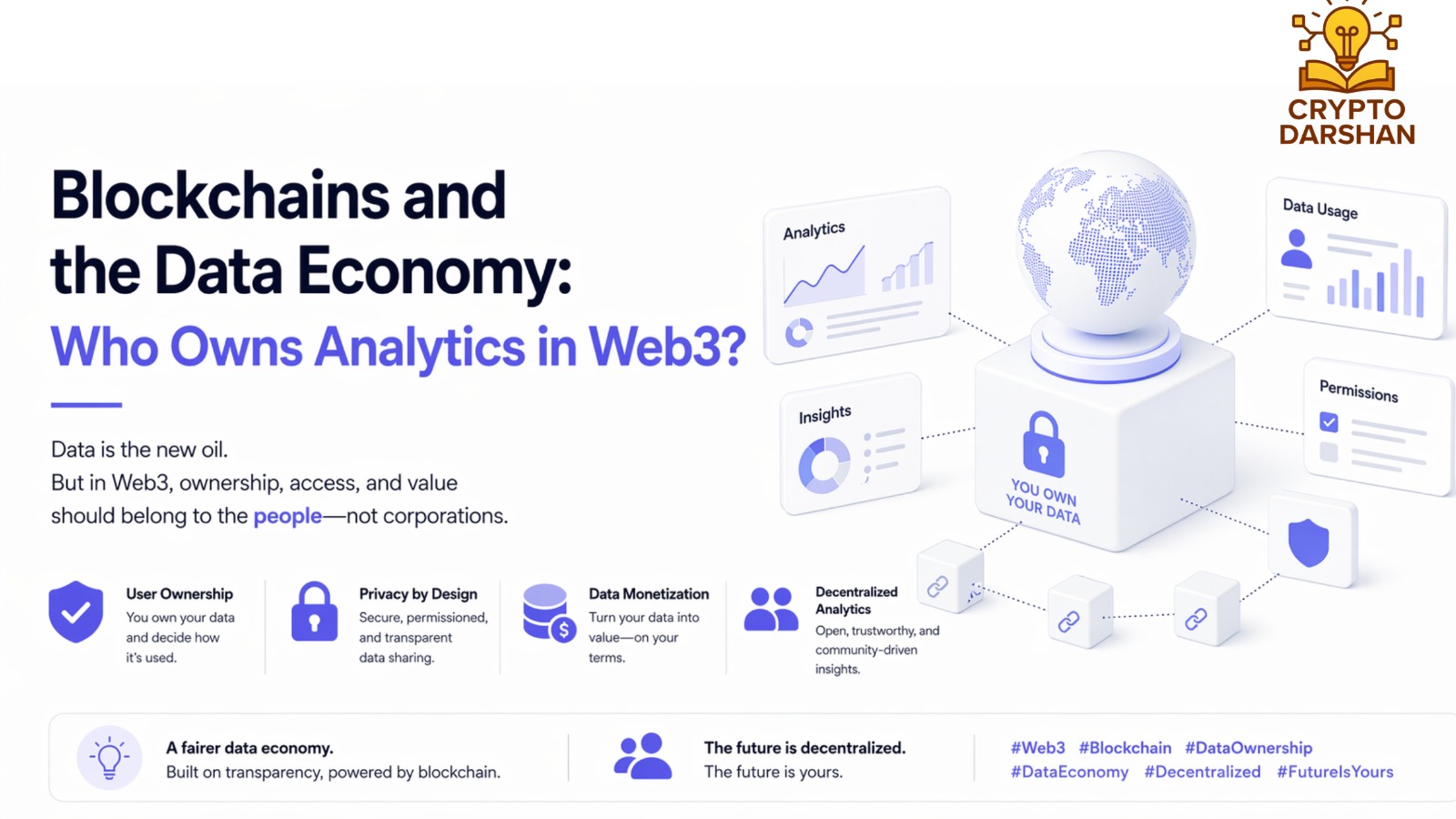
The digital world is undergoing a massive transformation. The rise of blockchain technology and Web3 is reshaping how data is created, shared, and monetized. In the traditional Web2 model, large corporations control user data and analytics, turning personal information into profit. However, Web3 introduces a new paradigm—one where users can own their data, control their privacy, and participate in the value they help create.
As blockchain technology continues to evolve, it raises an important question: Who owns analytics in Web3? The answer to this question will determine how the future data economy operates and how blockchain can achieve mass adoption.
This article explores the relationship between blockchains and the data economy, the challenges of data ownership, and the opportunities for decentralized analytics. It also examines what must change for blockchain and Web3 to reach Data Economy, empowering individuals and businesses alike.
Understanding the Data Economy

The data economy refers to an economic system where the buying and selling of data play a significant role. It involves the collection, analysis, and utilization of data as a valuable resource for various purposes, including business decisions, research, and innovation. Also, the data economy refers to the global system of collecting, analyzing, and monetizing data. In the Web2 era, companies like Google, Facebook, and Amazon built empires by gathering user data and using it to deliver targeted ads, personalized recommendations, and predictive analytics.
While this model has driven innovation, it has also created major concerns about privacy, transparency, and fairness. Users generate vast amounts of data daily, but they rarely benefit from it. Instead, centralized platforms control the flow of information and profit from user behavior.
Web3, powered by blockchain technology, aims to change this dynamic. It introduces decentralization, transparency, and user ownership into the data economy. For the Data Economy to occur, users must trust that their data is secure, private, and fairly rewarded.
The Role of Blockchain in the Data Economy

Blockchain technology provides a decentralized infrastructure for storing and managing data. Unlike traditional databases controlled by a single entity, blockchains distribute data across multiple nodes, ensuring transparency and security.
This decentralized structure allows users to maintain control over their data while still enabling analytics and insights. Smart contracts, self-executing programs on the blockchain, can automate data sharing and monetization without intermediaries.
For example, a user could share anonymized health data with researchers through a blockchain-based platform and receive tokens as compensation. This model empowers individuals and creates a fairer data economy.
However, for blockchain to power the global data economy effectively, it must overcome several challenges related to scalability, privacy, and usability. These improvements are essential for mass adoption.
Data Economy and Ownership in Web3

In Web3, data ownership shifts from corporations to individuals. Users can store their data in decentralized wallets or identity systems, granting access only when they choose. This concept is known as self-sovereign identity (SSI).
SSI allows users to control who can view or use their data, creating a more transparent and ethical digital environment. For instance, instead of logging into a website using a centralized service like Google, users can authenticate themselves through a blockchain-based identity that they fully control.
This shift in ownership is a cornerstone of Web3’s promise. It ensures that users—not corporations—benefit from the value their data generates. However, for this model to succeed and achieve Data Economy , blockchain systems must be easy to use, secure, and interoperable across platforms.
The Importance of Analytics in Web3

Analytics is the process of extracting insights from data. In Web2, analytics drives everything from marketing strategies to product development. In Web3, analytics remains just as important—but the way it’s conducted must change.
Traditional analytics relies on centralized data economy and warehouses, where companies collect and analyze user information. In contrast, Web3 analytics must operate in a decentralized environment where data is distributed and user-controlled.
This creates both opportunities and challenges. On one hand, decentralized analytics can provide more transparent and trustworthy insights. On the other hand, it requires new tools and frameworks that respect privacy and ownership.
For mass adoption, Web3 analytics must balance transparency with confidentiality. Users must feel confident that their data is being used ethically and securely.
Who Owns Analytics in Web3?

Ownership of analytics in Web3 is a complex issue. In a decentralized ecosystem, no single entity controls the data Economy, or the insights derived from it. Instead, ownership is shared among users, developers, and network participants.
- Users own their raw data and decide how it can be used.
- Developers create tools and algorithms that process data into insights.
- Networks provide the infrastructure that enables secure data exchange.
Ownership of analytics in Web3 is not centralized—it is distributed among users, developers, and the blockchain networks themselves. Unlike the Web2 model, where large corporations control both the data and the insights derived from it, Web3 introduces a decentralized structure that gives individuals more power over their information and how it is used.
Users Own Their Data
In Web3, users are the primary owners of their data. Through blockchain-based identities and decentralized storage and data economy, individuals can decide who can access their information and for what purpose. This means that analytics cannot be performed without user consent. If a company or researcher wants to analyze user data, they must request permission, often through smart contracts that define the terms of access and compensation. This user-centric model ensures fairness and transparency.
Developers Own the Analytical Tools
Developers and data scientists in Web3 create the algorithms, dashboards, and analytical frameworks that process decentralized data. While they do not own the raw data, they own the tools and models that transform it into insights. These tools can be open-source or monetized through decentralized marketplaces, allowing developers to earn rewards for their contributions while maintaining transparency.
Networks Facilitate Data Exchange

Blockchain networks act as neutral infrastructures that store and verify data. They do not own the data or analytics but provide the environment where secure and transparent data exchange can occur. The network’s consensus mechanism ensures that all transactions and data interactions are verifiable and tamper-proof, which builds trust in the analytics process.
Shared Ownership Through DAOs
In many Web3 ecosystems, analytics ownership is managed collectively through decentralized autonomous organizations (DAOs). DAOs allow communities to vote on how data is used, who can access it, and how profits from analytics are distributed. This shared governance model ensures that no single entity can monopolize insights or exploit user data.
Tokenized Incentives for Data Contribution
Web3 introduces token-based incentives that reward users for sharing their data. When analytics are performed on user-contributed data, participants can receive tokens or other digital assets as compensation. This creates a fair and transparent value exchange, where everyone involved in the analytics process benefits.
Challenges of Data Analytics in Web3

1. Scalability
Blockchain networks often struggle with scalability. Processing large volumes of data on-chain can be slow and expensive. For analytics to function effectively, blockchains must handle massive datasets without compromising performance. Layer-2 solutions and off-chain computation can help address this issue.
2. Privacy
While blockchain is transparent by design, analytics often require sensitive data. Balancing transparency with privacy is a major challenge. Technologies like zero-knowledge proofs and homomorphic encryption can enable secure analytics without exposing personal information.
3. Interoperability
Different blockchains store data in different formats. For analytics to work across multiple networks, interoperability is essential. Cross-chain protocols and data standards will allow seamless data exchange, supporting mass adoption.
4. Data Quality
Decentralized systems rely on user-generated data, which can vary in accuracy and reliability. Ensuring data quality is critical for meaningful analytics. Reputation systems and verification mechanisms can help maintain trust in decentralized data sources.
5. User Experience
Complex interfaces and technical jargon can discourage users. For Data Economy , Web3 analytics tools must be intuitive and user-friendly. Simplified dashboards, visual analytics, and guided workflows can make data insights accessible to everyone.
The Role of Decentralized Analytics Platforms

Decentralized analytics platforms are emerging to address the challenges of data ownership and transparency. These platforms use blockchain technology to collect, process, and share data in a secure and decentralized manner.
Examples include projects like Ocean Protocol, The Graph, and Chainlink, which enable decentralized data marketplaces and analytics services. These platforms allow users to monetize their data while maintaining control over it.
By decentralizing analytics, these systems reduce reliance on centralized intermediaries and promote fairness. They also create new economic opportunities for data providers, analysts, and developers.
For mass adoption, decentralized analytics platforms must offer scalability, affordability, and ease of use.
The Economic Value of Data Economy in Web3

Data is often called the “new oil” of the digital economy. In Web3, data becomes even more valuable because it is transparent, verifiable, and user-owned.
Blockchain enables new business models where users can earn tokens for sharing their data or participating in analytics. This creates a circular economy where value flows directly between users and developers, without middlemen.
For example, a decentralized social network could reward users for sharing engagement data that helps improve the platform. Similarly, a healthcare blockchain could compensate patients for contributing anonymized medical data to research.
These models empower individuals and promote Data Economy by aligning incentives between users and platforms.
The Role of Artificial Intelligence (AI) in Web3 Analytics
Enhancing Data Insights in Decentralized Systems
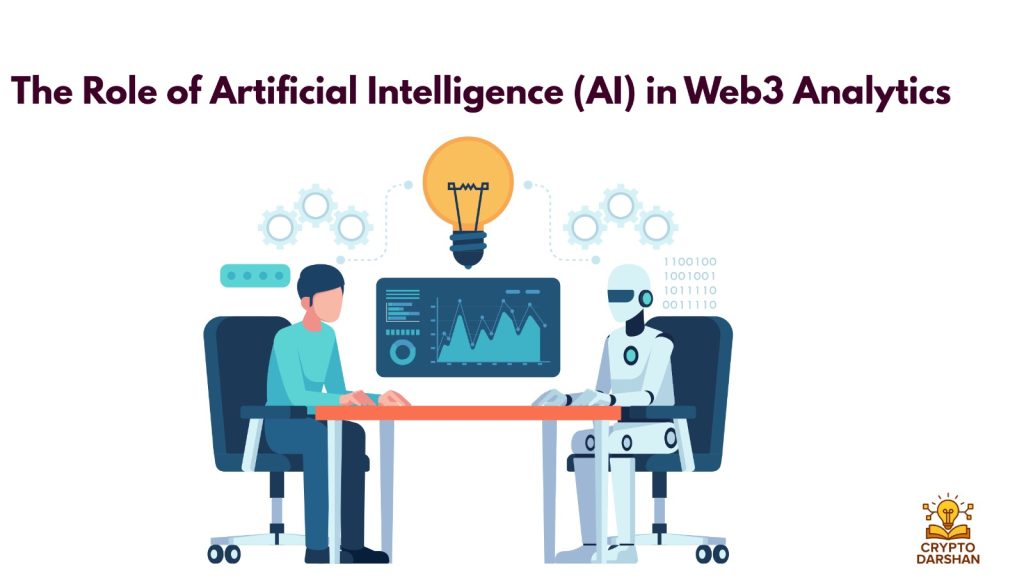
Artificial Intelligence (AI) plays a crucial role in analyzing the vast and complex data generated across decentralized networks. In Web3, data is distributed across multiple blockchains rather than stored in centralized databases. AI can process this fragmented data, identify patterns, and generate meaningful insights. By combining AI with blockchain, analytics become more accurate, efficient, and capable of handling large-scale decentralized information.
Improving Decision-Making and Automation
AI can automate decision-making processes within decentralized applications (dApps) and smart contracts. For example, AI algorithms can analyze blockchain data to detect fraud, predict market trends, or optimize resource allocation. When integrated with smart contracts, these insights can trigger automated actions without human intervention. This combination of AI and blockchain enhances efficiency and reliability, supporting the broader goal of mass adoption.
Ensuring Privacy-Preserving Analytics
One of the biggest challenges in Web3 analytics is maintaining user privacy while still extracting valuable insights. AI technologies such as federated learning and zero-knowledge proofs allow data to be analyzed without exposing personal information. This means AI can learn from decentralized data sources while keeping user data private and secure. Such privacy-preserving analytics build trust among users, which is essential for mass adoption.
Creating Intelligent Decentralized Applications
AI enables the development of smarter decentralized applications that can adapt to user behavior and preferences. For instance, AI-powered dApps can personalize user experiences, recommend content, or optimize financial strategies in decentralized finance (DeFi). These intelligent systems make Web3 platforms more interactive and user-friendly, encouraging more people to engage with blockchain technology.
Supporting Scalable and Sustainable Growth
As Web3 expands, managing and analyzing massive amounts of data becomes increasingly complex. AI helps scale analytics by automating data processing and optimizing network performance. It can also contribute to sustainability by identifying energy-efficient blockchain operations and reducing computational waste. By improving scalability and sustainability, AI ensures that Web3 analytics can grow responsibly and support long-term mass adoption.
Governance and Regulation in the Web3 Data Economy
Governance and regulation are critical for building trust in the Web3 data economy. Without clear rules, users and businesses may hesitate to participate.
Decentralized governance models, such as DAOs, allow communities to make collective decisions about data usage and analytics. However, governments also play a role in ensuring compliance with privacy laws and ethical standards.
Regulatory clarity will encourage institutional participation and protect users from exploitation. For Data Economy the , blockchain governance must balance decentralization with accountability.
If you want to explore how institutions leverage blockchain data for an edge, check out How Hedge Funds Use On-Chain Data in 2026 to Front-Run Retail.
The Path to Mass Adoption in the Web3 Data Economy

Achieving mass adoption in the Web3 data economy requires addressing several key factors:
- Education and Awareness
Users must understand how blockchain and Web3 work. Educational initiatives can help demystify the technology and build trust. - User-Friendly Tools
Simplified interfaces and seamless onboarding will make Web3 analytics accessible to non-technical users. - Interoperability and Standards
Common data standards and cross-chain compatibility will enable collaboration across different blockchain ecosystems. - Incentive Models
Rewarding users for sharing data and participating in analytics will encourage engagement and growth. - Regulatory Support
Clear and supportive regulations will attract businesses and investors, accelerating the Data Economy
Real-World Use Cases of Blockchain Data Analytics

1. Healthcare
Blockchain can securely store and share medical data, enabling research while protecting patient privacy. Patients can control access to their records and earn rewards for contributing to studies.
2. Finance
Decentralized finance (DeFi) platforms use blockchain analytics to assess risk, detect fraud, and optimize trading strategies. Transparent data improves trust and efficiency.
3. Supply Chain
Blockchain analytics can track goods from production to delivery, ensuring transparency and authenticity. This builds consumer trust and reduces fraud.
4. Marketing
Web3 marketing platforms can analyze user behavior without violating privacy. Users can choose to share data in exchange for rewards, creating a fairer advertising ecosystem.
5. Energy and Sustainability
Blockchain analytics can monitor energy consumption and carbon emissions, promoting sustainability. Users can trade renewable energy credits transparently.
These use cases demonstrate how blockchain analytics can create real-world value and drive mass adoption across industries.
The Future of Data Ownership and Analytics in Web3

The future of data ownership and analytics in Web3 is decentralized, transparent, and user-centric. As blockchain technology matures, users will gain more control over their digital identities and data.
Analytics will evolve into a collaborative process where users, developers, and organizations share insights and value fairly. Decentralized data marketplaces will become the backbone of the new digital economy.
For mass adoption, blockchain must continue to improve scalability, usability, and interoperability. When these challenges are solved, Web3 will redefine how data is owned, analyzed, and monetized globally.
FAQ: Blockchains and the Data Economy in Web3

1. What is the data economy in Web3?
The Web3 data economy refers to how blockchain-generated data—transactions, smart contracts, and user activity—is collected, analyzed, and monetized across decentralized networks.
2. Who owns blockchain data?
Blockchain data is publicly accessible by design, especially on networks like Ethereum. However, ownership of insights derived from that data often belongs to analytics platforms, developers, or organizations that process and interpret it.
3. What are blockchain analytics tools?
Blockchain analytics tools are platforms that track, visualize, and interpret on-chain data. Examples include services built by companies like Chainalysis and Dune Analytics.
4. Is blockchain data truly decentralized?
While the raw data is decentralized and transparent, access to meaningful insights is often centralized in a few analytics providers, creating a partial centralization of power.
5. Why is data ownership important in Web3?
Data ownership determines who benefits economically and strategically. In Web3, the goal is to give users more control over their data rather than letting centralized platforms dominate.
6. Can users monetize their own data in Web3?
Yes, emerging models allow users to monetize their data through token incentives, data marketplaces, and permissioned sharing systems.
7. What are the privacy concerns with blockchain analytics?
Even though wallets are pseudonymous, advanced analytics can sometimes link addresses to real identities, raising concerns about surveillance and data misuse.
8. How do analytics firms make money from blockchain data?
They provide services such as compliance monitoring, market intelligence, and risk analysis to institutions, governments, and crypto companies.
9. What role does AI play in Web3 analytics?
AI helps process massive amounts of blockchain data, detect patterns, predict trends, and improve decision-making for traders, developers, and institutions.
10. Are decentralized analytics platforms emerging?
Yes, there is a growing push toward decentralized analytics tools that aim to distribute data access and reduce reliance on centralized intermediaries.
Conclusion
The question of who owns analytics in Web3 goes beyond technology—it’s about power, fairness, and trust. Blockchain offers a path toward a more equitable data economy where users control their information and share in the value it creates.
However, achieving this vision requires overcoming challenges in scalability, privacy, governance, and education. Developers, institutions, and regulators must work together to build systems that are secure, transparent, and user-friendly.
As blockchain technology evolves, it will unlock new opportunities for innovation and inclusion. The journey toward mass adoption and data economy is already underway, and the future of the data economy will belong to those who embrace decentralization, transparency, and user empowerment.
In the Web3 era, data will no longer be controlled by a few corporations, it will be owned by the people who create it. That is the true promise of blockchain and the foundation for the next wave of the data economy.