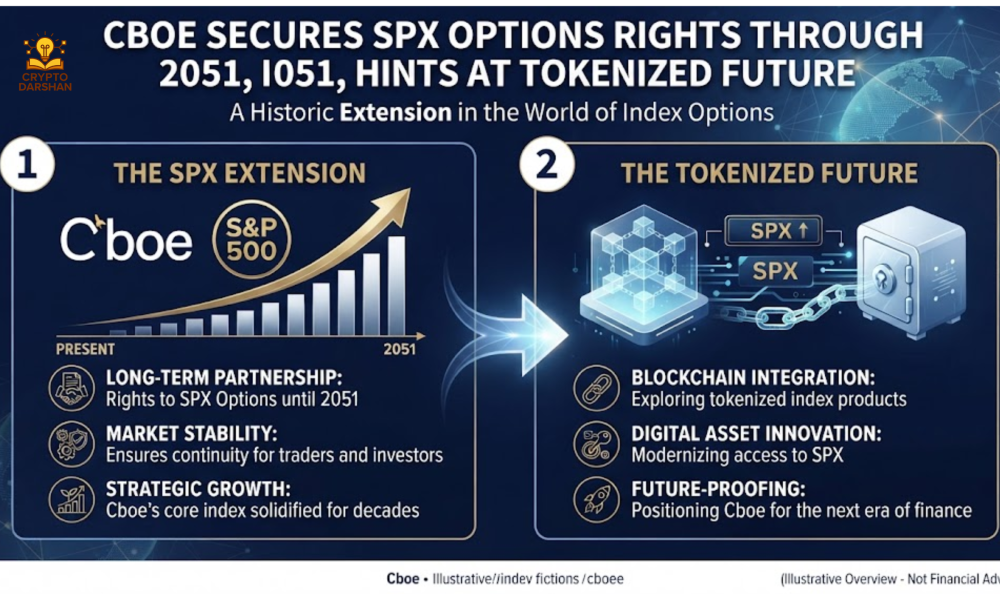
Cboe Global Markets has locked in exclusive rights to trade S&P 500 Index (SPX) options through 2051 after signing a 25-year licensing extension with S&P Dow Jones Indices. The deal also opens the door for the two firms to explore next-generation products, including tokenized options contracts built on blockchain infrastructure.
What the 25-Year Extension Means

The renewed agreement preserves Cboe’s exclusive license to list and trade SPX options—the world’s most liquid equity index options contract—through 2051. This removes a major long-term uncertainty for Cboe, which had previously held rights through 2032 under its earlier arrangement.
Key points from the deal:
- Exclusive SPX options rights: Cboe remains the only exchange operator able to offer options on the S&P 500 Index under the extended license.
- Long-term stability: The 25-year horizon extends a partnership that began in 1983, when SPX options first launched.
- Fee terms: Royalty terms for 2026 stay unchanged, with updated fee structures set to begin in 2027.
Market reaction was swift. Cboe’s shares jumped around 5–6% on the news as investors priced in reduced competitive risk and a clearer long-term revenue path from its flagship product.
Why SPX Options Matter
SPX options are a cornerstone of global equity risk management. They give investors and institutions a cash-settled, European-style way to gain or hedge exposure to 500 large U.S. companies without owning the underlying stocks.
Features that make SPX options especially popular:
- Broad market exposure: One contract references the entire S&P 500, simplifying portfolio hedging and tactical positioning.
- Cash settlement: No physical delivery of stocks; positions settle in cash based on the index level.
- Flexible expirations: Standard monthly, weekly, and month-end expirations, plus LEAPS with expirations up to three years out.
- Tax treatment: For eligible U.S. investors, SPX options can benefit from favorable 60/40 long-term/short-term capital gains treatment under Section 1256.
By securing exclusive rights through 2051, Cboe effectively guarantees its central role in this market for another generation.
Tokenized Options: What Could Come Next
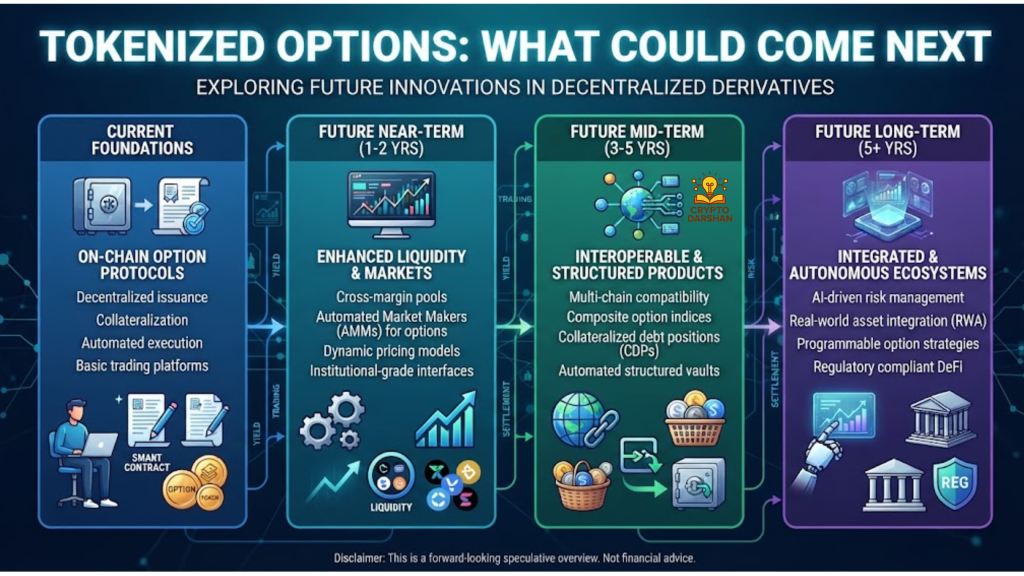
Alongside the license extension, Cboe and S&P Dow Jones Indices said they may collaborate on products “beyond traditional index derivatives,” explicitly naming tokenized options contracts as a potential area of innovation.
This does not mean tokenized SPX options are available today. The announcement is exploratory, not a product launch. Still, it signals that both firms see strategic value in pairing a marquee traditional-finance benchmark with blockchain-based infrastructure.
What “tokenized options” could mean
While details are not public, a tokenized options contract would likely involve:
- On-chain representation: Ownership and transfer of the option recorded on a blockchain via tokens.
- Programmable features: Smart contracts could automate certain functions such as margin checks, settlement logic, or eligibility rules.
- New distribution channels: Tokenization could, in theory, allow fractional access or integration with digital-asset platforms, subject to regulation.
Any such product would be separate from today’s SPX options and would require regulatory approvals, clear settlement designs, and robust risk controls before trading could begin.
Strategic Implications for Cboe and the Market
The deal strengthens Cboe’s position in three key ways:
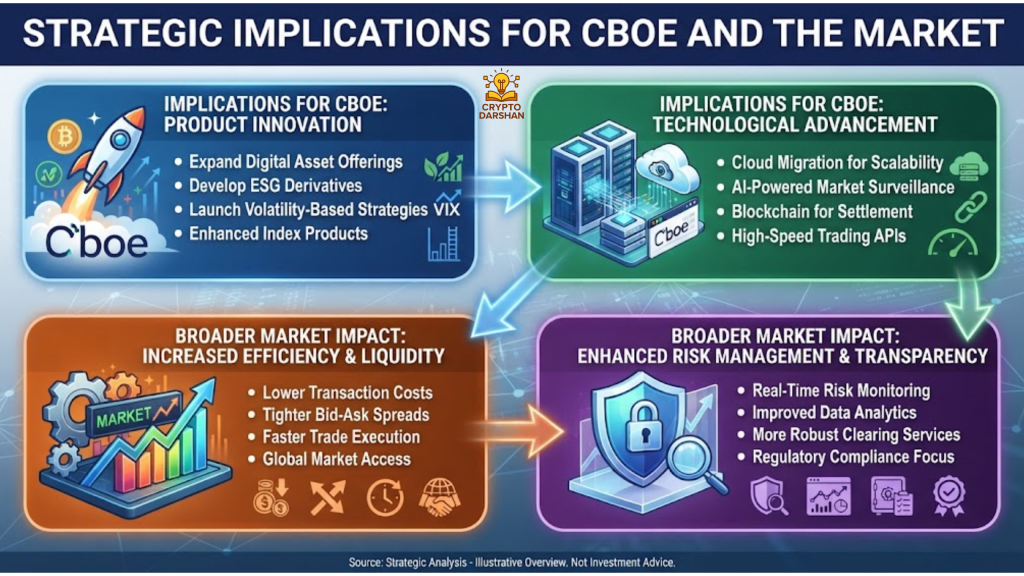
- Revenue certainty: SPX options are a major profit driver; locking in exclusivity through 2051 supports long-term earnings visibility.
- Innovation optionality: The tokenization clause gives Cboe and S&P DJI room to experiment with blockchain-native structures without disrupting existing markets.
- Competitive moat: Rivals cannot list SPX options during the license term, reinforcing Cboe’s dominance in equity index derivatives.
For the broader market, the move underscores how traditional finance is gradually integrating blockchain concepts. Rather than replacing existing infrastructure overnight, the likely path is hybrid: well-established benchmarks like the S&P 500 paired with new technological layers over time.
What Investors and Traders Should Watch
In the near term, nothing changes for anyone trading SPX options today. The same contracts, expirations, and settlement mechanisms remain in place.
Over the longer horizon, watch for:
- Regulatory filings: Any tokenized options product would need clear regulatory pathways in the U.S. and other jurisdictions.
- Technical design: How ownership, margin, and settlement would work on-chain, and whether institutions would accept the model.
- Industry response: Competitors may push their own tokenization or digital-asset initiatives if Cboe and S&P DJI move forward.
For now, the headline is simple: Cboe has secured its SPX options franchise through 2051 and flagged tokenized contracts as a possible next chapter in the evolution of index derivatives.