
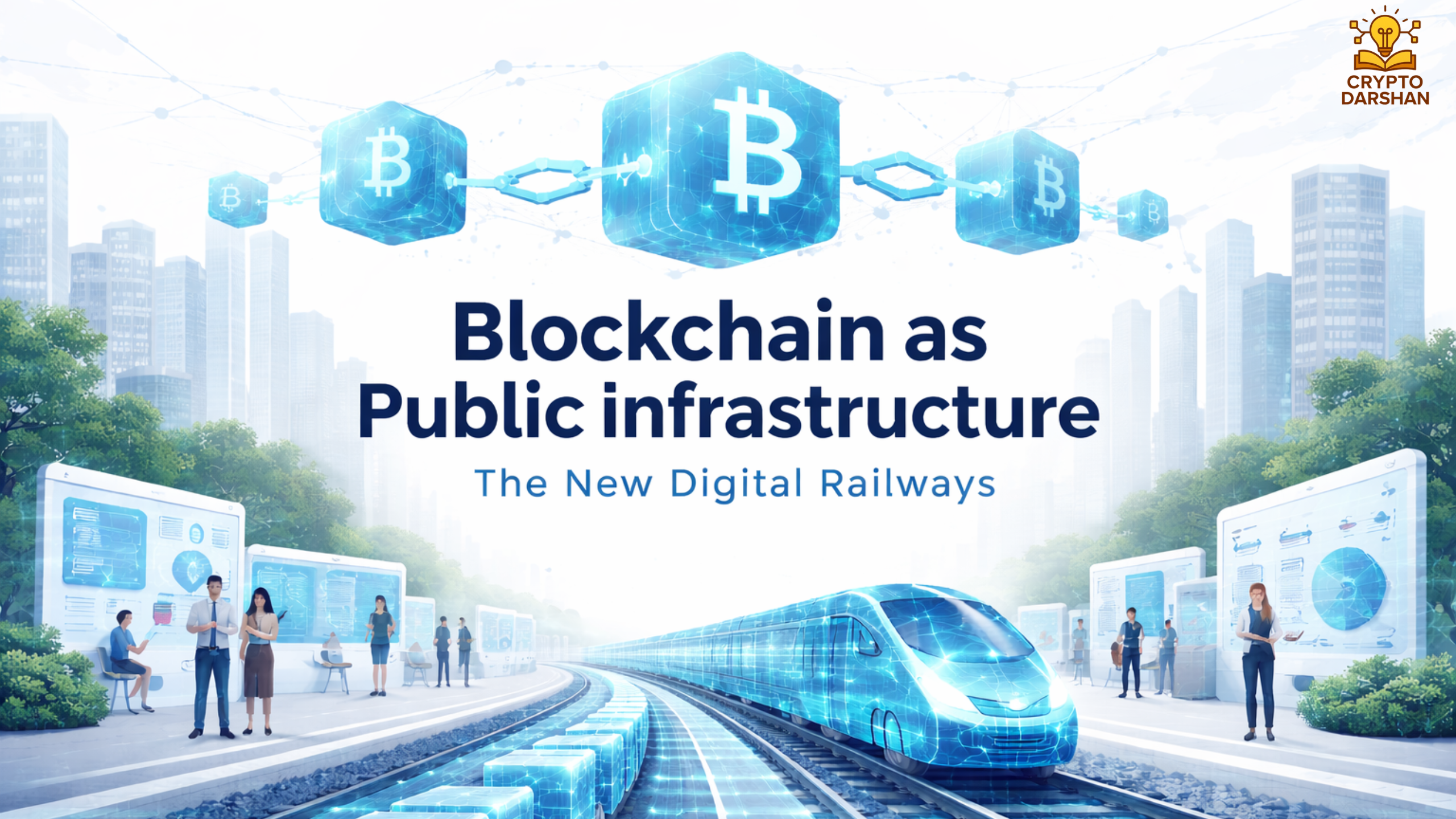
The 21st century has witnessed a digital transformation that rivals the industrial revolutions of the past. Just as railways once connected cities, economies, and people, blockchain technology is emerging as the new digital railway — a foundational infrastructure for the global digital economy. It promises to redefine how data, value, and trust move across the internet. This transformation is not merely technological; it is structural, economic, and societal. Blockchain, as public infrastructure, has the potential to reshape governance, commerce, and civic life in ways that echo the transformative power of railroads in the 19th century.
This article explores blockchain’s evolution from a niche innovation to a public utility, its role as a digital infrastructure, and how it can serve as the backbone of a more transparent, efficient, and equitable digital world. It also examines the challenges, policy implications, and future directions of blockchain as a public good.
The Historical Parallel: Railways and Digital Infrastructure

The Railway Revolution
In the 1800s, railways revolutionized transportation, commerce, and communication. They connected distant regions, reduced travel time, and enabled the mass movement of goods and people. Railways were not just a mode of transport; they were a public infrastructure that catalyzed industrialization, urbanization, and globalization. Governments and private enterprises collaborated to build networks that became the arteries of modern economies.
The Digital Revolution
Fast forward to the 21st century, and the internet has become the new global network. It connects billions of people, enabling instant communication and commerce. Yet, while the internet allows the exchange of information, it lacks a native system for exchanging value or establishing trust without intermediaries. This gap has led to inefficiencies, data monopolies, and privacy concerns.
Blockchain as the New Railway
Blockchain technology fills this gap. It provides a decentralized, transparent, and secure way to record transactions and share data. Just as railways standardized the movement of goods, blockchain standardizes the movement of digital assets and trust. It can serve as the underlying infrastructure for digital economies, enabling peer-to-peer transactions, decentralized governance, and verifiable data exchange.
Understanding Blockchain as Infrastructure

What Is Blockchain?
A blockchain is a distributed database or ledger shared across a computer network’s nodes. Each block contains a list of transactions, and once added to the chain, it cannot be altered without consensus from the network. This immutability and decentralization make blockchain a powerful tool for building trust in digital systems.
Public vs. Private Blockchains
- Public Blockchains: Open networks like Bitcoin and Ethereum allow anyone to participate, validate transactions, and access data. They function as public utilities, similar to the internet.
- Private Blockchains: Restricted networks used by corporations or governments for internal operations. They offer more control but less transparency.
For blockchain to serve as public infrastructure, it must operate as a public good — open, accessible, and governed by transparent protocols rather than centralized entities.
Blockchain Layers as Infrastructure Components
- Base Layer (Protocol Layer): The foundational blockchain network (e.g., Ethereum, Bitcoin).
- Network Layer: Nodes and validators that maintain consensus and security.
- Application Layer: Smart contracts and decentralized applications (dApps) that provide user-facing services.
- Interface Layer: Wallets, APIs, and user interfaces that connect people to the blockchain.
Together, these layers form a digital infrastructure stack that parallels the physical layers of traditional public utilities.
Blockchain as a Public Good

Defining Public Infrastructure
Public infrastructure refers to systems and services that are essential for societal functioning — roads, electricity, water, and communication networks. They are typically non-excludable and non-rivalrous, meaning everyone can use them without diminishing their availability to others.
Blockchain’s Public Utility Characteristics
- Open Access: Anyone can participate without permission.
- Transparency: All transactions are verifiable.
- Security: Cryptographic mechanisms ensure data integrity.
- Interoperability: Protocols can connect across networks.
- Resilience: Decentralization prevents single points of failure.
These features make blockchain a candidate for public infrastructure in the digital age, supporting applications in finance, governance, identity, and supply chains.
Like railways or telecommunications networks, digital infrastructure also requires governance. In blockchain ecosystems, decisions about upgrades, forks, and protocol rules are often shaped by complex governance battles, a topic explored in Blockchain Governance Wars: Forks, Votes, and Behind-the-Scenes Power.
The Economic Case for Blockchain Infrastructure

Reducing Transaction Costs
Traditional systems rely on intermediaries — banks, brokers, and clearinghouses — to verify and process transactions. Blockchain automates these functions through smart contracts, reducing costs and delays.
Enabling New Business Models
Blockchain enables decentralized finance (DeFi), tokenized assets, and peer-to-peer marketplaces. These innovations democratize access to financial services and create new economic opportunities.
Enhancing Transparency and Accountability
Public blockchains provide auditable records of transactions, reducing corruption and fraud. Governments can use blockchain to track public spending, manage land registries, and ensure fair elections.
Supporting Digital Sovereignty
By decentralizing control over data and digital assets, blockchain empowers individuals and communities to own and manage their digital identities and resources.
Blockchain and Governance

Decentralized Governance Models
Blockchain introduces new governance paradigms through decentralized autonomous organizations (DAOs). These entities operate via smart contracts, allowing stakeholders to vote on decisions transparently.
Public Sector Applications
Governments can leverage blockchain for:
- Digital Identity Systems: Secure, verifiable IDs for citizens.
- Voting Systems: Transparent and tamper-proof elections.
- Public Records: Immutable registries for land, health, and education.
- Supply Chain Tracking: Ensuring authenticity and ethical sourcing.
Policy and Regulation
For blockchain to function as public infrastructure, governments must establish regulatory frameworks that balance innovation with consumer protection. Policies should promote interoperability, data privacy, and open standards.
Blockchain and the Future of the Internet

Web3: The Decentralized Internet
Web3 represents the next phase of the internet — decentralized, user-owned, and blockchain-powered. It shifts control from centralized platforms to individuals, enabling a more equitable digital ecosystem.
Data Ownership and Privacy
Blockchain allows users to control their data through self-sovereign identity systems. Instead of relying on centralized databases, individuals can grant and revoke access to their information securely.
Interoperability and Open Standards
For blockchain to serve as public infrastructure, interoperability between networks is essential. Open standards ensure that different blockchains can communicate, much like how the internet’s TCP/IP protocols enable global connectivity.
Blockchain in Key Sectors

Finance and Banking
Blockchain is transforming finance through:
- Decentralized Finance (DeFi): Peer-to-peer lending, trading, and insurance.
- Central Bank Digital Currencies (CBDCs): Government-issued digital money.
- Cross-Border Payments: Faster, cheaper international transfers.
Supply Chain Management
Blockchain enhances supply chain transparency by recording every step of a product’s journey. This ensures authenticity, reduces fraud, and supports ethical sourcing.
Healthcare
Blockchain can secure patient records, streamline data sharing, and ensure the integrity of medical research. Patients gain control over their health data while maintaining privacy.
Energy and Sustainability
Blockchain supports decentralized energy grids, carbon credit tracking, and renewable energy trading. It enables transparent monitoring of sustainability initiatives.
Education
Blockchain-based credentials and certificates prevent fraud and simplify verification. Students can own and share their academic records globally.
Real Estate and Property Rights
Blockchain can simplify property transactions by recording ownership and transfer details on immutable ledgers. This reduces fraud, speeds up transactions, and ensures transparency in land registries.
Transportation and Logistics
Blockchain can optimize logistics by tracking shipments, verifying authenticity, and automating payments through smart contracts. It can also support autonomous vehicle coordination and maintenance records.
Challenges and Limitations

Scalability
Public blockchains face scalability issues due to limited transaction throughput. Layer-2 solutions and sharding aim to address these challenges.
Energy Consumption
Proof-of-work blockchains consume significant energy. Transitioning to proof-of-stake and other consensus mechanisms can reduce environmental impact.
Regulation and Compliance
Unclear regulations hinder adoption. Governments must develop frameworks that encourage innovation while ensuring security and compliance.
Digital Divide
Access to blockchain technology requires internet connectivity and digital literacy. Bridging this gap is essential for equitable participation.
Interoperability
Fragmentation among blockchain networks limits their potential. Standardized protocols are needed for seamless integration.
Security and Fraud
While blockchain itself is secure, vulnerabilities in smart contracts and user interfaces can lead to hacks and losses. Continuous auditing and education are vital.
Case Studies: Blockchain as Public Infrastructure in Action

Estonia’s e-Governance System
Estonia uses blockchain to secure government data, digital identities, and public services. Citizens can access healthcare, education, and voting systems through a unified digital platform.
India’s Blockchain Initiatives
India is exploring blockchain for land registries, supply chains, and digital identity systems. The government’s “IndiaChain” project aims to create a national blockchain infrastructure.
European Blockchain Services Infrastructure (EBSI)
The European Union’s EBSI project seeks to build a cross-border blockchain network for public services, including education, identity, and business registration.
African Blockchain Networks
Countries like Kenya and Nigeria are adopting blockchain for financial inclusion, agricultural supply chains, and transparent governance.
Latin America’s Blockchain Adoption
In Latin America, blockchain is being used to combat corruption and inflation. Countries like Brazil and Argentina are exploring blockchain-based systems for public procurement and digital currencies.
The Role of Governments and Institutions

Public-Private Partnerships
Collaboration between governments, academia, and industry is crucial for building blockchain infrastructure. Public-private partnerships can accelerate innovation and ensure equitable access.
Open Source Development
Open-source blockchain projects foster transparency, collaboration, and innovation. Governments can support these initiatives to ensure public ownership of digital infrastructure.
Education and Capacity Building
Investing in blockchain education and research prepares the workforce for the digital economy. Universities and training programs can play a key role in developing expertise.
International Cooperation
Blockchain’s global nature requires international collaboration. Cross-border agreements on standards, taxation, and data sharing can ensure interoperability and trust.
The Ethical Dimension of Blockchain Infrastructure

Equity and Inclusion
Blockchain must be designed to serve all communities, not just the technologically privileged. Inclusive design ensures that marginalized groups benefit from digital transformation.
Privacy and Surveillance
While blockchain enhances transparency, it must also protect individual privacy. Balancing openness with confidentiality is essential for ethical implementation.
Environmental Responsibility
Sustainable blockchain development requires energy-efficient consensus mechanisms and responsible resource use.
Accountability and Governance Ethics
Blockchain governance must remain transparent and democratic. Concentration of power among developers or miners can undermine decentralization. Ethical frameworks should guide decision-making processes.
The Future Vision: Blockchain as the Digital Railway

A Global Digital Commons
Blockchain can serve as a global digital commons — a shared infrastructure that supports innovation, governance, and economic activity. Like railways connected nations, blockchain can connect digital economies.
Interconnected Ecosystems
Future blockchain networks will interoperate seamlessly, enabling cross-border data and value exchange. This interconnectedness will power global trade, finance, and governance.
Empowered Citizens
In a blockchain-powered world, individuals will own their data, assets, and digital identities. This empowerment will redefine relationships between citizens, corporations, and governments.
Smart Cities and IoT Integration
Blockchain will underpin smart cities, enabling secure data exchange among IoT devices, autonomous vehicles, and public services. It will ensure transparency and accountability in urban management.
Artificial Intelligence and Blockchain Synergy
The combination of blockchain and artificial intelligence (AI) will create powerful systems for data verification, automation, and decision-making. Blockchain can ensure AI transparency by recording data sources and algorithmic decisions.
As blockchain records data provenance and AI processes that information for insights, the combination could enable more transparent and verifiable decision systems. This convergence is already driving the emergence of AI-focused blockchain projects, a trend explored in Top AI Crypto Coins in 2026: Where Smart Money Is Going.
The Metaverse and Digital Economies
Blockchain will serve as the foundation for the metaverse — virtual worlds where digital assets, identities, and economies operate seamlessly. It will enable ownership, trade, and governance in these digital spaces.
Policy Recommendations

Promote Open Standards
Governments and international organizations should promote open standards for blockchain development to ensure interoperability between different networks. Open standards prevent monopolization by large corporations and allow smaller players to participate in the ecosystem. This approach fosters innovation, competition, and collaboration across borders, much like how standardized railway gauges once unified transportation systems.
Support Public Infrastructure Projects
Public funding and policy support should be directed toward blockchain projects that serve collective interests, such as digital identity systems, transparent governance platforms, and public record management. Treating blockchain as a public utility ensures that its benefits reach all citizens rather than being confined to private enterprises.
Ensure Data Privacy
Strong data protection laws must accompany blockchain adoption. While transparency is a key feature of blockchain, privacy-preserving technologies like zero-knowledge proofs and encryption should be encouraged. Regulations should balance innovation with the right to privacy, ensuring that individuals maintain control over their personal data.
Encourage Sustainable Practices
Blockchain networks should adopt energy-efficient consensus mechanisms such as proof-of-stake or hybrid models. Governments can incentivize sustainable blockchain operations through tax benefits, grants, or carbon credits. Encouraging green blockchain practices aligns technological progress with environmental responsibility.
Foster Education and Research
Investing in blockchain education at universities, technical institutes, and vocational programs will build the skilled workforce needed for this emerging field. Research funding should support innovation in scalability, security, and governance. Public awareness campaigns can also help citizens understand blockchain’s role in everyday life.
Develop Inclusive Frameworks
Blockchain policies must ensure that all communities, including those in developing regions, have access to digital infrastructure. Inclusive frameworks should address affordability, connectivity, and digital literacy. This ensures that blockchain adoption does not widen the digital divide but instead promotes equitable participation.
Create Global Governance Models
Blockchain’s borderless nature requires international cooperation. Governments should collaborate to establish global governance models that define standards for interoperability, taxation, and data sharing. Such frameworks will prevent regulatory fragmentation and promote trust in cross-border blockchain applications.
Support Local Innovation
Local startups and community-driven blockchain projects should receive policy and financial support. Encouraging grassroots innovation ensures that blockchain solutions address real-world problems such as supply chain transparency, microfinance, and local governance. Supporting local ecosystems strengthens national competitiveness in the global digital economy.
Frequently Asked Questions (FAQs)

1. What does “blockchain as public infrastructure” mean?
Blockchain as public infrastructure refers to treating blockchain networks like foundational systems that support digital economies—similar to roads, railways, or the internet. These networks provide shared digital services such as secure record-keeping, identity verification, and financial transactions that many applications can build upon.
2. Why is blockchain compared to railways or public infrastructure?
Railways historically enabled commerce, mobility, and economic expansion by connecting cities and industries. In a similar way, blockchain networks enable digital connectivity by providing a decentralized platform for value transfer, data sharing, and trustless coordination across global systems.
3. How does blockchain function as a digital infrastructure layer?
Blockchain works as a distributed ledger maintained by a network of computers that verify and record transactions securely. Because the data is stored across many nodes and linked with cryptographic hashes, records are difficult to alter and can be independently verified by participants.
4. What industries could benefit from blockchain as public infrastructure?
Several sectors can leverage blockchain infrastructure, including:
- Financial services and payments
- Supply chain and logistics
- Digital identity systems
- Healthcare data management
- Government services and public records
These sectors benefit from blockchain’s transparency, automation, and tamper-resistant data systems.
5. How is blockchain different from traditional digital infrastructure?
Traditional digital infrastructure is usually centralized, meaning a single organization controls databases and systems. Blockchain infrastructure is decentralized, allowing multiple independent participants to maintain the network collectively without relying on a single authority.
6. What role do smart contracts play in blockchain infrastructure?
Smart contracts are programmable agreements stored on blockchain networks. They automatically execute when predefined conditions are met, enabling decentralized applications, automated financial systems, and digital marketplaces without intermediaries.
7. Can governments use blockchain as part of digital public infrastructure?
Yes. Governments can integrate blockchain into digital public infrastructure systems for:
- secure land registries
- digital identity systems
- transparent public spending
- cross-border payments
These systems can complement existing infrastructure such as digital identity and payment platforms used in many countries.
8. What challenges exist in using blockchain as public infrastructure?
Some major challenges include:
- scalability limitations
- regulatory uncertainty
- energy consumption in some networks
- interoperability between blockchains
- user experience barriers
Solving these issues is crucial before blockchain can fully function as a global public infrastructure.
Conclusion
Blockchain stands at the threshold of becoming the new digital railway — a foundational infrastructure for the global digital economy. Its potential to decentralize power, enhance transparency, and foster trust makes it a transformative force for the 21st century. Like the railways that once connected the physical world, blockchain connects the digital one, enabling the free and secure movement of value and information.
As governments, businesses, and citizens embrace this technology, the challenge lies in ensuring that blockchain remains open, inclusive, and sustainable. Building blockchain as public infrastructure is not just a technological endeavor; it is a societal mission to create a more equitable and connected digital future.