Global trade finance is the backbone of international commerce, enabling businesses to buy and sell goods across borders with confidence. It provides the financial instruments and credit facilities that make global trade possible, such as letters of credit, guarantees, and supply chain financing. However, traditional trade finance systems are often slow, expensive, and burdened by paperwork and intermediaries. In recent years, blockchain technology has emerged as a transformative force, promising to make global trade finance faster, cheaper, and more transparent.
Blockchain, the distributed ledger technology that underpins cryptocurrencies like Bitcoin, offers a secure and decentralized way to record transactions. Its ability to create immutable, transparent, and real-time records has made it a game-changer for industries that rely on trust and verification—especially global trade finance. By digitizing and automating trade processes, blockchain reduces delays, minimizes fraud, and cuts costs for businesses and financial institutions alike.
This article explores how blockchain is revolutionizing global trade finance, the challenges it addresses, the benefits it brings, and the future it promises for international trade.
Understanding Global Trade Finance

What Is Global Trade Finance?
Global trade finance refers to the financial products and services that facilitate international trade transactions. It helps importers and exporters manage the risks associated with cross-border trade, such as currency fluctuations, political instability, and payment defaults. Common instruments in global trade finance include:
- Letters of Credit (LCs): Guarantees from banks ensuring that exporters receive payment once certain conditions are met.
- Bills of Exchange: Written orders binding one party to pay a fixed amount to another.
- Trade Credit Insurance: Protection against non-payment by foreign buyers.
- Factoring and Forfaiting: Selling receivables to a third party to improve cash flow.
- Supply Chain Finance: Optimizing working capital by allowing suppliers to receive early payments.
These instruments are essential for maintaining trust between trading partners who may never meet in person. However, the traditional systems that support global trade finance are often outdated, slow, and costly.
The Challenges in Traditional Global Trade Finance

Despite its importance, global trade finance faces several persistent challenges:
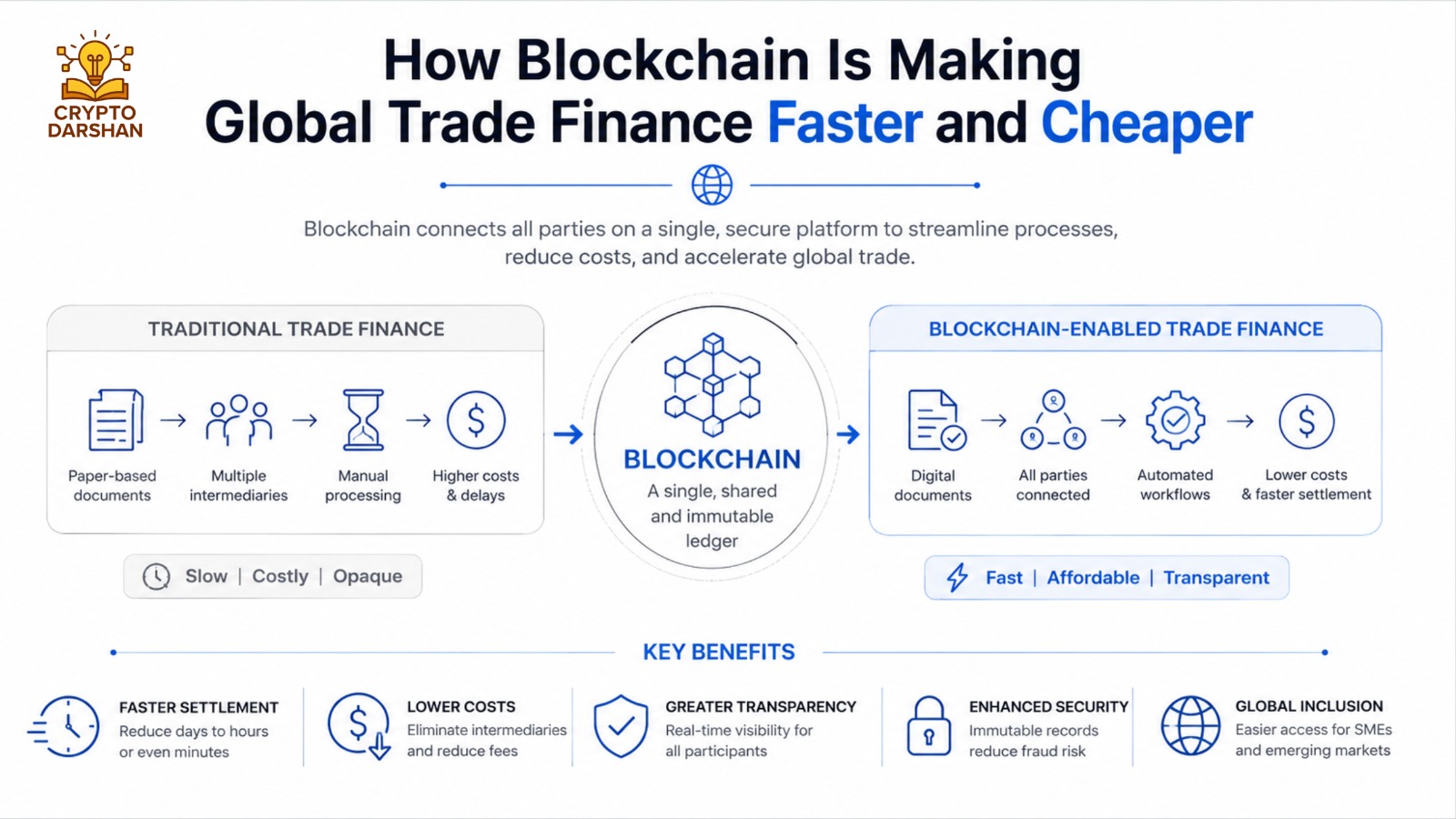
- Paper-Based Processes: Most trade transactions still rely on physical documents like bills of lading and letters of credit. These documents must be manually verified, stamped, and couriered between parties, leading to delays and errors.
- Lack of Transparency: Multiple intermediaries—banks, insurers, customs authorities, and logistics providers—handle different parts of the trade process. This fragmentation makes it difficult to track the status of shipments or payments in real time.
- High Costs: The reliance on manual verification and multiple intermediaries increases transaction costs. Small and medium-sized enterprises (SMEs) often find it difficult to access affordable trade finance.
- Fraud and Risk: Paper documents can be forged or duplicated, leading to fraud. The lack of real-time visibility also increases the risk of double financing or non-payment.
- Limited Access for SMEs: Many smaller businesses are excluded from global trade finance due to strict compliance requirements and high costs.
Blockchain technology offers solutions to these challenges by digitizing trade processes, improving transparency, and reducing costs.
The Role of Blockchain in Global Trade Finance

What Is Blockchain?
Blockchain is a decentralized digital ledger that records transactions across multiple computers in a secure and tamper-proof way. Each transaction, or “block,” is linked to the previous one, forming a chain of records that cannot be altered without consensus from the network participants.
Key features of blockchain include:
- Decentralization: No single entity controls the ledger.
- Transparency: All participants can view and verify transactions.
- Immutability: Once recorded, data cannot be changed or deleted.
- Security: Cryptographic algorithms protect data from unauthorized access.
These features make blockchain ideal for applications that require trust, verification, and transparency—such as global trade finance.
How Blockchain Transforms Global Trade Finance

Blockchain technology addresses many of the inefficiencies in traditional trade finance systems. Here’s how:
- Digitization of Documents: Blockchain allows trade documents like bills of lading, invoices, and letters of credit to be stored digitally on a shared ledger. This eliminates the need for paper-based processes and reduces the risk of document loss or forgery.
- Smart Contracts: These are self-executing contracts with terms written into code. In global trade finance, smart contracts can automatically trigger payments once predefined conditions are met, such as the delivery of goods or verification of shipping documents.
- Real-Time Tracking: Blockchain provides real-time visibility into the status of shipments, payments, and compliance checks. This transparency reduces disputes and improves trust among trading partners.
- Reduced Intermediaries: By enabling direct peer-to-peer transactions, blockchain reduces the need for intermediaries like correspondent banks, cutting costs and speeding up transactions.
- Enhanced Security: The cryptographic nature of blockchain ensures that trade data is secure and tamper-proof, reducing the risk of fraud.
- Improved Access for SMEs: Blockchain-based platforms can lower entry barriers for small businesses by simplifying compliance and reducing costs.
Key Benefits of Blockchain in Global Trade Finance
1. Faster Transactions
Traditional trade finance transactions can take days or even weeks to process due to manual verification and document exchange. Blockchain automates these processes, enabling near-instantaneous verification and settlement. Smart contracts ensure that payments are released automatically once conditions are met, reducing delays and improving cash flow. Faster settlement in trade finance depends on efficient transaction processing. Learn more in What are Mempools? The Waiting Room Your Crypto Sits in Before It Moves.
2. Lower Costs
By eliminating intermediaries and reducing paperwork, blockchain significantly cuts transaction costs. Banks and businesses save money on administrative expenses, courier fees, and compliance checks. This cost efficiency makes global trade finance more accessible to smaller players.
3. Greater Transparency
Blockchain’s shared ledger allows all participants to view the same version of transaction data in real time. This transparency reduces disputes, enhances trust, and simplifies auditing and compliance.
4. Enhanced Security and Fraud Prevention
immutable nature makes it nearly impossible to alter or forge trade documents. Each transaction is cryptographically secured and time-stamped, ensuring authenticity and traceability. This reduces the risk of double financing, document fraud, and other financial crimes.
5. Improved Efficiency and Automation
Smart contracts automate routine tasks such as payment releases, document verification, and compliance checks. This reduces human error and frees up resources for more strategic activities.
6. Better Access to Finance for SMEs
Blockchain-based trade finance platforms can provide SMEs with easier access to credit by offering transparent transaction histories and digital identities. This helps lenders assess risk more accurately and extend financing to previously underserved businesses.
Real-World Applications of Blockchain in Global Trade Finance

1. TradeLens
Developed by IBM and Maersk, TradeLens is a blockchain-based platform that digitizes global supply chain documentation. It allows shippers, freight forwarders, and customs authorities to share real-time data securely. By reducing paperwork and improving visibility, TradeLens has streamlined trade finance processes for thousands of participants worldwide.
2. We trade
We. Trade is a blockchain platform developed by a consortium of European banks to simplify trade finance for SMEs. It uses smart contracts to automate payments and ensure that transactions occur only when agreed conditions are met. This reduces risk and speeds up cross-border trade.
3. Marco Polo Network
The Marco Polo Network connects banks, corporates, and technology providers on a blockchain platform for open account trade finance. It offers solutions for receivables financing, payment commitments, and supply chain transparency.
4. Contour
Contour focuses on digitizing letters of credit using blockchain technology. By replacing paper-based LCs with digital versions, Contour reduces processing time from days to hours, making global trade finance faster and more efficient.
5. Komgo
Komgo is a blockchain-based trade finance platform for the commodities sector. It streamlines the exchange of trade documents and financing requests between traders, banks, and insurers, reducing fraud and improving efficiency.
How Blockchain Reduces Costs in Global Trade Finance

Streamlined Documentation
Blockchain eliminates the need for physical document exchange by digitizing trade records. This reduces courier costs, administrative overhead, and the risk of lost or forged documents.
Fewer Intermediaries
Traditional trade finance involves multiple intermediaries, each charging fees for their services. Blockchain enables direct transactions between buyers, sellers, and banks, cutting out unnecessary middlemen and reducing costs.
Automated Compliance
Smart contracts and digital identities simplify compliance with international trade regulations. Automated verification reduces the time and cost associated with manual compliance checks. Smart contracts are helping automate trade agreements and payments, a trend that is also expanding access to financial services in Financial Inclusion Through Crypto: How Blockchain Helps the Unbanked.
Reduced Fraud and Disputes
Blockchain’s transparency and immutability minimize the risk of fraud and disputes, saving businesses money on legal and insurance costs.
How Blockchain Speeds Up Global Trade Finance

Real-Time Verification
Blockchain allows all parties to verify trade documents and transactions in real time. This eliminates delays caused by manual verification and document exchange.
Instant Payments
Smart contracts enable automatic payment execution once conditions are met, reducing settlement times from days to minutes.
Faster Customs Clearance
Blockchain can integrate with customs systems to provide real-time data on shipments, speeding up clearance and reducing delays at ports.
Improved Supply Chain Coordination
By providing a single source of truth for all participants, blockchain improves coordination across the supply chain, reducing bottlenecks and inefficiencies.
The Impact of Blockchain on Banks and Financial Institutions
New Business Models
Banks are adopting blockchain to create new trade finance products and services. For example, digital letters of credit and blockchain-based supply chain financing are becoming increasingly popular.
Reduced Operational Costs
Automation and digitization reduce the need for manual processing, lowering operational costs for banks. Reducing paperwork and intermediaries is one reason businesses are exploring blockchain solutions, similar to the innovation discussed in The Hardest Part of Building a Blockchain Business.
Enhanced Risk Management
Blockchain provides real-time visibility into trade transactions, helping banks assess risk more accurately and prevent fraud.
Collaboration and Standardization
Blockchain encourages collaboration among banks, regulators, and technology providers to create standardized trade finance solutions that benefit the entire ecosystem.
Challenges and Limitations of Blockchain in Global Trade Finance

Regulatory Uncertainty
Different countries have varying regulations regarding blockchain and digital assets. The lack of global standards can hinder cross-border adoption.
Integration with Legacy Systems
Many banks and trade organizations still rely on legacy systems that are difficult to integrate with blockchain platforms.
Scalability and Interoperability
Blockchain networks must handle large volumes of transactions efficiently. Ensuring interoperability between different blockchain platforms is also a challenge.
Data Privacy Concerns
While blockchain promotes transparency, businesses must ensure that sensitive trade data remains confidential and compliant with data protection laws. Long-term adoption of blockchain in global commerce depends on strong security standards. Explore Post-Quantum Cryptography Explained: How Blockchains Are Preparing to understand future security challenges.
Adoption Barriers
Widespread adoption requires collaboration among multiple stakeholders, including banks, regulators, and logistics providers. Resistance to change and lack of technical expertise can slow progress.
The Future of Blockchain in Global Trade Finance

Increased Adoption
As blockchain technology matures, more banks and corporations are expected to adopt it for trade finance. The success of platforms like we.trade and Contour demonstrates the potential for large-scale implementation.
Integration with Emerging Technologies
Blockchain will increasingly integrate with other technologies such as artificial intelligence (AI), the Internet of Things (IoT), and big data analytics. For example, IoT sensors can provide real-time shipment data that is recorded on the blockchain, enhancing transparency and efficiency.
Central Bank Digital Currencies (CBDCs)
The rise of CBDCs could further streamline global trade finance by enabling instant cross-border payments on blockchain networks.
Standardization and Regulation
Global efforts to standardize blockchain protocols and regulatory frameworks will accelerate adoption and interoperability across borders.
Empowering SMEs
Blockchain will continue to democratize access to trade finance, enabling SMEs to participate more actively in global trade by reducing costs and simplifying compliance.
Case Studies: Blockchain Success in Global Trade Finance

Case Study 1: HSBC and ING’s Blockchain Letter of Credit
HSBC and ING executed the world’s first blockchain-based letter of credit transaction for a shipment of soybeans from Argentina to Malaysia. The transaction, which traditionally takes 5–10 days, was completed in just 24 hours using blockchain. This demonstrated how blockchain can make global trade finance faster and more efficient.
Case Study 2: Standard Chartered and DBS on Contour
Standard Chartered and DBS used the Contour platform to issue and process digital letters of credit for cross-border trade. The process reduced document handling time by 90%, showcasing blockchain’s potential to streamline trade finance operations.
Case Study 3: Komgo in the Commodities Sector
Komgo’s blockchain platform has been adopted by major energy companies and banks to digitize trade finance for commodities. It has reduced fraud, improved transparency, and cut processing times significantly.
The Economic Impact of Blockchain on Global Trade Finance
Boosting Global Trade Volumes
By reducing costs and delays, blockchain can increase global trade volumes. Faster and cheaper trade finance encourages more businesses to engage in international trade.
Enhancing Financial Inclusion
Blockchain-based trade finance platforms can extend credit to SMEs that were previously excluded from traditional banking systems, promoting economic growth and job creation.
Strengthening Supply Chains
Blockchain improves supply chain visibility and resilience, helping businesses respond more effectively to disruptions such as pandemics or geopolitical tensions.
Reducing the Global Trade Finance Gap
According to the Asian Development Bank, the global trade finance gap exceeds $1.7 trillion. Blockchain can help close this gap by making trade finance more accessible and efficient.
The Road Ahead: Building a Blockchain-Enabled Trade Ecosystem

To fully realize the potential of blockchain in global trade finance, stakeholders must collaborate to build a unified digital ecosystem. Key steps include:
- Developing Global Standards: Establishing common protocols for blockchain-based trade finance to ensure interoperability and compliance.
- Encouraging Public-Private Partnerships: Governments, banks, and technology providers must work together to promote adoption.
- Investing in Education and Training: Building technical expertise among trade professionals and regulators.
- Enhancing Legal Frameworks: Updating trade laws to recognize digital documents and smart contracts.
- Promoting Pilot Projects: Encouraging experimentation and innovation through pilot programs and sandbox environments.
FAQ: How Blockchain Is Making Global Trade Finance Faster and Cheaper

1. What is trade finance?
Trade finance refers to the financial services and instruments that help businesses conduct international trade. It includes letters of credit, guarantees, invoice financing, and payment processing that reduce risk for buyers and sellers.
2. How does blockchain improve trade finance?
Blockchain creates a shared, tamper-resistant digital ledger where all parties can access the same transaction records in real time. This reduces paperwork, speeds up verification, and lowers administrative costs.
3. Why is traditional trade finance often slow?
Traditional trade finance relies heavily on paper documents, manual verification, multiple intermediaries, and cross-border communication between banks, shipping companies, customs authorities, and traders.
4. How does blockchain reduce transaction costs?
By automating processes, eliminating duplicate record-keeping, and reducing the need for intermediaries, blockchain can significantly cut operational and processing expenses.
5. What role do smart contracts play in trade finance?
Smart contracts automatically execute agreements when predefined conditions are met. For example, payment can be released automatically once goods are delivered and verified.
6. Can blockchain help reduce fraud in international trade?
Yes. Since blockchain records cannot be easily altered, it becomes much harder to forge documents, manipulate invoices, or submit duplicate financing requests.
7. How does blockchain improve transparency?
All authorized participants can view the same transaction history, reducing information gaps and making it easier to track shipments, payments, and documentation.
8. What are letters of credit, and how does blockchain affect them?
A letter of credit is a bank guarantee that ensures payment between trading partners. Blockchain can digitize and automate the issuance, verification, and settlement of letters of credit, reducing processing times from days to hours.
Conclusion
Blockchain is transforming global trade finance by making it faster, cheaper, and more transparent. Through digitization, automation, and decentralization, blockchain addresses the long-standing inefficiencies of traditional trade finance systems. It reduces paperwork, eliminates intermediaries, enhances security, and provides real-time visibility into trade transactions.
As adoption grows, blockchain will play a central role in shaping the future of global trade finance. It will empower businesses of all sizes, strengthen supply chains, and drive economic growth worldwide. The journey toward a fully digital, blockchain-enabled trade ecosystem is still unfolding, but its potential to revolutionize global trade finance is undeniable.