
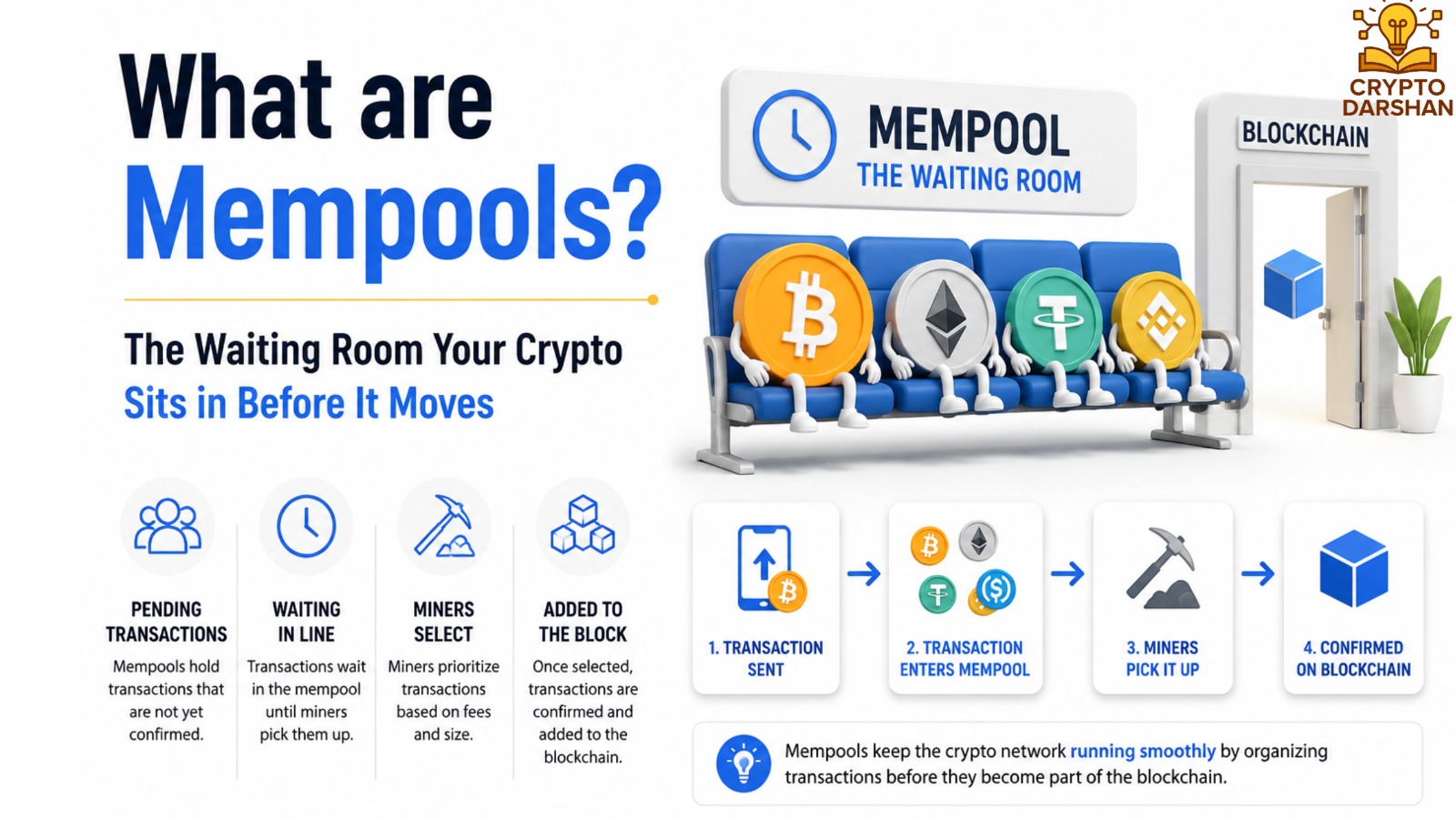
In the world of cryptocurrency, transactions don’t happen instantly. When sending Bitcoin, Ethereum, or any other digital asset, the transaction doesn’t immediately appear on the blockchain. Instead, it first enters a temporary holding area known as the mempool. The mempools act as a waiting room where unconfirmed transactions sit until they are picked up by miners or validators and added to a block.
Understanding how the mempools work is essential for anyone involved in crypto trading, mining, or blockchain development. It affects transaction speed, fees, and even network congestion. This guide explores what a mempool is, how it functions, why it matters, and how users can optimize their transactions to avoid delays and high fees.
1. Understanding the Basics of Blockchain Transactions
Before diving into the mempool, it’s important to understand how blockchain transactions work. Every blockchain network, whether Bitcoin, Ethereum, or others, follows a similar process for confirming transactions.
1.1 How a Transaction Is Created
When a user sends cryptocurrency, they create a transaction that includes:
- The sender’s address
- The recipient’s address
- The amount being sent
- A transaction fee
- A digital signature verifying authenticity
This transaction is broadcast to the network, where it awaits confirmation.
1.2 The Role of Miners and Validators
In proof-of-work (PoW) blockchains like Bitcoin, miners collect unconfirmed transactions and compete to add them to the next block. In proof-of-stake (PoS) systems like Ethereum (after the Merge), validators perform a similar role by proposing and attesting to new blocks. Since every blockchain maintains its own transaction queue, Why Interoperability Is Still a Big Challenge in Crypto remains an important topic for the industry.
1.3 Confirmation and Finality
Once a transaction is included in a block and that block is added to the blockchain, the transaction is considered confirmed. The more blocks that follow, the more secure the confirmation becomes. Before a transaction leaves the mempool and becomes part of the blockchain, it must first be selected through the process explained in How Mining Works.
2. What Is a Mempool?

The term mempool stands for memory pool. It is a temporary storage area maintained by each node in a blockchain network. When a transaction is broadcast, it first enters the nodes that receive it. From there, miners or validators select transactions from their mempool to include in the next block.
2.1 The Mempool as a Waiting Room
Think of the mempool as a waiting room for transactions. Each transaction waits for its turn to be processed. The order in which transactions are picked depends largely on the transaction fee offered. Higher fees usually mean faster processing.
2.2 Decentralized Nature of Mempools
Each node in the network maintains its own version of the mempools. This means there isn’t a single, centralized mempools. Instead, every node’s mempool may differ slightly depending on which transactions it has received and validated.
2.3 Temporary Storage
Transactions don’t stay in the mempools forever. If a transaction remains unconfirmed for too long—often due to low fees—it may be dropped from the mempool after a certain period, depending on the node’s configuration.
3. How the Mempool Works Step-by-Step

Step 1: Transaction Creation
A user initiates a transaction using a wallet. The wallet signs the transaction with the user’s private key and broadcasts it to the network.
Step 2: Transaction Validation
Nodes that receive the transaction verify its validity. They check that:
- The sender has enough balance.
- The digital signature is correct.
- The transaction follows network rules.
If valid, the transaction is added to the node’s mempools.
Step 3: Waiting for Inclusion
The transaction remains in the mempools until a miner or validator selects it for inclusion in a block. Transactions with higher fees are prioritized.
Step 4: Block Confirmation
Once included in a block, the transaction is removed from the mempools and becomes part of the blockchain’s permanent record.
4. Why the Mempool Matters

The mempool plays a crucial role in maintaining the efficiency and fairness of blockchain networks.
4.1 Regulating Network Traffic
The mempool acts as a buffer that helps manage transaction flow. When the network is busy, the mempool fills up, and fees rise. When activity slows, fees drop.
4.2 Fee Market Dynamics
Because miners and validators prioritize transactions with higher fees, the mempools effectively create a fee market. Users compete to have their transactions processed faster by offering higher fees.
4.3 Transparency and Predictability
By monitoring the mempool, users can estimate how long their transactions might take and adjust fees accordingly. Many blockchain explorers display real-time mempool data.
5. Mempools Size and Network Congestion

5.1 What Determines Mempool Size
The size of the mempool depends on:
- The number of unconfirmed transactions
- The average transaction size in bytes
- The network’s block capacity
When more transactions are waiting than can fit in the next block, the mempool grows.
5.2 Effects of Congestion
During periods of high demand—such as NFT drops or market volatility—the mempool can become congested. This leads to:
- Slower transaction confirmations
- Higher transaction fees
- Increased competition for block space
5.3 Clearing the Mempool
When miners or validators process transactions faster than new ones arrive, the mempool clears. This typically happens during low network activity.
6. Transaction Fees and the Mempool
6.1 How Fees Are Calculated
Transaction fees are usually based on the size of the transaction (in bytes) and the current demand for block space. In Bitcoin, fees are measured in satoshis per byte (sat/B), while Ethereum uses gas.
6.2 Fee Priority
Miners and validators prioritize transactions offering higher fees. This incentivizes users to pay more for faster confirmations.
6.3 Fee Estimation Tools
Wallets and explorers often include fee estimators that analyze the mempools to suggest optimal fees for timely confirmation.
7. Mempool in Different Blockchains

7.1 Bitcoin’s Mempool
Bitcoin’s mempool is decentralized, with each node maintaining its own version. The default maximum size is 300 MB, but this can vary. When full, nodes start dropping the lowest-fee transactions.
7.2 Ethereum’s Mempool (Transaction Pool)
Ethereum’s mempool, often called the transaction pool, works similarly but uses gas prices instead of satoshis per byte. Validators prioritize transactions with higher gas fees.
7.3 Other Blockchains
Different blockchains have unique mempool implementations:
- Litecoin mirrors Bitcoin’s structure.
- Solana uses a more centralized transaction queue.
- Cardano and Polkadot use mempools optimized for proof-of-stake consensus.
8. Mempool Monitoring and Analytics
8.1 Why Monitor the Mempool
Monitoring the mempool helps users:
- Predict transaction confirmation times
- Adjust fees for optimal speed
- Identify network congestion
8.2 Tools for Mempool Analysis
Popular tools include:
- Mempool.space for Bitcoin
- Etherscan Gas Tracker for Ethereum
- Blockchair for multi-chain analysis
8.3 Insights from Mempool Data
Mempool data reveals trends in network usage, such as spikes during market volatility or major token launches.
9. Mempool and Network Security

9.1 Preventing Spam and Attacks
The mempools helps filter out invalid or spam transactions. Nodes reject transactions that don’t meet minimum fee requirements or violate protocol rules.
9.2 Double-Spend Protection
Once a transaction enters the mempool, nodes track it to prevent double-spending attempts. If a conflicting transaction appears, nodes reject it.
9.3 Transaction Replacement (RBF)
Bitcoin supports Replace-by-Fee (RBF), allowing users to resend a transaction with a higher fee to speed up confirmation. This feature interacts directly with the mempool.
10. Common Mempool Issues

10.1 Stuck Transactions
Transactions with low fees can remain unconfirmed for hours or days during congestion. They may eventually be dropped from the mempool.
10.2 Dropped Transactions
If a transaction is dropped, it must be resent with a higher fee. Wallets often handle this automatically.
10.3 Mempools Overflows
When the mempool reaches its maximum size, nodes start removing the lowest-fee transactions to make room for new ones.
11. Optimizing Transactions for the Mempool

11.1 Choosing the Right Fee
Using a fee estimator helps ensure timely confirmation without overpaying. Many wallets automatically suggest optimal fees.
11.2 Timing Transactions
Sending transactions during off-peak hours can reduce fees and speed up confirmation.
11.3 Using Layer 2 Solutions
Layer 2 technologies like the Lightning Network (for Bitcoin) or Optimistic Rollups (for Ethereum) reduce reliance on the main chain, easing mempool congestion.
12. The Future of Mempools

12.1 Dynamic Fee Markets
As blockchain adoption grows, fee markets will become more dynamic. Algorithms may automatically adjust fees based on real-time mempools conditions.
12.2 Improved Scalability
Upgrades like Bitcoin’s SegWit and Ethereum’s sharding aim to increase block capacity, reducing mempool congestion.
12.3 Privacy Enhancements
Future mempool designs may include privacy features to hide transaction details from public view, improving user confidentiality.
13. Real-World Examples of Mempool Activity

13.1 Bitcoin Bull Runs
During major Bitcoin price surges, transaction volume spikes, causing mempool congestion and skyrocketing fees.
13.2 NFT Minting Events
On Ethereum, NFT launches often flood the mempool with transactions, leading to gas wars where users compete with high fees.
13.3 Network Upgrades
Before major upgrades, users often rush to move funds, temporarily increasing mempool size.
14. Mempool Visualization and Data Interpretation
14.1 Reading Mempools Charts
Mempools charts display the number of unconfirmed transactions and their fee distribution. Taller bars indicate congestion.
14.2 Understanding Fee Layers
Transactions are grouped by fee rate. Higher layers represent transactions with higher fees waiting to be confirmed first.
14.3 Predicting Confirmation Times
By analyzing mempool data, users can estimate how many blocks it will take for their transaction to confirm.
15. Mempool and Blockchain Scalability

15.1 The Scalability Challenge
As blockchain usage increases, limited block space becomes a bottleneck. The mempool reflects this pressure through congestion and rising fees.
15.2 Layer 2 and Off-Chain Solutions
Technologies like Lightning Network, zk-Rollups, and sidechains help reduce main-chain load, keeping mempools manageable.
15.3 Adaptive Block Sizes
Some blockchains experiment with adaptive block sizes that expand during high demand to prevent mempools overflow.
16. Developer Perspectives on the Mempool

16.1 Node Configuration
Developers can adjust mempool parameters such as maximum size, minimum fee rate, and transaction expiry time.
16.2 Custom Mempool Policies
Some nodes implement custom policies to prioritize specific transaction types or reject spam.
16.3 Mempool APIs
Developers use APIs to access mempool data for analytics, fee estimation, and transaction tracking.
17. Myths and Misconceptions About Mempools

Because the mempool operates behind the scenes, it is often misunderstood. Many users assume it functions like a traditional bank queue or a simple “first-come, first-served” list, but the reality is more complex and dynamic.
Here are 5 key points debunking common myths about mempools:
1. Myth: “There is only one global mempool.”
Reality: There is no single, centralized mempool. Every full node in a blockchain network maintains its own local version of the mempool. While these versions are constantly synchronized as nodes share information, they are rarely identical at any given millisecond. A transaction might appear in one node’s mempool before it propagates to another, which is why different block explorers might show slightly different numbers of unconfirmed transactions.
2. Myth: “Transactions are processed strictly in the order they arrive.”
Reality: The mempool is not a simple “first-in, first-out” (FIFO) queue. Miners and validators are profit-driven; they prioritize transactions that offer higher fees because those transactions increase their own rewards. A transaction broadcast five minutes ago with a high fee will almost always be picked up before a transaction broadcast an hour ago with a very low fee.
3. Myth: “If my transaction is in the mempool, it is guaranteed to be confirmed.”
Reality: Being in the mempools is not a guarantee of confirmation. If you set a fee that is too low, your transaction may sit in the mempool indefinitely. Furthermore, if the network becomes extremely congested, nodes may reach their memory limits and start dropping the lowest-fee transactions to make room for new ones. If your transaction is dropped, it effectively disappears from the network and must be rebroadcast.
4. Myth: “High fees guarantee instant confirmation.”
Reality: While high fees significantly increase your priority, they do not override the physical limitations of the blockchain. Confirmation still depends on the network’s block time (e.g., roughly 10 minutes for Bitcoin). Even with a massive fee, your transaction must wait for the next block to be mined. If the network is experiencing a massive surge in activity, even “high” fees might be outbid by others, causing your transaction to wait for a subsequent block.
18. The Mempool’s Role in Decentralization

The mempool is a cornerstone of blockchain decentralization because it removes the need for a central authority to decide which transactions are processed first. Instead, it creates a transparent, competitive environment where the network rules—not a middleman—determine the order of operations.
Here are 5 key points explaining the mempool’s role in decentralization:
1. Permissionless Access
In a centralized system, a bank or payment processor can choose to block or delay your transaction based on their own policies. In a decentralized network, the mempool is open to everyone. Anyone with an internet connection can broadcast a transaction, and as long as it follows the protocol rules, it will be accepted into the mempool of nodes globally, regardless of who the sender is.
2. Transparent Fee Markets
The mempool creates a transparent “fee market” that is visible to the entire world. Because miners and validators are incentivized to maximize their profits, they naturally prioritize transactions with higher fees. This mechanism is decentralized because it is driven by supply and demand rather than a fixed price set by a corporation, ensuring that block space is allocated efficiently and fairly based on market dynamics.
3. Distributed Validation
Because every full node in the network maintains its own version of the mempool, there is no single point of failure. If one node goes offline or is censored, the transaction still exists in the mempools of thousands of other nodes across the globe. This redundancy ensures that no single entity can effectively “delete” or hide a transaction once it has been broadcast to the network.
4. Neutrality and Censorship Resistance
The mempool acts as a neutral buffer. Miners and validators are generally incentivized to include any valid transaction that pays a fee. This makes it extremely difficult for any single actor to censor specific users or addresses. If a miner refuses to include a transaction for political or personal reasons, other miners in the decentralized network will likely pick it up from the mempool to collect the fee, ensuring the transaction eventually gets confirmed.
5. Preventing Centralized Control
By allowing transactions to sit in a public, distributed waiting room, the mempool prevents any central entity from “queue-jumping” or manipulating the order of transactions for their own benefit. The rules for how transactions move from the mempool to the blockchain are encoded in the protocol itself. This ensures that the system operates according to math and code, rather than the whims of a central administrator.
19. Comparing Mempools Across Networks
| Blockchain | Consensus Type | Fee Unit | Mempool Name | Priority Mechanism |
| Bitcoin | Proof of Work | Satoshis per byte | Mempool | Higher fee per byte |
| Ethereum | Proof of Stake | Gas | Transaction Pool | Higher gas price |
| Litecoin | Proof of Work | Litoshis per byte | Mempool | Higher fee per byte |
| Cardano | Proof of Stake | ADA | Mempool | Fee and stake weight |
| Solana | Proof of History | Lamports | Transaction Queue | Validator scheduling |
20.Frequently Asked Questions (FAQ)

1. What is a mempool in cryptocurrency?
A mempool (short for “memory pool”) is a temporary waiting area where unconfirmed blockchain transactions are stored before miners or validators include them in a block. It acts like a queue for pending transactions.
2. Why does a crypto transaction stay in the mempools?
A transaction remains in the mempool until it is selected for confirmation by the network. This can happen because the network is busy or because the transaction fee is lower than competing transactions.
3. Is the mempool the same for every blockchain?
No. Each blockchain has its own mempools design and rules. Networks like Bitcoin and Ethereum manage pending transactions differently based on their protocols and consensus mechanisms.
4. How long can a transaction stay in the mempool?
The time varies depending on network congestion and the fee paid. Some transactions are confirmed within seconds or minutes, while others may remain pending for hours or even longer if fees are too low.
5. Can a transaction be removed from the mempools?
Yes. If a transaction remains unconfirmed for too long, some nodes may drop it from their mempool. In that case, the wallet may need to rebroadcast the transaction or create a replacement.
6. Does a full mempool mean the blockchain is broken?
No. A full mempool simply indicates that there are more pending transactions than the network can process immediately. It is often a sign of high demand rather than a network failure.
7. How do transaction fees affect the mempool?
Transactions with higher fees are generally prioritized by miners or validators because they offer greater rewards. Lower-fee transactions may wait longer during periods of heavy network activity.
8. Can I check if my transaction is still in the mempool?
Yes. You can use a blockchain explorer to search for your transaction ID (TXID) and see whether it is still pending or has been confirmed.
21. Conclusion
The mempool is a vital component of every blockchain network. Acting as a waiting room for unconfirmed transactions, it ensures that the system remains orderly, transparent, and efficient. By understanding how the mempools works, users can make smarter decisions about transaction timing, fees, and network usage.
As blockchain technology evolves, the mempools will continue to adapt—becoming faster, more efficient, and more intelligent. Whether sending Bitcoin, minting NFTs, or building decentralized applications, understanding the mempool is key to navigating the crypto ecosystem effectively.