Access to financial services is a cornerstone of economic growth and personal empowerment. Yet, billions of people around the world remain excluded from the formal financial system. According to the World Bank, nearly 1.4 billion adults globally do not have access to a bank account. This lack of access limits their ability to save, borrow, invest, or even receive payments securely. The concept of Financial Inclusion aims to bridge this gap by ensuring that everyone, regardless of income or location, can access affordable and useful financial services.
In recent years, blockchain technology and cryptocurrencies have emerged as powerful tools for promoting Financial Inclusion. By removing intermediaries, reducing transaction costs, and enabling peer-to-peer transactions, blockchain offers a decentralized alternative to traditional banking systems. This article explores how crypto and blockchain technology are driving Financial Inclusion, empowering the unbanked, and reshaping the global financial landscape.
Understanding Financial Inclusion

What Is Financial Inclusion?
Financial Inclusion refers to the process of making financial products and services accessible and affordable to all individuals and businesses, especially those traditionally excluded from the formal financial sector. It encompasses access to banking, credit, insurance, savings, and payment systems. The goal is to ensure that everyone can participate in the economy and improve their financial well-being.
Why Financial Inclusion Matters
Financial Inclusion is not just about having a bank account—it’s about economic empowerment. When people have access to financial tools, they can save for emergencies, invest in education, start businesses, and build better futures. For governments, greater Financial Inclusion leads to economic stability, reduced poverty, and increased tax revenues.
The Global Financial Exclusion Problem
Despite technological progress, financial exclusion remains a major issue. Many people in developing countries lack access to banks due to:
- Geographic isolation from financial institutions
- Lack of identification documents
- High banking fees
- Distrust in financial systems
- Limited financial literacy
Blockchain and cryptocurrencies offer innovative solutions to these challenges by providing decentralized, borderless, and low-cost financial services.
The Role of Blockchain in Financial Inclusion
What Is Blockchain?
Blockchain is a distributed ledger technology that records transactions across a network of computers. Each transaction is stored in a block, and once verified, it becomes part of an immutable chain. This transparency and security make blockchain ideal for financial applications.
How Blockchain Promotes Financial Inclusion
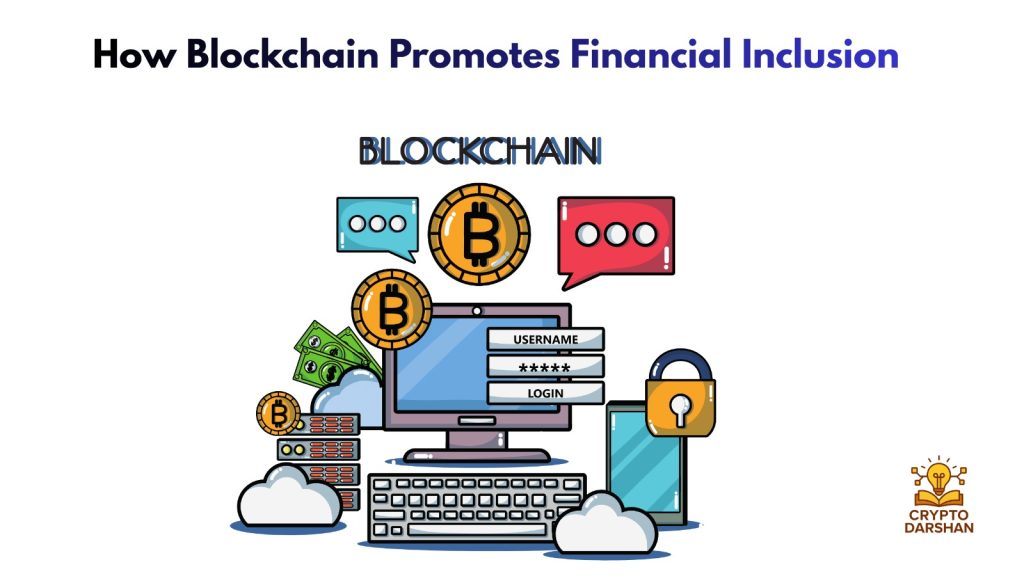
Blockchain technology supports Financial Inclusion in several key ways:
- Decentralization – It removes the need for intermediaries like banks, allowing people to transact directly.
- Accessibility – Anyone with a smartphone and internet connection can participate.
- Transparency – All transactions are recorded publicly, reducing corruption and fraud.
- Security – Cryptographic encryption ensures that funds and data are protected.
- Low Costs – Blockchain transactions are often cheaper than traditional banking fees.
By addressing the barriers that prevent people from accessing financial services, blockchain creates a more inclusive financial ecosystem. One major barrier to financial access is the lack of formal identification, which is why blockchain-based digital identities could help millions join the global financial system.
How Crypto Supports Financial Inclusion

1. Access to Banking Without Banks
Cryptocurrencies like Bitcoin and stablecoins allow individuals to store, send, and receive money without needing a traditional bank account. This is particularly valuable in regions where banking infrastructure is limited. With just a smartphone, users can create a digital wallet and participate in the global economy.
2. Lower Transaction Costs
Traditional remittance services often charge high fees, especially for cross-border transfers. Blockchain-based payments drastically reduce these costs. For example, sending money via crypto can cost a fraction of what traditional services charge, making it easier for migrant workers to send money home and support their families.
3. Faster Cross-Border Payments
International money transfers through banks can take several days. Blockchain enables near-instant transactions, regardless of location. This speed is crucial for small businesses and individuals who rely on timely payments.
4. Financial Empowerment for Women
In many developing countries, women face barriers to accessing financial services due to cultural or legal restrictions. Blockchain-based financial tools can bypass these barriers, giving women direct control over their finances and promoting gender equality in Financial Inclusion.
5. Microfinance and Peer-to-Peer Lending
Blockchain enables decentralized lending platforms where individuals can borrow or lend money without intermediaries. Smart contracts automatically enforce loan terms, reducing the risk of default and increasing trust. This opens new opportunities for small entrepreneurs who lack access to traditional credit.
The Unbanked and Underbanked: Who They Are

The Unbanked
The unbanked are individuals who do not have access to any formal financial services. They rely on cash transactions and informal lending systems. Many live in rural areas where banks are scarce or nonexistent.
The Underbanked
The underbanked have limited access to financial services. They may have a bank account but still rely on alternative financial services like payday loans or money orders due to high fees or lack of trust in banks.
Why They Are Excluded
Several factors contribute to financial exclusion:
- Lack of identification – Many people cannot open bank accounts without official ID.
- High costs – Banking fees are often unaffordable for low-income individuals.
- Geographic barriers – Rural populations may live far from bank branches.
- Limited financial literacy – Many people are unaware of how to use financial products.
- Distrust in institutions – Corruption and instability discourage participation in formal systems.
Blockchain and crypto can overcome these barriers by offering accessible, low-cost, and transparent alternatives.
How Blockchain Helps the Unbanked

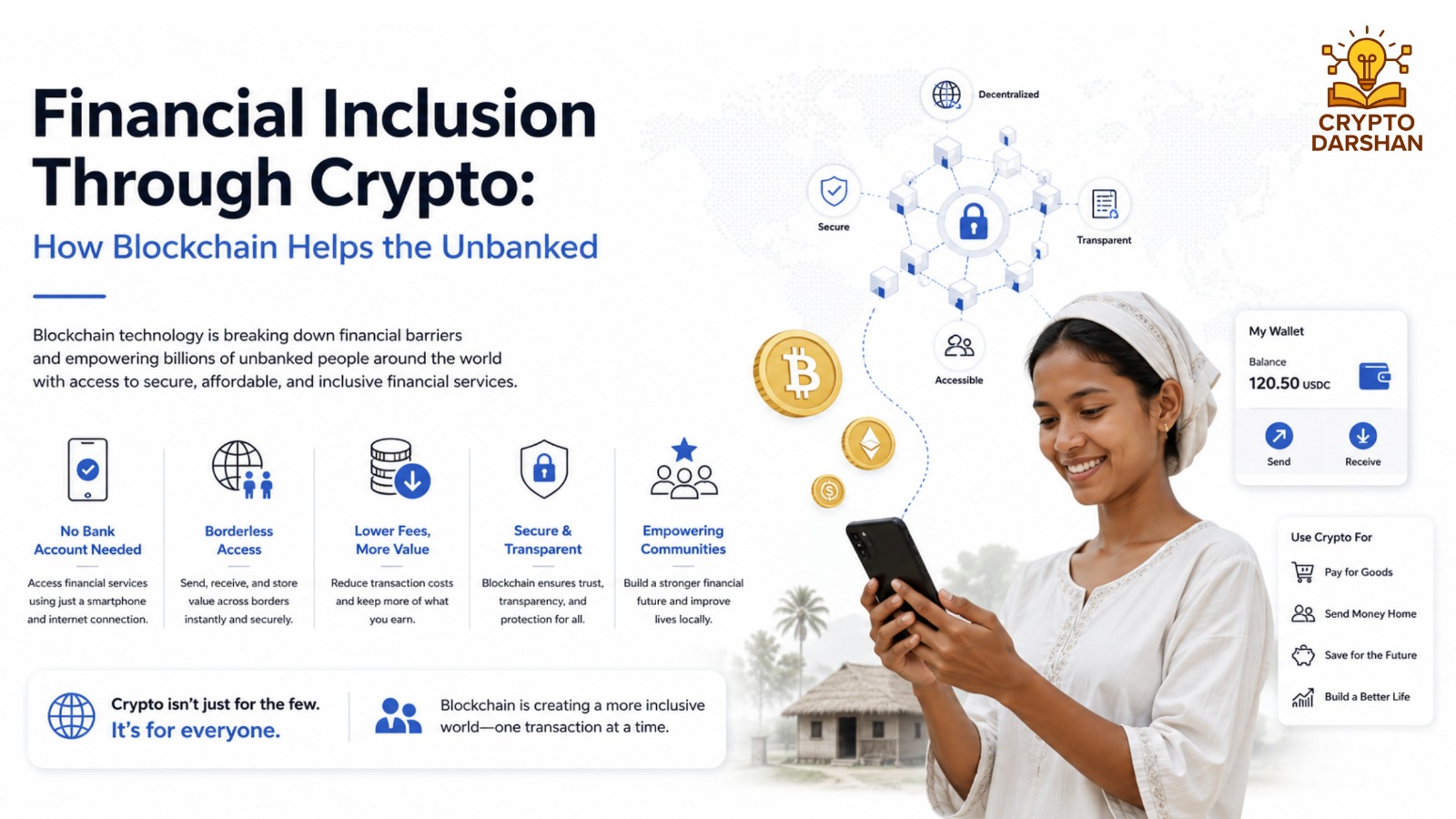
Blockchain technology acts as a bridge for the unbanked by removing the traditional barriers—such as high fees, geographic distance, and lack of documentation—that keep people out of the formal financial system.
Here is how blockchain empowers the unbanked:
1. Access Without Traditional Banks
In many parts of the world, physical bank branches are non-existent or inaccessible. Blockchain allows anyone with a basic smartphone and internet connection to create a digital wallet. This wallet functions as a personal bank account, enabling users to store, send, and receive funds independently of any centralized financial institution.
2. Drastic Reduction in Transaction Costs
Traditional banking and remittance services often charge exorbitant fees, which can be devastating for low-income individuals. Blockchain-based transactions operate on a peer-to-peer network, eliminating the need for expensive intermediaries. This makes sending money home or paying for goods significantly cheaper, ensuring that more capital stays in the hands of the user.
3. Instant Cross-Border Transfers
For migrant workers or small business owners, international money transfers through banks can take days and involve multiple clearinghouses. Blockchain enables near-instant global transactions. This speed is vital for those who rely on timely payments to cover daily expenses, rent, or emergency costs.
4. Digital Identity for the Undocumented
A major barrier to financial inclusion is the lack of official government-issued identification. Blockchain-based digital identity systems allow individuals to create a secure, verifiable identity record. This “digital footprint” can be used to prove who they are, allowing them to access credit, insurance, and other services that were previously closed to them.
5. Decentralized Finance (DeFi) and Micro-Lending
Traditional credit systems often exclude the poor because they lack collateral or a formal credit history. DeFi platforms use smart contracts to automate lending and borrowing. These systems can assess creditworthiness through alternative data points and provide micro-loans to entrepreneurs, helping them start or grow small businesses without needing a traditional bank’s approval.
6. Transparency and Security
In regions where corruption or institutional instability is common, people often distrust traditional banks. Blockchain provides a transparent, immutable ledger where every transaction is recorded and verifiable. This reduces the risk of fraud and ensures that users have full, secure control over their assets, fostering greater trust in the financial system.
Blockchain Use Cases for Financial Inclusion

1. Digital Wallets
Digital wallets are the foundation of blockchain-based Financial Inclusion. They allow users to store cryptocurrencies securely and make transactions without a bank. Wallets can be accessed via smartphones, making them ideal for people in remote areas.
2. Stablecoins for Everyday Transactions
Stablecoins are cryptocurrencies pegged to stable assets like the US dollar. They combine the benefits of crypto (speed, low cost, accessibility) with price stability. Stablecoins are increasingly used for remittances, savings, and payments in developing countries.
3. Decentralized Finance (DeFi)
DeFi platforms use blockchain to offer financial services such as lending, borrowing, and investing without intermediaries. Users can earn interest on their savings or access loans instantly, promoting Financial Inclusion for those excluded from traditional banking.
4. Blockchain-Based Identity Systems
Many unbanked individuals lack official identification, preventing them from accessing financial services. Blockchain-based digital identity systems can provide secure, verifiable IDs that enable participation in the financial system while protecting privacy.
5. Remittances and Cross-Border Transfers
Remittances are a lifeline for millions of families in developing countries. Blockchain reduces transfer fees and processing times, ensuring that more money reaches recipients. This directly supports Financial Inclusion by making international payments more efficient and affordable.
6. Microinsurance
Blockchain can facilitate microinsurance products tailored for low-income populations. Smart contracts automate claims processing, reducing administrative costs and ensuring transparency. This helps protect vulnerable communities from financial shocks.
Real-World Examples of Blockchain Driving Financial Inclusion

Stellar Network
The Stellar blockchain focuses on cross-border payments and Financial Inclusion. It connects financial institutions, payment systems, and individuals, enabling low-cost international transfers. Stellar’s partnerships with organizations like IBM have expanded access to financial services in developing regions.
Celo
Celo is a mobile-first blockchain platform designed to promote Financial Inclusion. It allows users to send and receive crypto using phone numbers instead of complex wallet addresses. Celo’s ecosystem supports stablecoins and decentralized applications that empower the unbanked.
BitPesa (Now AZA Finance)
BitPesa uses blockchain to facilitate business payments across Africa. By reducing transaction costs and improving speed, it helps small and medium-sized enterprises (SMEs) access global markets and financial services.
BanQu
BanQu provides blockchain-based digital identity and transaction records for people without bank accounts. It helps farmers, refugees, and small entrepreneurs build financial histories, enabling them to access credit and participate in the formal economy.
UNICEF CryptoFund
UNICEF’s CryptoFund uses blockchain to distribute funds to startups working on social impact projects. This initiative demonstrates how crypto can support Financial Inclusion by funding innovation in underserved communities.
Benefits of Blockchain for Financial Inclusion

1. Transparency and Trust
Blockchain’s public ledger ensures that all transactions are visible and verifiable. This transparency builds trust among users and reduces corruption, a major barrier to Financial Inclusion in many regions.
2. Reduced Costs
By eliminating intermediaries, blockchain significantly lowers transaction fees. This makes financial services more affordable for low-income individuals and small businesses.
3. Accessibility and Convenience
Blockchain-based financial tools are accessible via smartphones, making them ideal for people in remote or underserved areas. Users can transact anytime, anywhere, without relying on physical bank branches.
4. Security and Privacy
Blockchain uses advanced cryptography to protect user data and funds. Users maintain control over their private keys, ensuring that their assets remain secure.
5. Empowerment and Autonomy
Blockchain gives individuals full control over their finances. They can save, invest, and transact independently, fostering economic empowerment and self-reliance.
Challenges to Achieving Financial Inclusion

1. Regulatory Uncertainty
Many countries lack clear regulations for cryptocurrencies and blockchain technology. This uncertainty can discourage adoption and limit the growth of Financial Inclusion initiatives.
2. Volatility of Cryptocurrencies
The price volatility of cryptocurrencies like Bitcoin can make them unsuitable for everyday transactions. Stablecoins and central bank digital currencies (CBDCs) may offer more stability.
3. Technological Barriers
Access to smartphones and reliable internet remains limited in some regions. Without these tools, participation in blockchain-based financial systems is difficult.
4. Lack of Awareness and Education
Many people are unfamiliar with blockchain and crypto. Education and awareness campaigns are essential to promote safe and effective use of these technologies.
5. Energy Consumption
Some blockchain networks consume significant energy, raising environmental concerns. However, newer technologies like proof-of-stake are addressing this issue.
The Role of Governments and Institutions

Government Support
Governments play a crucial role in promoting Financial Inclusion through blockchain. By creating supportive regulations, investing in digital infrastructure, and partnering with private companies, they can accelerate adoption.
Central Bank Digital Currencies (CBDCs)
CBDCs are digital versions of national currencies issued by central banks. They combine the benefits of blockchain with government backing, offering a secure and inclusive financial system. CBDCs can help bring millions of unbanked individuals into the formal economy.
International Organizations
Institutions like the World Bank, IMF, and United Nations are exploring blockchain solutions for Financial Inclusion. Their initiatives focus on improving access to credit, reducing remittance costs, and enhancing transparency in aid distribution.
The Future of Financial Inclusion Through Blockchain

Integration with Artificial Intelligence
AI can enhance blockchain-based Financial Inclusion by analyzing user data to offer personalized financial products, detect fraud, and improve credit scoring for the unbanked.
Expansion of DeFi Ecosystems
As decentralized finance continues to grow, more people will gain access to financial services without traditional intermediaries. DeFi platforms will play a major role in expanding Financial Inclusion globally.
Growth of Digital Identity Systems
Blockchain-based digital identities will enable secure access to financial services for those without official documents. This will be a key driver of Financial Inclusion in developing countries.
Collaboration Between Sectors
The future of Financial Inclusion depends on collaboration between governments, financial institutions, technology companies, and NGOs. Together, they can build sustainable, inclusive financial ecosystems powered by blockchain.
Ethical and Social Implications

Privacy vs. Transparency
While blockchain promotes transparency, it must also protect user privacy. Balancing these two aspects is essential to ensure trust and widespread adoption.
Digital Divide
Efforts to promote Financial Inclusion must address the digital divide. Without access to technology and education, marginalized groups risk being left behind.
Economic Empowerment
Blockchain-based Financial Inclusion can transform lives by giving people control over their finances. However, it must be implemented responsibly to avoid exploitation and ensure equitable access.
Steps Toward Implementation

To successfully implement blockchain-based solutions for Financial Inclusion, stakeholders should focus on these five key areas:
Developing Supportive Policy
Governments must establish clear, balanced regulatory frameworks that encourage blockchain innovation while simultaneously protecting consumers from fraud and market volatility.
Fostering Public-Private Partnerships
Success depends on deep collaboration between government agencies, fintech companies, and non-governmental organizations to build sustainable, trusted financial ecosystems that reach underserved populations.
Investing in Digital Infrastructure
Expanding reliable internet access and mobile connectivity is a critical prerequisite, as these tools are the primary gateways for the unbanked to access blockchain-based financial services.
Prioritizing Financial Literacy
Widespread adoption requires comprehensive education programs that teach users how to safely manage digital wallets, understand their data rights, and navigate the basics of decentralized finance.
Launching Targeted Pilot Projects
Authorities should implement small-scale, real-world trials—such as digital remittance corridors or micro-lending programs—to identify technical bottlenecks, refine security protocols, and gather essential user feedback before a full-scale rollout.
FAQ: Financial Inclusion Through Crypto: How Blockchain Helps the Unbanked

1. What does financial inclusion mean?
Financial inclusion refers to ensuring that individuals and businesses have access to affordable and useful financial services such as savings accounts, payments, loans, and insurance.
2. Who are the unbanked?
The unbanked are people who do not have access to traditional banking services. This can be due to geographic barriers, lack of documentation, high banking fees, or limited financial infrastructure.
3. How can cryptocurrency help the unbanked?
Cryptocurrencies allow people to send, receive, and store money using only a smartphone and internet connection, reducing the need for traditional bank accounts.
4. Why is blockchain important for financial inclusion?
Blockchain provides a decentralized and transparent system for financial transactions, enabling people to access financial services without relying on traditional banking institutions.
5. Do people need a bank account to use crypto?
No. Most cryptocurrency wallets can be created without opening a bank account, making digital finance accessible to individuals who are excluded from the traditional banking system.
6. How can crypto reduce transaction costs?
Blockchain networks can eliminate intermediaries, which often lowers the fees associated with cross-border payments, remittances, and money transfers.
7. What role do stablecoins play in financial inclusion?
Stablecoins are cryptocurrencies designed to maintain a stable value, often pegged to a fiat currency. They can provide easier access to digital payments and savings without the extreme volatility of some cryptocurrencies.
8. How does crypto help people send money internationally?
Crypto enables near-instant global transfers, often at lower costs than traditional remittance services, making it easier for migrant workers to send money home.
9. Can blockchain provide financial services in remote areas?
Yes. As long as users have internet access and a compatible device, blockchain-based financial services can be accessed even in regions with limited banking infrastructure.
Conclusion
Blockchain and cryptocurrencies are redefining the path toward global Financial Inclusion. By providing secure, transparent, and low-cost financial services, they empower individuals who have long been excluded from the formal economy. From digital wallets and remittances to decentralized finance and digital identities, blockchain offers practical solutions to some of the world’s most persistent financial challenges.
The journey toward full Financial Inclusion is far from over, but blockchain technology has opened new possibilities. As governments, institutions, and innovators continue to collaborate, the dream of a world where everyone has equal access to financial opportunities is becoming a reality. Through crypto and blockchain, Financial Inclusion is no longer just an ideal—it is an achievable goal that can transform lives and economies across the globe.