
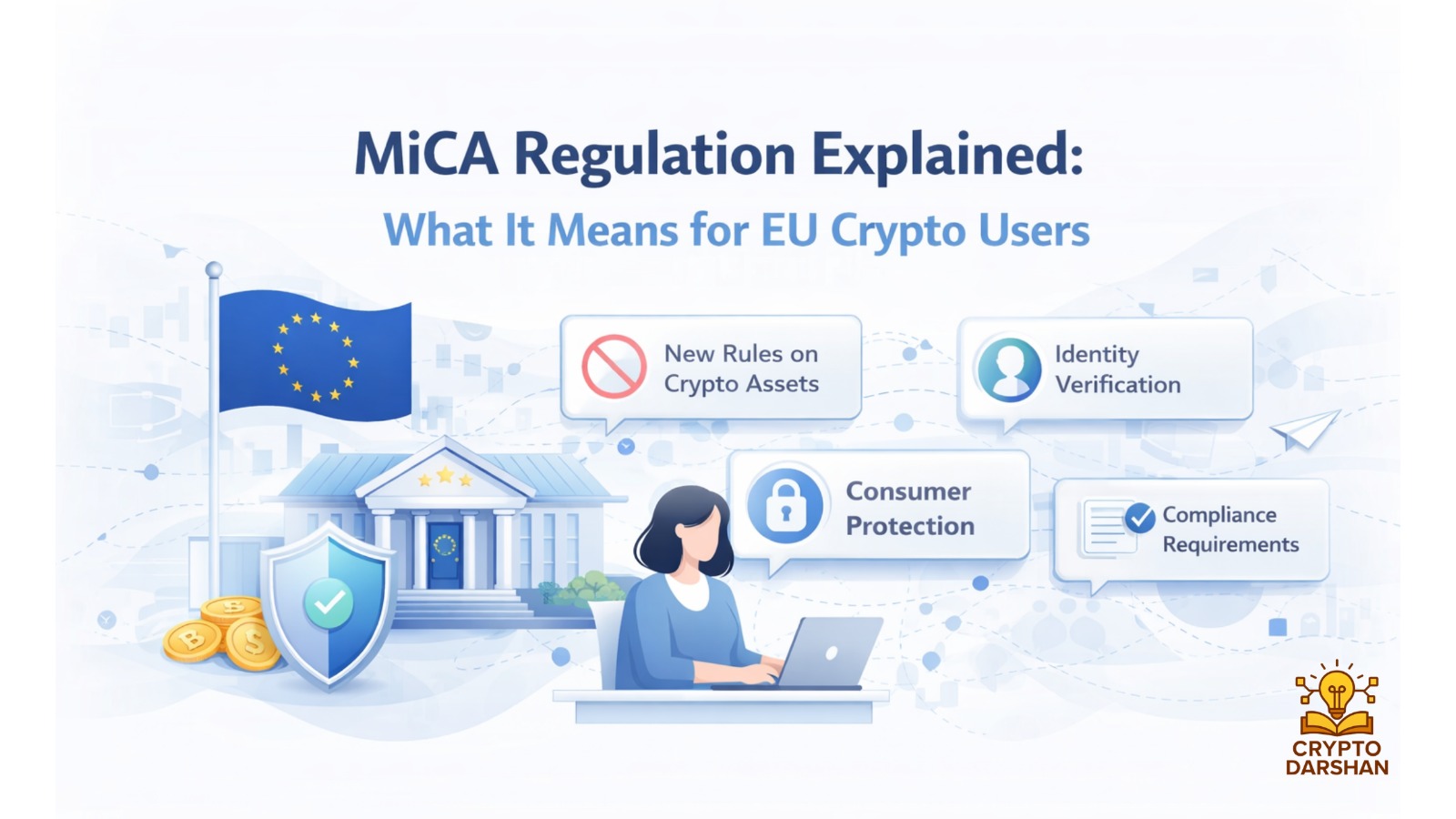
The European Union has taken a major step toward regulating the cryptocurrency industry through the Markets in Crypto-Assets (MiCA) Regulation. This landmark framework aims to bring clarity, stability, and consumer protection to the rapidly evolving digital asset market. For crypto users, investors, and businesses operating within the EU, MiCA represents both an opportunity and a challenge. It sets out clear rules for crypto-asset issuance, trading, and service provision, while also imposing compliance obligations that could reshape how the crypto ecosystem functions in Europe.
This comprehensive guide explores what MiCA is, why it matters, how it affects different stakeholders, and what it means for the future of crypto in the EU. It breaks down the regulation in simple terms, ensuring readability and understanding for all audiences.
What Is MiCA?
MiCA is the EU’s framework for regulating crypto-assets and service providers. It creates clearly defined compliance rules and crypto-asset definitions, improves consumer protection, and encourages innovation by establishing regulatory clarity. It was officially adopted in 2023 and will be fully implemented in phases through 2024 and 2025.
MiCA’s primary goal is to create a harmonized regulatory framework across all EU member states. Before MiCA, each country had its own approach to crypto MiCA Regulation, leading to confusion and inconsistency. MiCA eliminates this fragmentation by introducing a single set of rules that apply across the entire EU.
Key Objectives of MiCA
- Consumer Protection: Safeguard investors and users from fraud, scams, and market manipulation.
- Market Integrity: Ensure fair and transparent trading practices.
- Financial Stability: Prevent systemic risks from large-scale crypto operations.
- Innovation Support: Encourage responsible innovation and growth in the crypto sector.
- Legal Clarity: Provide clear definitions and obligations for crypto-asset issuers and service providers.
Why MiCA Was Introduced

The crypto market has grown exponentially over the past decade, but it has also faced challenges such as volatility, scams, and a lack of oversight. The EU recognized the need for a unified approach to manage these risks while supporting innovation.
Key Reasons Behind MiCA
- Fragmented Regulation: Different EU countries had varying rules, making cross-border operations difficult.
- Consumer Risks: Many investors lost money due to unregulated projects and fraudulent schemes.
- Stablecoin Concerns: The rise of stablecoins like USDT and USDC raised questions about financial stability and monetary sovereignty.
- AML and KYC Gaps: Lack of consistent anti-money laundering (AML) and know-your-customer (KYC) standards.
- Institutional Adoption: Traditional financial institutions needed legal certainty to enter the crypto space.
MiCA aims to address all these issues by creating a single, transparent, and enforceable framework.
Scope of MiCA

MiCA applies to crypto-assets, issuers, and crypto-asset service providers (CASPs) operating within the EU. It covers a wide range of digital assets but excludes those already regulated under existing EU financial laws, such as securities or e-money.
Crypto-Assets Covered by MiCA
- Asset-Referenced Tokens (ARTs): Tokens backed by a basket of assets like fiat currencies, commodities, or other crypto-assets.
- E-Money Tokens (EMTs): Tokens pegged to a single fiat currency, similar to stablecoins.
- Utility Tokens: Tokens that provide access to a product or service within a blockchain ecosystem.
- Other Crypto-Assets: Any digital asset not classified under the above categories.
Entities Covered by MiCA
- Crypto-Asset Issuers: Entities that create and offer crypto-assets to the public.
- Crypto-Asset Service Providers (CASPs): Businesses offering services such as trading, custody, exchange, or portfolio management of crypto-assets.
MiCA’s Core Components

MiCA introduces several key components that define how crypto-assets and related services should operate within the EU.
1. Authorization and Licensing
All Crypto-Asset Service Providers (CASPs) must obtain authorization from a national competent authority (NCA) in an EU member state. Once authorized, they can operate across the EU under a passporting system, like traditional financial institutions.
Services requiring authorization include:
- Custody and administration of crypto assets.
- Operation of trading platforms
- Exchange of crypto-assets for fiat or other crypto-assets
- Execution of orders
- Placement of crypto assets.
- Portfolio management
- Advice on crypto assets.
2. Whitepaper Requirement
Issuers of crypto assets must publish a whitepaper that provides detailed information about the project, including:
- The issuer’s identity and governance structure
- Description of the crypto asset.
- Rights and obligations of holders
- Risks associated with the investment.
- Technical and security details
This whitepaper must be approved by the relevant authority before the asset can be offered to the public.
3. Consumer Protection Measures
MiCA introduces strict rules to protect consumers, including:
- Clear disclosure of risks
- Prohibition of misleading marketing
- Obligation to maintain sufficient reserves for stablecoins.
- Right to withdraw from token purchases within 14 days (for certain offerings)
4. Stablecoin Regulation
Stablecoins, or asset-referenced tokens (ARTs) and e-money tokens (EMTs), face the most stringent requirements under MiCA Regulation. Issuers must:
- Maintain full reserves to back the tokens.
- Provide redemption rights to holders.
- Limit large-scale issuance that could threaten financial stability.
- Obtain authorization from the European Banking Authority (EBA) for significant tokens.
5. Market Abuse and Transparency
MiCA introduces rules to prevent market manipulation, insider trading, and other abusive practices. CASPs must implement systems to detect and report suspicious activities.
How MiCA Affects Different Stakeholders

1. Crypto Users and Investors
For everyday crypto users, MiCA brings greater protection and transparency. Users will have access to verified information about crypto projects and service providers. Fraudulent schemes will be harder to operate under MiCA’s strict disclosure and authorization rules.
Benefits for users:
- Safer investments
- Clearer information about risks
- Legal recourse in case of fraud
- More trustworthy exchanges and wallets
2. Crypto Businesses and Startups
For crypto companies, MiCA introduces compliance obligations but also opens doors to a larger, unified market. Once authorized in one EU country, a CASP can operate across all 27 member states.
Implications for businesses:
- Need for regulatory compliance and licensing
- Increased operational costs due to legal and reporting requirements.
- Easier cross-border expansion
- Enhanced credibility and investor confidence
3. Stablecoin Issuers
Stablecoin issuers face the most significant regulatory burden. They must maintain full reserves, undergo audits, and comply with redemption obligations. However, this also legitimizes stablecoins as a reliable financial instrument within the EU.
4. Regulators and Policymakers
MiCA gives regulators a clear framework to monitor and supervise the crypto market. It also enhances cooperation between national authorities and EU institutions like the European Securities and Markets Authority (ESMA) and the European Banking Authority (EBA).
MiCA vs. Other Global Regulations

MiCA is one of the most comprehensive crypto regulations globally. Comparing it with other jurisdictions helps highlight its uniqueness.
| Region | Regulatory Approach | Key Features |
| EU (MiCA) | Unified framework | Covers all crypto-assets, licensing for CASPs, and stablecoin rules |
| US | Fragmented (SEC, CFTC, FinCEN) | Case-by-case enforcement, unclear definitions |
| UK | Post-Brexit framework | Focus on AML and consumer protection |
| Singapore | Progressive licensing | Encourages innovation with strict AML rules |
| Japan | Early adopter | Strong exchange regulation, stablecoin oversight |
MiCA’s harmonized approach sets a global benchmark for crypto MiCA Regulation, balancing innovation with investor protection.
Implementation Timeline
MiCA’s rollout is divided into phases to allow businesses and regulators to adapt.
| Phase | Timeline | Focus Area |
| Phase 1 | June 2024 | Stablecoin (ARTs and EMTs) regulation |
| Phase 2 | December 2024 | CASP authorization and general crypto-asset rules |
| Phase 3 | 2025 onward | Full enforcement and supervision |
Challenges and Criticisms of MiCA

While MiCA is widely praised, it also faces criticism and challenges.
1. Compliance Costs
Small startups may struggle with the cost of compliance, including legal fees, audits, and reporting obligations.
2. Innovation Concerns
Some fear that strict rules could stifle innovation, especially for decentralized finance (DeFi) and non-fungible tokens (NFTs), which are not fully covered under MiCA.
3. Regulatory Overlap
There may be overlaps with other EU regulations like the Transfer of Funds Regulation (TFR) and Anti-Money Laundering Directive (AMLD), leading to complexity.
4. Global Competitiveness
If other regions adopt more flexible rules, the EU could risk losing crypto innovation to jurisdictions with lighter regulations.
MiCA Regulation and DeFi

Limited Coverage
The MiCA Regulation does not directly regulate decentralized finance (DeFi) because it mainly targets centralized crypto services. DeFi platforms run through smart contracts without a central authority, making them difficult to fit into MiCA’s current framework.
Regulatory Challenges
DeFi’s decentralized nature makes it hard for regulators to identify who is responsible for compliance. Since MiCA depends on licensed entities, applying its rules to autonomous protocols remains a challenge for EU authorities.
Future Inclusion
The European Commission plans to study DeFi further and may include it in future updates of the MiCA Regulation. Possible areas of focus include smart contract audits, governance transparency, and user protection.
Impact on Developers and Users
DeFi projects with centralized elements, such as token issuance or liquidity control, could fall under MiCA’s scope. Users may benefit from better protection but could face stricter identity and compliance requirements.
Encouraging Responsible Innovation
The MiCA Regulation aims to support innovation while ensuring safety. Future DeFi rules are expected to balance decentralization with accountability, helping the EU build a secure and transparent crypto ecosystem.
MiCA Regulation and NFTs

Current Exclusion from MiCA Regulation
The MiCA Regulation currently excludes most non-fungible tokens (NFTs) from its scope. NFTs are considered unique digital assets that represent ownership of specific items like art, music, or collectibles. Since they are not interchangeable like cryptocurrencies or stablecoins, they do not fit MiCA’s definition of “crypto assets” intended for mass trading or investment.
Exceptions for Fractional or Financial NFTs
Some NFTs may still fall under the MiCA Regulation if they function like financial instruments. For example, fractionalized NFTs where ownership of a single asset is divided among multiple investors—could be treated as securities or investment tokens. Similarly, NFTs that promise financial returns or represent underlying assets might be subject to MiCA’s rules.
Regulatory Uncertainty and Future Review
The European Commission has acknowledged that the NFT market is evolving rapidly and may require future regulation. It plans to monitor NFT developments and assess whether additional rules are needed to ensure transparency, prevent fraud, and protect consumers. Future updates to the MiCA Regulation could introduce specific guidelines for NFTs, especially those used for investment or trading purposes.
Clear regulation like MiCA could strengthen institutional confidence, especially at a time when markets are reacting to developments such as Bitcoin ETFs See $166M Outflow as Five-Week Sell-Off Tops $4B.
Impact on NFT Creators and Marketplace
For now, NFT creators and marketplaces in the EU face fewer regulatory burdens under MiCA. However, they must still comply with general EU laws on anti-money laundering (AML) and consumer protection. If future amendments bring NFTs under MiCA, platforms may need to register, disclose project details, and follow stricter compliance standards.
Encouraging Innovation with Caution
The MiCA Regulation aims to balance innovation with investor safety. By initially excluding NFTs, the EU allows creative industries to grow without heavy restrictions. At the same time, regulators remain cautious, ensuring that NFT projects offering financial benefits do not exploit regulatory loopholes.
Opportunities Under MiCA

Despite its challenges, MiCA offers several opportunities for the crypto industry. MiCA also indirectly impacts the competitive landscape between private stablecoins and government-backed digital currencies, as explained in Stablecoins vs CBDCs: The Future of Digital Money Compared.
1. Increased Trust and Legitimacy
MiCA Regulation enhances public confidence in crypto assets, attracting institutional investors and mainstream adoption.
2. Cross-Border Expansion
The EU passporting system allows CASPs to operate across all member states with a single license, simplifying market entry.
3. Institutional Participation
Banks and financial institutions can now engage with crypto-assets under a clear legal framework.
4. Innovation in Compliance
New technologies like RegTech and blockchain analytics will emerge to help companies meet MiCA’s compliance requirements efficiently.
Preparing for MiCA Compliance

Crypto businesses operating in the EU should start preparing for MiCA by taking the following steps:
- Conduct a Regulatory Assessment: Identify which parts of MiCA apply to the business model.
- Obtain Authorization: Apply for CASP licensing from the relevant national authority.
- Develop a Compliance Framework: Implement AML/KYC procedures, risk management, and reporting systems.
- Update Whitepapers: Ensure all disclosures meet MiCA’s transparency standards.
- Engage Legal Experts: Work with legal advisors familiar with EU financial regulations.
- Monitor Regulatory Updates: Stay informed about guidance from ESMA and EBA.
The Future of Crypto in the EU Under MiCA

Greater Market Stability and Investor Confidence
MiCA will bring much-needed stability to the European crypto market by enforcing transparency, accountability, and consumer protection. With clear rules for issuers and service providers, investors will have more confidence in the legitimacy of crypto projects. This trust is expected to attract more retail and institutional investors, leading to a more mature and stable market environment.
Unified Regulatory Framework Across the EU
One of MiCA’s biggest advantages is the creation of a single, harmonized regulatory framework across all EU member states. This eliminates the patchwork of national laws that previously made cross-border operations difficult. Crypto companies licensed in one EU country will be able to operate throughout the entire region, encouraging innovation and competition while simplifying compliance.
Boost in Institutional Adoption
With legal clarity and standardized rules, traditional financial institutions such as banks, asset managers, and payment providers are more likely to enter the crypto space. MiCA provides the regulatory certainty these institutions need to offer crypto-related products and services, potentially leading to a surge in institutional participation and mainstream adoption of digital assets.
Innovation Within a Regulated Environment
Although MiCA introduces strict compliance requirements, it also encourages responsible innovation. Startups and developers will be able to build new blockchain solutions with the assurance that their operations comply with EU law. This balance between innovation and regulation could make the EU a global hub for compliant crypto innovation.
Potential Expansion to DeFi and NFTs
While MiCA currently focuses on centralized crypto services, future updates are expected to address decentralized finance (DeFi) and non-fungible tokens (NFTs). As these sectors grow, the EU may introduce additional frameworks to ensure transparency and consumer protection without stifling innovation.
FAQ Section

1. What is the MiCA Regulation?
MiCA (Markets in Crypto-Assets) Regulation is the European Union’s first comprehensive crypto framework designed to regulate crypto assets, stablecoins, and crypto service providers across EU member states.
2. When does MiCA Regulation take effect?
MiCA Regulation implementation began in 2024, with full enforcement rolling out in phases through 2025–2026 across the European Union.
3. How does MiCA affect crypto users in the EU?
MiCA increases investor protection, improves transparency, and requires crypto platforms to follow strict compliance and licensing standards.
4. Does MiCA regulate stablecoins?
Yes. MiCA introduces strict reserve, transparency, and operational requirements for stablecoin issuers operating in the EU.
5. Will MiCA impact crypto exchanges?
Crypto exchanges must obtain authorization, follow anti-money laundering standards, and meet capital requirements to operate legally in the EU.
6. Is MiCA good or bad for crypto?
MiCA is considered positive for long-term crypto adoption because it reduces uncertainty and increases institutional confidence, though it may increase compliance costs for smaller firms.
7. Does MiCA apply outside the EU?
MiCA directly applies only to EU member states, but global crypto companies serving EU customers must comply with its rules.
Conclusion
The Markets in Crypto-Assets (MiCA) Regulation is a transformative step for the European crypto landscape. It brings clarity, security, and legitimacy to a market that has long operated in a regulatory gray area. For users, it means safer investments and better protection. For businesses, it offers a unified market and a chance to build trust with regulators and consumers alike.
While challenges remain, especially around compliance costs and innovation, MiCA sets a strong foundation for the future of digital finance in Europe. As the MiCA Regulation takes full effect, it will likely shape not only the EU’s crypto ecosystem but also influence global standards for years to come.