BitGo has made history in the crypto regulatory space by becoming the first global digital asset company to secure a Virtual Asset Service Provider (VASP) registration in South Korea. The Korea Financial Intelligence Unit (KoFIU) accepted BitGo Korea’s VASP registration on August 18, 2026, clearing the way for the firm to offer regulated crypto custody and transfer services to institutions in one of Asia’s most active crypto markets.
What Exactly Did BitGo Achieve?
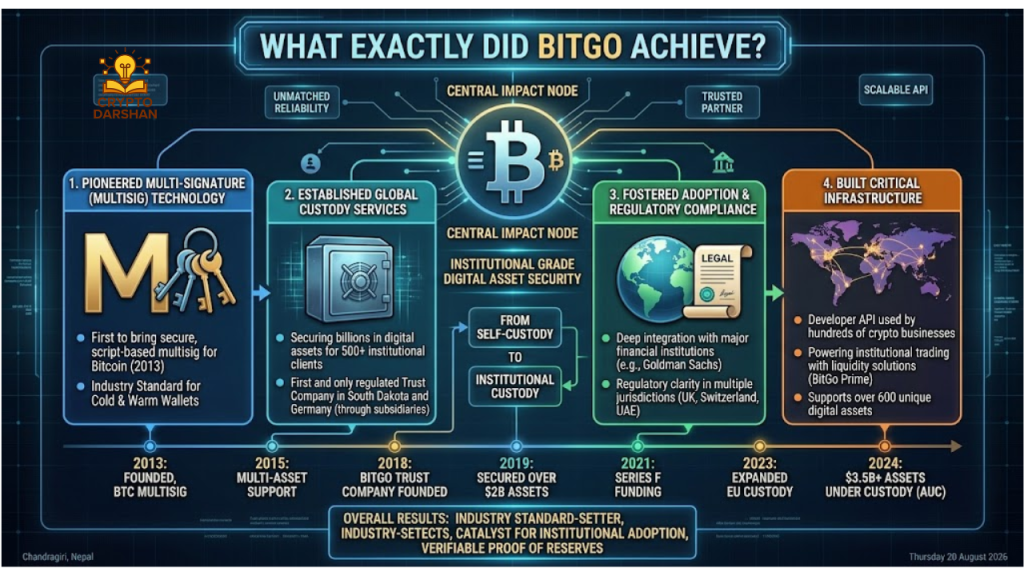
BitGo Korea, the company’s local subsidiary, received formal acceptance of its VASP registration from South Korea’s financial intelligence regulator. This is not a generic “license” in the traditional banking sense, but a regulatory registration that allows legally operate specific virtual asset services in the country.koreatimes.
With this registration, Korea can now provide:
- Crypto custody services for institutional and corporate clients
- Virtual asset transfer services
- Related management services for digital assets
The company says it will focus on financial institutions, corporations, and other professional clients rather than retail users.koreatimes.
Why This Is a Big Deal
BitGo’s achievement stands out for several reasons:
- First foreign majority-owned crypto firm: BitGo Korea is the first locally established subsidiary of an overseas crypto company to win VASP registration directly, without buying an existing licensed Korean operator.sedaily+2
- Built compliance from scratch: Instead of acquiring a local VASP, it spent around two years building its information security management system (ISMS), anti-money laundering (AML) controls, and internal frameworks to meet South Korean standards.
- Timing before stricter rules: The registration was accepted just before tougher VASP entry rules took effect on August 20, 2026. New requirements include deeper scrutiny of major shareholders, a 200% debt-ratio cap, and stricter “fit and proper” tests for executives.
In short, BitGo crossed the regulatory finish line under the old framework, but with full compliance that will also satisfy the new, stricter regime.
Who Backs BitGo in Korea?
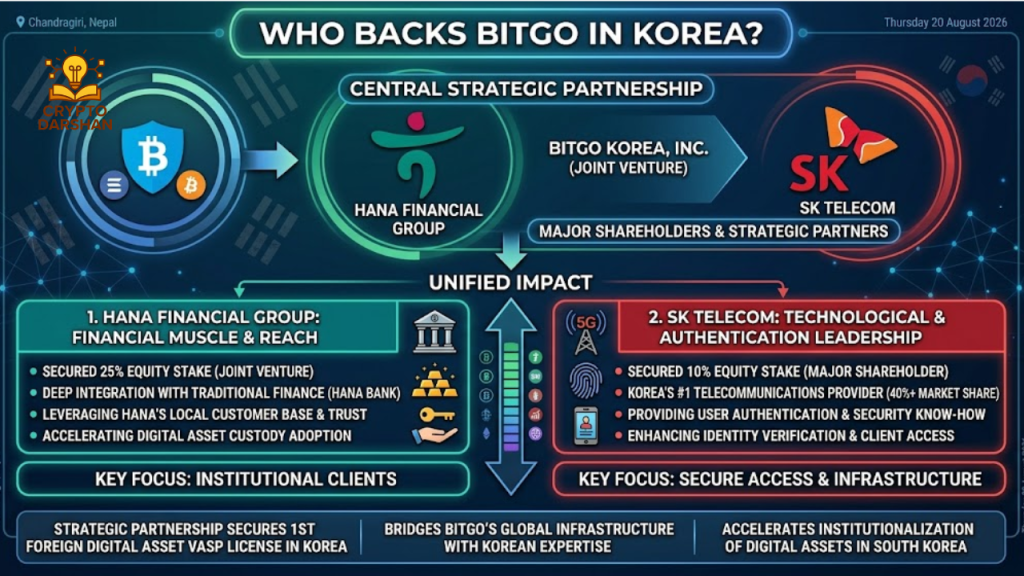
BitGo’s push into South Korea has strong local support. Major shareholders in BitGo Korea include:
- Hana Financial Group – one of South Korea’s largest financial conglomerates, holding roughly 25%
- SK Telecom – the country’s leading telecom operator, with around a 10% stake.
This backing matters because South Korean regulators closely examine major shareholders when assessing VASP applications. Having reputable, well-capitalized local partners likely strengthened it’s case and signaled long-term commitment to the market.
What This Means for South Korea’s Crypto Market
South Korea is one of the world’s most active crypto trading hubs, with high retail participation and growing institutional interest. However, the regulatory environment has been tightening, especially around custody, security, and investor protection.
BitGo’s entry adds:
- A globally recognized custodian: BitGo is already known for institutional-grade cold storage, insurance-backed custody, and compliance-focused infrastructure in other jurisdictions.
- More options for institutions: Korean banks, asset managers, and corporations now have another regulated partner for holding and moving digital assets safely.
- A template for other foreign firms: BitGo’s path—building a local entity, meeting ISMS and AML standards, and passing regulator review—shows other global crypto companies how to enter Korea without acquisitions.
Over time, this could encourage more foreign crypto infrastructure providers to seek VASP registration, deepening the country’s institutional crypto ecosystem.
How BitGo Prepared for Approval
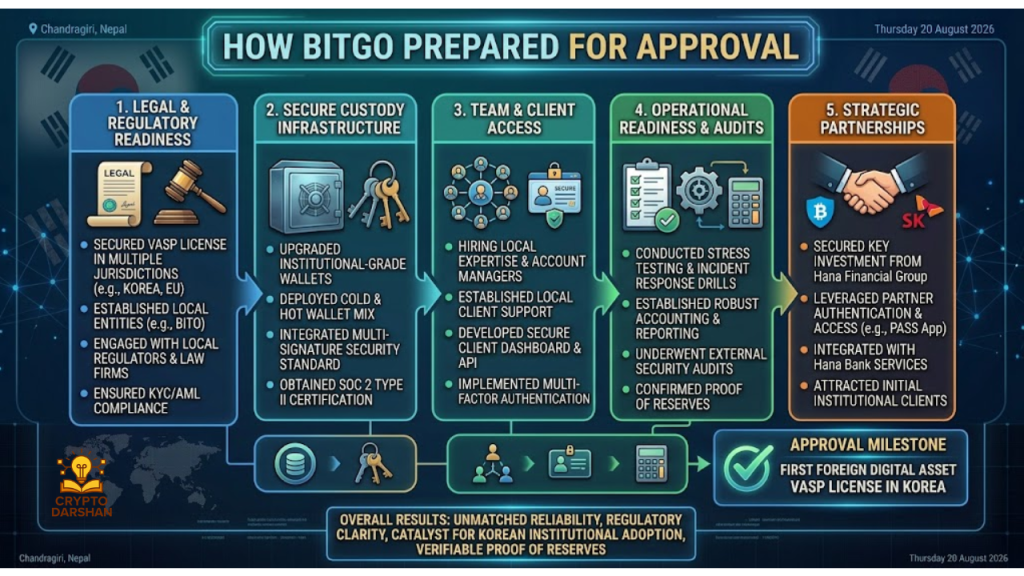
It didn’t rush this process. The company:
- Established BitGo Korea in 2024 as a dedicated local subsidiary.
- Secured preliminary ISMS certification in mid-2025, a key prerequisite for custody-focused businesses.
- Built AML and internal control systems aligned with South Korea’s specified financial transaction laws.
- Passed regulator reviews on security, governance, and financial soundness before filing for VASP registration.
Mike Belshe, BitGo’s co-founder and CEO, called the milestone “two years in the making,” emphasizing the company’s focus on bringing regulated cold storage and institutional infrastructure to the Korean market.
What Services Will BitGo Korea Offer First?
While BitGo hasn’t disclosed a precise launch date or full product list, the firm has outlined its initial focus:
- Institutional crypto custody: Secure storage solutions for digital assets, likely including multi-signature and cold storage options.koreatimes.
- Corporate and financial institution services: Tailored solutions for banks, asset managers, and other professional clients.
- Compliance-first infrastructure: Systems designed to meet local AML, cybersecurity, and reporting requirements from day one.
The company has not yet shared details on supported assets, fee structures, or whether it will eventually expand into retail-facing products.
Why This Matters for Global Crypto Regulation
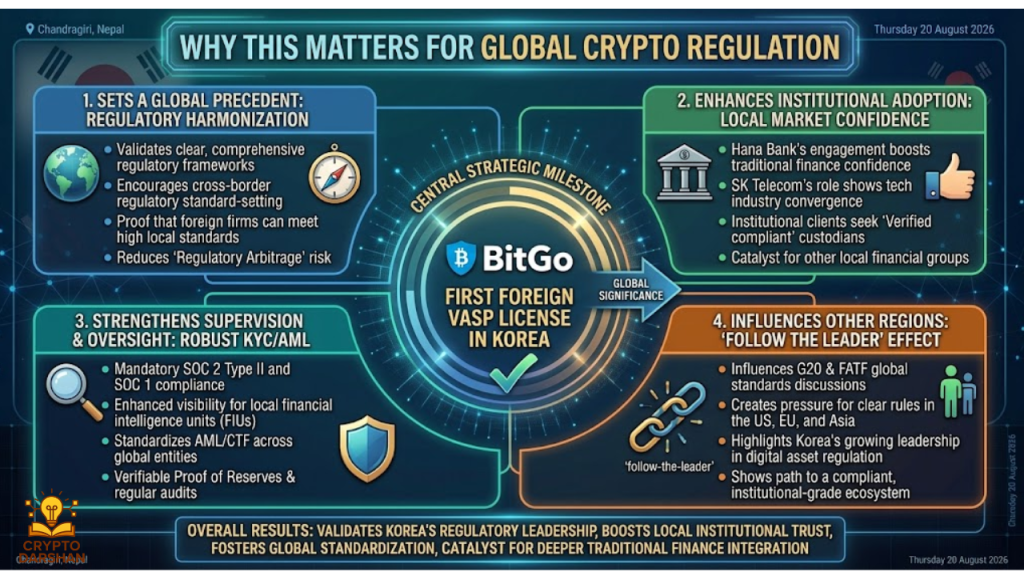
BitGo’s South Korea win is more than a local story. It signals that:
- Global crypto firms can navigate complex Asian regulations without relying on acquisitions or local “license shells.
- Institutional-grade custody is becoming a regulated norm, not an optional extra, in major markets.
- Traditional finance players are comfortable backing crypto infrastructure when the regulatory path is clear, as seen with Hana Financial and SK Telecom’s involvement.
For other jurisdictions watching how to integrate crypto safely, South Korea’s approach—strict security standards, clear shareholder rules, and strong AML controls—offers a model that balances innovation with investor protection.
What’s Next for BitGo in Korea?
With VASP registration secured, BitGo Korea’s next steps likely include:
- Onboarding initial institutional clients such as financial firms and large corporations.
- Integrating with local banking and payment rails to support smooth fiat on/off ramps for institutional users.
- Expanding the “GoNetwork”—it’s global regulated infrastructure—to include deeper Korea-specific products and partnerships.
If execution goes smoothly, this could become a key piece of South Korea’s institutional crypto infrastructure, alongside local exchanges and custodians already operating under VASP registration.