Crypto Futures Trading has become one of the most dynamic and profitable areas in the digital asset market. It allows traders to speculate on the future price of cryptocurrencies without owning the underlying asset. This form of trading provides opportunities for both hedging and speculation, making it a powerful tool for investors seeking to manage risk or amplify returns. As the cryptocurrency market matures, advanced instruments like perpetual contracts have gained immense popularity due to their flexibility and continuous trading nature.
Crypto Futures Trading operates similarly to traditional futures markets but with unique characteristics tailored to digital assets. Traders can open long or short positions, use leverage, and benefit from price movements in either direction. The introduction of perpetual contracts has revolutionized this space, offering a seamless trading experience without expiry dates. Understanding how these contracts work, their advantages, and the strategies involved is essential for anyone looking to master Crypto Futures Trading.
Understanding the Basics of Crypto Futures Trading

Cryptocurrency futures are financial contracts that let you buy or sell a specific amount of a crypto at a set price at a future date. However, unlike spot trading, where assets are exchanged immediately, futures contracts are settled later. This allows traders to speculate on price movements without holding the actual cryptocurrency.
In Crypto Futures Trading, traders can take two main positions:
- Long Position: A trader buys a futures contract expecting the price of the cryptocurrency to rise. If the price increases, the trader profits from the difference.
- Short Position: A trader sells a futures contract anticipating a price decline. If the price drops, the trader gains from the price difference.
The ability to profit from both rising and falling markets makes Crypto Futures Trading attractive to a wide range of investors. Additionally, the use of leverage allows traders to control larger positions with smaller capital, amplifying both potential gains and risks.
The Evolution of Perpetual Contracts in Crypto Futures Trading

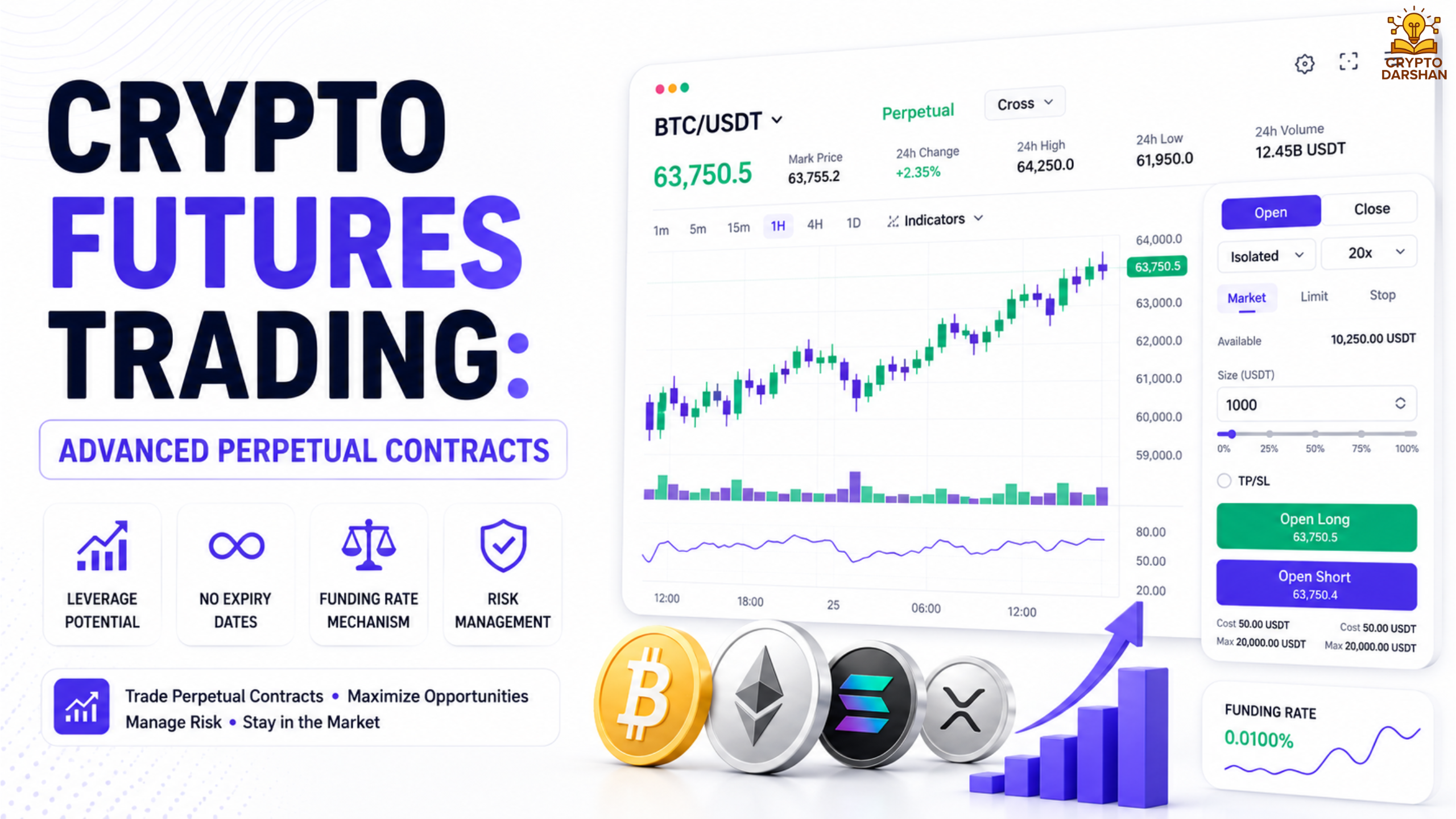
Perpetual contracts are a unique innovation in Crypto Futures Trading. Unlike traditional futures contracts that have fixed expiration dates, perpetual contracts never expire. This means traders can hold positions indefinitely, provided they maintain sufficient margin. The concept was first introduced by BitMEX and has since been adopted by major exchanges like Binance, Bybit, and OKX.
The key feature of perpetual contracts in Crypto Futures Trading is the funding rate mechanism. This system ensures that the contract price remains close to the spot market price. When the perpetual contract price is higher than the spot price, long traders pay a funding fee to short traders, and vice versa. This mechanism incentivizes traders to balance the market and maintain price stability.
Perpetual contracts have transformed Crypto Futures Trading by providing continuous exposure to the market without the need to roll over contracts. This innovation has made futures trading more accessible and efficient for both retail and institutional investors.
How Perpetual Contracts Work in Crypto Futures Trading
In Crypto Futures Trading, perpetual contracts function similarly to traditional futures but with continuous settlement. The absence of an expiry date means traders can keep positions open as long as they meet margin requirements. The funding rate plays a crucial role in maintaining equilibrium between the perpetual contract and the spot price.
Key Components of Perpetual Contracts
- Funding Rate: A periodic payment exchanged between long and short traders to keep the contract price aligned with the spot price.
- Leverage: Traders can amplify their exposure by borrowing funds, allowing them to control larger positions with smaller capital.
- Margin: The collateral required to open and maintain a position. If the margin falls below a certain threshold, the position may be liquidated.
- Mark Price: The fair value of the contract used to prevent unfair liquidations during volatile market conditions.
These components make perpetual contracts a sophisticated tool in Crypto Futures Trading, offering flexibility and continuous market participation.
Advantages of Perpetual Contracts in Crypto Futures Trading

Perpetual contracts offer several advantages that make them a preferred choice for traders engaged in Crypto Futures Trading:
- No Expiry Date: Traders can hold positions indefinitely, eliminating the need to roll over contracts.
- Continuous Trading: The market operates 24/7, providing constant opportunities for profit.
- Leverage Opportunities: Traders can use leverage to maximize potential returns.
- Hedging Capabilities: Investors can hedge spot positions to protect against adverse price movements.
- High Liquidity: Major exchanges offer deep liquidity, ensuring efficient order execution.
- Funding Rate Mechanism: Keeps contract prices aligned with spot prices, maintaining market stability.
These benefits make perpetual contracts an essential component of advanced Crypto Futures Trading strategies. Traders looking to maximize the advantages of leverage should also read Crypto Leverage Trading 2026: Best Strategies, Platforms, and Trading Tips.
Risks Associated with Crypto Futures Trading
While Crypto Futures Trading offers significant profit potential, it also carries substantial risks. Understanding these risks is crucial for effective risk management.
- Leverage Risk: High leverage can amplify both gains and losses. A small price movement can lead to liquidation.
- Market Volatility: Cryptocurrency markets are highly volatile, leading to rapid price fluctuations.
- Liquidation Risk: If the margin balance falls below maintenance requirements, positions may be automatically closed.
- Funding Rate Fluctuations: Changes in funding rates can impact profitability, especially for long-term positions.
- Exchange Risk: Security breaches or technical failures on exchanges can result in losses.
Effective risk management strategies are essential for sustainable success in Crypto Futures Trading.
Key Strategies for Successful Crypto Futures Trading
To excel in Crypto Futures Trading, traders must adopt well-defined strategies that balance risk and reward. The following are some of the most effective approaches:
1. Trend Following Strategy
This strategy involves identifying and trading in the direction of the prevailing market trend. Traders use technical indicators like moving averages and trend lines to confirm entry and exit points.
2. Scalping Strategy
Scalping focuses on making small profits from minor price movements. Traders open and close multiple positions within short timeframes, relying on high liquidity and tight spreads.
3. Hedging Strategy
Hedging involves opening futures positions to offset potential losses in spot holdings. For example, a trader holding Bitcoin can short Bitcoin futures to protect against price declines.
4. Arbitrage Strategy
Arbitrage exploits price differences between exchanges or between spot and futures markets. Traders buy low on one platform and sell high on another to capture risk-free profits.
5. Swing Trading Strategy
Swing traders hold positions for several days or weeks, aiming to profit from medium-term price movements. This strategy combines technical and fundamental analysis.
6. Funding Rate Arbitrage
Traders can take advantage of funding rate discrepancies by holding offsetting positions in perpetual contracts and spot markets.
Each of these strategies can be tailored to individual risk tolerance and market conditions, enhancing the effectiveness of Crypto Futures Trading.
Technical Analysis in Crypto Futures Trading
Technical analysis is a cornerstone of successful Crypto Futures Trading. It involves studying price charts, patterns, and indicators to forecast future price movements. Common tools include:
- Moving Averages (MA): Identify trends and potential reversals.
- Relative Strength Index (RSI): Measures market momentum and overbought or oversold conditions.
- Bollinger Bands: Indicate volatility and potential breakout points.
- MACD (Moving Average Convergence Divergence): Highlights trend strength and direction.
- Fibonacci Retracement: Identifies potential support and resistance levels.
By combining these tools, traders can make informed decisions and improve their success rate in Crypto Futures Trading. For a broader perspective on upcoming market trends and potential market movements, see our Crypto Forecast 2026: Market Predictions, Trends, and Investment Opportunities guide.
Fundamental Analysis in Crypto Futures Trading
While technical analysis focuses on price data, fundamental analysis examines the underlying factors influencing cryptocurrency value. In Crypto Futures Trading, fundamental analysis includes:
- Market News: Regulatory developments, partnerships, and technological upgrades can impact prices.
- On-Chain Metrics: Data such as transaction volume, active addresses, and network hash rate provide insights into blockchain health.
- Macroeconomic Factors: Global economic trends, inflation rates, and monetary policies affect investor sentiment.
- Exchange Activity: Changes in trading volume and open interest indicate market participation levels.
Combining fundamental and technical analysis provides a comprehensive approach to Crypto Futures Trading.
The Role of Leverage in Crypto Futures Trading
Leverage is a defining feature of Crypto Futures Trading. It allows traders to control large positions with a fraction of the capital. For example, with 10x leverage, a trader can open a $10,000 position with only $1,000 in margin.
While leverage amplifies potential profits, it also increases risk. A small adverse price movement can lead to liquidation. Therefore, traders must use leverage cautiously and implement strict risk management practices.
Managing Leverage Effectively
- Start with Low Leverage: Beginners should use minimal leverage to reduce risk exposure.
- Set Stop-Loss Orders: Automatically close positions to limit losses.
- Monitor Margin Levels: Ensure sufficient margin to avoid liquidation.
- Diversify Positions: Avoid concentrating all capital in a single trade.
Proper leverage management is essential for long-term success in Crypto Futures Trading.
Risk Management in Crypto Futures Trading
Risk management is the foundation of sustainable Crypto Futures Trading. Without proper controls, even profitable strategies can lead to losses. Key risk management techniques include:
- Position Sizing: Allocate only a small percentage of capital to each trade.
- Stop-Loss and Take-Profit Orders: Define exit points to lock in profits and limit losses.
- Diversification: Spread investments across multiple assets to reduce exposure.
- Regular Portfolio Review: Adjust strategies based on market conditions.
- Emotional Discipline: Avoid impulsive decisions driven by fear or greed.
Implementing these practices ensures consistent performance in Crypto Futures Trading.
The Importance of Funding Rates in Perpetual Contracts
Funding rates are central to perpetual contracts in Crypto Futures Trading. They maintain price parity between the perpetual contract and the spot market. Funding rates are calculated based on the difference between the contract price and the spot price.
When the funding rate is positive, long traders pay short traders. When negative, short traders pay long traders. Understanding funding rate dynamics helps traders optimize their positions and avoid unnecessary costs.
Factors Influencing Funding Rates
- Market Sentiment: Bullish markets often lead to positive funding rates.
- Leverage Usage: High leverage demand can increase funding rates.
- Exchange Policies: Different exchanges have varying funding rate calculation methods.
Monitoring funding rates is essential for effective Crypto Futures Trading, especially for long-term positions.
Advanced Trading Tools and Platforms
Modern Crypto Futures Trading platforms offer advanced tools to enhance trading efficiency. Leading exchanges like Binance, Bybit, and OKX provide features such as:
- Advanced Charting Tools: Real-time data and technical indicators.
- API Integration: Automated trading through bots and algorithms.
- Cross and Isolated Margin Modes: Flexible risk management options.
- Copy Trading: Follow and replicate strategies of experienced traders.
- Mobile Applications: Trade on the go with full functionality.
Choosing the right platform is crucial for seamless Crypto Futures Trading.
Algorithmic and Automated Crypto Futures Trading

Algorithmic trading uses computer programs to execute trades based on predefined criteria. In Crypto Futures Trading, algorithms can analyze market data, identify opportunities, and execute trades faster than humans.
Benefits of Algorithmic Trading
- Speed and Efficiency: Instant execution of trades.
- Emotion-Free Decisions: Eliminates human bias.
- Backtesting Capabilities: Test strategies using historical data.
- 24/7 Operation: Continuous trading without manual intervention.
Algorithmic trading enhances precision and consistency in Crypto Futures Trading. Traders interested in combining automation with risk management strategies should also explore Crypto Leverage Trading 2026: Best Strategies, Platforms, and Trading Tips.
Psychological Aspects of Crypto Futures Trading

Trading psychology plays a vital role in Crypto Futures Trading success. Emotional control, discipline, and patience are essential traits for traders. Common psychological challenges include:
- Fear of Missing Out (FOMO): Leads to impulsive entries.
- Overconfidence: Causes excessive risk-taking.
- Revenge Trading: Attempting to recover losses through reckless trades.
- Impatience: Closing positions prematurely.
Developing emotional resilience and maintaining a disciplined approach are key to mastering Crypto Futures Trading.
Regulatory Landscape of Crypto Futures Trading
The regulatory environment for Crypto Futures Trading varies across jurisdictions. Some countries have embraced it, while others impose restrictions. Regulatory clarity is essential for market stability and investor protection.
Key Regulatory Considerations
- Licensing Requirements: Exchanges must comply with local regulations.
- KYC and AML Policies: Ensure transparency and prevent illicit activities.
- Taxation: Profits from Crypto Futures Trading may be subject to capital gains tax.
- Consumer Protection: Safeguards against fraud and manipulation.
Understanding the regulatory framework helps traders operate legally and securely in the Crypto Futures Trading ecosystem.
The Future of Crypto Futures Trading

The future of Crypto Futures Trading looks promising as institutional adoption increases and technology advances. Innovations such as decentralized derivatives platforms, improved risk management tools, and AI-driven analytics are shaping the next generation of trading.
Emerging Trends
- Decentralized Futures Exchanges: Offering transparency and reduced counterparty risk.
- Integration with DeFi: Combining futures trading with decentralized finance protocols.
- AI and Machine Learning: Enhancing predictive accuracy and strategy optimization.
- Tokenized Derivatives: Expanding access to new asset classes.
- Cross-Chain Trading: Allowing futures contracts across multiple blockchain networks.
- Institutional Liquidity Pools: Increasing market depth and reducing volatility.
These developments will continue to drive growth and innovation in Crypto Futures Trading. However, as markets evolve, traders should remain aware of manipulation risks discussed in Crypto Pump 2026: Pump & Dump Patterns.
Case Studies: Real-World Applications of Crypto Futures Trading

Case Study 1: Institutional Hedging
A large investment firm holding Bitcoin uses Crypto Futures Trading to hedge against potential price declines. By shorting Bitcoin perpetual contracts, the firm offsets losses in its spot holdings during market downturns, maintaining portfolio stability.
Case Study 2: Retail Trader Leverage Strategy
An individual trader uses 5x leverage on Ethereum perpetual contracts to amplify returns during a bullish trend. By managing risk with stop-loss orders, the trader achieves significant gains while minimizing downside exposure.
Case Study 3: Arbitrage Between Exchanges
A professional trading desk identifies a price difference between Binance and Bybit perpetual contracts. By buying on one exchange and selling on another, the desk captures a risk-free profit, demonstrating the efficiency of arbitrage in Crypto Futures Trading.
These examples highlight the versatility and practical applications of Crypto Futures Trading across different market participants.
FAQ: Crypto Futures Trading – Advanced Perpetual Contracts

1. What are perpetual futures contracts?
Perpetual futures contracts are derivative instruments that allow traders to speculate on cryptocurrency price movements without owning the underlying asset. Unlike traditional futures, perpetual contracts have no expiration date, allowing positions to remain open indefinitely as long as margin requirements are maintained.
2. How do perpetual contracts differ from traditional futures?
Traditional futures contracts expire on a specific date and settle accordingly. Perpetual contracts never expire and use a funding rate mechanism to keep contract prices closely aligned with the spot market.
3. What is the funding rate in perpetual futures?
The funding rate is a periodic payment exchanged between long and short traders. When the funding rate is positive, long positions pay short positions. When it is negative, short positions pay long positions.
4. What is leverage in crypto futures trading?
Leverage allows traders to control a larger position with a smaller amount of capital. For example, 10x leverage enables a trader to control a $10,000 position with only $1,000 in margin. While leverage can amplify profits, it also increases potential losses.
5. What is liquidation?
Liquidation occurs when a trader’s losses exceed the available margin in their account. The exchange automatically closes the position to prevent the account balance from becoming negative.
6. What is the difference between cross margin and isolated margin?
Cross Margin uses the entire account balance to support open positions, while Isolated Margin limits risk by allocating a specific amount of margin to an individual trade.
7. What are some advanced perpetual futures trading strategies?
Popular advanced strategies include:
- Trend-following
- Breakout trading
- Funding rate arbitrage
- Market-neutral hedging
- Pair trading
- Statistical arbitrage
- Multi-timeframe analysis
8. How does funding rate arbitrage work?
Funding rate arbitrage involves taking offsetting positions in spot and futures markets to earn funding payments while minimizing directional market risk.
Conclusion
Crypto Futures Trading, especially through advanced perpetual contracts, represents a powerful avenue for traders seeking to capitalize on cryptocurrency market volatility. By understanding the mechanics of perpetual contracts, mastering leverage, and implementing sound risk management strategies, traders can navigate this complex market effectively. As technology evolves and regulatory frameworks mature, Crypto Futures Trading will remain a cornerstone of the digital asset ecosystem, offering endless opportunities for those equipped with knowledge, discipline, and strategic insight.