
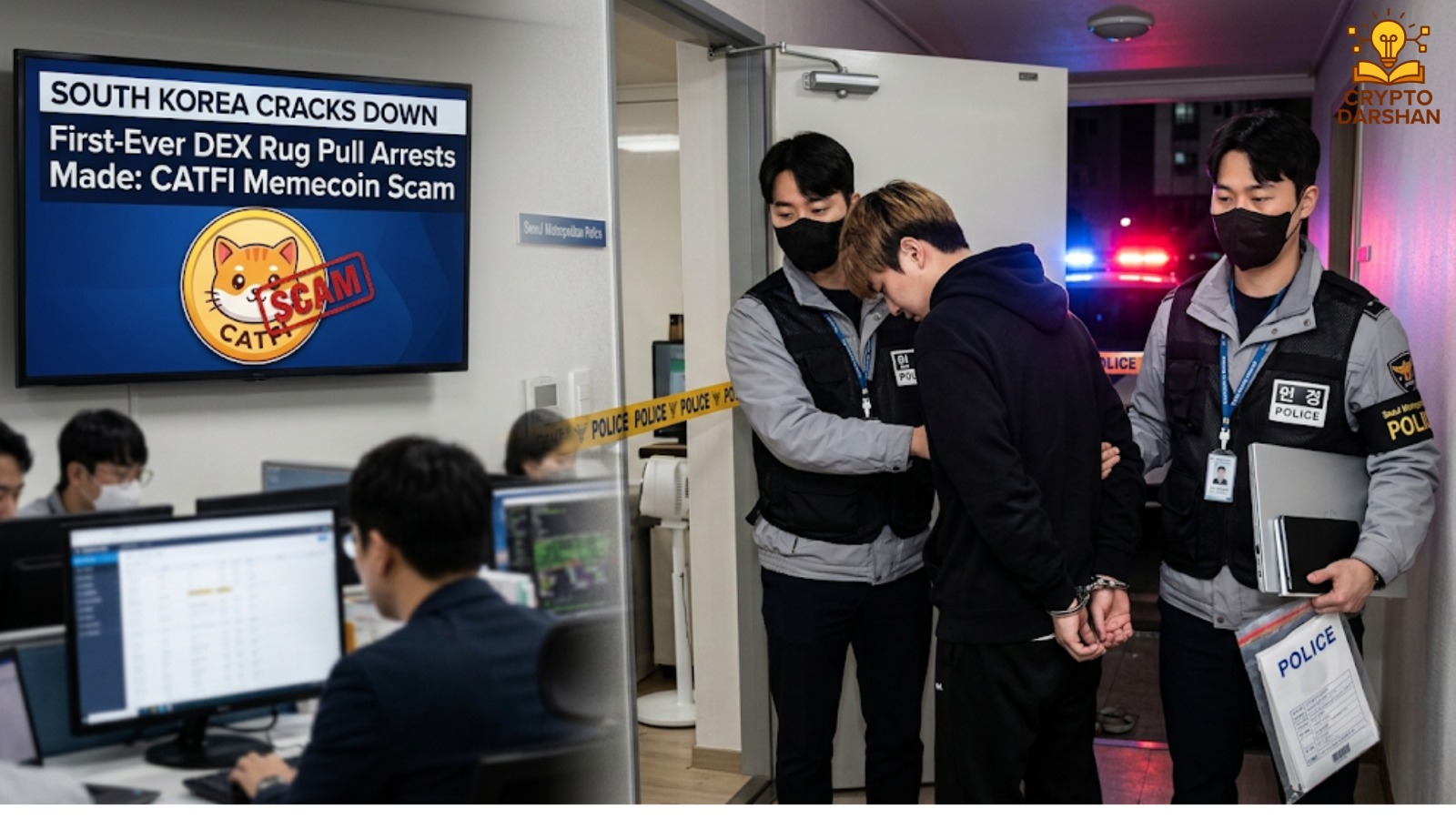
South Korea has made history by arresting and charging a criminal group responsible for the country’s first decentralized exchange (DEX) rug pull. This landmark case involves the CATFI memecoin, a Solana-based token that skyrocketed in value before crashing and leaving 256 investors with massive losses.
The Seoul Southern District Prosecutors’ Office’s Joint Investigation Department for Virtual Asset Crimes led the operation, marking a major turning point in how South Korea handles crypto fraud. This is the first time the nation’s Virtual Asset User Protection Act has been used to prosecute a DEX rug pull, signaling that regulators are now taking decentralized platforms just as seriously as centralized ones.
How the CATFI Scam Unfolded

The Birth of a Fake Memecoin
In early 2025, the criminal group created CATFI on Pump.Fun, a popular platform for launching memecoins on the Solana blockchain. After creating the token, they listed it on a decentralized exchange and began a coordinated manipulation campaign.
The 1,001-Fold Price Surge
The group’s scheme worked like this:
- They drove the token’s price up 1,001 times within just 26 hours
- Around 6,000 investors jumped in during the hype
- The token’s value once approached $9 million before crashing to just $57,000
This artificial price pump was designed to lure in unsuspecting buyers who thought they were getting in on the next big memecoin.
The Rug Pull Execution

Once the price peaked, the criminals sold their holdings, pocketing approximately 400 million won (about $260,000–$290,000) in illegal profits. They had initially invested only 10 million won (around $7,200), turning it into a 40x return through fraud.
Meanwhile, 256 investors suffered losses totaling 900 million won (approximately $586,000–$652,000). One trader alone lost nearly $190,000 in under an hour.
The Mastermind Behind the Scam

“Eth Father” – The Fake Influencer
The main suspect, identified only by his surname Park, operated under the online pseudonym “Eth Father”. He posed as an independent crypto influencer to gain trust and promote CATFI as if he had no connection to the project.
His deceptive tactics included:
- Falsely recommending CATFI as a third-party investment
- Managing the project’s social media accounts
- Buying fake followers to inflate credibility
- Posting false positive announcements about the token
Park also used multiple wallets to hide his token ownership and engaged in wash trading to make it look like legitimate trading activity was happening.
The Arrests and Charges: Who Got Caught?

Prosecutors took action against five people in total:
Two people were arrested and indicted for market manipulation, one was indicted without detention, and two others were charged with helping the main suspect escape.
Why This Case Matters :A New Era of Crypto Enforcement

This case is significant for several reasons:
- First DEX Rug Pull Prosecution: Unlike previous crypto fraud cases targeting centralized exchanges, this is South Korea’s first DEX rug pull arrest
- Virtual Asset User Protection Act: The case is the first application of the unfair trading provisions under South Korea’s new crypto law, which took effect to protect users
- Regulatory Signal: Authorities are sending a clear message that decentralized platforms are not lawless zones, and fraud there will be punished
- Memecoin Warning: With memecoins becoming increasingly popular, this case warns investors about the risks of pumping schemes on platforms like Pump.Fun
What This Means for Crypto Investors: Red Flags to Watch For
If a token explodes overnight, take a step back before jumping in. A 1,000x surge in just 26 hours might sound exciting, but moves that extreme are often a major red flag. Don’t blindly trust influencers hyping a coin on social media. Some promoters already hold large amounts of the token and benefit when new investors rush in. A project’s social media popularity can be misleading. Fake followers, bots, and artificial engagement are cheap and easy to create, so always look beyond the numbers. Before investing, spend time researching the people behind the project.
A transparent team with a real track record is usually far more trustworthy than anonymous developers making huge promises. Investors should also understand the warning signs explained in our guide on How Social Media Manipulates Beginner Crypto Investors Without Them Knowing.
The Future of DeFi Safety

As regulations tighten, decentralized finance is becoming more accountable. While DEXs offer freedom and privacy, this case shows that law enforcement can still track down and prosecute those who exploit them.
South Korea’s bold move sets a precedent that could influence how other countries handle DEX fraud in the future.
South Korea’s first DEX rug pull arrest is a watershed moment for crypto regulation. The CATFI scam, which defrauded 256 investors out of nearly $600,000, has resulted in arrests under new virtual asset protection laws. This case proves that even in decentralized markets, criminals cannot escape justice, and investors should stay vigilant against memecoin manipulation schemes.