The world of blockchain technology can seem complex, filled with technical terms and abstract concepts. Yet, at the heart of every blockchain network lies one essential component — the Blockchain Node. Understanding what a Blockchain Node is and how it works is key to grasping how cryptocurrencies, decentralized applications, and digital ledgers function.
This article provides a clear, easy-to-understand explanation of Blockchain Nodes, their types, roles, and importance in maintaining the integrity and security of blockchain systems. It also explores how nodes interact, how they differ across various blockchains, and why they are vital for decentralization.
By the end, the concept of a Blockchain Node will no longer feel intimidating but rather fascinating — the invisible engine that keeps the blockchain world running.
What Is a Blockchain?

Before diving into what a Blockchain Node is, it’s important to understand what a blockchain itself represents. A blockchain is a distributed digital ledger that records transactions across a network of computers. Instead of relying on a central authority, it uses cryptography and consensus mechanisms to ensure that all participants agree on the validity of transactions.
Each block in the chain contains a list of transactions, a timestamp, and a cryptographic hash of the previous block. This structure makes the blockchain immutable — once data is recorded, it cannot be altered without changing all subsequent blocks.
The blockchain’s decentralized nature means that no single entity controls it. Instead, it relies on a network of participants — the Blockchain Nodes — to verify, store, and share data.
What Is a Blockchain Node?
A Blockchain Node is any computer or device that connects to a blockchain network and participates in its operation. Each node stores a copy of the blockchain’s data and helps validate and relay transactions. In simple terms, a Blockchain Node acts as a checkpoint or participant that ensures the blockchain remains accurate, secure, and synchronized across the entire network.
Every Blockchain Node communicates with others to share information about new transactions and blocks. This peer-to-peer communication ensures that all copies of the blockchain remain consistent, even without a central server.
In essence, a Blockchain Node is the backbone of the blockchain — without nodes, there would be no network, no consensus, and no trustless system.
How a Blockchain Node Works
A Blockchain Node performs several key functions that keep the network operational:
- Verification of Transactions
When a transaction is broadcast to the network, nodes verify its validity. They check whether the sender has enough balance, whether the digital signatures are correct, and whether the transaction follows the network’s rules. - Propagation of Data
Once verified, the Blockchain Node shares the transaction with other nodes. This process, known as propagation, ensures that all nodes have the same information. - Storage of Blockchain Data
Each Blockchain Node stores a copy of the blockchain ledger. Some nodes store the entire history of transactions, while others store only partial data to save space. - Consensus Participation
Nodes participate in consensus mechanisms such as Proof of Work (PoW) or Proof of Stake (PoS) to agree on which transactions should be added to the blockchain. - Security and Validation
By independently verifying transactions, nodes prevent fraud, double-spending, and unauthorized changes to the blockchain.
The Role of Blockchain Nodes in Decentralization

Decentralization is one of the most important features of blockchain technology. A Blockchain Node plays a central role in achieving this. Instead of relying on a single central authority, thousands of nodes around the world maintain and verify the blockchain.
This distribution of power ensures that no single entity can manipulate the data. Even if some nodes go offline or act maliciously, the network continues to function because other nodes maintain the correct version of the ledger.
The more Blockchain Nodes a network has, the more decentralized and secure it becomes. For example, Bitcoin has thousands of nodes distributed globally, making it extremely difficult for anyone to alter its data or shut it down.
Types of Blockchain Nodes

Not all Blockchain Nodes are the same. Different types of nodes perform different functions depending on their role in the network. Below are the main types of nodes found in most blockchain systems.
1. Full Node
A Full Node stores the entire history of the blockchain, from the first block (the genesis block) to the most recent one. It independently verifies all transactions and blocks according to the network’s consensus rules.
Full nodes are essential for maintaining the integrity of the blockchain. They ensure that every transaction follows the rules and that no invalid data is added to the chain.
Examples of full nodes include Bitcoin Core nodes in the Bitcoin network and Geth nodes in Ethereum.
2. Light Node (SPV Node)
A Light Node, also known as a Simplified Payment Verification (SPV) node, does not store the entire blockchain. Instead, it keeps only the block headers and relies on full nodes for transaction verification.
Light nodes are useful for devices with limited storage or processing power, such as smartphones or lightweight wallets. They allow users to interact with the blockchain without maintaining a full copy of it.
3. Mining Node
A Mining Node is a special type of full node that participates in the process of creating new blocks. In Proof of Work systems like Bitcoin, mining nodes compete to solve complex mathematical puzzles. The first node to solve the puzzle gets to add a new block to the blockchain and receive a reward.
Mining nodes are crucial for securing the network and confirming transactions.
4. Masternode
A Masternode is a specialized node that performs advanced functions beyond simple transaction verification. Found in networks like Dash, masternodes handle tasks such as instant transactions, governance voting, and privacy features.
Masternodes usually require a significant investment or collateral in the network’s native cryptocurrency to operate, ensuring that operators have a vested interest in maintaining network integrity.
5. Validator Node
In Proof of Stake (PoS) systems, a Validator Node replaces miners. Validators are chosen to create new blocks based on the amount of cryptocurrency they have staked. They verify transactions and propose new blocks, earning rewards for honest behavior and risking penalties for misconduct.
Validator nodes are energy-efficient alternatives to mining nodes and are becoming increasingly popular in modern blockchain networks.
How Blockchain Nodes Communicate
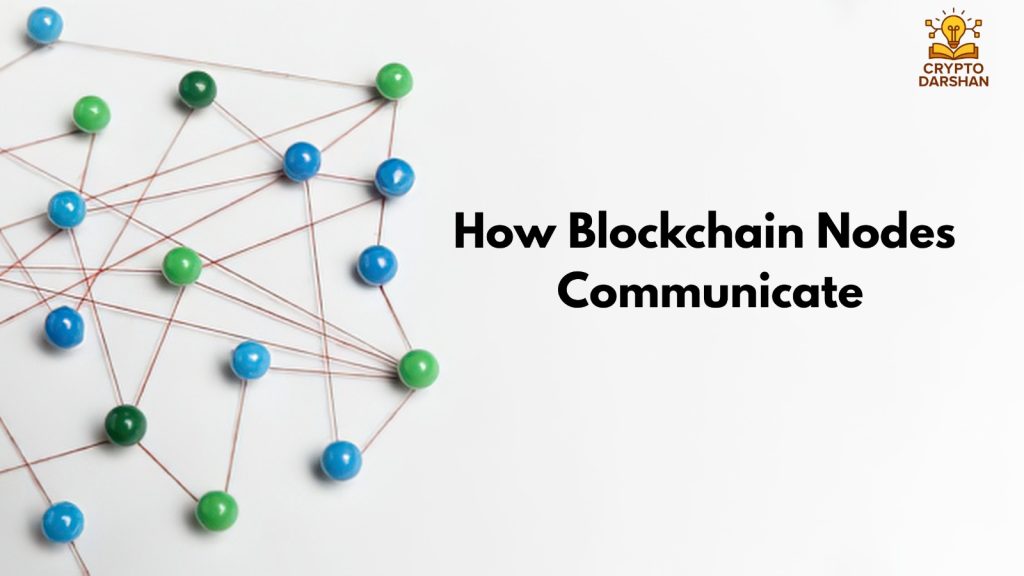
A Blockchain Node communicates with other nodes through a peer-to-peer (P2P) network. This decentralized communication model ensures that all nodes share information directly without intermediaries.
When a new transaction occurs, it is broadcast to nearby nodes. Each node verifies the transaction and passes it along to others. This process continues until the entire network is updated.
The communication between nodes ensures that all participants have the same version of the blockchain, maintaining consistency and trust across the system.
Why Blockchain Nodes Are Important

The importance of a Blockchain Node cannot be overstated. Without nodes, a blockchain would not exist. Here are the main reasons why nodes are essential:
- Security – Nodes verify every transaction, preventing fraud and double-spending.
- Transparency – Every node stores a copy of the blockchain, ensuring that data is publicly verifiable.
- Decentralization – Nodes distribute control across the network, eliminating single points of failure.
- Resilience – Even if some nodes fail, others keep the network running.
- Consensus – Nodes work together to agree on the state of the blockchain, ensuring accuracy and trust.
How to Run a Blockchain Node
Running a Blockchain Node allows individuals to contribute to the network’s security and decentralization. The process varies depending on the blockchain, but the general steps include:
- Choose the Blockchain Network
Decide which blockchain to support, such as Bitcoin, Ethereum, or another network. - Download the Node Software
Obtain the official node software from the blockchain’s website or repository. - Install and Configure
Install the software on a computer or server and configure it according to network requirements. - Sync the Blockchain
The node will download and verify the entire blockchain history, which can take hours or days depending on the network size. - Stay Online
Keep the node running continuously to help validate transactions and maintain network stability.
Running a Blockchain Node requires storage space, bandwidth, and processing power, but it also provides the satisfaction of supporting a decentralized ecosystem.
Blockchain Node vs. Miner
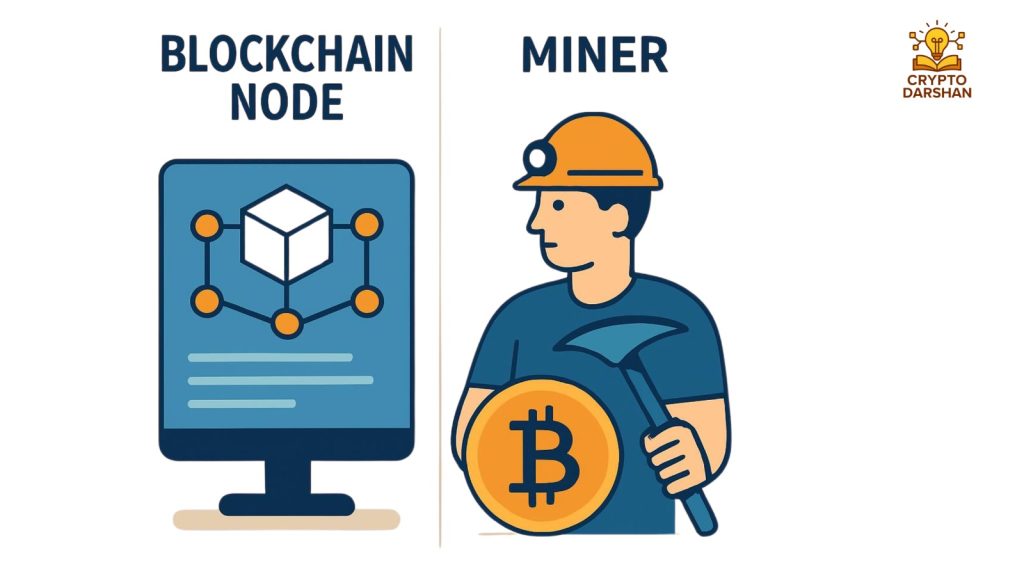
While both nodes and miners are essential to blockchain networks, they serve different purposes.
A Blockchain Node verifies and stores transactions, ensuring that the blockchain remains accurate and consistent. A miner, on the other hand, is a node that performs additional work — solving cryptographic puzzles to create new blocks and earn rewards.
All miners are nodes, but not all nodes are miners. Non-mining nodes still play a vital role by validating transactions and maintaining the network’s integrity.
Blockchain Node vs. Wallet
A cryptocurrency wallet is often confused with a Blockchain Node, but they are not the same.
A wallet is a software application that allows users to store, send, and receive cryptocurrencies. It interacts with the blockchain through nodes but does not necessarily store the blockchain itself.
A Blockchain Node, however, maintains a copy of the blockchain and verifies transactions. Some wallets connect to external nodes, while others run their own lightweight nodes for added security.
The Consensus Mechanism and Blockchain Nodes

Consensus mechanisms are the rules that Blockchain Nodes follow to agree on the state of the blockchain. Different blockchains use different consensus models, but the goal is always the same — to ensure that all nodes have a consistent and accurate record of transactions.
Proof of Work (PoW)
In PoW systems like Bitcoin, mining nodes compete to solve mathematical puzzles. The first to solve it adds a new block to the blockchain. Other nodes verify the block before accepting it.
Proof of Stake (PoS)
In PoS systems like Ethereum 2.0, validator nodes are chosen based on the amount of cryptocurrency they stake. Validators confirm transactions and propose new blocks, earning rewards for honest participation.
Delegated Proof of Stake (DPoS)
In DPoS systems, token holders vote for a limited number of validator nodes to represent them. This model increases efficiency while maintaining decentralization.
Each consensus mechanism relies on Blockchain Nodes to verify transactions, maintain trust, and secure the network.
Security and Blockchain Nodes

Security is one of the main reasons Blockchain Nodes exist. By distributing data across thousands of nodes, blockchains become resistant to attacks and data manipulation.
Even if a hacker compromises one node, the rest of the network maintains the correct version of the blockchain. To alter the data, an attacker would need to control more than half of all nodes — a nearly impossible task in large networks like Bitcoin or Ethereum.
Nodes also use cryptographic techniques to verify transactions, ensuring that only valid and authorized actions are recorded.
The Cost of Running a Blockchain Node

Running a Blockchain Node can be free or costly, depending on the network and node type.
- Full Nodes require significant storage and bandwidth to maintain the entire blockchain.
- Light Nodes are cheaper to run since they store less data.
- Masternodes and Validator Nodes often require staking or collateral, which can be expensive but also generate rewards.
Despite the costs, running a node provides benefits such as increased privacy, independence from third-party services, and direct participation in the blockchain ecosystem.
Real-World Examples of Blockchain Nodes

Bitcoin Nodes
Bitcoin’s network consists of thousands of Blockchain Nodes distributed worldwide. Each node stores the full blockchain and verifies transactions independently. This decentralization makes Bitcoin one of the most secure networks in existence.
Ethereum Nodes
Ethereum uses both full and light nodes. Full nodes store the entire blockchain, while light nodes allow users to interact with decentralized applications (dApps) without downloading all data. Validator nodes in Ethereum 2.0 secure the network through staking.
Dash Masternodes
Dash introduced the concept of masternodes, which perform advanced functions like instant transactions and governance voting. Operators must hold a certain amount of Dash as collateral to run a masternode.
The Future of Blockchain Nodes

The future of Blockchain Nodes is evolving alongside blockchain technology itself. As networks grow, scalability and efficiency become major challenges. Developers are exploring new solutions such as:
- Sharding – Dividing the blockchain into smaller parts (shards) to reduce the load on individual nodes.
- Layer 2 Solutions – Off-chain systems like the Lightning Network that reduce the burden on main nodes.
- Hybrid Nodes – Combining features of full and light nodes for better performance.
- Cloud-Based Nodes – Hosting nodes on cloud infrastructure for easier deployment and maintenance.
- Incentivized Nodes – Rewarding users for running nodes to encourage decentralization.
These innovations aim to make Blockchain Nodes more efficient, accessible, and sustainable for the future.
Common Misconceptions About Blockchain Nodes
- “Only miners are nodes.”
Not true. All miners are nodes, but not all nodes are miners. Many nodes simply verify and store data. - “Running a node is too technical.”
While it requires some setup, many blockchains now offer user-friendly software for running nodes. - “Nodes are optional.”
Without nodes, a blockchain cannot function. They are the foundation of the entire system. - “Nodes make blockchains slow.”
Nodes ensure accuracy and security. Scalability solutions are being developed to improve speed without sacrificing decentralization.
Why Everyone Should Understand Blockchain Nodes
Understanding Blockchain Nodes is essential for anyone interested in cryptocurrencies, decentralized finance (DeFi), or blockchain technology. Nodes are the reason blockchains are secure, transparent, and independent.
By learning how nodes work, individuals can make informed decisions about participating in blockchain networks, running their own nodes, or developing decentralized applications.
FAQ: What Is a Blockchain Node? The Simplest Explanation You’ll Ever Read

1. What is a blockchain node?
A blockchain node is any computer or device connected to a blockchain network that helps store, verify, and share transaction data.
2. Why are blockchain nodes important?
Nodes maintain the integrity, security, and decentralization of a blockchain by validating transactions and ensuring all participants have the same version of the ledger.
3. How does a blockchain node work?
A node receives transactions, verifies them according to the network’s rules, stores blockchain data, and communicates updates to other nodes on the network.
4. What are the different types of blockchain nodes?
Common types include full nodes, light nodes, archive nodes, mining nodes, and validator nodes, each serving different functions within the network.
5. What is a full node?
A full node stores the complete blockchain history and independently verifies all transactions and blocks according to the network’s rules.
6. What is a light node?
A light node stores only a portion of the blockchain data and relies on full nodes for detailed information, making it faster and less resource-intensive.
7. What is the difference between a node and a miner?
A node validates and shares blockchain data, while a miner (or validator in some networks) participates in creating new blocks and securing the network.
8. Does every blockchain have nodes?
Yes. Every blockchain network depends on nodes to maintain its distributed ledger and ensure consensus among participants.
Conclusion
A Blockchain Node is the heartbeat of any blockchain network. It verifies transactions, stores data, and ensures that the system remains decentralized and secure. Without nodes, there would be no blockchain — only a centralized database vulnerable to manipulation.
From full nodes that store entire ledgers to validator nodes that secure Proof of Stake systems, each Blockchain Node plays a vital role in maintaining trust and transparency.
As blockchain technology continues to evolve, nodes will remain the foundation of decentralized systems. They embody the principles of openness, security, and collaboration that define the blockchain revolution.
In the simplest terms, a Blockchain Node is not just a computer it’s the guardian of truth in a digital world built on trustless technology.