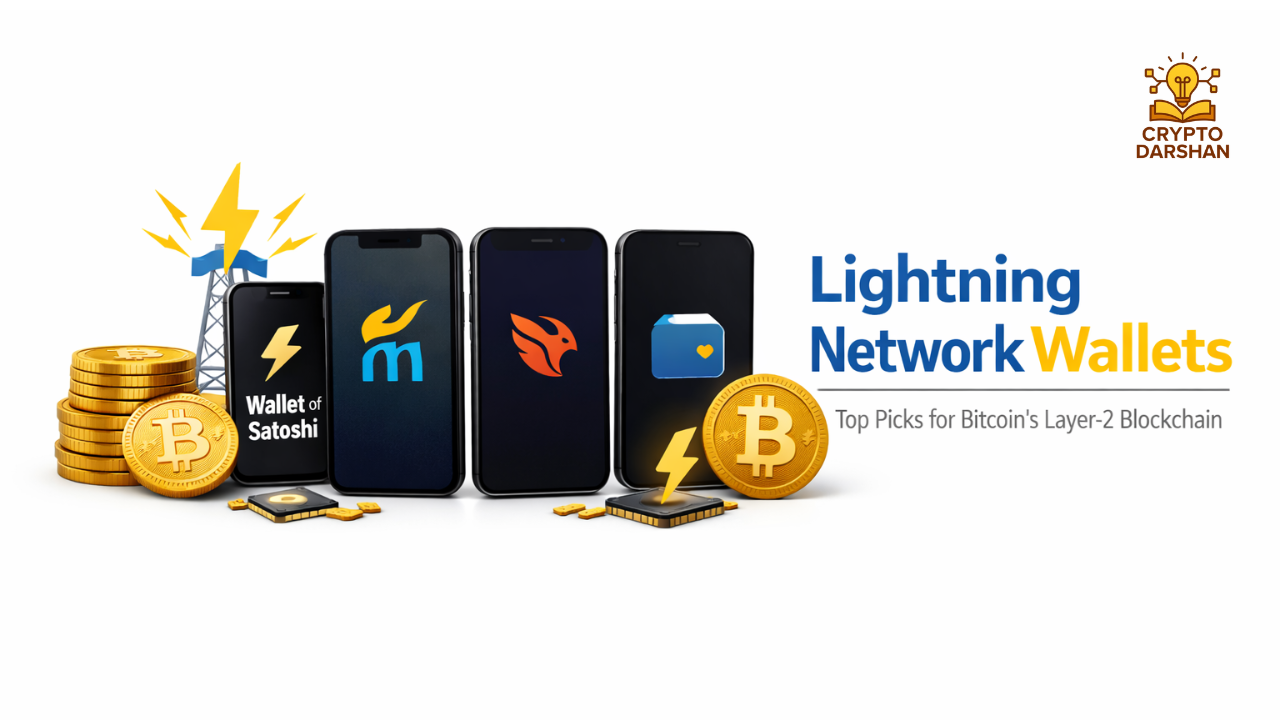
The Lightning Network has revolutionized the way Bitcoin transactions are processed, offering faster, cheaper, and more scalable solutions for everyday payments. As Bitcoin continues to evolve beyond a store of value into a practical medium of exchange, the Network plays a crucial role in enabling instant microtransactions and reducing congestion on the main blockchain. In 2026, the adoption of wallets has surged, empowering users to send and receive Bitcoin seamlessly across the globe.
This comprehensive guide explores the fundamentals of the Lightning Network, how it works, and the best wallets available today. It also examines the technology behind these wallets, their security features, and how they contribute to Bitcoin’s Layer-2 ecosystem.
Understanding the Lightning Network

What Is the Lightning Network?
The Lightning Network is a second layer for Bitcoin (BTC) that uses micropayment channels to scale the blockchain’s capability and handle transactions more efficiently and cheaply. Instead of recording every transaction directly on the blockchain, the Lightning Network allows users to open payment channels between each other.
These channels can process thousands of transactions instantly, with only the opening and closing balances recorded on the main Bitcoin blockchain. This approach significantly reduces network congestion and transaction fees, making Bitcoin more practical for everyday use.
How the Lightning Network Works
The Lightning Network operates through a system of payment channels. When two users open a channel, they lock a certain amount of Bitcoin into a multi-signature wallet. This wallet acts as a shared account that both parties can use to send and receive payments instantly.
Each transaction updates the balance within the channel without broadcasting it to the blockchain. When the channel is closed, the final balance is recorded on the Bitcoin network. This mechanism allows the process millions of transactions per second, far surpassing the capacity of the base layer.
Benefits of the Lightning Network
- Speed – Transactions on the Lightning Network are nearly instantaneous, taking milliseconds to confirm. While Lightning improves transaction speed, Bitcoin’s underlying value still depends heavily on supply scarcity, which we explained in Bitcoin Supply Shock: Are Exchanges Running Out of BTC?
- Low Fees – Because transactions occur off-chain, fees are minimal compared to traditional Bitcoin transfers.
- Scalability – The Network can handle millions of transactions per second, making Bitcoin scalable for global use.
- Privacy – Off-chain transactions provide greater privacy since they are not recorded on the public blockchain.
- Micropayments – The Lightning Network enables microtransactions as small as a few satoshis, opening new possibilities for digital commerce.
What Are Lightning Network Wallets?

Network wallets are specialized Bitcoin wallets that support Layer-2 transactions. They allow users to open, manage, and close payment channels on the Lightning Network. These wallets make it possible to send and receive Bitcoin instantly without waiting for blockchain confirmations.
Unlike traditional Bitcoin wallets, Lightning Network wallets maintain both on-chain and off-chain balances. The on-chain balance represents Bitcoin stored on the main blockchain, while the off-chain balance is used for Lightning transactions.
Types of Lightning Network Wallets
- Custodial Wallets – Managed by a third party that handles the technical aspects of the Lightning Network. These wallets are user-friendly but require trust in the provider.
- Non-Custodial Wallets – Give users full control over their private keys and funds. They require more technical knowledge but offer greater security and independence.
- Hybrid Wallets – Combine the convenience of custodial wallets with the control of non-custodial ones, offering a balanced experience.
Top Lightning Network Wallets in 2026
1. Phoenix Wallet
Phoenix Wallet is one of the most popular non-custodial Lightning Network wallets. Developed by ACINQ, it offers a seamless user experience with automatic channel management. Users can send and receive Bitcoin instantly without worrying about liquidity or channel setup.
Key Features:
- Non-custodial with full control over funds
- Automatic channel creation and management
- Integrated on-chain and off-chain balance
- Simple interface for beginners
- Available on Android and iOS
Why It Stands Out:
Phoenix Wallet simplifies the Network experience by handling technical details in the background. It’s ideal for users who want the benefits of non-custodial control without the complexity of manual channel management.
2. Breez Wallet
Breez Wallet is a user-friendly, non-custodial Lightning Network wallet designed for everyday payments. It integrates seamlessly with point-of-sale systems, making it perfect for merchants and consumers alike.
Key Features:
- Instant Bitcoin payments via the Lightning Network
- Built-in podcast streaming and tipping features
- Non-custodial with self-custody of funds
- Supports NFC payments and QR codes
- Available on mobile platforms
Why It Stands Out:
Breez Wallet focuses on usability and real-world adoption. Its integration with content platforms and merchant tools makes it one of the most versatile Lightning Network wallets available.
3. Wallet of Satoshi
Wallet of Satoshi is a custodial Lightning Network wallet known for its simplicity and ease of use. It’s ideal for beginners who want to experience without dealing with technical complexities.
Key Features:
- Custodial wallet with instant setup
- Supports both Lightning and on-chain Bitcoin transactions
- Simple interface for quick payments
- Available on Android and iOS
Why It Stands Out:
Wallet of Satoshi is perfect for newcomers to the Lightning Network. Its custodial nature removes the need for channel management, allowing users to focus on fast and easy Bitcoin payments.
4. BlueWallet

BlueWallet is a versatile Bitcoin wallet that supports both on-chain and Lightning Network transactions. It offers users the flexibility to choose between custodial and non-custodial modes.
Key Features:
- Dual support for Bitcoin and Lightning
- Option to connect to external Lightning nodes
- Advanced security features
- Open-source and community-driven
Why It Stands Out:
BlueWallet bridges the gap between traditional Bitcoin wallets and Lightning Network wallets, making it suitable for both beginners and advanced users.
5. Muun Wallet
Muun Wallet is a hybrid Bitcoin wallet that integrates Lightning Network functionality with a focus on security and simplicity. It automatically routes payments through the most efficient path, whether on-chain or off-chain.
Key Features:
- Hybrid on-chain and Lightning transactions
- Non-custodial with strong encryption
- Automatic payment routing
- Cross-platform compatibility
Why It Stands Out:
Muun Wallet’s hybrid design ensures that users always get the fastest and cheapest transaction route, making it one of the most efficient Lightning Network wallets available.
6. Zeus Wallet
Zeus Wallet is a powerful non-custodial Lightning Network wallet designed for advanced users who run their own nodes. It provides full control over funds and direct access to node management tools.
Key Features:
- Connects directly to personal Lightning nodes
- Advanced channel management
- Non-custodial with full privacy
- Open-source and customizable
Why It Stands Out:
Zeus Wallet is ideal for power users who want complete control over their Lightning Network operations. It’s a favorite among developers and node operators.
7. Strike
Strike is a payment platform that leverages the Lightning Network to enable instant Bitcoin and fiat transactions. It allows users to send money globally without traditional banking fees.
Key Features:
- Instant Bitcoin and fiat payments
- Integration with bank accounts
- Custodial wallet with regulatory compliance
- Available on multiple platforms
Why It Stands Out:
Strike bridges the gap between traditional finance and the Lightning Network, making Bitcoin payments accessible to mainstream users and businesses.
How to Choose the Right Lightning Network Wallet

Choosing the right Lightning Network wallet is essential for anyone who wants to take full advantage of Bitcoin’s Layer-2 technology. Layer-2 solutions like Lightning are part of a broader push to improve blockchain infrastructure, similar to the innovations covered in The Battle for Web3 Infrastructure: RPC Providers vs Decentralized Nodes.
With so many options available, it’s important to understand what features matter most and how they align with your needs. The following five key points—custody preference, ease of use, security features, platform compatibility, and integration options—will help you make an informed decision.
1. Custody Preference
The first and most important factor when selecting a Lightning Network wallet is deciding between custodial and non-custodial options.
- Custodial wallets are managed by a third party that holds your private keys and manages the technical aspects of the Lightning Network for you. These wallets are ideal for beginners who want a simple, plug-and-play experience without worrying about liquidity management or node operation. However, they require trust in the service provider since you don’t have full control over your funds.
- Non-custodial wallets, on the other hand, give you complete ownership of your private keys and Bitcoin. You are responsible for managing your channels, backups, and security. While this option requires more technical understanding, it offers maximum privacy and independence.
2. Ease of Use
The ease of use of a Network wallet determines how accessible it is for everyday transactions. A good wallet should have an intuitive interface, clear navigation, and simple setup procedures.
- For beginners, wallets with automatic channel management and minimal configuration are ideal. They handle technical details like liquidity and routing in the background, allowing users to focus on sending and receiving Bitcoin.
- For advanced users, wallets that offer manual control over channels, nodes, and routing options provide greater flexibility and customization.
3. Security Features
Security is a critical factor when choosing a Lightning Network wallet, as it directly affects the safety of your Bitcoin. Since Lightning transactions occur off-chain, wallets must protect both on-chain and off-chain balances.
Key security features to look for include:
- Private key control – Non-custodial wallets ensure that only you have access to your private keys.
- Backup and recovery options – Seed phrases or encrypted backups allow you to restore your wallet if your device is lost or damaged.
- Open-source code – Wallets with publicly available code can be audited by the community, ensuring transparency and trustworthiness.
- Watchtower services – Some wallets include watchtowers that monitor the Lightning Network for fraudulent activity, protecting users from potential channel breaches.
4. Platform Compatibility

When selecting a Lightning wallet, it’s important to ensure that it works on your preferred device and operating system. Wallets are typically available for Android, iOS, desktop, or web-based platforms.
- Mobile wallets are ideal for everyday use, allowing you to make quick payments on the go. Examples include Breez, Phoenix, and Wallet of Satoshi.
- Desktop wallets are better suited for users who manage larger amounts or run their own nodes, such as Zeus or Electrum with Lightning support.
- Cross-platform wallets like Muun offer synchronization between mobile and desktop, providing flexibility and convenience.
Platform compatibility also includes how well the wallet integrates with hardware wallets or external nodes. A wallet that supports multiple platforms ensures that you can access your funds anytime, anywhere.
5. Integration Options
The final key point to consider is integration options—how well the Lightning Network wallet connects with other tools, services, and payment systems.
- Merchant integration – Some wallets, like Breez, include built-in point-of-sale features that allow businesses to accept Bitcoin payments instantly.
- API and developer tools – Advanced wallets offer APIs for developers to build custom applications or integrate Lightning payments into websites and apps.
- Hardware wallet compatibility – Integration with hardware wallets adds an extra layer of security for users who store large amounts of Bitcoin.
- Third-party services – Some wallets connect with exchanges, DeFi platforms, or fiat on-ramps, making it easier to move funds between systems.
Security in Lightning Wallets

Security is a top priority in Lightning Network wallets. Since these wallets handle both on-chain and off-chain funds, they must protect users from potential vulnerabilities.
Key Security Measures
- Private Key Control – Non-custodial wallets ensure users retain full control of their private keys.
- Backup and Recovery – Seed phrases and encrypted backups protect against data loss.
- Open-Source Code – Transparency allows the community to audit wallet security.
- Channel Monitoring – Some wallets include watchtower services that monitor for fraudulent activity.
By combining these features, modern Lightning Network wallets provide robust protection for users’ funds.
The Future of the Lightning Network

The Lightning Network continues to evolve, with new innovations improving scalability, privacy, and interoperability. In 2026, several trends are shaping its future:
- Cross-Chain Payments – The Lightning Network is expanding beyond Bitcoin, enabling instant transfers between different blockchains.
- Smart Contracts – Developers are integrating programmable payments into the Lightning Network, allowing for automated transactions.
- Decentralized Finance (DeFi) – Layer-2 solutions are merging with DeFi platforms, creating new financial products.
- Global Adoption – Businesses and governments are exploring payments for remittances, retail, and digital identity systems.
Lightning Network and Everyday Payments

The Lightning Network is transforming how people use Bitcoin in daily life. From buying coffee to paying for online services, transactions are now instant and nearly free.
Real-World Use Cases
- Retail Payments – Merchants accept Bitcoin via Network wallets for instant checkout.
- Content Monetization – Creators receive micro-tips through Lightning-enabled platforms.
- Gaming and Streaming – Players and viewers make in-game purchases or donations using Lightning payments.
- Remittances – Cross-border transfers are faster and cheaper through the Lightning Network.
These applications demonstrate how the Lightning Network is bridging the gap between cryptocurrency and real-world utility.
Challenges Facing the Lightning Network

Despite its success, the Lightning Network faces several challenges:
- Liquidity Management – Maintaining sufficient liquidity in payment channels can be complex.
- User Education – Many users still lack understanding of how the Lightning Network works.
- Interoperability – Ensuring compatibility between different wallets and nodes remains a technical hurdle.
- Regulatory Uncertainty – Governments are still developing frameworks for Layer-2 payment systems.
Ongoing research and development aim to address these issues, making the Lightning Network more accessible and reliable.
The Economic Impact of the Lightning Network

The Lightning Network is reshaping the global economy by enabling faster and cheaper financial transactions. It reduces reliance on traditional banking systems and opens new opportunities for digital commerce.
Key Economic Benefits
- Lower Transaction Costs – Businesses save money on payment processing fees.
- Financial Inclusion – People in developing countries gain access to global payment networks.
- Innovation Growth – Startups build new applications on top of the Lightning Network.
- Decentralized Finance Expansion – The Lightning Network supports new financial models that operate without intermediaries.
These benefits highlight the transformative potential of the Lightning Network in the digital economy.
FAQ

1. What is the Lightning Network in Bitcoin?
The Lightning Network is a Layer-2 scaling solution built on top of Bitcoin that enables faster and cheaper transactions. It works by creating off-chain payment channels, allowing users to send payments instantly without recording every transaction on the main blockchain.
2. Why do people use Lightning Network wallets?
Lightning wallets allow users to send and receive Bitcoin almost instantly with extremely low fees. This makes them ideal for small everyday payments, tipping, and microtransactions that would otherwise be expensive on the main Bitcoin network.
3. What are some popular Lightning Network wallets in 2026?
Some widely used Lightning wallets include Wallet of Satoshi, Muun Wallet, Phoenix Wallet, and BlueWallet. These wallets are known for their user-friendly interfaces and reliable Lightning integration.
4. Are Lightning Network wallets safe to use?
Lightning wallets can be safe if users follow good security practices. Non-custodial wallets give users full control over their private keys, while custodial wallets manage the funds on behalf of the user but offer simpler setups.
5. How do Lightning payments work?
Lightning payments use payment channels between users. Instead of recording every transfer on the Bitcoin blockchain, transactions occur off-chain and only the final balances are settled on the main network.
6. Do Lightning Network transactions have fees?
Yes, but they are typically very small compared to on-chain Bitcoin fees. Lightning routing nodes charge tiny fees for forwarding payments through the network.
7. Can Lightning wallets receive normal Bitcoin transactions?
Many Lightning wallets support both on-chain and Lightning transactions. Users can deposit regular Bitcoin and then convert it into Lightning payments within the wallet.
8. What are the advantages of Lightning over on-chain Bitcoin payments?
The Lightning Network offers faster confirmation times, significantly lower fees, and the ability to process thousands of transactions per second compared to the base Bitcoin network.
Conclusion
The Lightning Network represents a major leap forward in Bitcoin’s evolution, transforming it from a slow, expensive network into a fast, scalable payment system. With the rise of advanced Lightning wallets, users can now enjoy instant, low-cost Bitcoin transactions with enhanced privacy and security.
From non-custodial wallets like Phoenix and Breez to hybrid solutions like Muun and custodial options like Wallet of Satoshi, there is a Network wallet for every type of user. As adoption grows, the Lightning Network will continue to drive innovation, enabling Bitcoin to function as a true global currency.
In the coming years, they will not only redefine digital payments but also shape the future of decentralized finance, commerce, and global connectivity. Its integration into everyday life marks the beginning of a new era for Bitcoin and the broader blockchain ecosystem.