Ethereum co-founder Vitalik Buterin has outlined a fresh vision for decentralized finance (DeFi) that moves away from today’s liquidation-heavy systems.
Instead of relying on debt and sudden liquidations, he suggests rebuilding key DeFi products using financial options, with the goal of making them safer and more stable for everyday users.
What is wrong with today’s liquidation model?
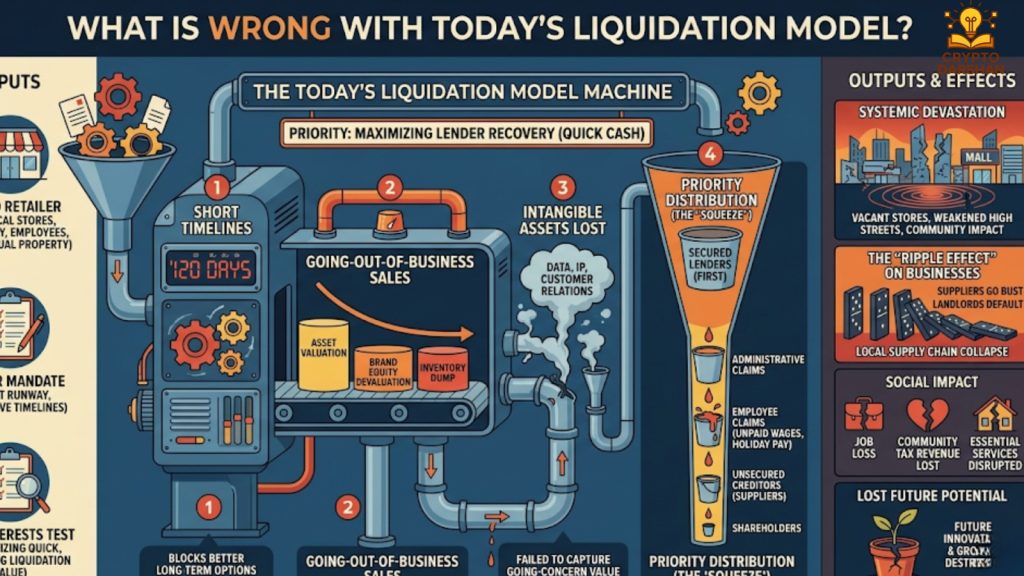
Most major DeFi protocols use collateralized debt positions (CDPs).
In this model, users lock up crypto as collateral and borrow against it, but if the value of that collateral drops too far, the protocol can liquidate the position in an instant.
This creates several problems:
- Users can lose funds very quickly in volatile markets.
- Protocols rely heavily on fast price oracles to know exactly when to trigger liquidations.
- These real-time oracles can become attack targets or fail during sharp market moves, adding systemic risk to decentralized finance (DeFi).
Buterin’s new proposal directly targets these pain points by asking a simple question: can DeFi be built without forced liquidations and constant oracle pressure?
How an options-based decentralized finance (DeFi) model works
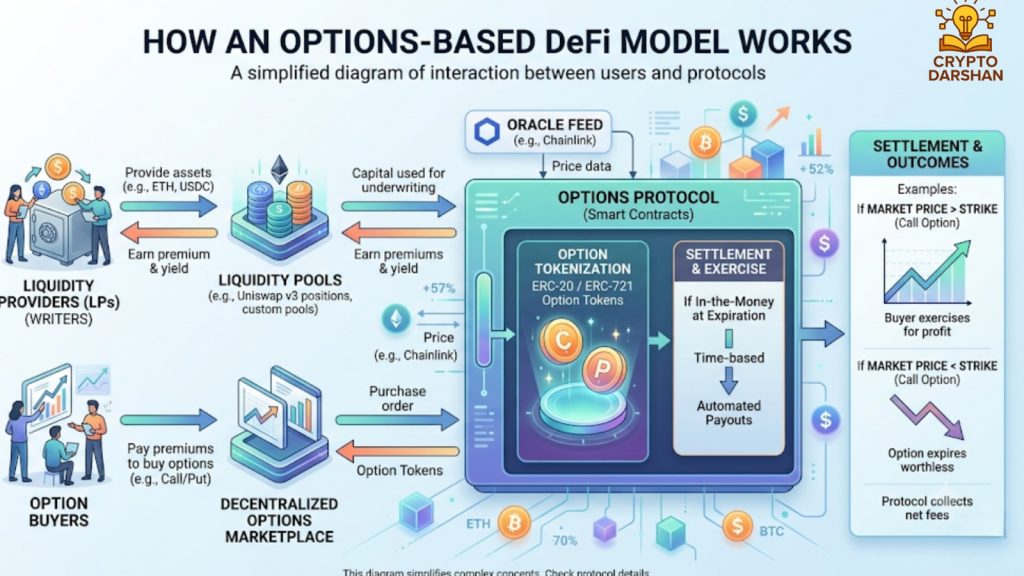
In his research note, Buterin describes a design where index-like crypto products are built on options contracts instead of debt.
The idea is to let users gain exposure to a basket of assets, similar to an index—without exposing them to sudden liquidations if prices move against them.
Here is the key shift:
- In current systems, if collateral falls below a limit, the position is closed and liquidated.
- In the options-based model, the user’s exposure simply drifts away from the target index over time when markets move, rather than being abruptly wiped out.
That means losses would show up as a gradual change in the portfolio’s composition instead of a brutal liquidation event.
This structure aims to lower leverage-related failure points while keeping the core benefit: exposure to a diversified crypto basket.
Fixing the oracle problem with “slow” price feeds
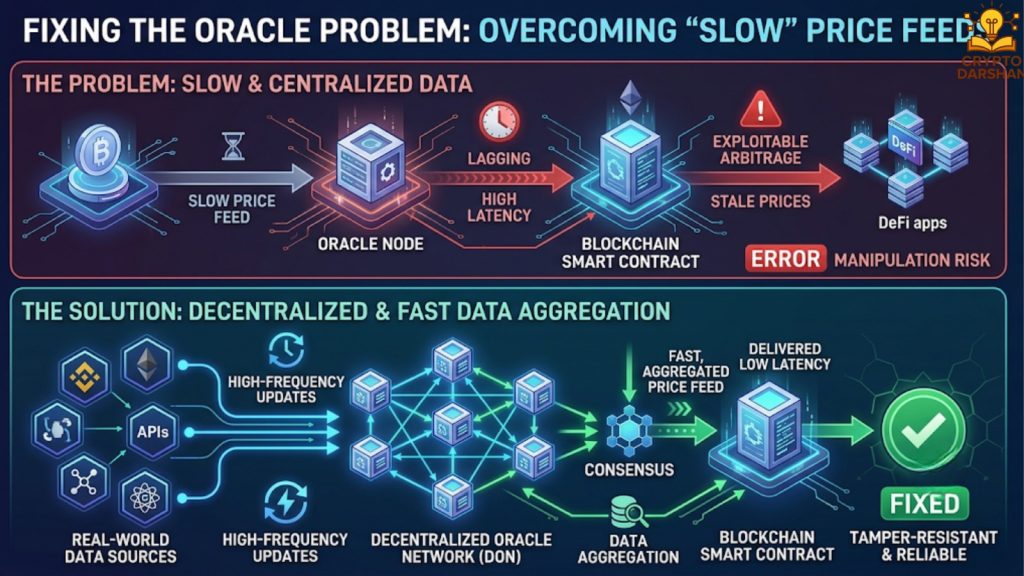
Another major goal of the proposal is to ease DeFi’s dependence on fast, fragile price oracles.
Today’s liquidation engines need second-by-second prices, which can be exploited or disrupted during intense volatility.
Buterin suggests that an options-based design could instead rely on slower, more robust oracles, similar to those used in prediction markets.
Because positions are not liquidated instantly, the protocol does not need to react to every small price move, reducing the attack surface around oracle manipulation.
He even notes that he would feel more comfortable with algorithmic stablecoins built on this structure than with those that depend on rapid-fire oracle data.
This hints at a broader vision where stablecoins and synthetic assets might be redesigned on top of options for improved resilience.
Trade-offs and open questions

Despite the promise, Buterin is clear that the idea is still theoretical and not yet deployed on Ethereum.
An options-based system would still require ongoing portfolio rebalancing so that positions continue to track their target indices.
The big open question is whether these rebalancing trades can be executed cheaply and efficiently on-chain.
If gas costs, slippage, or poor execution become too heavy, the model could end up too expensive or complex for real users.
For now, the proposal serves as a research direction rather than a ready-made product design.
It challenges builders to think beyond the current “debt plus liquidation” template and consider options as a new base layer for DeFi.
Why this matters for decentralized finance (DeFi)’s future

Buterin’s concept arrives at a time when DeFi is searching for more robust foundations after several high-profile liquidations and oracle-related incidents.
By shifting the core mechanism from debt to options, his proposal aims to deliver smoother user experiences, fewer sudden wipeouts, and less reliance on fragile real-time data.
If developers can turn this research into working protocols, decentralized finance (DeFi) users might one day gain index-like exposure, stablecoins, and other products that behave more predictably in stressed markets.
Even if the exact design changes, this discussion is likely to push the DeFi ecosystem toward safer, more resilient structures in the years ahead