The blockchain technology sector is growing rapidly, and Ethereum has become one of the most popular platforms for building decentralized applications (dApps). However, as more people use Ethereum, the network has faced challenges like high gas fees and slow transaction times. This is where Polygon comes in. Polygon is a powerful solution designed to make Ethereum faster, cheaper, and more efficient.
This guide explains Polygon Blockchainin simple terms, covering how it works, why it matters, and how it helps scale Ethereum. It’s written for beginners who want to understand blockchain technology without getting lost in technical jargon.
What Is Polygon?

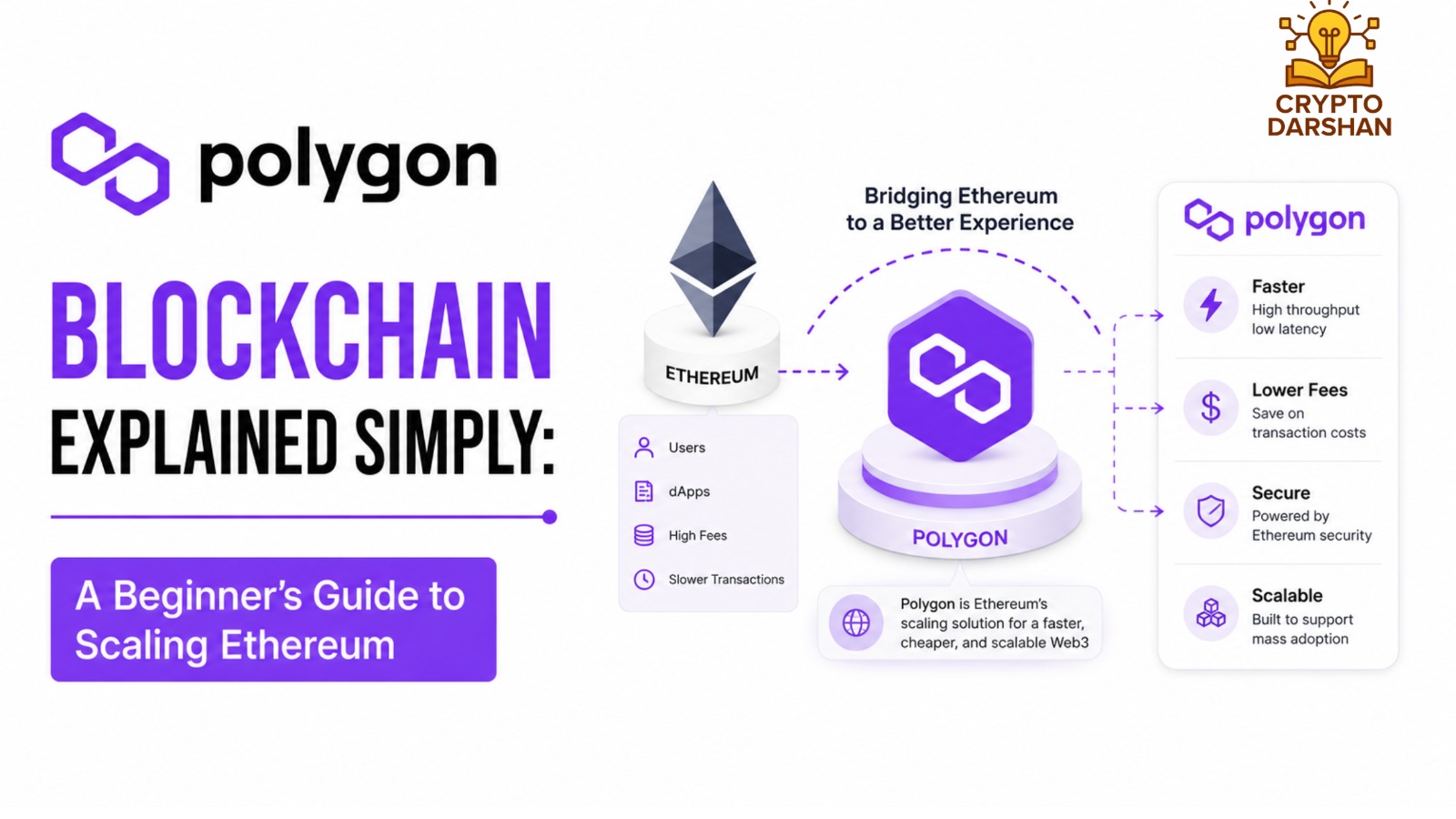
Polygon, formerly known as Matic Network, is a Layer 2 scaling solution for Ethereum. It helps improve Ethereum’s performance by processing transactions off the main Ethereum blockchain while still benefiting from its security and ecosystem.
In simple terms, Polygon acts like a helper network that works alongside Ethereum. It takes some of the workload off Ethereum’s main chain, allowing transactions to happen faster and at a lower cost.
Polygon Blockchain is not a replacement for Ethereum. Instead, it enhances Ethereum’s capabilities by providing a framework for building and connecting multiple Ethereum-compatible blockchain networks.
The Problem Polygon Solves

Ethereum is one of the most widely used blockchains, but it faces three major challenges:
1. Limited Scalability
Ethereum can only process about 15-30 transactions per second, which is insufficient for mass adoption. When thousands of users try to use the network simultaneously, it becomes congested and slow. Polygon solves this by processing up to 65,000 transactions per second, allowing the network to handle significantly more users and applications without performance issues.
2. High Transaction Costs
Ethereum’s gas fees can skyrocket during peak usage, sometimes reaching $50-$100 per transaction. This makes simple actions like sending tokens or trading NFTs extremely expensive for average users. Polygon reduces these costs dramatically, with transaction fees typically costing just a fraction of a cent, making blockchain technology accessible and affordable for everyone.
3. Slow Transaction Speed
On Ethereum’s mainnet, transactions can take several minutes or even hours to confirm during busy periods. This creates a frustrating user experience, especially for time-sensitive activities like trading or gaming. Polygon Blockchain processes transactions in just 2-3 seconds, providing near-instant confirmation and a smooth, responsive experience for users.
4. Poor User Experience
The combination of high fees and slow speeds creates barriers for mainstream adoption. New users are discouraged when they face expensive costs and long wait times. Polygon improves the overall user experience by making blockchain interactions fast, cheap, and seamless, similar to traditional web applications that people are familiar with.
5. Developer Limitations
High costs and network congestion limit what developers can build on Ethereum. Complex applications requiring frequent transactions become impractical due to expenses. Polygon provides developers with a scalable environment where they can create feature-rich decentralized applications without worrying about cost constraints or performance bottlenecks, enabling innovation and creativity.
These issues make it difficult for developers and users to enjoy a smooth experience. Polygon solves these problems by creating a more efficient environment for transactions and dApps.
How Polygon Works

Polygon uses a Layer 2 scaling approach, meaning it operates on top of Ethereum’s main blockchain (Layer 1). It processes transactions off-chain and then sends the final results back to Ethereum. This reduces the load on Ethereum and speeds up the entire process.
Here’s how it works step by step:
- Transaction Creation – A user initiates a transaction on a dApp built on Polygon Blockchain.
- Off-Chain Processing – The transaction is processed on Polygon’s network instead of Ethereum’s main chain.
- Batching Transactions – Polygon groups multiple transactions together into a single batch.
- Final Settlement – The batch is sent back to Ethereum for final confirmation.
This method allows Polygon to handle thousands of transactions per second while keeping fees extremely low.
Key Features of Polygon Blockchain
Polygon offers several features that make it one of the most popular scaling solutions for Ethereum.
1. High Scalability
Polygon can process up to 65,000 transactions per second on a single sidechain, compared to Ethereum’s 15–30. This makes it ideal for applications that require high-speed performance.
2. Low Transaction Fees
Because transactions are processed off-chain, users pay only a fraction of Ethereum’s gas fees. This makes Polygon attractive for developers and users who want affordable blockchain interactions.
3. Security
Polygon uses Ethereum’s security model. It periodically submits checkpoints to Ethereum, ensuring that all transactions remain secure and verifiable.
4. Compatibility with Ethereum
Polygon is fully compatible with Ethereum’s tools, wallets, and smart contracts. Developers can easily migrate their existing Ethereum dApps to Polygon without rewriting code.
5. Developer-Friendly Environment
Polygon provides a complete framework for building decentralized applications. It supports multiple scaling solutions, including sidechains, rollups, and plasma chains. Polygon plays a key role in improving user experience for decentralized applications. Explore What Web3 Builders Need Before Mass Adoption Happens.
The Polygon Architecture
Polygon’s architecture is designed to be modular and flexible. It consists of four main layers:
1. Ethereum Layer
This is the base layer that provides security and finality. Polygon uses Ethereum to store checkpoints and manage staking.
2. Security Layer
This optional layer provides additional security through validators who verify transactions and maintain network integrity.
3. Polygon Networks Layer
This layer contains multiple independent Polygon Blockchain networks built on Polygon. Each network can have its own consensus mechanism and governance model.
4. Execution Layer
This is where smart contracts and transactions are executed. It ensures that all operations run smoothly and efficiently.
This layered design allows Polygon Blockchain to support a wide range of scaling solutions and blockchain networks.
Polygon’s Scaling Solutions

Polygon supports several different scaling technologies, each designed for specific use cases.
1. Polygon PoS (Proof of Stake)
The Polygon PoS chain is the most widely used solution. It uses a network of validators who stake MATIC tokens to secure the network and validate transactions. It offers fast and low-cost transactions while maintaining a connection to Ethereum.
2. Polygon zkEVM
The zkEVM (Zero-Knowledge Ethereum Virtual Machine) is a cutting-edge scaling solution that uses zero-knowledge proofs to verify transactions. It allows developers to run Ethereum-compatible smart contracts with higher efficiency and lower costs.
3. Polygon Miden
Polygon Miden is a zk-rollup solution that focuses on privacy and scalability. It uses advanced cryptography to process transactions off-chain and then submits proofs to Ethereum.
4. Polygon Nightfall
Polygon Nightfall combines Optimistic Rollups and Zero-Knowledge Proofs to provide both privacy and scalability for enterprise use cases.
5. Polygon Supernets
Supernets are customizable blockchain networks built using Polygon’s technology. They allow developers to create dedicated blockchains optimized for specific applications.
The Role of MATIC Token
The MATIC token is the native cryptocurrency of the Polygon Blockchain network. It plays several important roles:
1. Transaction Fees
MATIC is used to pay for all transaction fees on the Polygon network. Whenever you send tokens, interact with smart contracts, or use decentralized applications, you need MATIC to cover the gas fees. These fees are significantly lower than Ethereum’s, making transactions affordable and accessible for everyday users.
2. Staking and Network Security
Validators stake MATIC tokens to secure the Polygon network and validate transactions. By locking up their MATIC, validators help maintain network integrity and process transactions accurately. In return, they earn rewards in MATIC tokens. Regular users can also delegate their MATIC to validators and earn a portion of the staking rewards without running their own validator node.
3. Governance Participation
MATIC token holders have voting rights in the Polygon ecosystem’s governance decisions. They can participate in proposals related to protocol upgrades, network changes, and future development directions. This gives the community a voice in shaping Polygon’s evolution and ensures the network remains decentralized and community-driven.
MATIC has a fixed supply of 10 billion tokens, making it a deflationary asset over time.
Benefits of Using Polygon Blockchain

Polygon Blockchain offers numerous benefits for both developers and users.
1. Faster Transactions
Transactions on Polygon Blockchain are confirmed in seconds, compared to minutes on Ethereum. This makes it ideal for gaming, DeFi, and NFT applications.
2. Lower Costs
Polygon’s low fees make blockchain technology accessible to more users. Developers can build affordable dApps without worrying about high gas costs.
3. Seamless User Experience
Polygon Blockchain provides a smooth experience for users. Wallets like MetaMask can easily connect to Polygon, and users can switch between Ethereum and Polygon networks effortlessly.
4. Strong Ecosystem
Polygon has a large and growing ecosystem of dApps, including popular projects like Aave, Uniswap, and OpenSea. This makes it one of the most active blockchain networks in the world.
5. Sustainability
Polygon Blockchain is committed to becoming carbon-neutral. It uses energy-efficient consensus mechanisms and invests in sustainability initiatives.
Polygon vs. Ethereum
| Feature | Ethereum | Polygon |
| Transaction Speed | 15–30 TPS | Up to 65,000 TPS |
| Transaction Fees | High | Low |
| Consensus Mechanism | Proof of Stake | Proof of Stake (Layer 2) |
| Security | High | High (inherits Ethereum’s security) |
| Compatibility | Native | Fully compatible |
| Use Case | Base Layer | Scaling Solution |
Polygon Blockchain enhances Ethereum’s performance without replacing it. It acts as a complementary network that improves scalability and user experience.
Real-World Use Cases of Polygon Blockchain

Polygon Blockchain is used across various industries, from finance to gaming. Some notable examples include:
1. Decentralized Finance (DeFi)
DeFi platforms like Aave, Curve, and SushiSwap use Polygon to offer faster and cheaper transactions. Users can lend, borrow, and trade assets with minimal fees.
2. Non-Fungible Tokens (NFTs)
NFT marketplaces like OpenSea and Rarible have integrated Polygon to reduce minting and trading costs. Artists and collectors benefit from lower fees and faster transactions.
3. Gaming
Blockchain games like Decentraland and The Sandbox use the Polygon Blockchain to handle in-game transactions efficiently. Players can buy, sell, and trade digital assets without delays.
4. Enterprise Solutions
Companies use Polygon for supply chain management, identity verification, and data sharing. Its scalability and security make it suitable for business applications.
5. Web3 and Metaverse Projects
Polygon supports Web3 applications that connect users to decentralized internet services. It also powers metaverse projects that require high-speed, low-cost transactions.
How to Use Polygon: 5 Key Points

1. Set Up a Compatible Wallet
Install a cryptocurrency wallet like MetaMask that supports Polygon Blockchain. This wallet will store your digital assets and allow you to interact with decentralized applications on the Polygon network.
2. Add Polygon Network to Your Wallet
Configure your wallet to connect to the Polygon network by adding the network details. You can do this manually through your wallet settings or use automated tools like Chainlist to add the network with one click.
3. Bridge Your Assets from Ethereum
Use the official Polygon Bridge to transfer tokens from Ethereum to Polygon. This process moves your cryptocurrencies between the two networks, allowing you to use them on Polygon’s Blockchain faster and cheaper network.
4. Get MATIC Tokens for Transaction Fees
Acquire some MATIC tokens to pay for transaction fees on the Polygon Blockchain network. You can purchase MATIC from exchanges or receive it through the bridge. Keep a small amount in your wallet for gas fees.
5. Start Using Polygon dApps
Once connected, explore and use decentralized applications built on Polygon. This includes DeFi platforms for trading and lending, NFT marketplaces for buying digital art, gaming platforms, and various Web3 services—all with fast transactions and low costs.
Polygon Blockchain‘s Bridge Explained

1. PoS Bridge (Proof of Stake Bridge)
The PoS Bridge is the faster option for transferring assets between Ethereum and Polygon. It uses Polygon’s Proof of Stake mechanism to validate transactions. When you deposit assets, they’re locked on Ethereum and equivalent tokens are minted on Polygon. Deposits take about 7-8 minutes, while withdrawals take around 3 hours. This bridge is ideal for frequent traders and DeFi users who need quick transfers. It supports various ERC-20 tokens, making it versatile for most use cases.
2. Plasma Bridge
The Plasma Bridge prioritizes security over speed. It uses Plasma technology with a more rigorous security process. Deposits take 22-30 minutes, but withdrawals require up to 7 days due to a challenge period that prevents fraudulent transactions. This bridge is best for users transferring large amounts who value maximum security. The longer withdrawal time is a trade-off for enhanced protection against potential attacks.
Polygon Blockchain Ecosystem Growth

Polygon’s ecosystem has grown rapidly, attracting thousands of developers and projects. It supports a wide range of applications, including:
- DeFi protocols like Aave, QuickSwap, and Balancer
- NFT platforms like OpenSea and Zed Run
- Gaming projects like Decentraland and Skyweaver
- Enterprise solutions for supply chain and identity management
Polygon’s partnerships with major companies like Adobe, Stripe, and Meta show its growing influence in the blockchain industry.
Polygon Blockchain Roadmap and Future
Polygon continues to innovate and expand its technology. Some key developments include:
- zkEVM Expansion – Improving zero-knowledge technology for faster and more private transactions.
- Supernets Launch – Allowing developers to create custom blockchains optimized for specific use cases.
- Sustainability Goals – Achieving carbon neutrality and promoting eco-friendly blockchain solutions.
- Interoperability – Enhancing cross-chain communication between different blockchains.
Polygon’s vision is to become the leading platform for building scalable and interconnected blockchain networks.
Challenges Facing Polygon Blockchain

While Polygon Blockchain offers many advantages, it also faces some challenges:
- Competition – Other Layer 2 solutions like Arbitrum and Optimism are also improving Ethereum scalability.
- Security Risks – As with any blockchain, smart contract vulnerabilities can pose risks.
- Network Congestion – As usage grows, Polygon must continue to optimize performance.
- Decentralization – Ensuring that the network remains decentralized as it scales is an ongoing challenge.
Despite these challenges, Polygon’s active development and strong community support position it well for long-term success.
The Future of Ethereum Scaling

Ethereum’s transition to Proof of Stake (Ethereum 2.0) has improved energy efficiency but not fully solved scalability issues. Layer 2 solutions like Polygon Blockchain remain essential for handling large-scale adoption.
In the future, Ethereum and Polygon will likely work even more closely together. Polygon’s advanced scaling technologies, such as zkEVM and Supernets, will play a key role in supporting the next generation of decentralized applications.
Why Polygon Matters

Polygon Blockchain is more than just a scaling solution—it’s a gateway to a faster, more affordable, and more inclusive blockchain ecosystem. By solving Ethereum’s biggest challenges, Polygon enables developers to build powerful applications that can reach millions of users.
Its combination of speed, low cost, and compatibility makes it one of the most important projects in the blockchain space today.
FAQ: Polygon Blockchain Explained Simply: A Beginner’s Guide to Scaling Ethereum

1. What is Polygon blockchain?
Polygon is a blockchain scaling platform designed to make Ethereum transactions faster and cheaper. It helps users and developers avoid Ethereum’s high gas fees while still benefiting from Ethereum’s security and ecosystem.
2. How does Polygon work?
Polygon processes transactions on a separate network and then connects them to Ethereum. This reduces congestion on Ethereum and allows transactions to be completed more quickly and at a lower cost.
3. Is Polygon a Layer 2 solution?
Polygon offers multiple scaling solutions, including Layer 2 technologies and sidechains. Its most popular network, Polygon PoS, is often used as a cost-effective scaling solution for Ethereum.
4. What is the POL token?
POL is Polygon’s native token used for network security, governance, and staking. It is the successor to the MATIC token as part of Polygon’s ecosystem upgrade.
5. Why is Polygon important for Ethereum?
Polygon helps solve Ethereum’s scalability challenges by reducing transaction costs and increasing processing speed, making blockchain applications more accessible to users.
6. What are the benefits of using Polygon?
Key benefits include:
- Lower transaction fees
- Faster transaction speeds
- Compatibility with Ethereum
- Strong developer ecosystem
- Support for DeFi, NFTs, and gaming applications
7. Is Polygon secure?
Polygon leverages Ethereum’s infrastructure and has multiple security mechanisms in place. However, like all blockchain networks, users should research risks and follow best security practices.
8. What types of applications are built on Polygon?
Polygon hosts a wide range of applications, including decentralized finance (DeFi) platforms, NFT marketplaces, blockchain games, payment solutions, and enterprise projects.
Conclusion
Polygon has become a cornerstone of the Ethereum ecosystem. It provides the tools and infrastructure needed to scale Ethereum without sacrificing security or decentralization. With its wide range of scaling solutions, strong developer community, and growing ecosystem, Polygon is shaping the future of blockchain technology.
For beginners, understanding Polygon is a key step toward exploring the world of decentralized finance, NFTs, and Web3. As blockchain adoption continues to grow, Polygon will remain at the forefront of innovation, helping Ethereum reach its full potential as the foundation of a decentralized internet.