Managing digital assets without the right tools is like navigating a storm without a compass. Prices shift in seconds, new tokens launch daily, and tax obligations grow more complex every year. Serious investors need more than a spreadsheet. They need reliable crypto portfolio trackers — platforms built to handle real complexity, real money, and real decisions.
This guide breaks down everything you need to know: what to look for, which platforms lead the market, and how to choose the one that fits your strategy.
What Are Crypto Portfolio Trackers?

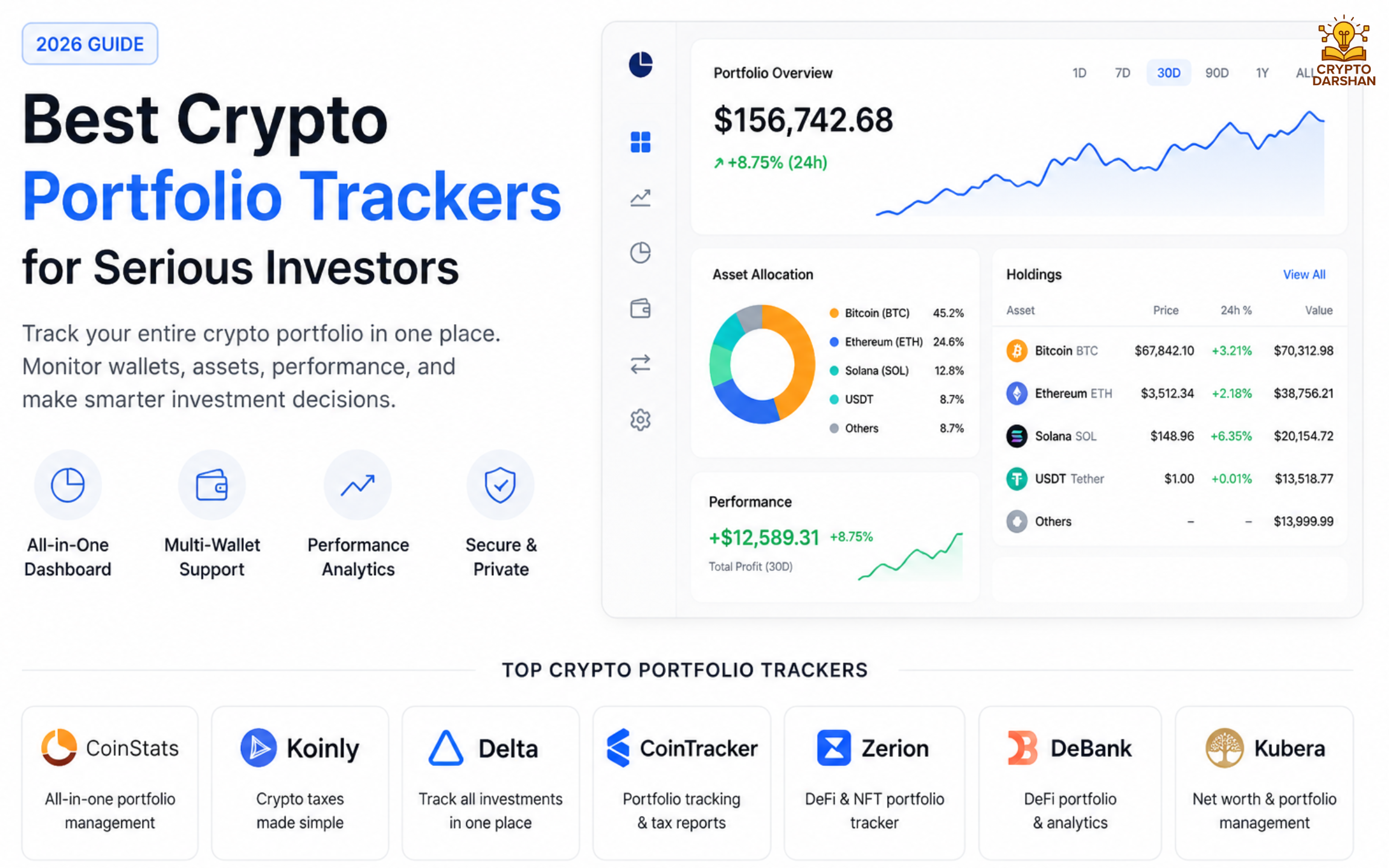
A crypto portfolio tracker is a tool that helps users monitor the value, performance, allocation, and history of their crypto holdings across wallets, exchanges, or chains. Instead of logging into multiple exchanges and wallets to piece together your financial picture, a tracker does it automatically. It connects to your accounts, reads your balances and transaction history, and presents everything in a single dashboard.
Modern platforms go far beyond basic price tracking. They calculate cost basis, display unrealized gains and losses, track portfolio performance over time, and generate reports that simplify crypto tax filing. Think of them as the command center for your entire crypto investment strategy.
Accurate portfolio trackers also simplify tax reporting and make strategies like tax-loss harvesting easier during volatile market cycles, as explained in Tax-Loss Harvesting in Crypto: How to Legally Minimize Your Tax Bill.
How Do They Work?
Most crypto portfolio trackers connect to your accounts in one of two ways. The first is through API keys — unique codes generated by exchanges that let third-party apps read your account data. With read-only permissions, these keys give the tracker visibility into your trades and balances without the ability to move funds.
The second method is through public wallet addresses. For assets in MetaMask, Ledger, or Trust Wallet, you provide your public address and the tracker scans the blockchain automatically — no private key needed. Many platforms also support manual entry for over-the-counter trades or niche protocols.
Who Needs Them?
Crypto portfolio trackers are not just for institutional investors or professional traders. They are useful for anyone who holds digital assets across more than one platform. If you have Bitcoin on Coinbase, Ethereum staked on Lido, a few altcoins on Binance, and some NFTs in a MetaMask wallet, manually tracking your total portfolio value — let alone your tax liability — becomes nearly impossible without a dedicated tool.
The more complex your holdings, the more essential these tools become. And as the crypto ecosystem continues to grow, the average investor’s portfolio is becoming more complex every year.
Why Serious Investors Can’t Afford to Go Without Crypto Portfolio Trackers
Casual holders might check prices on an exchange app. But investors managing multiple wallets, DeFi positions, staking rewards, and cross-chain assets need something far more capable.
Crypto portfolio trackers give you a unified view of everything you own — across every wallet, every exchange, every chain — in one dashboard. They calculate your profit and loss in real time, track your cost basis, flag unrealized gains, and in many cases, prepare tax-ready reports.
Without crypto portfolio trackers, investors often:
- Miss critical rebalancing signals
- Miscalculate their true net exposure
- Overpay on taxes due to poor cost-basis records
- Make allocation decisions based on incomplete data
For anyone managing more than a few hundred dollars across multiple platforms, these tools are not optional. They are foundational.
What Makes a Crypto Portfolio Tracker Worth Using?
Not all crypto portfolio trackers are created equal. Before diving into specific platforms, here are the features that separate serious tools from surface-level apps.
1. Multi-Exchange and Multi-Wallet Integration
As crypto investing becomes increasingly multi-chain, strong integration support is no longer optional. Serious investors often hold assets across centralized exchanges, self-custody wallets, DeFi platforms, and Layer 2 ecosystems simultaneously. A high-quality portfolio tracker should automatically sync transactions across these environments without requiring constant manual updates.
This becomes even more important as blockchain activity expands across appchains and scaling networks, similar to the trends discussed in Appchains vs Layer 2s: Which Model Wins in 2026?
2. Real-Time Price Feeds
In crypto, a ten-minute delay can represent a 5% price swing. Reliable crypto portfolio trackers pull live pricing from multiple data sources to ensure you are always seeing current valuations — not stale numbers.
3. Tax Reporting and Cost Basis Tracking
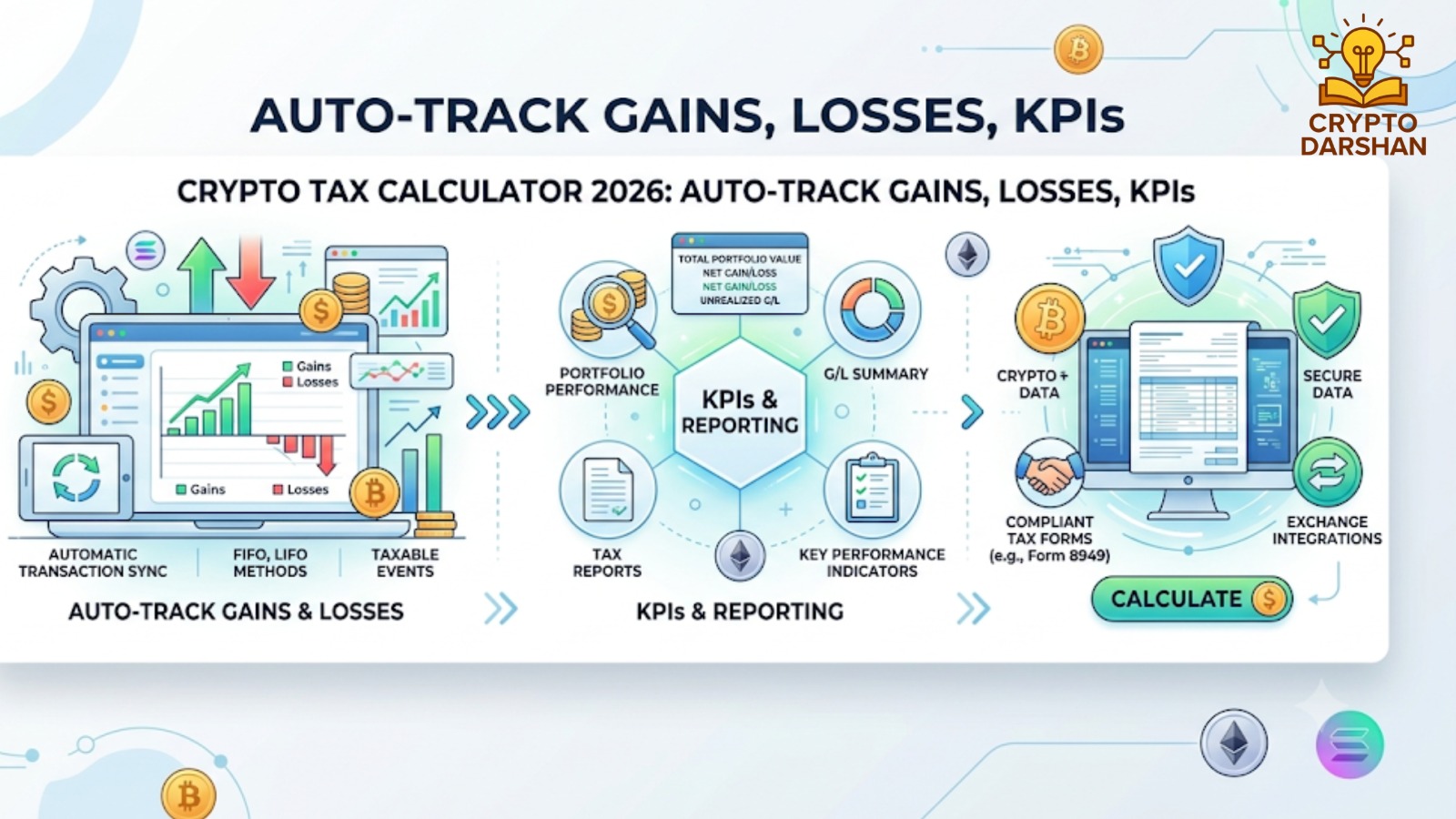
Tax authorities worldwide are tightening their grip on crypto transactions. Quality crypto portfolio trackers support multiple cost basis methods — FIFO, LIFO, HIFO, and average cost — and generate reports compatible with major tax software or accountants. This feature alone can save thousands.
4. DeFi and NFT Support
The days of simple buy-and-hold portfolios are behind us. Serious investors hold LP tokens, staking positions, yield farming rewards, NFTs, and governance tokens. Your tracker needs to understand all of it.
5. Performance Analytics
Beyond price, the best crypto portfolio trackers offer detailed performance breakdowns: asset allocation percentages, sector exposure, historical return comparisons, and portfolio beta. These insights help you understand not just what you own, but how well it is working.
6. Security Practices
Since these platforms access sensitive financial data, their security architecture matters. Look for read-only API integrations (no withdrawal permissions), two-factor authentication, encryption at rest, and transparent privacy policies.
The Best Crypto Portfolio Trackers in 2025

1. CoinStats
CoinStats is one of the most widely used crypto portfolio trackers globally, and for good reason. It supports over 300 exchanges, 10,000+ coins, and more than 100 wallets. Its dashboard is clean but highly detailed, with real-time profit and loss tracking across every connected account.
Standout Features:
- Auto-syncs with wallets and exchanges
- DeFi portfolio tracking across Ethereum, BSC, and Solana
- Built-in news feed and market alerts
- Mobile apps for iOS and Android with widget support
CoinStats is ideal for investors who want an all-in-one experience with minimal manual input. The free tier is functional, while the premium plan unlocks unlimited portfolios and advanced analytics.
Best for: Active investors managing 5–20+ exchanges who want a polished, automated experience.
2. CoinTracking
For tax-focused investors, CoinTracking stands as one of the most powerful crypto portfolio trackers available. With support for over 25 methods of gain/loss calculation and compatibility with more than 110 exchanges, it is a heavyweight in the space.
Standout Features:
- Generates tax reports for over 100 countries
- Supports FIFO, LIFO, HIFO, AVCO, and more
- Detailed trade history and audit trail
- API imports and CSV uploads
- CPA access feature for accountants
The interface has a steeper learning curve than some competitors, but the depth of data it provides is unmatched. Investors preparing for tax season or managing high-volume trading activity will find it invaluable.
Best for: High-frequency traders, institutional investors, and anyone with complex tax reporting needs.
3. Delta
Delta has earned a reputation as one of the sleekest and most intuitive crypto portfolio trackers on the market. Originally focused on stocks and commodities, it expanded into crypto and now handles a broad range of asset types under one roof.
Standout Features:
- Tracks stocks, ETFs, crypto, and commodities together
- Detailed market analytics and price alerts
- Beautiful data visualizations
- Supports manual entry and API sync
- Available on desktop and mobile
Delta suits the modern investor whose portfolio spans both traditional and digital assets. It bridges the gap between TradFi and crypto in a way few other crypto portfolio trackers attempt.
Best for: Multi-asset investors who want crypto and traditional holdings in a single view.
4. Koinly
Koinly blurs the line between crypto portfolio tracking and crypto tax software. Among crypto portfolio trackers, it has arguably the strongest tax preparation capabilities, making it the go-to for investors in the US, UK, Canada, Australia, and the EU.
Standout Features:
- Auto-imports from 700+ exchanges and wallets
- Generates IRS Form 8949, Schedule D, and country-specific reports
- Smart transfer matching to avoid phantom gains
- DeFi and NFT transaction support
- Free plan available for basic tracking
Even as a pure portfolio tracker — ignoring its tax features entirely — Koinly delivers real-time valuations, historical charts, and clean asset breakdowns. The tax layer simply makes it more powerful.
Best for: Tax-conscious investors in regulated jurisdictions who want tracking and compliance in one place.
5. Zerion
Zerion is among the most specialized crypto portfolio trackers in the DeFi space. If your holdings are primarily on-chain — Uniswap positions, Aave loans, Curve LP tokens, Compound rewards — Zerion reads them all automatically just from your wallet address.
Standout Features:
- No account required; connect via wallet
- Tracks DeFi protocols, NFTs, and governance tokens
- Cross-chain support across Ethereum, Polygon, Arbitrum, Optimism, and more
- Clean UI with detailed transaction history
- Non-custodial and privacy-respecting
Zerion does not require API keys or manual imports. Simply connect your wallet and see everything. This zero-friction approach makes it the preferred tool among DeFi-native investors.
Best for: DeFi-heavy investors and on-chain power users who value privacy and automation.
6. Kubera
Kubera targets high-net-worth investors who want a true wealth dashboard — not just a crypto tracker. Among crypto portfolio trackers, it is the most comprehensive in terms of asset class coverage.
Standout Features:
- Tracks bank accounts, brokerage accounts, real estate, crypto, and alternative investments
- Supports DeFi wallets and cold storage
- Beneficiary and estate planning features
- Net worth tracking over time
- Advanced IRR and return calculations
The annual price tag is higher than most, but for investors managing seven-figure or eight-figure portfolios across asset classes, that cost is negligible compared to the clarity it provides.
Best for: Wealth managers and high-net-worth individuals who want a complete financial picture.
7. Rotki
Rotki is for the privacy-first investor. Unlike most crypto portfolio trackers that store your data on their servers, Rotki stores everything locally on your machine. It is open-source, auditable, and completely offline-capable.
Standout Features:
- Local data storage — no server-side tracking
- Open-source and auditable codebase
- Supports Ethereum, Bitcoin, and 100+ exchanges
- Tax report generation for multiple jurisdictions
- One-time purchase or subscription model
For investors who are uncomfortable sharing financial data with third parties — and who have the technical comfort to run desktop software — Rotki is unmatched in its commitment to privacy.
Best for: Privacy-conscious, technically comfortable investors who want full data sovereignty.
How to Choose the Right Crypto Portfolio Tracker
With so many strong crypto portfolio trackers available, the best choice depends on your situation. Here is a quick framework to help you decide.
If you prioritize ease of use: CoinStats or Delta offer the cleanest onboarding experience. You can be fully set up within minutes.
If taxes are your primary concern: Koinly and CoinTracking are the strongest crypto portfolio trackers for that purpose. Both generate court-ready documentation.
If you live in DeFi: Zerion is built for you. It tracks your on-chain positions automatically without requiring any manual entry.
If you want everything in one place: Kubera handles crypto alongside stocks, real estate, and bank accounts, making it the most comprehensive of all crypto portfolio trackers for total wealth management.
If privacy is non-negotiable: Rotki gives you full local control. No cloud, no third party, no compromise.
Your ideal tracker should align with your portfolio complexity, reporting needs, and investment strategy. Casual investors may only need balance tracking and mobile alerts, while active traders often require advanced analytics, tax reporting, and multi-exchange synchronization. Long-term investors should also consider whether a platform supports emerging ecosystems such as DeFi protocols, Layer 2 networks, NFTs, and cross-chain assets.
As digital asset management becomes more sophisticated, portfolio trackers are evolving into full financial operating systems for crypto investors. Features like automated reporting, cost-basis tracking, and performance analytics are becoming increasingly important under evolving accounting standards, as discussed in Fair Value vs Cost Basis: The Crypto Accounting Rule Change That Affects Every CFO.
Common Mistakes Investors Make With Crypto Portfolio Trackers

Even with the best tools, investor behavior can undermine the data. Here are the most frequent errors:
Connecting Full API Access Instead of Read-Only
Always use read-only API keys when connecting exchanges to crypto portfolio trackers. A read-only key lets the tracker see your balances and trade history but cannot execute trades or make withdrawals. Never grant more access than the tool needs.
Ignoring DeFi Positions
Many investors set up their trackers for centralized exchange holdings but forget to import their DeFi wallets. Incomplete data leads to inaccurate net worth calculations and potential tax errors.
Not Reconciling Regularly
Markets move fast. Crypto portfolio trackers are only as accurate as your last sync. Set a weekly reminder to check that your integrations are still active and pulling correctly.
Treating Estimates as Final Tax Figures
Most crypto portfolio trackers produce estimates, not guaranteed tax calculations. Use their output as a starting point and always have a qualified tax professional review the final figures — especially for complex DeFi transactions.
The Future of Crypto Portfolio Tracking

The next generation of crypto portfolio trackers will be powered by AI. Early features are already appearing, including natural language queries, automated rebalancing suggestions, risk scoring by position, and intelligent tax-loss harvesting alerts.
As blockchain ecosystems grow more complex — with Layer 3 networks, cross-chain bridges, restaking protocols, and tokenized real-world assets — these tools will need to evolve rapidly. Investors who master them today will have a clear edge as the market matures. Portfolio tracking is no longer passive record-keeping; it is becoming a form of active intelligence gathering.
This data-driven investing approach closely aligns with the market cycle analysis discussed in Bitcoin Dominance Chart Explained: How Smart Money Tracks Altcoin Rotation.
Free vs. Paid Crypto Portfolio Trackers: Which Should You Choose?
One of the most common questions new users ask is whether a free plan is enough. The honest answer depends on your holdings’ complexity.
Free plans offer basic functionality — real-time price tracking, manual entry, and limited exchange integrations. For someone starting out with a few assets on one exchange, that is often sufficient.
However, free tiers impose limits that grow frustrating quickly: transaction caps, restricted tax exports, and no DeFi or NFT tracking. Paid plans typically range from $10 to $30 per month. For investors managing serious portfolios, that cost is trivial compared to the time saved and tax accuracy gained.
Start with free tiers on two or three platforms, test the integrations that matter most, and upgrade on the one that fits your workflow.
Are Crypto Portfolio Trackers Safe to Use?
Security is a reasonable concern when connecting tools to accounts holding real money.
Reputable platforms only request read-only API access — they can view your data but cannot initiate transactions or withdrawals. For on-chain wallets, only your public address is shared, which carries no security risk. Still, protect your tracker account with a strong password and two-factor authentication, and always access the platform through its official URL.
For the most privacy-conscious investors, locally hosted tools like Rotki keep your data entirely off the internet.
FAQ: Best Crypto Portfolio Trackers for Serious Investors

1. What is a crypto portfolio tracker?
A crypto portfolio tracker is a tool or platform that helps investors monitor their cryptocurrency holdings, profits, losses, transactions, and overall portfolio performance across multiple wallets and exchanges in one dashboard.
2. Why do serious crypto investors use portfolio trackers?
Serious investors use portfolio trackers to:
- Track real-time portfolio performance
- Monitor gains and losses
- Manage taxes and transaction history
- Analyze asset allocation
- Connect multiple exchanges and wallets
- Reduce manual spreadsheet work
3. Which are the best crypto portfolio trackers in 2026?
Some of the most popular crypto portfolio trackers include:
- CoinStats
- Koinly
- Delta Investment Tracker
- Kubera
- CoinTracker
- DeBank
Each platform offers different strengths depending on whether you focus on DeFi, taxes, NFTs, or long-term investing.
4. Which crypto tracker is best for tax reporting?
Koinly and CoinTracker are widely used for crypto tax reporting because they support automated transaction imports, capital gains calculations, and downloadable tax reports.
5. Are crypto portfolio trackers safe to use?
Most reputable trackers are safe if they use:
- Read-only API access
- Encryption
- Two-factor authentication (2FA)
- No withdrawal permissions
Investors should never provide exchange withdrawal access or private keys unless using a self-custody wallet integration they fully trust.
6. Can portfolio trackers connect to DeFi wallets?
Yes. Many modern trackers support:
- Ethereum wallets
- Layer 2 networks
- NFT holdings
- DeFi protocols
- Cross-chain assets
Platforms like Zerion and DeBank are especially popular among DeFi users.
7. Do crypto portfolio trackers support NFTs?
Yes. Several advanced trackers now display:
- NFT floor prices
- Collection values
- Wallet-based NFT holdings
- Marketplace activity
This is useful for investors active in digital collectibles and gaming ecosystems.
8. Are free crypto portfolio trackers enough for most investors?
Free plans are usually enough for beginners and casual investors. However, serious investors often upgrade to paid plans for:
- Advanced analytics
- Unlimited transactions
- Tax optimization tools
- Multi-device syncing
- Performance benchmarking
Final Thoughts
The difference between a casual crypto holder and a serious investor often comes down to discipline — in research, in risk management, and in tracking. The right crypto portfolio trackers do not just show you numbers. They give you the information architecture to make better decisions, manage your tax burden intelligently, and protect your wealth as it grows.
Whether you are managing a three-asset portfolio or a complex multi-chain DeFi stack, there is a tracker on this list designed for your situation. Start with the free tiers, test the integrations that matter most to you, and choose the platform that fits not just where you are today — but where your portfolio is headed.
The best investors are not just the ones who pick the right assets. They are the ones who understand their positions clearly enough to act with conviction when the moment comes. Crypto portfolio trackers make that clarity possible.