

The world of decentralized finance (DeFi) has grown rapidly, transforming how people interact with money, investments, and digital assets. At the heart of this revolution lies a powerful and widely adopted standard known as ERC-20 tokens. This standard defines how tokens on the Ethereum blockchain should behave, ensuring compatibility, security, and efficiency across decentralized applications (dApps). Without ERC-20, the DeFi ecosystem as it exists today would not be possible.
The ERC-20 tokens standard has become the foundation for thousands of cryptocurrencies, stablecoins, and decentralized projects. It provides a common set of rules that developers follow when creating tokens, allowing them to interact seamlessly with wallets, exchanges, and smart contracts. From popular tokens like USDT and LINK to governance tokens like UNI and AAVE, most of the DeFi world runs on ERC-20.
This article explores what ERC-20 is, how it works, why it matters, and how it powers the decentralized finance ecosystem. It also examines its advantages, limitations, and the future of token standards on Ethereum and beyond.
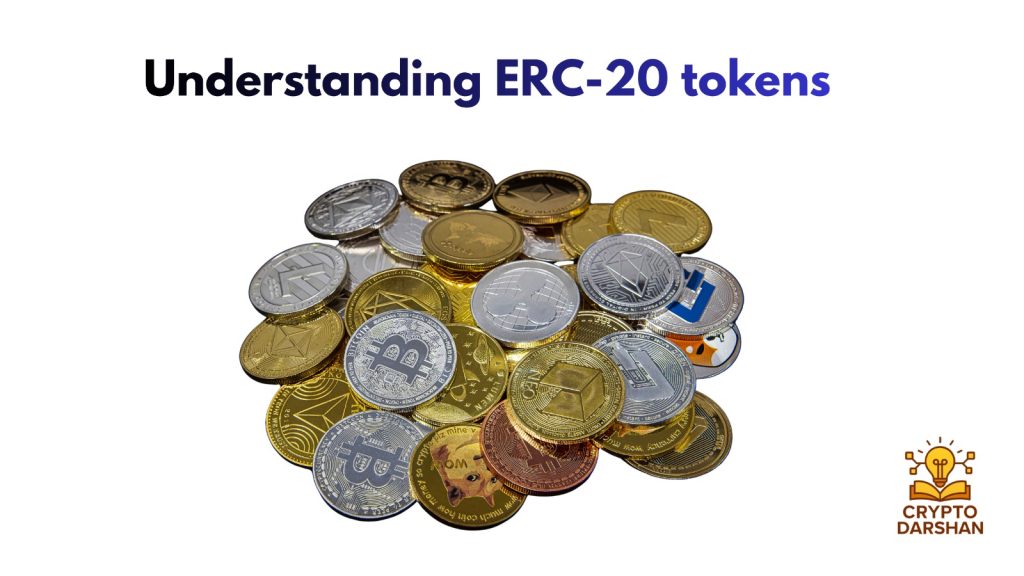
Understanding ERC-20 tokens
What Is ERC-20?
ERC-20 stands for “Ethereum Request for Comment 20.” It is a technical standard used for creating and issuing tokens on the Ethereum blockchain. Introduced in 2015 by developer Fabian Vogelsteller, ERC-20 defines a set of rules that all Ethereum-based tokens must follow to ensure interoperability.
In simple terms, ERC-20 is like a universal language for tokens on Ethereum. It ensures that all tokens built using this standard can work with any Ethereum-based platform, wallet, or exchange without requiring custom integration.
The Purpose of ERC-20
Before ERC-20, developers created tokens using different methods, leading to compatibility issues. Each token had its own unique code, making it difficult for wallets and exchanges to support multiple tokens efficiently. ERC-20 solved this problem by introducing a standardized framework that all tokens could follow.
The main goals of ERC-20 are:
- Interoperability: Ensuring all tokens can interact with Ethereum-based applications.
- Simplicity: Providing a clear and consistent structure for token creation.
- Efficiency: Reducing development time and integration costs.
- Security: Establishing reliable and predictable token behavior.
By following the ERC-20 standard, developers can create tokens that automatically work with existing Ethereum infrastructure, including decentralized exchanges (DEXs), wallets, and DeFi protocols.
How ERC-20 Works

The Core Functions
The ERC-20 standard defines six mandatory functions and three optional ones. These functions govern how tokens are transferred, how balances are tracked, and how approvals are managed.
Mandatory Functions
- totalSupply()
Returns the total number of tokens in circulation. - balanceOf(address _owner)
Returns the token balance of a specific address. - transfer(address _to, uint256 _value)
Transfers tokens from the sender’s address to another address. - transferFrom(address _from, address _to, uint256 _value)
Allows a third party to transfer tokens on behalf of another user, provided they have approval. - approve(address _spender, uint256 _value)
Grants permission to another address to spend a specified amount of tokens. - allowance(address _owner, address _spender)
Returns the remaining number of tokens that a spender is allowed to use on behalf of the owner.
Optional Functions
- name() – Returns the token’s name (e.g., “Tether USD”).
- symbol() – Returns the token’s symbol (e.g., “USDT”).
- decimals() – Defines how divisible the token is (e.g., 18 decimals).
These functions make the tokens predictable and easy to integrate into any Ethereum-based system.
Smart Contracts and ERC-20 tokens
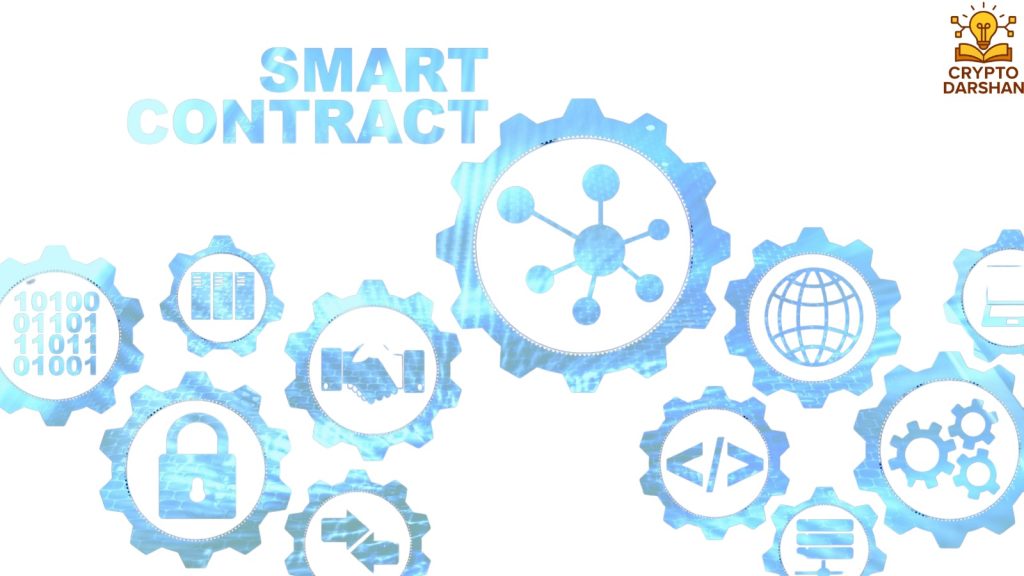
Every ERC-20 token is governed by a smart contract—a self-executing program that runs on the Ethereum blockchain. The smart contract defines the token’s rules, supply, and behavior. Once deployed, it operates autonomously, ensuring that transactions follow the predefined logic without human intervention.
For example, when a user sends ERC-20 tokens to another wallet, the smart contract updates the balances of both addresses on the blockchain. This process is transparent, secure, and verifiable by anyone.
Why ERC-20 Matters
Standardization and Compatibility
The biggest advantage of ERC-20 is standardization. By following a common set of rules, ERC-20 tokens can be easily integrated into any Ethereum-based platform. This compatibility has fueled the growth of DeFi, where thousands of tokens interact seamlessly across decentralized exchanges, lending platforms, and yield farms.
Foundation of DeFi
DeFi relies heavily on ERC-20 tokens. Stablecoins like USDC and DAI, governance tokens like UNI and COMP, and liquidity tokens all follow the it’s standard. This uniformity allows DeFi protocols to interact with multiple tokens without needing custom code for each one.
Ease of Creation
Developers can create ERC-20 tokens quickly using pre-written templates. This simplicity has led to an explosion of new projects, from startups to large-scale decentralized organizations.
Liquidity and Exchange Support
Because ERC-20 is widely adopted, most cryptocurrency exchanges and wallets support it by default. This makes ERC-20 tokens highly liquid and easy to trade globally.
The Role of ERC-20 in DeFi
ERC-20 as the Backbone of DeFi
DeFi, or decentralized finance, refers to financial services built on blockchain technology without intermediaries. These services include lending, borrowing, trading, and yield farming. The majority of DeFi tokens are ERC-20 tokens, making the standard the backbone of the entire ecosystem.
If you’re new to Ethereum-based assets, check out our guide on Digital Identity on the Blockchain: How It Could Replace Your Passport to see how blockchain standards extend beyond finance.
Examples of ERC-20 Tokens in DeFi
- USDT (Tether): A stablecoin pegged to the US dollar, widely used for trading and liquidity.
- USDC (USD Coin): Another popular stablecoin used in DeFi protocols.
- DAI: A decentralized stablecoin created by MakerDAO.
- UNI: The governance token of Uniswap, a leading decentralized exchange.
- AAVE: The governance and utility token of the Aave lending platform.
- COMP: The governance token of Compound Finance.
- LINK: The token used by Chainlink to power decentralized oracles.
These ERC-20 tokens enable users to lend, borrow, trade, and earn interest without relying on traditional banks.
ERC-20 and Smart Contracts in DeFi
Smart contracts built on Ethereum use ERC-20 tokens to automate financial transactions. For example, when a user deposits ERC-20 tokens into a lending protocol, the smart contract automatically issues interest-bearing tokens in return. This automation eliminates intermediaries and reduces costs.
Advantages of ERC-20

1. Interoperability
ERC-20 tokens can interact seamlessly with any Ethereum-based application. This interoperability allows users to move tokens between wallets, exchanges, and DeFi platforms effortlessly.
2. Security
Because ERC-20 tokens operate on the Ethereum blockchain, they inherit its robust security features. Transactions are transparent, immutable, and verifiable.
3. Transparency
All ERC-20 transactions are recorded on the public Ethereum ledger. Anyone can verify token transfers, balances, and contract details, ensuring accountability.
4. Efficiency
Developers can create these tokens quickly using standardized code. This reduces development time and costs while ensuring reliability.
5. Liquidity
ERC-20 tokens are supported by most major exchanges and wallets, making them easy to trade and highly liquid.
6. Programmability
ERC-20 tokens can be integrated into complex smart contracts, enabling advanced financial products like automated market makers (AMMs), yield farms, and decentralized lending platforms.
Limitations of ERC-20

Despite its success, ERC 20 is not without flaws. Several limitations have prompted the development of newer token standards.
1. Lack of Native Support for Complex Features
ERC-20 is designed for fungible tokens—tokens that are identical and interchangeable. It does not support non-fungible tokens (NFTs) or more complex token behaviors.
2. Transaction Fees
ERC-20 tokens rely on the Ethereum network, which can experience high gas fees during congestion. This makes small transactions expensive.
3. Delayed Transactions
During periods of high network activity, ERC-20 transactions can take longer to confirm, affecting user experience.
4. Approval and Transfer Issues
The ERC-20 standard requires two separate transactions for third-party transfers: one for approval and another for the actual transfer. This increases gas costs and complexity.
5. Lack of Cross-Chain Compatibility
ERC-20 tokens are native to Ethereum and cannot be used directly on other blockchains without bridges or wrapped versions.
ERC-20 vs. Other Token Standards
ERC-721 (NFTs)
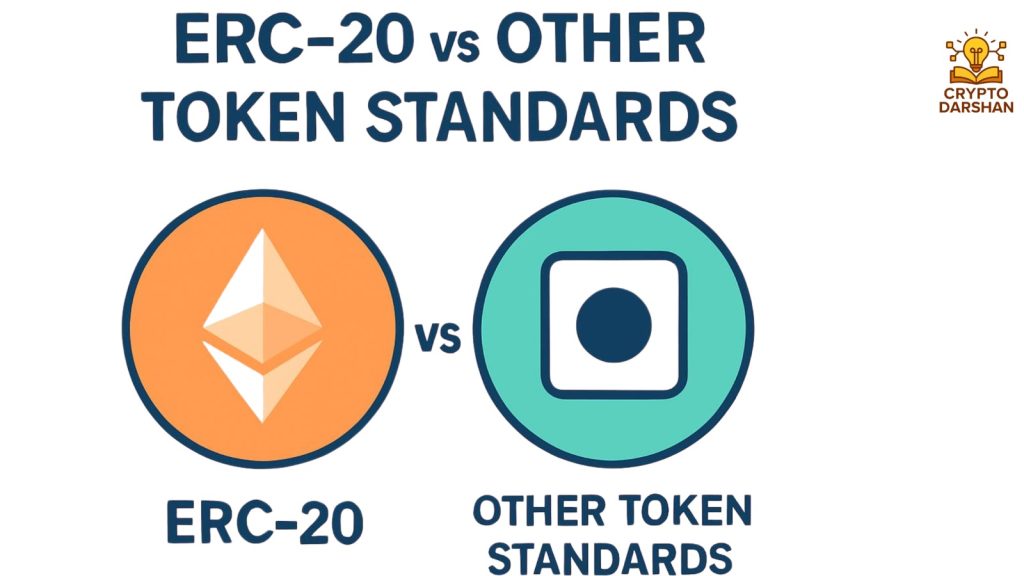
While ERC-20 defines fungible tokens, ERC-721 defines non-fungible tokens (NFTs). Each ERC-721 token is unique and cannot be exchanged on a one-to-one basis. ERC-721 is used for digital art, collectibles, and gaming assets.
ERC-1155 (Multi-Token Standard)
ERC-1155 allows developers to create both fungible and non-fungible tokens within a single contract. It is more efficient for gaming and metaverse applications.
ERC-777 (Improved ERC 20)
ERC-777 is an upgraded version of ERC 20 that simplifies token transfers and adds advanced features, such as smart contract hooks. However, ERC-20 remains more widely adopted due to its simplicity and compatibility.
How to Create an ERC-20 Token
Creating an ERC-20 token on the Ethereum blockchain is simple if the steps are followed carefully. Here are six easy-to-understand key points to guide the process.
1. Plan the Token
Decide the purpose and details of the token before writing any code.
- Name and Symbol: Choose a unique name and short symbol (e.g., “MyToken”, “MTK”).
- Total Supply: Set how many tokens will exist.
- Decimals: Usually 18, meaning tokens can be divided into small units.
- Use Case: Define if it’s for payments, governance, or rewards.
2. Set Up the Development Tools
Prepare the environment needed to create and deploy the token.
- Install Node.js and MetaMask.
- Use a development tool like Remix IDE, Hardhat, or Truffle.
- Connect MetaMask to a test network such as Goerli or Sepolia for testing.
3. Write the Smart Contract
The smart contract defines how the token works.
- Use Solidity, Ethereum’s programming language.
- Include standard ERC-20 functions like transfer, approve, and balanceOf.
- Use OpenZeppelin’s ERC-20 template to save time and ensure security.
- Example:
pragma solidity ^0.8.0; import “@openzeppelin/contracts/token/ERC20/ERC20.sol”; contract MyToken is ERC20 { constructor(uint256 initialSupply) ERC20(“MyToken”, “MTK”) { _mint(msg.sender, initialSupply * 10 ** decimals()); } }
4. Test the Token
Before launching, test everything to avoid errors.
- Use a local blockchain or testnet to check transfers and balances.
- Make sure all functions work correctly.
- Fix any bugs before moving to the main network.
5. Deploy to Ethereum
Once testing is complete, deploy the token to the Ethereum mainnet.
- Use MetaMask to pay gas fees in ETH.
- Deploy through Remix or Hardhat.
- After deployment, note the contract address—this is your token’s unique ID.
Real-World Examples of ERC-20 Tokens
1. Tether (USDT)
USDT is one of the most widely used ERC-20 tokens. It is a stablecoin pegged to the US dollar, providing stability in volatile markets.
2. USD Coin (USDC)
USDC is another stablecoin that follows the ERC 20 standard. It is fully backed by reserves and widely used in DeFi protocols.
3. Uniswap (UNI)
UNI is the governance token of Uniswap, a decentralized exchange built on Ethereum. It allows holders to vote on protocol upgrades and fee structures.
4. Chainlink (LINK)
LINK is used to pay for data services on the Chainlink network, which connects smart contracts to real-world data.
5. Aave (AAVE)
AAVE is both a governance and utility token for the Aave lending platform, enabling decentralized borrowing and lending.
6. Maker (MKR)
MKR is used to govern the MakerDAO protocol, which issues the DAI stablecoin.
These examples highlight the versatility and dominance of ERC-20 in the DeFi ecosystem.
ERC-20 and Tokenomics
Token Supply
ERC-20 tokens can have fixed or variable supplies. Fixed-supply tokens are capped at a certain number, while variable-supply tokens can be minted or burned based on network activity.
Distribution Models
Common distribution methods include:
- Initial Coin Offerings (ICOs): Early fundraising events for blockchain projects.
- Airdrops: Free token distributions to promote adoption.
- Liquidity Mining: Rewarding users for providing liquidity to DeFi platforms.
- Staking Rewards: Incentivizing users to lock tokens for network security or governance.
Governance and Utility
Many ERC-20 tokens serve dual purposes: governance and utility. Governance tokens allow holders to vote on protocol decisions, while utility tokens provide access to platform features or services.
Security and Auditing in ERC-20

Importance of Auditing
Because ERC-20 tokens handle real value, security is critical. Smart contract audits identify vulnerabilities before deployment, preventing hacks and exploits.
Common Vulnerabilities
- Reentrancy attacks
- Integer overflows
- Improper access control
- Unchecked external calls
Best Practices
- Use well-tested libraries like OpenZeppelin.
- Conduct third-party audits.
- Implement multi-signature wallets for fund management.
- Regularly update and monitor smart contracts.
The Future of ERC-20

Layer 2 Solutions
To address scalability and high gas fees, ERC-20 tokens are increasingly being used on Layer 2 networks like Arbitrum, Optimism, and Polygon. These solutions reduce transaction costs and improve speed while maintaining Ethereum’s security.
Cross-Chain Bridges
Cross-chain bridges allow ERC-20 tokens to move between blockchains, expanding their utility beyond Ethereum. Wrapped tokens, such as WBTC (Wrapped Bitcoin), are examples of this innovation.
Integration with Web3
As Web3 evolves, those tokens will play a central role in decentralized identity, gaming, and metaverse economies.
Evolution of Token Standards
While newer standards like ERC-777 and ERC-1155 offer improvements, ERC-20 remains the most trusted and widely used token standard. Its simplicity and compatibility ensure its continued dominance in DeFi.
Economic Impact of ERC-20
Driving DeFi Growth
ERC-20 has enabled the creation of thousands of DeFi projects, unlocking billions of dollars in total value locked (TVL). It has democratized access to financial services and created new economic opportunities. ERC-20 tokens rely heavily on smart contracts, which also play a key role in Financial Inclusion Through Crypto: How Blockchain Helps the Unbanked.
Empowering Developers and Entrepreneurs
By lowering the barriers to token creation, ERC-20 has empowered developers and entrepreneurs to launch innovative projects without relying on traditional financial systems.
Global Financial Inclusion
ERC-20 tokens allow anyone with an internet connection to participate in global finance, promoting inclusion and reducing dependence on centralized institutions.
Case Studies: ERC-20 in Action

Case Study 1: Uniswap
Uniswap uses ERC-20 tokens for liquidity pools and governance. Its automated market maker (AMM) model allows users to trade the tokens directly from their wallets without intermediaries.
Case Study 2: MakerDAO
MakerDAO uses ERC tokens (MKR and DAI) to maintain a decentralized stablecoin system. DAI’s stability is maintained through smart contracts and collateralized debt positions.
Case Study 3: Aave
Aave’s ERC-20 token (AAVE) powers its decentralized lending platform, allowing users to earn interest or borrow assets without banks.
FAQ: What Is ERC-20? The Token Standard That Powers Most of DeFi

1. What is ERC-20?
ERC-20 is a technical standard used for creating and managing fungible tokens on the Ethereum blockchain. It defines a common set of rules that tokens must follow to ensure compatibility with wallets, exchanges, and decentralized applications (dApps).
2. What does ERC-20 stand for?
ERC stands for “Ethereum Request for Comments,” while “20” is the proposal number assigned to the token standard.
3. Why was the ERC-20 standard created?
ERC-20 was created to establish a universal framework for Ethereum-based tokens, making them easier to develop, integrate, and trade across the blockchain ecosystem.
4. What is a fungible token?
A fungible token is interchangeable with another token of the same type and value. For example, one ERC-20 token is identical to any other token of the same project.
5. Why is ERC-20 important for DeFi?
Most decentralized finance (DeFi) applications use ERC-20 tokens for lending, borrowing, trading, staking, and liquidity provision because the standard ensures broad compatibility.
6. How do ERC-20 tokens work?
ERC-20 tokens operate through smart contracts that manage token balances, transfers, approvals, and other functions according to the standard’s rules.
7. What are some popular ERC-20 tokens?
Well-known ERC-20 tokens include USD Coin (USDC), Chainlink (LINK), Uniswap (UNI), and Shiba Inu (SHIB).
8. Are all Ethereum tokens ERC-20 tokens?
No. Ethereum supports multiple token standards, including ERC-721 for NFTs and ERC-1155 for multi-token assets.
Conclusion
The ERC-20 token standard is the foundation of the Ethereum ecosystem and the driving force behind decentralized finance. By providing a universal framework for token creation and interaction, ERC-20 has enabled seamless interoperability, security, and innovation across thousands of projects.
From stablecoins and governance tokens to lending platforms and decentralized exchanges, ERC-20 powers most of DeFi. Its simplicity, reliability, and widespread adoption have made it the most influential token standard in blockchain history.
As Ethereum continues to evolve with Layer 2 scaling, cross-chain bridges, and new token standards, ERC 20 will remain a cornerstone of decentralized finance and digital innovation. It represents not just a technical standard but a symbol of the open, programmable, and inclusive future of global finance.