
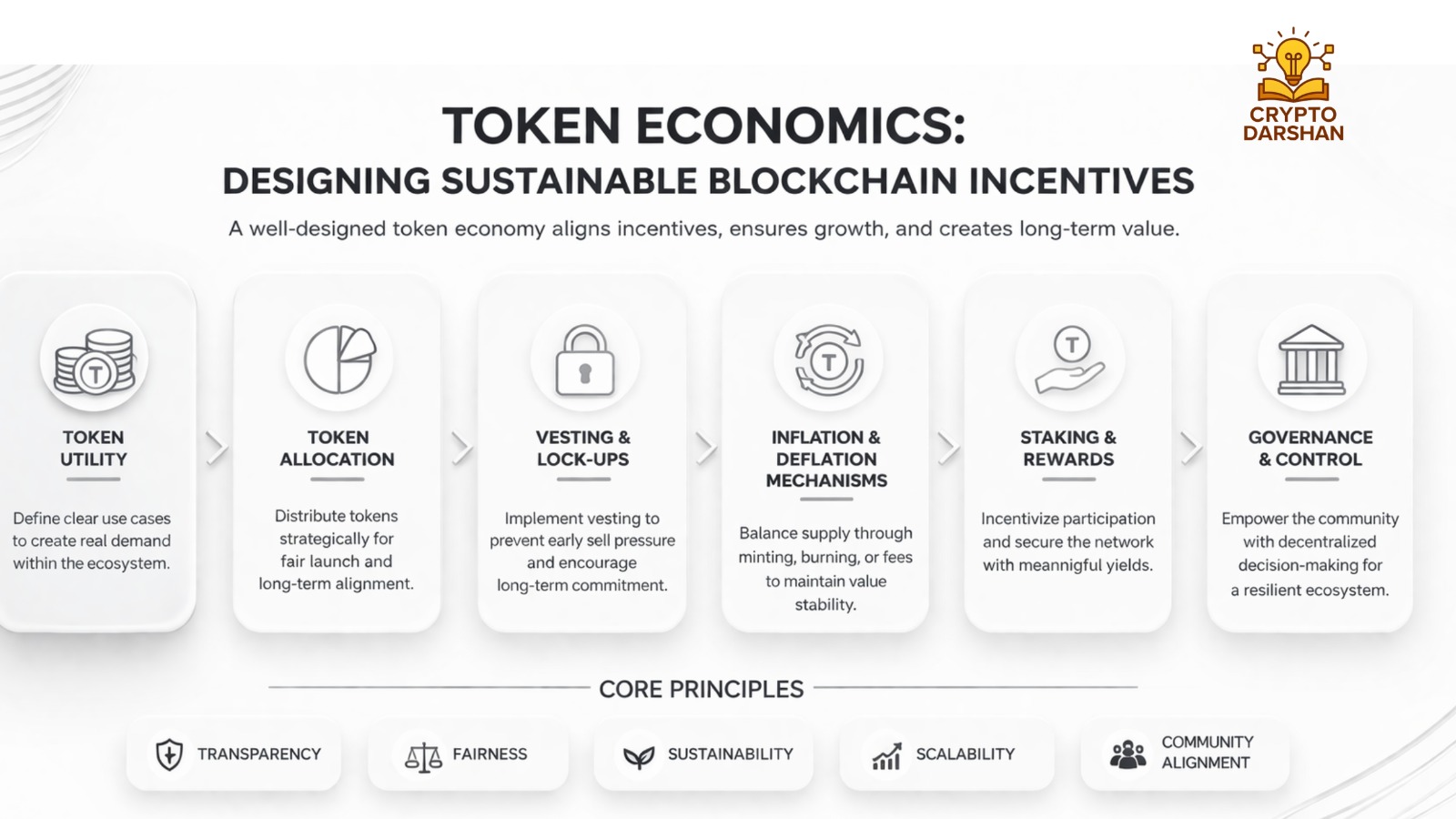
Token Economics is the foundation of every blockchain ecosystem. It defines how tokens are created, distributed, and used within a network. In simple terms, Token Economics is the study of how digital tokens function as part of a decentralized economy. It combines principles from economics, game theory, and cryptography to design systems that encourage participation, maintain security, and ensure long-term sustainability.
In the world of blockchain, Token Economics determines the success or failure of a project. A well-designed token model can attract users, investors, and developers, while a poorly designed one can lead to inflation, manipulation, or collapse. Understanding Token Economics is essential for anyone building or investing in blockchain technology.
This article explores the key components of Token Economics, including token design, distribution models, incentive mechanisms, governance, and sustainability. It also examines real-world examples and best practices for creating robust blockchain ecosystems.
What Is Token Economics?
Token economies refer to the economics of goods and services that have been tokenized. Blockchain technology enables these economies to function without the need for intermediaries and third parties. Blockchain and token economies offer a solution to bridge the physical and digital gap between our increasingly global and virtual worlds. Token Economics refers to the study and design of economic systems built around blockchain tokens. These tokens can represent various forms of value, such as currency, ownership, access rights, or governance power. Token Economics defines how these tokens are issued, how they circulate, and how they influence user behavior.
In traditional economics, money serves as a medium of exchange, a store of value, and a unit of account. In blockchain systems, tokens perform similar roles but with added programmability. Through smart contracts, tokens can enforce rules automatically, enabling decentralized applications (dApps) to operate without intermediaries.
The goal of Token Economics is to align the interests of all participants, users, developers, validators, and investors—so that the network remains secure, efficient, and valuable over time.
The Importance of Token Economics in Blockchain Systems
Token Economics is not just about creating digital money. It is about designing a complete economic system that sustains itself. Without proper Token Economics, even the most innovative blockchain technology can fail.
1. Incentivizing Participation
Blockchain networks rely on participants to validate transactions, secure the network, and build applications. Token Economics provides incentives for these actions. For example, miners or validators earn tokens for maintaining the network, while users may receive rewards for staking or providing liquidity.
2. Ensuring Network Security
A well-designed Token Economics model discourages malicious behavior. By requiring participants to stake tokens or pay transaction fees, the system makes attacks costly and unprofitable. Many poorly designed token models fail because they don’t align user incentives properly, which is one of the key reasons explained in why most retail traders lose money in crypto
3. Promoting Decentralization
Token Economics helps distribute power and ownership across a wide range of participants. This prevents centralization and ensures that no single entity can control the network.
4. Driving Adoption and Growth
Tokens can be used to reward early adopters, developers, and community members. This creates a positive feedback loop that encourages more people to join and contribute to the ecosystem.
Core Components of Token Economics
Token Economics involves several interconnected components that define how a blockchain ecosystem functions. These include token supply, distribution, utility, and governance.
1. Token Supply
The total supply of tokens determines scarcity and value. There are two main types of supply models:
- Fixed Supply: The total number of tokens is capped, similar to Bitcoin’s 21 million limit. This model creates scarcity and can drive value appreciation.
- Inflationary Supply: New tokens are continuously minted to reward participants, as seen in networks like Ethereum. This model supports ongoing incentives but must be carefully managed to avoid devaluation.
2. Token Distribution
Token distribution defines how tokens are allocated among participants. Common methods include:
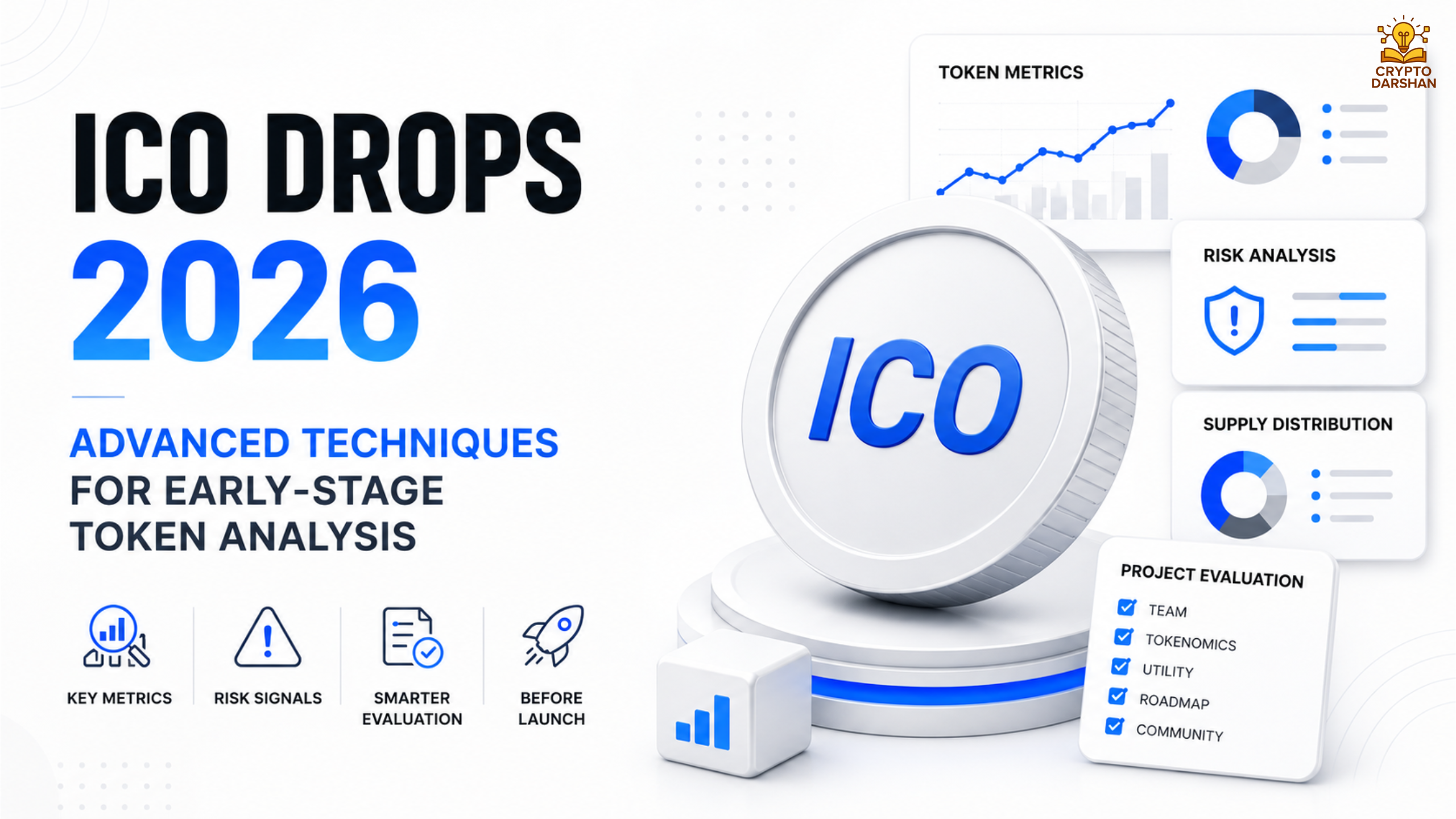
- Initial Coin Offerings (ICOs): Tokens are sold to investors to raise funds.
- Airdrops: Free tokens are distributed to users to encourage adoption.
- Mining or Staking Rewards: Tokens are earned by contributing computing power or locking up assets.
- Team and Foundation Allocations: Tokens are reserved for developers, advisors, and future development.
A balanced distribution model ensures fairness and prevents excessive concentration of tokens in a few hands.
3. Token Utility
Utility defines what a token can be used for within the ecosystem. Common types of utility include:
- Payment Tokens: Used to pay for goods, services, or transaction fees.
- Governance Tokens: Grant holders voting rights on protocol decisions.
- Access Tokens: Provide entry to specific features or services.
- Security Tokens: Represent ownership or investment in an asset.
The more useful a token is, the stronger its demand and value.
4. Governance Mechanisms
Governance determines how decisions are made within a blockchain network. Token Economics often includes governance tokens that allow holders to vote on proposals, upgrades, or policy changes. Decentralized governance ensures transparency and community participation.
Designing Sustainable Token Economics
Sustainability is the ultimate goal of Token Economics. A sustainable model ensures that the network can operate indefinitely without collapsing due to inflation, manipulation, or lack of participation.
1. Balancing Supply and Demand
A sustainable Token Economics model maintains equilibrium between token supply and demand. If supply grows too fast, token value drops. If demand falls, the network loses activity. Mechanisms like token burns, staking, and buybacks help maintain balance.
2. Creating Long-Term Incentives
Short-term rewards can attract users, but long-term incentives keep them engaged. Token vesting schedules, staking rewards, and governance participation encourage users to stay invested in the ecosystem.
3. Preventing Inflation and Speculation
Excessive token issuance can lead to inflation, while speculative trading can destabilize prices. Token Economics must include mechanisms to control inflation and discourage pump-and-dump behavior.
4. Encouraging Real Utility
Tokens should have real use cases beyond speculation. Whether it’s paying for services, accessing features, or participating in governance, utility drives sustainable demand.
Token Models in Token Economics
Different blockchain projects use different token models depending on their goals. Understanding these models is key to mastering Token Economics.
1. Single-Token Model
In this model, one token performs all functions, payment, governance, and staking. Bitcoin is a classic example. This model is simple but can limit flexibility.
2. Dual-Token Model
Some projects use two tokens: one for utility and another for governance or stability. For example, MakerDAO uses DAI (a stablecoin) and MKR (a governance token). This separation allows better control over economic dynamics.
3. Multi-Token Model
Complex ecosystems like decentralized finance (DeFi) platforms may use multiple tokens for different purposes, liquidity, rewards, and governance. This model offers flexibility but requires careful design to avoid confusion.
Token Valuation in Token Economics
1. Intrinsic Value
Intrinsic value refers to the real, underlying worth of a token based on its utility, scarcity, and role within the ecosystem. A token that provides essential functions, such as enabling transactions, granting access to services, or participating in governance, has tangible value beyond speculation. In Token Economics, intrinsic value is built through real-world use cases and continuous demand for the token’s core purpose.
2. Market Value
Market value is determined by the price at which a token trades on exchanges. It reflects the balance between supply and demand, investor sentiment, and overall market conditions. While market value can fluctuate due to speculation or external factors, it often serves as a short-term indicator of how the public perceives the token’s potential. Sustainable Token Economics aims to align market value with intrinsic value over time.
3. Network Value
Network value measures the overall health and strength of a blockchain ecosystem. It is often assessed using metrics like the number of active users, transaction volume, and total value locked (TVL) in decentralized applications. A network with high activity and engagement typically supports a higher token valuation. In Token Economics, network value demonstrates how effectively the token drives participation and utility within the ecosystem.
4. Utility and Demand
The more useful a token is, the greater its demand and value. Tokens that serve multiple purposes—such as payments, staking, or governance, tend to attract more users and investors. In Token Economics, designing tokens with strong utility ensures consistent demand, which stabilizes prices and supports long-term growth. Utility-driven demand is one of the most reliable indicators of sustainable token valuation.
5. Speculative Value
Speculative value arises from investor expectations about a token’s future performance. While speculation can boost short-term prices, it also introduces volatility and risk. In Token Economics, managing speculative behavior is crucial to maintaining stability. Projects can reduce excessive speculation by focusing on transparency, real-world utility, and long-term incentives rather than hype-driven marketing.
Incentive Mechanisms in Token Economics
Incentives are the heart of Token Economics. They motivate participants to act in ways that benefit the network.
1. Proof-of-Work (PoW)
Participants compete to solve cryptographic puzzles, earning tokens as rewards. This mechanism secures the network but consumes significant energy.
2. Proof-of-Stake (PoS)
Validators lock up tokens as collateral to secure the network. They earn rewards based on their stake and performance. PoS is more energy-efficient than PoW.
3. Delegated Proof-of-Stake (DPoS)
Token holders delegate their voting power to representatives who validate transactions. This model increases efficiency but may reduce decentralization.
4. Liquidity Mining and Yield Farming
Users provide liquidity to decentralized exchanges or lending platforms and earn tokens as rewards. This mechanism drives liquidity and participation in DeFi ecosystems.
5. Governance Rewards
Participants who vote on proposals or contribute to governance may receive tokens as incentives. This encourages active community involvement.
Governance and Token Economics

Governance is a vital part of Token Economics. It ensures that the network evolves in a decentralized and transparent manner.
1. On-Chain Governance
Decisions are made directly on the blockchain through smart contracts. Token holders vote on proposals, and results are automatically executed.
2. Off-Chain Governance
Discussions and decisions occur outside the blockchain, often through forums or community meetings. Final decisions are implemented manually.
3. Hybrid Governance
Combines on-chain and off-chain methods to balance efficiency and decentralization. Effective governance ensures that Token Economics remains adaptable and aligned with community interests.
Case Studies in Token Economics

1. Bitcoin
Bitcoin’s Token Economics is based on scarcity. With a fixed supply of 21 million coins and a halving mechanism that reduces rewards every four years, Bitcoin maintains deflationary pressure. This design encourages long-term holding and value appreciation.
2. Ethereum
Ethereum’s Token Economics evolved from a proof-of-work model to proof-of-stake with Ethereum 2.0. The introduction of staking and fee-burning mechanisms (EIP-1559) created a more sustainable and deflationary model.
3. Binance Smart Chain (BNB)
BNB uses a token burn mechanism to reduce supply over time. This deflationary approach increases scarcity and supports long-term value growth.
4. MakerDAO
MakerDAO’s dual-token model (DAI and MKR) showcases advanced Token Economics. DAI maintains stability as a decentralized stablecoin, while MKR holders govern the system and absorb risks.
5. Uniswap
Uniswap’s Token Economics revolves around liquidity provision. Users earn UNI tokens for providing liquidity, and token holders participate in governance decisions.
Challenges in Token Economics

Despite its potential, Token Economics faces several challenges that can threaten sustainability.
1. Inflation and Over-Issuance
Excessive token minting can dilute value and discourage long-term holding.
2. Speculation and Volatility
Speculative trading can cause price swings, undermining stability and utility.
3. Centralization Risks
Unequal token distribution can lead to power concentration, defeating the purpose of decentralization.
4. Regulatory Uncertainty
Governments are still developing frameworks for digital assets. Regulatory changes can impact Token Economics and investor confidence.
5. Lack of Real Utility
Tokens without clear use cases often lose value once initial hype fades.
Best Practices for Designing Token Economics

1. Define Clear Objectives
Before creating a token, it’s essential to understand its purpose within the ecosystem. A token can serve many roles—such as a medium of exchange, a governance tool, or a reward mechanism. Defining clear objectives ensures that the token has a meaningful function and aligns with the project’s goals. Without a clear purpose, tokens risk becoming speculative assets with no real utility, potentially harming long-term sustainability.
2. Ensure Fair Distribution
Fair token distribution prevents centralization and builds trust among participants. When too many tokens are concentrated in the hands of founders or early investors, it can lead to manipulation and discourage community participation. A balanced approach—such as allocating tokens for public sales, community rewards, and development funds—helps create a healthy and decentralized ecosystem.
3. Incorporate Deflationary Mechanisms
Deflationary mechanisms, like token burns or buybacks, help control supply and maintain value over time. By reducing the number of tokens in circulation, these mechanisms create scarcity, which can increase demand and stabilize prices. However, they must be implemented carefully to avoid harming liquidity or discouraging participation.
4. Encourage Long-Term Holding
Sustainable Token Economics rewards users who stay committed to the network. Mechanisms such as staking, vesting schedules, and loyalty rewards motivate participants to hold tokens rather than sell them quickly. This reduces market volatility and strengthens the network’s stability by ensuring that users have a long-term interest in its success.
5. Promote Transparency
Transparency builds trust and credibility in any blockchain project. Clear communication about token supply, distribution, governance, and updates helps users make informed decisions. Publishing whitepapers, audits, and governance proposals ensures accountability and prevents misinformation. Transparent Token Economics fosters community confidence and long-term engagement.
The Future of Token Economics

The future of Token Economics lies in creating more sustainable, inclusive, and adaptive systems. As blockchain technology matures, Token Economics will integrate with real-world assets, decentralized finance, and artificial intelligence.
Emerging trends include:
- Dynamic Token Models: Adaptive supply mechanisms that respond to market conditions.
- Cross-Chain Token Economics: Interoperable tokens that function across multiple blockchains.
- Real-World Asset Tokenization: Representing physical assets like real estate or commodities on blockchain.
- Community-Driven Economies: Decentralized autonomous organizations (DAOs) that use Token Economics for governance and funding.
Token Economics will continue to shape the digital economy, influencing how value is created, shared, and sustained in decentralized systems. While sustainable tokenomics focuses on long-term value, many traders still engage in scalping crypto in highly volatile markets for quick profits.
Frequently Asked Question

1. What is token economics (tokenomics)?
Tokenomics refers to the design, structure, and management of a cryptocurrency’s supply, distribution, and incentives within a blockchain ecosystem. It determines how tokens are created, used, and maintained to ensure long-term sustainability.
2. Why is tokenomics important in blockchain projects?
Tokenomics is crucial because it directly affects user behavior, network security, and project growth. Poor token design can lead to inflation, lack of demand, or project failure, while strong tokenomics promotes adoption and stability.
3. What are the key components of tokenomics?
The main components include:
- Token supply (fixed or inflationary)
- Distribution model (ICO, airdrops, staking rewards)
- Utility (use cases within the ecosystem)
- Incentive mechanisms (rewards, penalties)
- Governance structure
4. What is the difference between fixed and inflationary token supply?
A fixed supply has a capped number of tokens, creating scarcity (like Bitcoin), while an inflationary supply continuously increases, often used to reward participants like validators or miners.
5. How do incentives work in blockchain ecosystems?
Incentives encourage users to participate honestly by rewarding actions such as validating transactions, staking tokens, or providing liquidity. Penalties discourage malicious behavior, ensuring network integrity.
6. What role does staking play in tokenomics?
Staking allows users to lock up tokens to support network operations, such as validating transactions. In return, they earn rewards, helping secure the network and reduce circulating supply.
Conclusion
Token Economics is the backbone of blockchain ecosystems. It defines how tokens are created, distributed, and used to align incentives among participants. A well-designed Token Economics model ensures sustainability, security, and growth.
By understanding the principles of Token Economics, supply, demand, utility, and governance, developers and investors can build systems that stand the test of time. As blockchain technology evolves, Token Economics will remain the key to designing sustainable and equitable digital economies.
In the end, Token Economics is not just about tokens, it’s about creating trust, value, and collaboration in a decentralized world.