

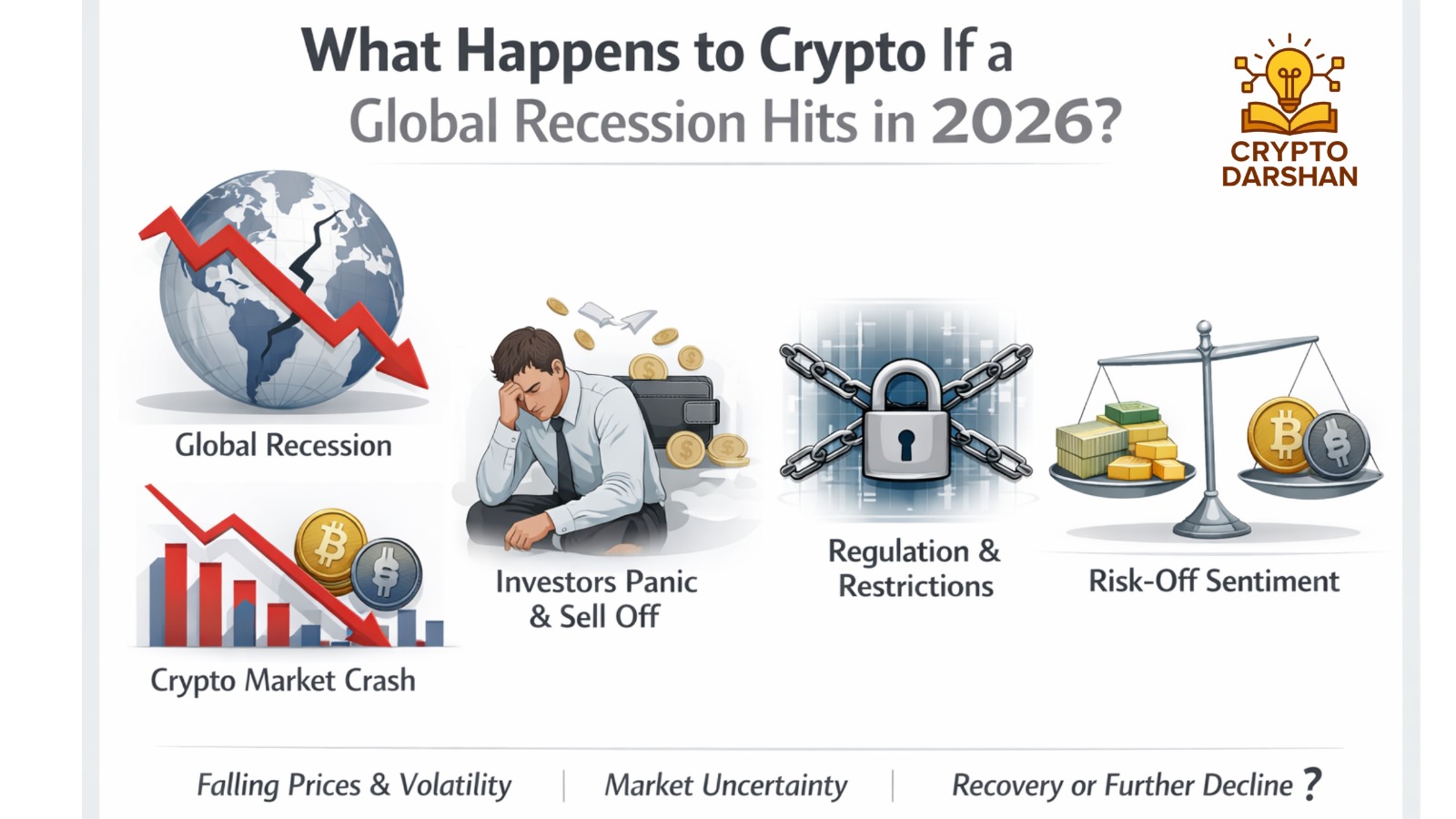
What happens if a global Crypto recession hits in 2026 starts with sharp declines, as Bitcoin and altcoins often mirror stock market sell-offs during risk-off periods. The global economy moves in cycles of growth and contraction. After years of expansion, signs of a slowdown often appear, such as rising inflation, tightening credit, and geopolitical tensions. As 2026 approaches, economists and investors are increasingly discussing the possibility of a global recession. The question on many minds is: what happens to crypto if a global recession hits in 2026?
Cryptocurrencies have matured significantly since their inception, evolving from speculative digital assets into a complex ecosystem of decentralized finance (DeFi), non-fungible tokens (NFTs), and blockchain-based innovations. Yet, their behavior during a major economic downturn remains uncertain.
This article explores how a global recession could impact the crypto market, investor sentiment, regulations, and the broader blockchain industry.
Understanding a Global Recession

A global recession is an extended period of economic decline around the world. It involves synchronized recessions across many national economies as trade relations and international financial systems transmit economic shocks from one country to another. It typically involves falling GDP, rising unemployment, reduced consumer spending, and tightening financial conditions. The International Monetary Fund (IMF) defines a global recession as a period when global per capita GDP growth falls below zero.
Key Triggers of a Global Recession
- Monetary Tightening: Central banks raising interest rates to combat inflation can slow borrowing and investment.
- Geopolitical Conflicts: Wars, trade disputes, or sanctions can disrupt supply chains and global trade.
- Debt Crises: Excessive corporate or sovereign debt can lead to defaults and financial instability.
- Energy Shocks: Sudden increases in oil or gas prices can raise production costs and reduce consumer spending.
- Pandemics or Natural Disasters: Global health crises or climate-related disasters can disrupt economies.
If these factors converge in 2026, the world could face a synchronized downturn. The impact on traditional markets would be severe but what about crypto?
The Relationship Between Crypto and the Global Economy

Cryptocurrencies were initially designed to operate outside traditional financial systems. Bitcoin’s creation in 2009 was a direct response to the 2008 financial crisis, offering an alternative to centralized banking. However, as the crypto market has grown, its correlation with traditional assets has increased.
Correlation Between Crypto and Stocks
In the early years, Bitcoin and other cryptocurrencies moved independently of stock markets. But since 2020, data shows a growing correlation between Bitcoin and major indices like the S&P 500 and Nasdaq. This means that when global markets fall, crypto often follows.
Why Correlation Has Increased
- Institutional Adoption: Hedge funds, corporations, and ETFs now hold crypto, linking it to broader financial markets.
- Liquidity Flows: Investors treat crypto as a risk asset, selling it during market stress.
- Macroeconomic Factors: Inflation, interest rates, and monetary policy affect both traditional and digital assets.
Thus, in a global recession, crypto may not remain immune. However, its decentralized nature and unique use cases could still offer resilience in specific areas.
How a Global Recession Could Impact Crypto Prices

A global recession affects every corner of the financial world, and cryptocurrencies are no exception. While crypto was once seen as a hedge against traditional market downturns, its growing integration with global finance means it now reacts to economic shocks in more complex ways. Below are five key points explaining how a global recession could impact crypto prices.
1. Short-Term Price Declines Due to Risk Aversion
When a crypto recession begins, investors typically move away from risky assets and seek safety in cash, gold, or government bonds. Cryptocurrencies, known for their volatility, are often among the first assets sold during such times.
This “flight to safety” can trigger sharp sell-offs across the crypto market. For example, during the early stages of the COVID-19 pandemic in March 2020, Bitcoin’s price dropped by more than 50% in just a few days as global markets panicked.
In a 2026 recession scenario, a similar pattern could emerge. Investors facing uncertainty may liquidate crypto holdings to cover losses elsewhere or preserve liquidity, leading to steep short-term declines in prices.
2. Liquidity Crunch and Market Volatility
Crypto recessions often cause liquidity shortages, meaning there’s less money circulating in the economy. When liquidity dries up, both traditional and crypto markets experience reduced trading volumes and higher volatility.
In crypto, this can lead to:
- Wider price swings: With fewer buyers and sellers, even small trades can move prices dramatically.
- Exchange instability: Some smaller exchanges may struggle to maintain operations if trading activity drops.
- DeFi liquidations: Falling asset prices can trigger automatic liquidations in decentralized finance (DeFi) platforms, amplifying downward pressure.
This liquidity crunch can create a feedback loop lower prices cause more panic selling, which further reduces liquidity and drives prices down even more.
3. Flight to Quality Within the Crypto Market
Not all cryptocurrencies are affected equally during a recession. Investors tend to move away from speculative altcoins and focus on assets with stronger fundamentals and perceived safety.
- Bitcoin often becomes the preferred choice due to its limited supply and established reputation as “digital gold.”
- Ethereum may retain value because of its utility in decentralized applications and smart contracts.
- Stablecoins like USDT and USDC could see increased demand as traders seek to preserve capital within the crypto ecosystem.
This internal shift known as a “flight to quality” can cause smaller or weaker projects to collapse while strengthening the dominance of major cryptocurrencies.
4. Long-Term Recovery and Institutional Reentry
While recessions bring short-term pain, they also create opportunities for long-term investors. Historically, Bitcoin and other major cryptocurrencies have rebounded strongly after market downturns.
Once central banks respond to a Crypto recession with lower interest rates or stimulus measures, liquidity returns to the market. Investors seeking higher returns may reenter crypto, driving prices upward again.
Institutional investors, in particular, often use recessions to accumulate assets at discounted prices. This accumulation phase can set the stage for the next bull market once economic conditions stabilize.
5. Shifts in Investor Perception and Use Cases
A global cryto recession could change how people view and use cryptocurrencies. If traditional financial systems struggle due to inflation, currency devaluation, or banking crises, crypto could gain renewed appeal as an alternative store of value or payment method.
For example:
- In countries with weakening fiat currencies, citizens might turn to Bitcoin or stablecoins to preserve purchasing power.
- Businesses could adopt crypto payments to bypass capital controls or unstable banking systems.
- Investors might view decentralized assets as protection against government mismanagement or excessive money printing.
This shift in perception could gradually support crypto prices, even if short-term volatility remains high.
The Role of Bitcoin During a Crypto Recession

Bitcoin’s narrative as “digital gold” positions it as a potential haven during economic uncertainty. However, its performance in a real global recession remains untested on a large scale.
Bitcoin as a Hedge Against Inflation
If central banks respond to a Crypto recession with aggressive money printing or quantitative easing, fiat currencies could lose value. In such a scenario, Bitcoin’s scarcity (limited to 21 million coins) might attract investors seeking protection from currency debasement.
Bitcoin as a Risk Asset
Conversely, if investors prioritize liquidity and stability, Bitcoin could behave more like a tech stock declining alongside equities. Its volatility and speculative nature may deter risk-averse investors during the early stages of a downturn.
The Halving Factor
Bitcoin’s next halving event, expected around 2028, could influence its price trajectory. Historically, halvings have preceded bull markets due to reduced supply issuance. If a Crypto recession occurs in 2026, it might coincide with a pre-halving accumulation phase, potentially cushioning Bitcoin’s decline.
Ethereum and the Broader Altcoin Market

Ethereum’s Dual Role
Ethereum serves as both a cryptocurrency and a platform for decentralized applications (dApps). Its value depends not only on investor sentiment but also on network activity. During a recession, reduced speculative activity could lower transaction volumes and gas fees, impacting Ethereum’s revenue model.
However, Ethereum’s transition to proof-of-stake (PoS) and its role in DeFi could provide stability. Staking rewards may attract long-term holders, while developers continue building innovative financial products.
Altcoins and Speculative Tokens
Smaller altcoins and meme tokens are likely to suffer the most. These assets rely heavily on speculative trading and retail enthusiasm. In a recession, when disposable income shrinks, demand for high-risk tokens typically collapses.
Projects with strong fundamentals, real-world utility, and active development communities may survive, while weaker ones could vanish.
Stablecoins: The Bridge Between Fiat and Crypto
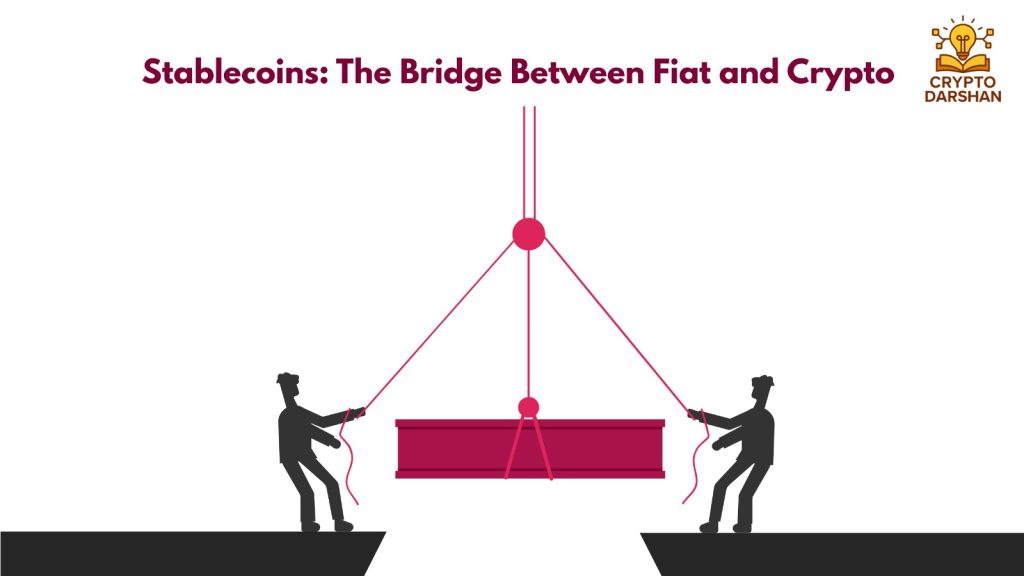
Stablecoins play a crucial role during market turbulence. Pegged to fiat currencies, they offer a refuge for traders seeking to exit volatile positions without leaving the crypto ecosystem.
Increased Demand for Stablecoins
In a Crypto recession, demand for stablecoins could rise as investors seek liquidity and stability. Platforms offering yield on stablecoin deposits might attract users looking for passive income.
Risks to Stablecoins
However, not all stablecoins are equal. Algorithmic stablecoins have historically failed during market stress, as seen with TerraUSD (UST) in 2022. Fiat-backed stablecoins like USDC and USDT could face scrutiny if their reserves are questioned or if regulatory pressures intensify.
Transparency, regulation, and trust will determine which stablecoins thrive in a recessionary environment.
DeFi and the Impact of a Crypto Recession

Decentralized finance (DeFi) has revolutionized lending, borrowing, and trading. Yet, its reliance on collateralized loans and liquidity pools makes it vulnerable to market downturns.
Liquidity Crunches
In a recession, falling crypto prices can trigger liquidations across DeFi platforms. This can create a cascade effect, draining liquidity and destabilizing protocols.
Flight to Quality Protocols
Established DeFi platforms with strong governance, security, and transparency such as Aave, MakerDAO, and Uniswap may retain user trust. Smaller or unaudited projects could collapse under pressure.
Innovation Amid Crisis
Despite short-term pain, recessions often spur innovation. Developers may focus on building more resilient financial systems, improving risk management, and integrating real-world assets into DeFi.
NFTs and the Digital Asset Market
The NFT boom of 2021 demonstrated the potential of digital ownership. However, NFTs are highly speculative and sensitive to economic conditions.
Decline in Speculative Demand
During a recession, luxury spending and speculative investments decline. NFT prices could fall sharply as collectors prioritize essential expenses.
Shift Toward Utility-Based NFTs
Projects offering real-world utility such as gaming assets, event tickets, or intellectual property rightsmay continue to grow. The focus could shift from hype-driven art collections to functional digital assets.
Institutional Investors and Crypto Recession

Institutional participation has transformed the crypto landscape. Hedge funds, asset managers, and corporations now hold significant crypto exposure.
Risk Management and Portfolio Rebalancing
In a recession, institutions may reduce exposure to volatile assets, including crypto. However, some may view Bitcoin as a long-term hedge against monetary instability.
The Role of ETFs and Custody Solutions
The rise of Bitcoin and Ethereum ETFs provides regulated access to crypto markets. These instruments could stabilize prices by attracting long-term investors, even during economic downturns.
If a recession triggers institutional risk-off behavior, we could see ETF outflows similar to what we discussed in BlackRock, ETFs, and the Institutionalization of Bitcoin. Institutional liquidity now plays a larger role in Bitcoin’s price structure than ever before.
Regulatory Responses During Crypto Recession

Economic crises often prompt governments to tighten financial regulations. Crypto could face increased scrutiny as regulators seek to protect investors and maintain stability.
Potential Regulatory Trends
- Stablecoin Oversight: Governments may impose stricter reserve requirements and audits.
- Taxation Policies: Authorities could target crypto profits to raise revenue.
- Anti-Money Laundering (AML) Enforcement: Exchanges and DeFi platforms may face tougher compliance rules.
- Central Bank Digital Currencies (CBDCs): Recessions could accelerate CBDC development as governments seek more control over monetary systems.
While regulation may create short-term uncertainty, it could also legitimize the industry and attract institutional capital in the long run.
The Role of Central Bank Digital Currencies (CBDCs)

CBDCs represent a digital form of national currency issued by central banks. In a Crypto recession, governments may use CBDCs to distribute stimulus payments or implement monetary policy more efficiently.
Impact on Crypto
CBDCs could compete with stablecoins and challenge the role of cryptocurrencies in payments. However, they may also increase public awareness of digital assets, indirectly benefiting the broader crypto ecosystem.
Mining and Network Security During a Crypto Recession

Bitcoin Mining Economics
A Crypto recession could reduce Bitcoin’s price, making mining less profitable. Smaller miners might shut down, leading to temporary drops in hash rate. However, the network’s difficulty adjustment ensures long-term stability.
Energy Costs and Sustainability
Falling energy prices during a crypto recession could lower mining costs. Additionally, miners may shift toward renewable energy sources to reduce expenses and meet environmental standards.
Investor Psychology and Market Sentiment

Market behavior during recessions is driven by fear, uncertainty, and risk aversion. Understanding investor psychology is key to predicting crypto trends.
During a global recession, price movements are often driven more by emotion than fundamentals. As explained in our article Crypto Sentiment & Social Media Trends That Move Markets, fear-driven narratives on X and YouTube can amplify sell-offs far beyond what on-chain data justifies.
Panic Selling and Capitulation
As prices fall, retail investors may panic and sell at a loss. This can accelerate declines but also create opportunities for long-term buyers.
Accumulation by Smart Money
Institutional investors and experienced traders often accumulate assets during downturns, anticipating future recoveries. This pattern has repeated across multiple crypto cycles.
Potential Scenarios for Crypto in a 2026 Recession
Scenario 1: Short-Term Crash, Long-Term Recovery
Crypto prices fall sharply as investors flee risk assets, but rebound as central banks inject liquidity and inflation rises. Bitcoin and Ethereum emerge stronger, while weaker altcoins disappear.
Scenario 2: Prolonged Bear Market
A deep, multi-year Crypto recession leads to sustained low demand for crypto. Institutional interest wanes, and innovation slows. Only projects with real-world utility survive.
Scenario 3: Crypto as a Safe Haven
If fiat currencies weaken and inflation surges, Bitcoin and select cryptocurrencies could gain recognition as digital stores of value. Adoption accelerates, and crypto becomes a mainstream financial asset.
Strategies for Crypto Investors During a Recession
- Diversify Portfolios: Balance crypto holdings with traditional assets like gold or bonds.
- Focus on Quality Projects: Prioritize assets with strong fundamentals and active development.
- Maintain Liquidity: Keep stablecoins or cash reserves for buying opportunities.
- Avoid Excessive Leverage: High leverage amplifies losses during volatile periods.
- Adopt a Long-Term Perspective: Market cycles are temporary; innovation continues.
The Silver Lining: Opportunities in a Downturn
Crypto Recessions, while painful, often reset markets and eliminate unsustainable projects. For crypto, this could mean a healthier ecosystem built on real utility, transparency, and innovation.
Areas of Growth
- Decentralized Identity (DID): Secure digital identities for online interactions.
- Tokenization of Real Assets: Real estate, commodities, and securities on blockchain.
- Cross-Border Payments: Faster, cheaper international transactions.
- Web3 Infrastructure: Decentralized internet services and data ownership.
What Happens If a Global Crypto Recession Hits in 2026? – FAQ

1. Would crypto crash immediately if a recession starts?
Not necessarily but volatility would likely spike. In past risk-off environments, including the 2022 tightening cycle led by the Federal Reserve, crypto initially sold off alongside equities. Investors typically reduce exposure to risk assets first. However, the depth of the drop would depend on liquidity conditions, interest rates, and institutional positioning at the time.
2. Would Bitcoin act as a safe haven during a Crypto recession?
That’s debated. Bitcoin has been called “digital gold,” but historically it has behaved more like a tech stock during liquidity crises. If theCrypto recession is accompanied by aggressive money printing or rate cuts, Bitcoin could recover faster due to renewed liquidity.
3. What happens to altcoins during a recession?
Altcoins tend to be more volatile than Bitcoin. Assets like Ethereum and Solana may see sharper drawdowns because investors rotate into safer assets (BTC, stablecoins, or cash). Smaller-cap tokens are usually hit hardest.
4. How would crypto ETFs react?
Spot Bitcoin ETFs such as the one launched by BlackRock could see outflows if institutions rebalance portfolios during economic stress. However, ETFs also make it easier for traditional investors to buy dips, which could stabilize markets faster than in previous cycles.
5. Would stablecoins benefit during crypto recession?
Possibly. Stablecoins like Tether and USD Coin often see increased demand during volatility as traders move to safety within the crypto ecosystem. They act as liquidity hubs during uncertain periods.
6. Could a recession actually be bullish for crypto?
Yes ,in the medium to long term. If central banks cut rates or restart stimulus programs, liquidity returns to markets. Historically, crypto performs strongly during periods of monetary easing and expanding money supply.
Interestingly, economic downturns can also accelerate regulatory clarity. As explored in Why Crypto Regulation Is Actually Bullish Long Term, structured oversight may reduce uncertainty and attract long-term capital once the panic subsides.
7. What happens to crypto mining during a recession?
If prices drop significantly, less efficient miners may shut down operations. For Bitcoin, this reduces network hash rate temporarily until mining difficulty adjusts. Over time, this self-correcting mechanism stabilizes the network.
8. Would DeFi survive Crypto recession?
Major DeFi protocols could survive, but leverage would likely unwind quickly. During past stress events, lending protocols faced liquidations when collateral prices dropped. However, transparent on-chain systems allow faster price discovery compared to traditional finance.
9. Could governments tighten crypto regulation during a recession?
Yes. Economic stress often leads to stricter oversight of financial markets. Policymakers may increase scrutiny of exchanges, stablecoins, and cross-border crypto flows to protect capital controls or financial stability.
Conclusion
If a global crypto recession hits in 2026, the crypto market will face significant challenges, but also opportunities. Short-term volatility and price declines are likely as investors seek safety. However, the long-term outlook remains optimistic for projects with strong fundamentals, real-world utility, and decentralized resilience.
Bitcoin may reaffirm its role as a hedge against monetary instability, while Ethereum and DeFi continue to innovate. Stablecoins and CBDCs will shape the future of digital finance, and regulation will bring greater legitimacy to the industry.
Ultimately, recessions test the strength of every financial system. For crypto, 2026 could mark not the end of a cycle, but the beginning of a more mature, sustainable era for digital assets.