
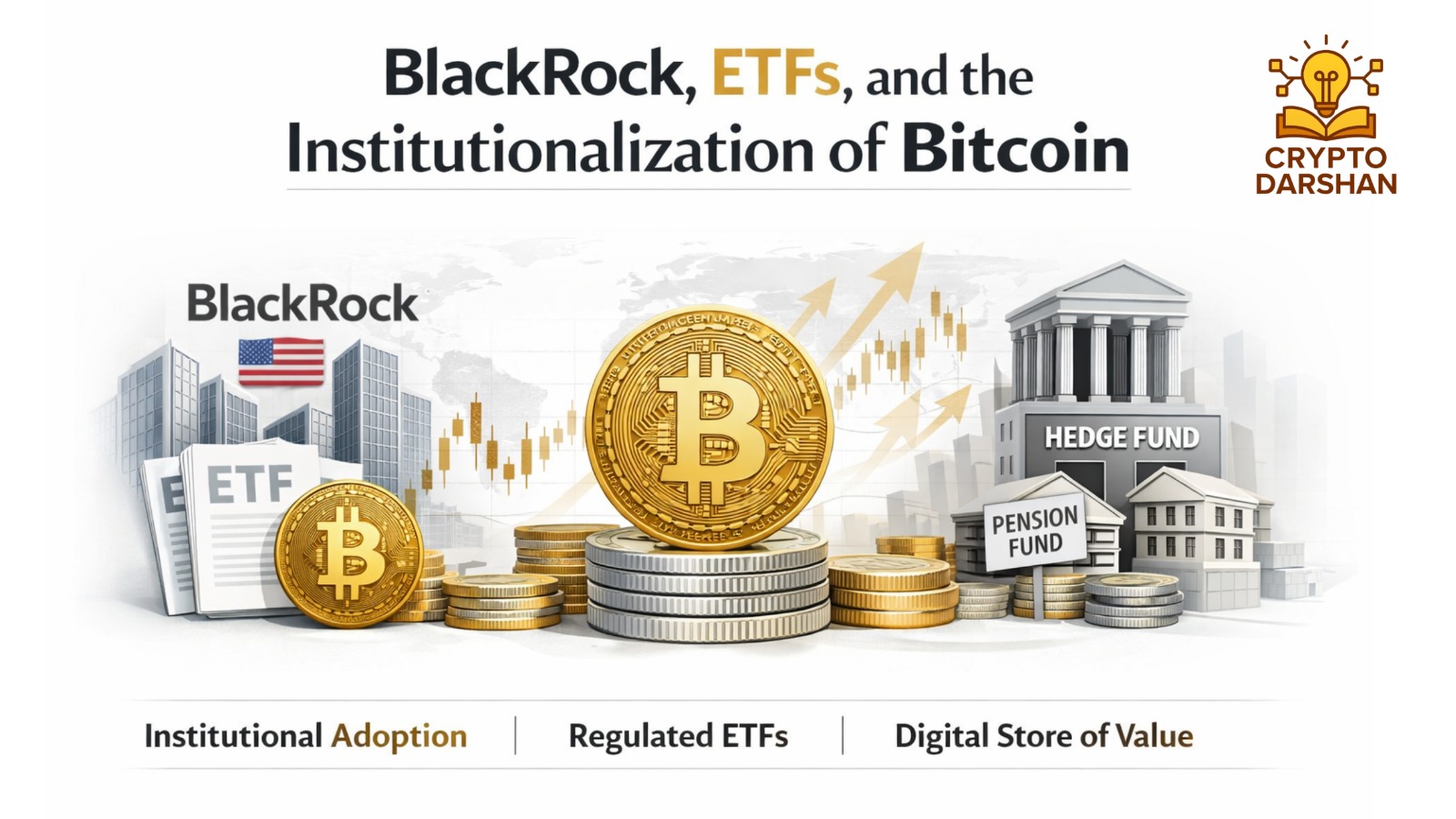
Bitcoin has evolved from a niche digital experiment into a global financial asset commanding the attention of the world’s largest institutions. Among these institutions, BlackRock the world’s largest asset manager has emerged as a pivotal player in legitimizing Bitcoin through its involvement in exchange-traded funds (ETFs). The approval and launch of Bitcoin ETFs mark a defining moment in the institutionalization of Bitcoin, bridging the gap between traditional finance and the decentralized world of digital assets.
This transformation is not just about investment vehicles; it represents a fundamental shift in how Bitcoin is perceived, accessed, and integrated into the global financial system. The entry of BlackRock and other major financial institutions signals a new era where Bitcoin is no longer viewed solely as a speculative asset but as a legitimate component of diversified portfolios.
This article explores the intricate relationship between BlackRock, ETFs, and the institutionalization of Bitcoin. It examines how ETFs work, why BlackRock’s involvement matters, the implications for investors, and what this means for the future of Bitcoin and the broader cryptocurrency ecosystem.
The Rise of Bitcoin: From Cypherpunk Dream to Institutional Asset

Bitcoin was introduced in 2009 by the pseudonymous Satoshi Nakamoto as a decentralized, peer-to-peer digital currency designed to operate outside the control of governments and central banks. For years, it remained a fringe technology embraced by early adopters, libertarians, and technologists who believed in financial sovereignty.
However, as Bitcoin matured, its narrative evolved. What began as a digital alternative to fiat currency gradually became recognized as “digital gold” a store of value resistant to inflation and censorship. This shift in perception attracted investors seeking diversification and protection against macroeconomic uncertainty.
By the late 2010s, Bitcoin had captured the attention of hedge funds, family offices, and eventually, institutional investors. The introduction of regulated futures markets, custodial solutions, and compliance frameworks paved the way for large-scale participation. Yet, one major barrier remained: accessibility.
Traditional investors were accustomed to regulated, easily tradable financial instruments. Buying and storing Bitcoin directly involved technical complexities, security risks, and regulatory uncertainties. This gap created the perfect opportunity for financial innovation and that’s where ETFs entered the picture.
Understanding ETFs: The Bridge Between Traditional Finance and Crypto

An exchange-traded fund (ETF) is an investment fund that holds multiple underlying assets. It can be bought and sold on an exchange, much like an individual stock. ETFs offer investors exposure to assets without requiring direct ownership. They are known for their liquidity, transparency, and cost efficiency.
In the context of Bitcoin, a Bitcoin ETF allows investors to gain exposure to the price movements of Bitcoin without having to buy, store, or secure the cryptocurrency themselves. Instead, the ETF holds Bitcoin (in the case of a spot ETF) or Bitcoin futures contracts (in the case of a futures ETF), and investors can buy shares of the ETF through their brokerage accounts.
This structure solves several problems for institutional and retail investors alike:
- Regulatory clarity: ETFs operate under established securities laws.
- Ease of access: Investors can buy Bitcoin exposure through traditional brokerage platforms.
- Custody and security: Professional custodians handle the storage of Bitcoin.
- Tax efficiency: ETFs often provide more favorable tax treatment compared to direct crypto transactions.
The introduction of Bitcoin ETFs represents a major milestone in integrating digital assets into mainstream finance. But the real game-changer came when BlackRock entered the scene. As traditional finance embraces Bitcoin through ETFs, decentralized alternatives continue evolving, as we explained in Why DEXs Matter More Than Ever After Global Exchange Regulations.
BlackRock’s Entry into Bitcoin: A Turning Point

BlackRock, with over $10 trillion in assets under management, is the largest asset manager in the world. Its influence extends across global markets, shaping investment trends and institutional behavior. When BlackRock filed for a spot Bitcoin ETF in 2023, it sent shockwaves through both the crypto and traditional finance sectors.
The move was significant for several reasons:
- Legitimacy: BlackRock’s involvement signaled that Bitcoin had matured into a credible asset class.
- Regulatory confidence: The firm’s reputation and compliance expertise increased the likelihood of regulatory approval.
- Institutional adoption: BlackRock’s clients include pension funds, endowments, and sovereign wealth funds entities that had previously been hesitant to engage with crypto.
- Market validation: The filing catalyzed renewed interest in Bitcoin, driving prices upward and reigniting mainstream media coverage.
BlackRock’s CEO, Larry Fink, who once criticized Bitcoin, later described it as “digital gold” and a potential global asset. This shift in tone reflected a broader change in institutional sentiment toward cryptocurrencies.
The Road to Bitcoin ETF Approval
1. Early Attempts and Rejections
- Key Point: The U.S. Securities and Exchange Commission (SEC) repeatedly rejected early Bitcoin ETF applications.
- Explanation: Since 2013, several firms, including the Winklevoss twins, tried to launch Bitcoin ETFs. The SEC denied these proposals due to concerns about market manipulation, lack of surveillance, and insufficient investor protection.
2. Regulatory Concerns
- Key Point: The SEC’s main issues centered on market integrity and investor safety.
- Explanation: Regulators worried that Bitcoin’s price could be manipulated on unregulated exchanges. They also questioned whether there were enough safeguards to protect investors from fraud and volatility.
3. Introduction of Bitcoin Futures ETFs (2021)
- Key Point: Futures-based Bitcoin ETFs were approved before spot ETFs.
- Explanation: In 2021, the SEC allowed ETFs based on Bitcoin futures traded on the Chicago Mercantile Exchange (CME). These products gave investors regulated exposure to Bitcoin but didn’t hold actual Bitcoin. However, they faced drawbacks like tracking errors and higher costs.
4. BlackRock’s Entry Changes the Game
- Key Point: BlackRock’s application for a spot Bitcoin ETF in 2023 marked a turning point.
- Explanation: As the world’s largest asset manager, BlackRock brought credibility and regulatory expertise. Its proposal included a surveillance-sharing agreement with Coinbase to monitor trading activity and prevent manipulation, directly addressing the SEC’s past concerns.
5. Surveillance-Sharing Agreement

- Key Point: This agreement was crucial for regulatory approval.
- Explanation: It allowed BlackRock and Coinbase to share data on Bitcoin trading, improving transparency and reducing the risk of price manipulation. This innovation reassured regulators that the ETF could operate within a controlled environment.
6. Growing Institutional Pressure
- Key Point: Demand from institutional investors pushed regulators to reconsider.
- Explanation: Pension funds, hedge funds, and asset managers wanted a regulated way to gain Bitcoin exposure. The growing maturity of the crypto market and improved custody solutions made approval more feasible.
7. SEC Approval in 2024
- Key Point: The SEC finally approved multiple spot Bitcoin ETFs, including BlackRock’s iShares Bitcoin Trust (IBIT).
- Explanation: After years of resistance, the SEC acknowledged that the market had matured enough to support spot ETFs. BlackRock’s compliance measures and market surveillance mechanisms played a major role in this decision.
8. Impact of Approval
- Key Point: The approval marked a historic milestone for Bitcoin and the crypto industry.
- Explanation: It legitimized Bitcoin as a mainstream financial asset, opened the door for institutional capital inflows, and bridged the gap between traditional finance and digital assets.
How BlackRock’s Bitcoin ETF Works

The iShares Bitcoin Trust (IBIT) operates similarly to other commodity-based ETFs, such as those tracking gold. The fund holds actual Bitcoin in custody, and each share represents fractional ownership of that Bitcoin. The ETF’s price closely tracks the spot price of Bitcoin, allowing investors to gain exposure without dealing with wallets or private keys.
Key features of BlackRock’s Bitcoin ETF include:
- Custody: Coinbase Custody serves as the primary custodian, ensuring secure storage of Bitcoin.
- Transparency: Daily disclosures of holdings and net asset value (NAV) maintain investor confidence.
- Liquidity: Shares trade on major exchanges, providing easy entry and exit for investors.
- Institutional-grade compliance: The ETF adheres to strict regulatory and reporting standards.
This structure allows institutional investors to integrate Bitcoin exposure into their portfolios seamlessly, using familiar investment vehicles.
The Institutionalization of Bitcoin
The approval of Bitcoin ETFs, led by BlackRock, represents the institutionalization of Bitcoin the process by which it becomes embedded within the traditional financial system. This transformation has several key dimensions:
1. Legitimacy and Trust
Institutional participation enhances Bitcoin’s credibility. When firms like BlackRock, Fidelity, and Invesco offer Bitcoin products, it signals to the market that Bitcoin is a legitimate asset worthy of inclusion in diversified portfolios.
2. Capital Inflows
ETFs open the floodgates for capital from pension funds, insurance companies, and endowments that were previously restricted from investing in unregulated assets. This influx of institutional capital increases market depth and stability.
3. Market Maturity
Institutional involvement brings improved liquidity, tighter spreads, and more sophisticated trading infrastructure. These developments reduce volatility and make Bitcoin markets more efficient.
4. Regulatory Integration
The ETF framework ensures compliance with securities laws, anti-money laundering (AML) regulations, and investor protection standards. This integration helps align Bitcoin with global financial norms.
5. Custody and Security
Professional custodianship reduces the risks associated with self-custody, such as hacks or lost private keys. Institutions can now hold Bitcoin exposure with confidence.
The Broader Impact on the Crypto Ecosystem

The institutionalization of Bitcoin has ripple effects across the entire cryptocurrency ecosystem. As Bitcoin gains legitimacy, it paves the way for broader acceptance of digital assets, blockchain technology, and decentralized finance (DeFi).
1. Increased Adoption
Institutional endorsement encourages retail investors to participate, driving adoption across demographics. Financial advisors and wealth managers are more likely to recommend Bitcoin exposure through ETFs.
2. Enhanced Infrastructure
The demand for secure custody, compliance tools, and trading platforms accelerates innovation in crypto infrastructure. Companies like Coinbase, BitGo, and Fireblocks benefit from institutional partnerships.
3. Competitive Landscape
The success of Bitcoin ETFs may inspire similar products for other cryptocurrencies, such as Ethereum. This diversification could expand the digital asset investment universe.
4. Price Stability
As institutional investors adopt long-term strategies, Bitcoin’s price may become less volatile. This stability could further attract conservative investors.
5. Policy and Regulation
The integration of Bitcoin into regulated markets pressures policymakers to develop clearer frameworks for digital assets. This regulatory clarity benefits the entire industry.
BlackRock’s Strategic Vision for Bitcoin and Digital Assets

BlackRock’s involvement in Bitcoin is not a short-term play. It reflects a broader strategic vision centered on the tokenization of assets and the modernization of financial markets.
1. Tokenization of Real-World Assets
BlackRock has expressed interest in tokenizing traditional assets such as bonds, equities, and real estate. Tokenization leverages blockchain technology to improve transparency, efficiency, and accessibility in asset trading and settlement.
2. Integration with ESG Principles
As a leader in environmental, social, and governance (ESG) investing, BlackRock is exploring ways to align Bitcoin exposure with sustainability goals. This includes supporting renewable energy initiatives in Bitcoin mining.
3. Expansion into Digital Infrastructure
Beyond ETFs, BlackRock is investing in blockchain infrastructure, data analytics, and digital asset management tools. These initiatives position the firm at the forefront of financial innovation.
4. Global Influence
BlackRock’s global reach enables it to shape regulatory discussions and market standards for digital assets worldwide. Its participation accelerates the harmonization of crypto regulations across jurisdictions.
The Role of Other Institutional Players

While BlackRock’s entry is monumental, it is part of a broader wave of institutional adoption. Other major players have also launched or applied for Bitcoin ETFs, including Fidelity, Invesco, Ark Invest, and VanEck. Each brings unique strengths and strategies to the market.
Fidelity: Offers both spot Bitcoin ETFs and direct crypto trading services for institutional clients.
Ark Invest: Focuses on innovation-driven investment strategies, emphasizing Bitcoin’s role in the future of finance.
VanEck: One of the earliest advocates for Bitcoin ETFs, with a strong presence in commodity-based funds.
The competition among these firms benefits investors by driving down fees, improving product quality, and expanding access. Even as ETFs gain traction, innovation in wallet infrastructure continues, as discussed in Smart Wallets Explained: The Future of Crypto Accounts.
Market Reactions and Performance

The launch of Bitcoin ETFs triggered significant market activity. Within weeks, billions of dollars flowed into these funds, reflecting strong demand from both retail and institutional investors. BlackRock’s IBIT quickly became one of the top-performing ETFs by inflows.
Bitcoin’s price responded positively, breaking through key resistance levels and reaching new multi-year highs. Analysts attributed this rally to increased accessibility, institutional confidence, and reduced selling pressure from long-term holders.
Moreover, the correlation between Bitcoin and traditional assets began to shift. As more institutions integrated Bitcoin into diversified portfolios, it started behaving more like a macro asset influenced by global liquidity and monetary policy trends.
Challenges and Criticisms

Despite the optimism, the institutionalization of Bitcoin is not without challenges and criticisms.
1. Centralization Concerns
Critics argue that institutional dominance undermines Bitcoin’s decentralized ethos. When large custodians and asset managers control significant portions of Bitcoin, it concentrates power in the hands of a few entities.
2. Regulatory Risks
While ETFs operate under regulatory oversight, future policy changes could impact their operations. Governments may impose stricter rules on crypto-related products.
3. Market Manipulation
Although surveillance-sharing agreements aim to prevent manipulation, concerns persist about the influence of large players on Bitcoin’s price.
4. Custodial Risks
Even with professional custodians, the risk of security breaches or operational failures cannot be entirely eliminated.
5. Philosophical Divide
Some Bitcoin purists view institutionalization as a betrayal of Bitcoin’s original vision of financial independence. They argue that Bitcoin should remain outside traditional finance.
The Future of Bitcoin ETFs and Institutional Adoption

The approval of Bitcoin ETFs is just the beginning. The next phase of institutional adoption will likely involve deeper integration of digital assets into financial products and services.
1. Expansion to Other Cryptocurrencies
Ethereum ETFs are already under consideration, and other digital assets may follow. This diversification could create a multi-asset digital investment ecosystem.
2. Integration with Retirement Accounts
Bitcoin ETFs could soon become available in 401(k) plans and pension funds, further expanding access to mainstream investors.
3. Global Adoption
Countries outside the U.S. are exploring similar ETF frameworks. Canada, Europe, and Asia have already launched Bitcoin ETFs, setting the stage for global harmonization.
4. Technological Innovation
Advancements in blockchain technology, custody solutions, and tokenization will continue to enhance the efficiency and security of digital asset investments.
5. Long-Term Price Implications
As institutional demand grows, Bitcoin’s scarcity and fixed supply could drive long-term price appreciation. Analysts predict that ETFs could absorb a significant portion of Bitcoin’s circulating supply over time.
BlackRock, ETFs, and the Institutionalization of Bitcoin – FAQ

1. Why is BlackRock’s involvement in Bitcoin important?
BlackRock is the world’s largest asset manager, overseeing trillions of dollars in assets. Its entry into Bitcoin through ETFs signals institutional validation, reduces perceived risk, and opens the door for pension funds, hedge funds, and traditional investors to gain exposure to crypto.
2. What is a Bitcoin ETF?
A Bitcoin ETF (Exchange-Traded Fund) is a regulated investment vehicle that allows investors to gain exposure to Bitcoin without directly holding the asset. Instead of managing wallets or private keys, investors can buy shares through traditional brokerage accounts
3. What is the iShares Bitcoin Trust (IBIT)?
iShares Bitcoin Trust (IBIT) is BlackRock’s spot Bitcoin ETF. It holds actual Bitcoin rather than derivatives, offering direct exposure to the asset’s price movements within a regulated structure.
4. How do Bitcoin ETFs impact Bitcoin’s price?
Bitcoin ETFs can increase demand by making access easier for institutional capital. When large funds allocate even a small percentage of their portfolios to Bitcoin, the inflow can significantly impact price due to Bitcoin’s limited supply.
5. What does “institutionalization of Bitcoin” mean?
Institutionalization refers to the growing involvement of major financial institutions—such as asset managers, banks, and pension funds—in Bitcoin markets. This shift often brings greater liquidity, regulatory clarity, and long-term capital.
6. Does institutional adoption reduce Bitcoin’s volatility?
Institutional participation can improve liquidity and market depth, which may reduce extreme price swings. However, Bitcoin remains a risk asset and can still experience significant volatility during macroeconomic or regulatory events.
7. How does BlackRock’s ETF differ from futures-based Bitcoin ETFs?
Spot ETFs like IBIT hold real Bitcoin, while futures ETFs invest in Bitcoin futures contracts traded on regulated exchanges. Spot ETFs tend to track Bitcoin’s price more closely and avoid issues like futures roll costs.
8. Are Bitcoin ETFs safer than holding Bitcoin directly?
Bitcoin ETFs eliminate the need for private key management and self-custody risks. However, investors are exposed to counterparty risk and rely on custodians and fund managers. Direct ownership provides full control but requires security responsibility.
9. How do regulators view Bitcoin ETFs?
Regulators have historically been cautious due to concerns about market manipulation and investor protection. However, recent approvals of spot ETFs signal growing acceptance of Bitcoin as a legitimate asset class within traditional finance.
Conclusion
BlackRock’s entry into the Bitcoin market through ETFs marks a historic milestone in the evolution of digital assets. It symbolizes the convergence of traditional finance and decentralized technology, ushering in a new era of institutional participation and legitimacy for Bitcoin.
The institutionalization of Bitcoin is transforming it from a speculative asset into a recognized component of global investment portfolios. ETFs have made Bitcoin accessible, regulated, and secure for a broad range of investors, bridging the gap between Wall Street and the blockchain.
While challenges remain, including regulatory uncertainties and philosophical debates, the trajectory is clear. Bitcoin is no longer an outsider to the financial system; it is becoming an integral part of it. As BlackRock and other institutions continue to innovate, the boundaries between traditional and digital finance will blur, shaping the future of global markets.
The story of BlackRock, ETFs, and the institutionalization of Bitcoin is not just about financial products. It is about the transformation of money, trust, and value in the digital age a transformation that is only just beginning.