

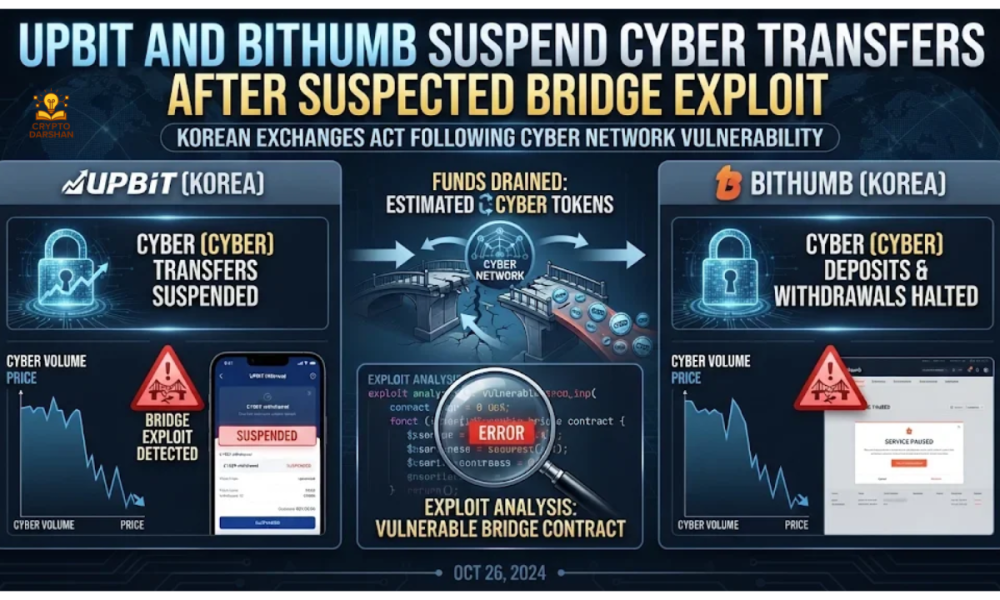
South Korea’s two largest crypto exchanges, Upbit and Bithumb, have suspended CYBER deposits and withdrawals after reports of a suspected exploit involving the Cyber bridge. The move is a precautionary measure while the project and exchanges assess the security risk.c
Why the transfers stopped
Upbit and Bithumb halted CYBER transfers after a suspected bridge exploit raised concerns that tokens could be minted or moved without proper backing. Cross-chain bridges connect separate blockchain networks, allowing assets to move between them.
When a bridge is compromised, attackers may be able to create unbacked tokens on one chain or withdraw assets from reserves on another. Exchanges often stop deposits and withdrawals immediately to prevent potentially affected tokens from entering or leaving their platforms.
The suspension does not necessarily mean that CYBER trading has stopped. In similar cases, exchanges have kept spot markets open while blocking token inflows and outflows until they can confirm whether customer assets are safe.
What a bridge exploit means
A crypto bridge normally locks an asset on one blockchain and issues a matching representation on another. For example, a user may lock a token on Ethereum and receive a wrapped version on another network.
If the bridge’s contracts, validators, or signing keys fail, an attacker may be able to bypass that process. In a serious case, they can mint tokens without locking the original assets, or drain the reserves that back tokens waiting to be redeemed.
That creates a supply problem. If more CYBER exists than the bridge can support, the token’s price and redeemability can come under pressure. Exchanges respond quickly because a compromised bridge can affect users even if their own systems were not directly hacked.
How Upbit and Bithumb respond
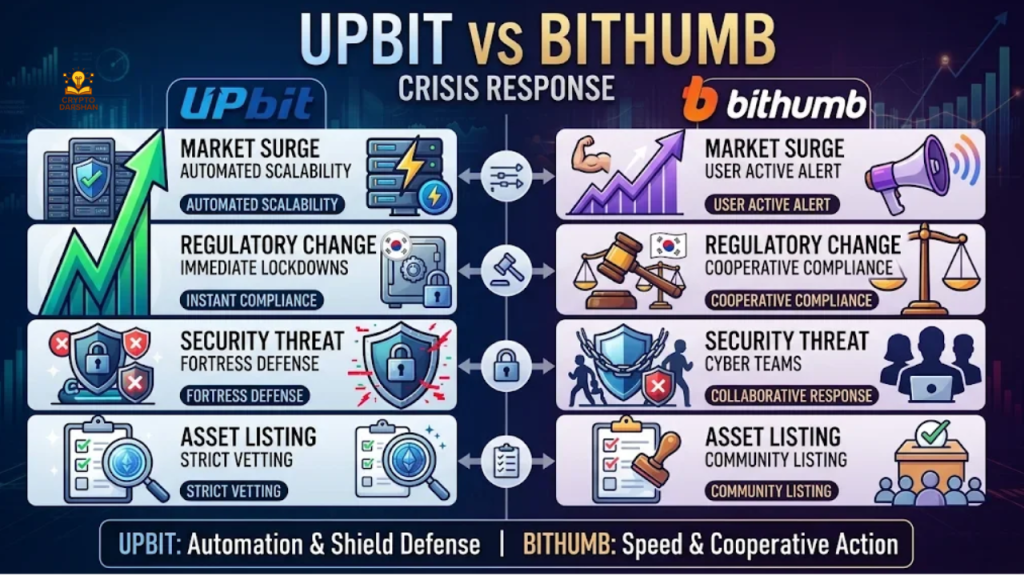
Upbit has a history of suspending transfers when a token’s underlying network or bridge faces an unresolved security event. The exchange previously halted SAND deposits and withdrawals after The Sandbox identified a bridge vulnerability that allowed unbacked SAND to be minted on Base and BNB Smart Chain.
In that case, Upbit also placed SAND under its trading caution framework, while Bithumb issued a separate caution designation. Both exchanges cited possible exposure to losses from an unresolved security incident involving a wallet or distributed ledger.
The CYBER action appears to follow the same playbook: halt transfers first, investigate the suspected exploit, and restore deposits and withdrawals only after the project provides a credible security update.
What CYBER holders should do

CYBER holders should avoid sending tokens through the affected bridge until the project confirms that it is safe. A bridge that has been exploited may still process transactions, but that does not mean the underlying vulnerability has been fixed.
Users should also follow only official announcements from Upbit, Bithumb, and the Cyber project. Scammers often use security incidents to impersonate support teams, share fake recovery links, or ask users for seed phrases.
A hardware wallet does not automatically protect against a bridge exploit if a user approves a malicious transaction. The safest approach is to pause bridge activity, keep funds on a trusted platform or self-custody wallet, and wait for verified updates.
South Korea’s security rules
The suspension comes as South Korea prepares to give exchanges more authority to act quickly during suspected attacks. The Financial Services Commission has proposed allowing platforms to temporarily block deposits and withdrawals when they suspect a hacking attempt, even before a breach is fully confirmed.
That policy is designed to reduce the chance that stolen or compromised tokens move through exchanges while an investigation is underway. It also gives exchanges time to identify affected wallets, isolate risk, and coordinate with the affected project.
The proposal follows several security incidents involving South Korean crypto infrastructure. Bithumb reported a separate security breach before the Financial Security Institute was hit by a cyberattack that exposed employee records and documents from dozens of financial companies.
What happens next

The key question is whether Cyber can confirm the scope of the suspected exploit. The project will need to identify the affected contracts, disable or repair the bridge, and determine whether any unbacked CYBER was created.
Exchanges will likely wait for a clear statement on the cause, the amount at risk, and the steps taken to protect users. Deposits and withdrawals may remain suspended until those questions are answered.
If the exploit is contained quickly and no user funds are affected, Upbit and Bithumb may restore transfers after completing their reviews. If unbacked tokens were minted or bridge reserves were drained, the recovery process could take longer and may require a token migration, contract upgrade, or compensation plan.
The bigger lesson
Bridge exploits remain one of the most damaging risks in crypto because they can affect assets across multiple networks at once. A problem on one chain can quickly create uncertainty for exchanges, liquidity providers, and holders on another.
For users, the practical takeaway is to treat bridge transfers as higher-risk activity. Before moving funds, check official status pages, use small test transactions when appropriate, and avoid bridges that have recently reported unresolved security issues.