
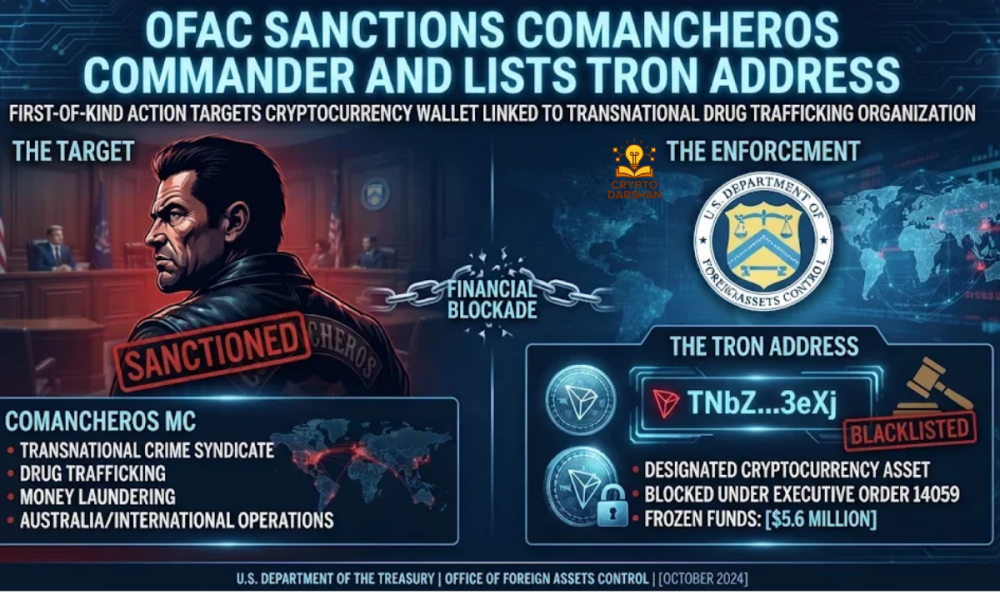
The U.S. Treasury has sanctioned Alexandre Varela Villar, a Spain-based commander of the Comancheros motorcycle gang, and added a Tron address to his sanctions entry. The move is part of a broader November 19 action against two international drug-trafficking organizations.
Who was sanctioned
OFAC listed Varela Villar, also known as Alex Vare, on its Specially Designated Nationals and Blocked Persons List. The agency also designated Allan Meehan, the Australia-based world president of the Comancheros, under Executive Order 14059.
Treasury said the two men were sanctioned because of their leadership roles in the gang. The action also targeted Pasilika Naufahu, head of the group’s New Zealand chapter; his brother Vetekina Naufahu, a senior member; and Marco Francis Coffen, described as an associate who supplied encrypted communications services to Australian criminal groups.
The Comancheros were described by Treasury as an Australia-headquartered gang that helped cartels arrange cocaine shipments from South America to the United States, Australia, and Europe. Treasury named the Sinaloa Cartel, Jalisco New Generation Cartel, Clan del Golfo, and Los Choneros as groups the gang worked with. Some shipments allegedly involved hundreds of kilograms of cocaine.
What the Tron address means
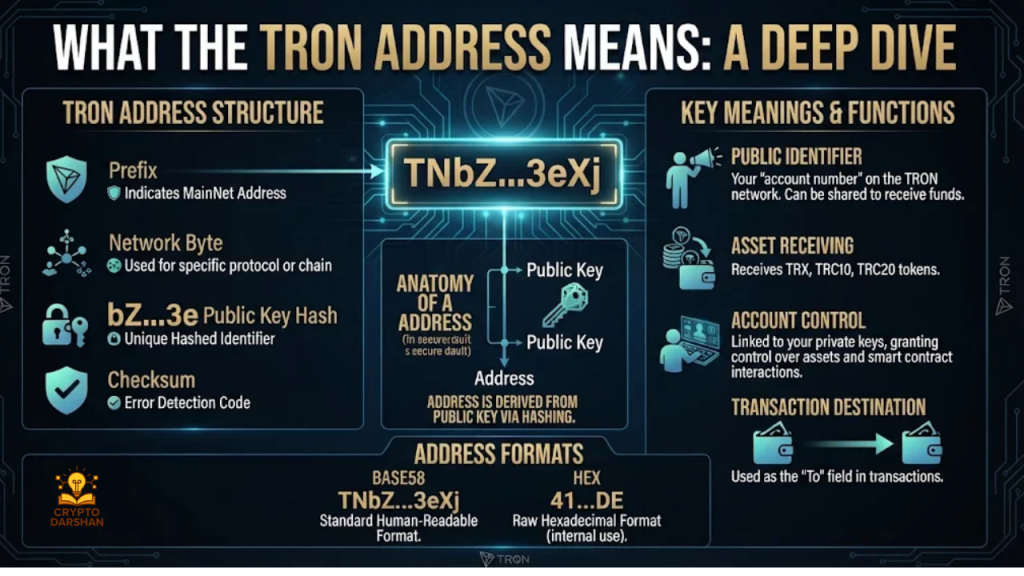
The sanctions entry identifies a Tron address under Varela Villar’s name. OFAC’s digital-currency guidance says the agency publishes addresses to help the public identify crypto linked to blocked people or entities.
The listing does not mean that every transaction involving that address is automatically connected to wrongdoing. It also does not reveal a token balance or a dollar value. Instead, it flags the address as associated with a sanctioned person under U.S. rules.
OFAC says its public sanctions search can look up a digital-currency address directly. The search uses an exact address match, while Treasury’s downloadable files include both the address and its associated digital-currency label.
What firms must do
Under OFAC’s guidance, a company holding digital assets connected to a blocked person is expected to block the relevant property and report it to OFAC. The company must also provide any information it has about who owns the address.
The sanctions block property and interests in property held in the United States, or in the possession or control of U.S. persons. In general, U.S. persons cannot deal with that property unless a license or exemption applies.
The restrictions can also reach companies owned directly or indirectly, alone or with other blocked parties, by 50% or more. Treasury said foreign financial institutions that knowingly help significant transactions for a designated person could face limits on their U.S. correspondent accounts.
Stablecoin freezes are separate
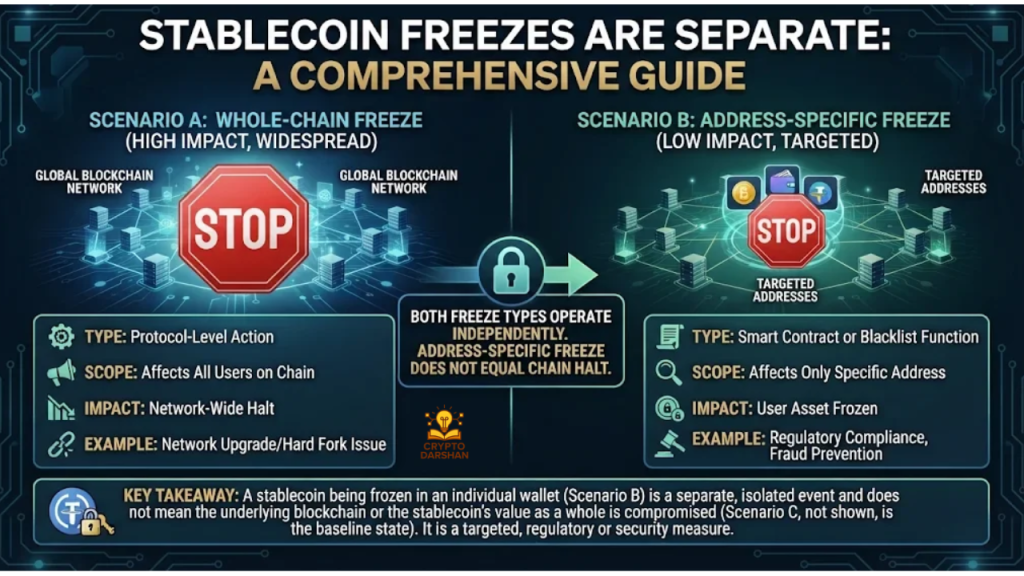
A sanctions listing and a stablecoin freeze are related but different actions. OFAC can add an address to its sanctions list, while a stablecoin issuer may separately freeze balances connected to that address.
In July, Tether froze USDT balances across 131 Tron addresses that OFAC had added as identifiers under an existing ISIS-K designation. The new entry for Varela Villar identifies the address and network but does not state whether any stablecoin issuer has frozen funds.
That distinction matters for crypto businesses. A compliance team may need to block an address because of sanctions exposure even if no token issuer has yet announced a freeze.
A wider action against ’Ndrangheta
The same Treasury action also targeted Italy’s ’Ndrangheta, a criminal organization first sanctioned by the United States in May 2008 under the Foreign Narcotics Kingpin Designation Act. Treasury said the group’s Toronto faction uses U.S. and Canadian financial systems to launder proceeds.
OFAC designated Angelo Figliomeni, identified as the head of the Toronto faction, and several other senior figures, including Luigi Vescio Sr.
The action also covered three Ontario funeral-home businesses and a Toronto-area limousine company that Treasury said Vescio controls. OFAC issued a wind-down license for those four businesses and entities they own by 50% or more.
The license allows transactions normally needed to wind down dealings with the covered companies until 12:01 a.m. Eastern Standard Time on December 18, 2026. Any payment to a blocked person under the license must go into a blocked, interest-bearing account in the United States.
Why crypto compliance matters
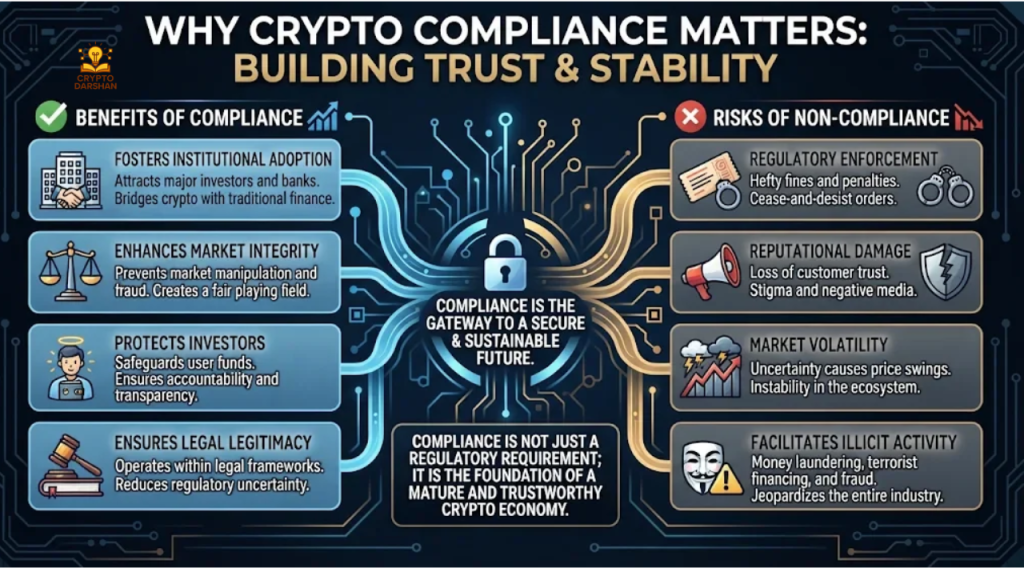
This case shows how sanctions enforcement increasingly reaches crypto infrastructure. A public blockchain address can become a compliance identifier, even when the person behind it is not directly named in a transaction.
For exchanges, wallet providers, payment firms, and stablecoin issuers, the practical steps are clear: screen addresses against updated sanctions data, block assets where required, document the decision, and report the action to OFAC when applicable.
The investigation involved the U.S. Homeland Security Task Force, FBI, Drug Enforcement Administration, and Homeland Security Investigations. Treasury also credited police agencies in Australia, New Zealand, Italy, and Canada for helping build the case.