
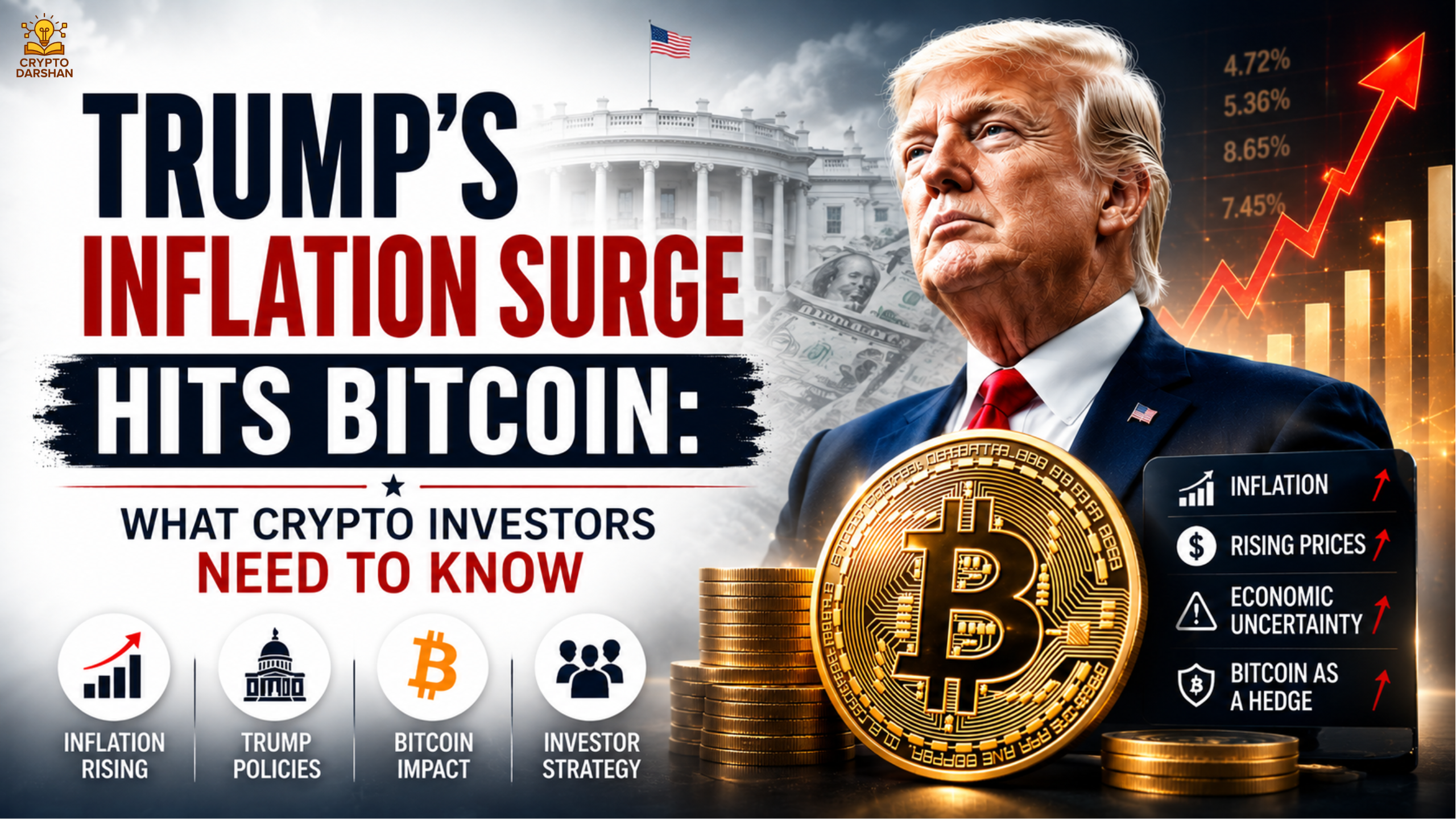
President Donald Trump has openly embraced rising inflation, saying “I love the inflation” after the latest data showed prices climbing 4.2% year-over-year in May—the highest level in three years. This surprising stance, combined with new Federal Reserve policy under hawkish Chair Kevin Warsh, creates a challenging environment for Bitcoin and crypto markets heading into summer 2026.
The Shocking Inflation Numbers Behind Trump’s Comments
The May Consumer Price Index (CPI) report revealed inflation hit 4.2%, marking the third consecutive monthly increase since the Iran conflict began on February 28, 2026. Before the war started, inflation stood at just 2.4%, but the closure of the Hormuz Strait has dramatically affected global energy prices.
Trump’s response came from the Oval Office when questioned about the troubling data:
“The numbers were great… I love this. What I truly enjoy is the inflation.”
This unusual celebration of rising prices contrasts sharply with the Republican party’s election platform, which claims Trump wants to “end inflation.” The wartime is largely driven by gas prices shooting up more than 50% since the conflict began.
Why Rising Inflation Hurts Bitcoin
Bitcoin’s response to inflation concerns highlights why understanding “Why Altseason Follows Bitcoin Rallies” is essential for investors tracking broader crypto market movements. Higher inflation creates a chain reaction that typically damages crypto prices:
Interest Rate Pressure
When inflation climbs above the Fed’s 2% target, the Federal Reserve usually raises interest rates to cool prices. Currently, traders are favoring interest rate increases instead of cuts, placing additional pressure on risk assets, including Bitcoin.
Stronger Dollar, Weaker Crypto
Rising interest rates typically bolster the U.S. dollar and Treasury yields. This diverts investment away from non-yielding assets like Bitcoin, which doesn’t produce regular income through dividends or interest.
Risk-Asset Discomfort
Higher inflation means less demand for risky assets overall. Crypto markets, including Bitcoin and Ethereum, traditionally perform poorly when inflation expectations rise and monetary policy tightens.
Kevin Warsh’s Hawkish Fed Policy Complicates Things
President Trump swore in Kevin Warsh as the new Federal Reserve Chair on May 22, 2026, inheriting a tough inflation outlook above the 3.8% rate at the time. Warsh’s reputation as an inflation hawk means he supports:
- A smaller Fed balance sheet
- Tighter monetary policy
- Aggressive fighting
“While Warsh has publicly described Bitcoin in surprisingly non-hostile terms, his hawkish monetary instincts create tension,” according to industry analysis.
Warsh acknowledged Bitcoin during a July 2025 Hoover Institution interview:
“Bitcoin does not make me nervous. I think of it as an important asset that can help inform policymakers when they’re doing things right and wrong. It is not a substitute for the dollar.”
However, this openness doesn’t offset the reality that tighter monetary policy is generally bad for Bitcoin in the short term. Despite market turbulence, Bitcoin has consistently outperformed many competitors, helping explain why it remains one of the few survivors discussed in Before Bitcoin: The Failed Digital Currencies That Paved the Way
The Counterargument: When Trump’s Policies Could Help Crypto

Despite the inflation concerns, some analysts see potential upside scenarios for Bitcoin under Trump’s economic platform:
Weaker Dollar Push
Trump’s push for a weaker dollar could lead to currency turmoil, making assets like Bitcoin more attractive as a hedge. Noelle Acheson, a crypto and macroeconomic analyst, noted:
“This should be good for BTC, in that currency turmoil will enhance the appeal of a hard supply cap asset that can diversify reserves while remaining unaffected by geopolitics.”
Supply Cap Advantage
Bitcoin’s fixed 21 million supply cap becomes more appealing when investors worry about currency devaluation and geopolitical instability from events like the Iran war.
Previous Crypto Boosts
When Trump previously claimed inflation was “almost gone” and could “drop to 1%” in November 2025, crypto markets bounced back immediately:
This shows crypto markets respond quickly to Trump’s macro policy statements.
What to Watch This Summer

Bitcoin could face intensified macroeconomic challenges as summer 2026 approaches if the Fed signals monetary policy tightening at next week’s meeting. Key indicators crypto investors should monitor:
| Factor | Impact on Bitcoin |
|---|
The Bottom Line for Crypto Investors

Trump’s embrace of 4.2% inflation, combined with Kevin Warsh’s hawkish Fed approach, creates a challenging macro environment for Bitcoin. The typical relationship holds: higher inflation → higher interest rates → stronger dollar → weaker crypto prices.
However, Bitcoin’s long-term appeal as a “hard supply cap asset” unaffected by geopolitics could provide insulation if currency turmoil intensifies from the ongoing Iran conflict. Crypto markets remain closely tied to Fed policy, trading more like high-beta tech assets that rise with easy money and fall fast on tightening fears.
For now, traders should expect continued volatility as Bitcoin navigates the tension between it concerns and potential currency hedge benefits heading into summer 2026.