Cryptocurrency markets have become one of the most dynamic and unpredictable financial ecosystems in the world. Unlike traditional markets such as stocks or commodities, crypto assets often experience extreme price fluctuations within short periods. Bitcoin, Ethereum, and other digital currencies can rise or fall by double-digit percentages in a single day. This volatility attracts traders seeking quick profits but also investors who prefer stability.
Understanding why crypto markets are highly volatile requires exploring the underlying factors that drive these price movements, including market structure, investor behavior, regulatory uncertainty, technological innovation, and macroeconomic influences.
“High volatility often makes investors vulnerable to scams. To learn how to protect your crypto assets, check out our comprehensive guide on Common Crypto Scams Explained and How to Protect Your Assets
This comprehensive analysis examines the key reasons behind cryptocurrency volatility, its implications for investors, and how the market might evolve toward greater stability in the future.
What Is Market Volatility?

Volatility in financial markets refers to the degree to which the price of an asset fluctuates over a specified period. In simple terms, it reflects the intensity and frequency of price movements.the more volatile and unpredictable an asset is, the riskier it’s considered to be as an investment.
- Low volatility: Prices remain relatively stable over time.
- High volatility: Prices swing sharply, both up and down, in a short time.
Cryptocurrencies are among the most volatile asset classes in the financial world. While this creates opportunities for high profits, it also carries significant risk. Unlike stocks or bonds, which generally follow market fundamentals and corporate performance, crypto prices are influenced by multiple factors, often making them unpredictable.
1. Why crypto markets are highly volatile| Understanding the crypto market.

1.1 Decentralization and Lack of Central Authority
Traditional financial markets are regulated and supported by central authorities such as governments, central banks, and financial institutions. These entities can intervene to stabilize markets during periods of extreme volatility. In contrast, cryptocurrencies operate on decentralized networks without any central authority to manage supply, demand, or price stability. This absence of regulation allows prices to move freely based on market sentiment, leading to sharp fluctuations.
1.2 Limited Market Maturity
Cryptocurrency markets are relatively young compared to traditional financial systems. Bitcoin, the first cryptocurrency, was introduced in 2009, and the broader crypto ecosystem has only gained mainstream attention in the past decade. As a result, the market is still developing in terms of infrastructure, liquidity, and investor understanding. Immature markets tend to experience higher volatility because they lack the depth and stability of established financial systems.
1.3 24/7 Trading Environment
Unlike stock exchanges that operate during specific hours, cryptocurrency markets are open 24 hours a day, seven days a week. This continuous trading environment means that price movements can occur at any time, influenced by global events, news, or investor sentiment. The absence of trading breaks allows volatility to persist without pause, amplifying both upward and downward price swings.
2. Supply and Demand Dynamics

2.1 Fixed Supply of Major Cryptocurrencies
Many cryptocurrencies, such as Bitcoin, have a fixed supply cap. Bitcoin’s total supply is limited to 21 million coins, which creates scarcity. When demand increases, prices can rise rapidly because supply cannot adjust to meet demand. Conversely, when demand falls, prices can drop sharply since there is no mechanism to stabilize the market.
2.2 Speculative Demand
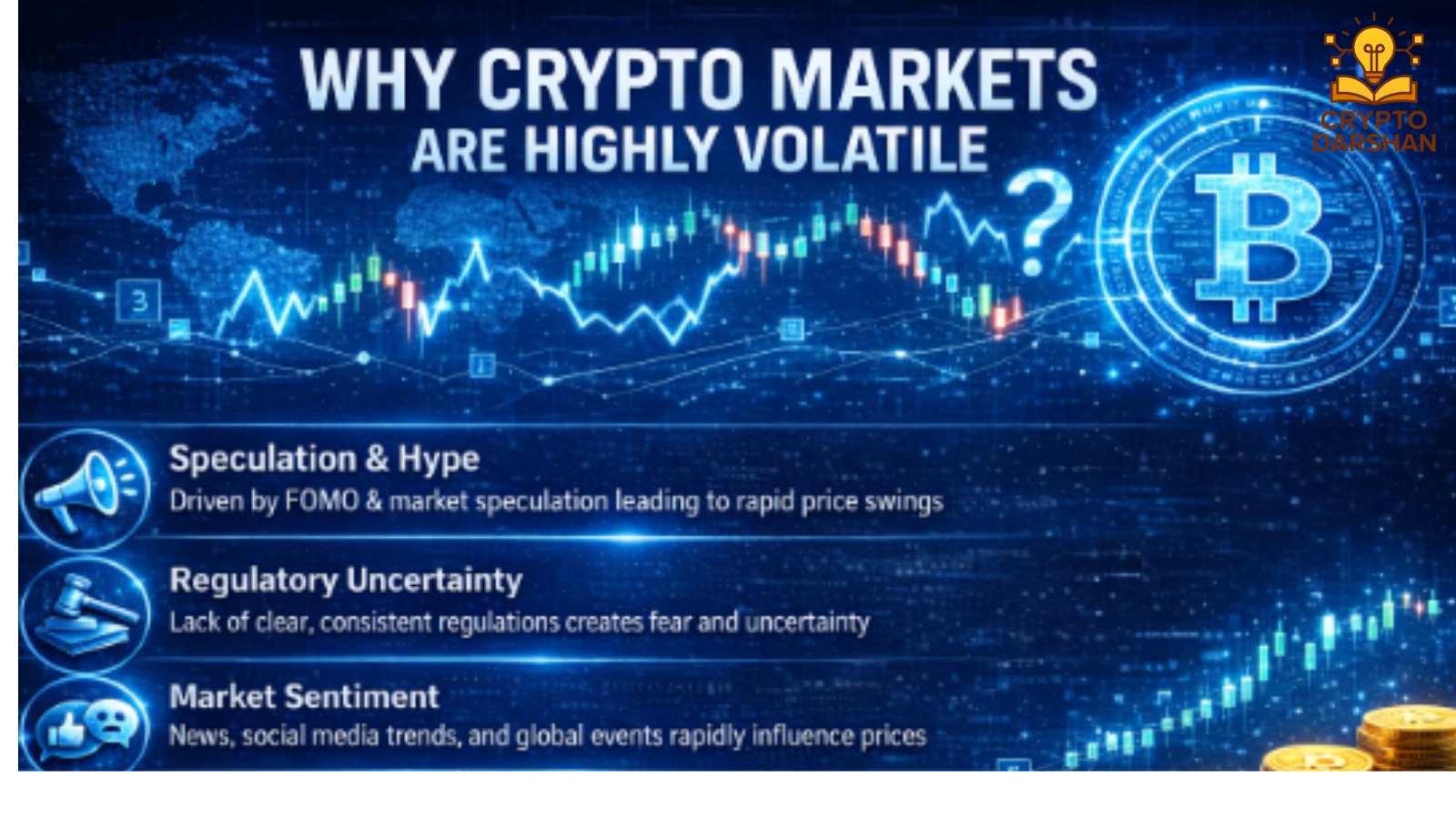
A significant portion of cryptocurrency trading is driven by speculation rather than fundamental value. Traders often buy and sell based on short-term price movements, news, or social media trends. This speculative behavior amplifies volatility because prices are influenced more by emotions and expectations than by intrinsic value.
2.3 Liquidity Constraints
Liquidity refers to how easily an asset can be bought or sold without affecting its price. Many cryptocurrencies have relatively low liquidity compared to traditional assets. When large buy or sell orders are placed, they can significantly impact prices. Low liquidity also makes it easier for market manipulation to occur, further increasing volatility.
3. Market Sentiment and Investor Psychology

3.1 Fear and Greed Cycles
Investor psychology plays a crucial role in cryptocurrency volatility. The market often swings between fear and greed. During bull markets, optimism and greed drive prices higher as investors rush to buy. In bear markets, fear and panic selling dominate, causing sharp declines. These emotional cycles create exaggerated price movements that contribute to volatility.
3.2 Influence of Social Media and News
Social media platforms such as X (formerly Twitter), Reddit, and Telegram have a powerful influence on crypto markets. A single tweet from a prominent figure or a viral post can trigger massive buying or selling activity. News about regulatory actions, exchange hacks, or technological upgrades can also cause sudden price swings. The speed at which information spreads online amplifies market reactions.
3.3 Herd Behavior
Herd behavior occurs when investors follow the actions of others rather than making independent decisions. In crypto markets, this phenomenon is common due to the lack of reliable valuation metrics. When prices rise, more investors jump in, fearing they might miss out on profits (FOMO). When prices fall, panic selling ensues as investors rush to exit. This collective behavior intensifies volatility.
4. Regulatory Uncertainty
4.1 Inconsistent Global Regulations
Cryptocurrency regulations vary widely across countries. Some nations embrace digital assets, while others impose strict restrictions or outright bans. This inconsistency creates uncertainty for investors and businesses. When a major country announces new regulations, the market often reacts sharply, either positively or negatively, depending on the perceived impact.
4.2 Fear of Government Crackdowns

The possibility of government crackdowns or restrictive policies can cause sudden market sell-offs. For example, announcements about potential bans on crypto trading or mining have historically led to steep price declines. Regulatory uncertainty discourages institutional participation and contributes to market instability.
4.3 Evolving Legal Frameworks
As governments and financial authorities continue to develop legal frameworks for cryptocurrencies, markets react to each new development. Positive regulatory news, such as the approval of Bitcoin ETFs or recognition of crypto as a legitimate asset class, can drive prices up. Conversely, negative developments can trigger panic selling.
5. Technological Factors

5.1 Rapid Innovation and Upgrades
The cryptocurrency industry evolves rapidly, with frequent technological upgrades, forks, and new project launches. While innovation drives growth, it also introduces uncertainty. Network upgrades or forks can lead to temporary disruptions, confusion, or disagreements within communities, affecting prices.
5.2 Security Vulnerabilities and Hacks
Security breaches, exchange hacks, and smart contract exploits can cause significant market turmoil. When investors lose funds due to security incidents, confidence in the market declines, leading to sell-offs. The decentralized nature of crypto makes it difficult to recover lost assets, further amplifying fear and volatility.
5.3 Scalability and Network Congestion
Network congestion and high transaction fees can negatively impact user experience and investor confidence. For example, when the Ethereum network becomes congested, transaction costs rise, discouraging users and traders. Such technical issues can lead to short-term price drops and increased volatility.
6. Market Manipulation

6.1 Whale Activity
Large holders of cryptocurrencies, known as “whales,” can significantly influence market prices. When whales buy or sell large amounts, they can trigger substantial price movements. Their actions often lead to cascading effects as smaller traders react to price changes.
6.2 Pump-and-Dump Schemes
Pump-and-dump schemes involve artificially inflating the price of a cryptocurrency through coordinated buying and hype, followed by mass selling to take profits. These schemes are common in low-cap altcoins and contribute to extreme short-term volatility.
6.3 Lack of Oversight
The decentralized and largely unregulated nature of crypto markets makes it easier for manipulation to occur. Without strict oversight, practices such as wash trading, spoofing, and insider trading can distort prices and create artificial volatility.
7. Macroeconomic and External Factors

7.1 Global Economic Conditions
Cryptocurrency markets are increasingly influenced by global economic trends. Inflation, interest rates, and monetary policies affect investor sentiment toward risk assets. During periods of economic uncertainty, investors may move away from volatile assets like crypto, leading to price declines.
7.2 Correlation with Traditional Markets
While cryptocurrencies were initially seen as uncorrelated assets, recent trends show increasing correlation with traditional markets, especially during global financial stress. When stock markets fall, crypto often follows, as investors seek to reduce risk exposure.
7.3 Geopolitical Events
Geopolitical tensions, wars, and trade disputes can impact crypto markets. For instance, during times of crisis, some investors view Bitcoin as a safe-haven asset, while others liquidate holdings to secure cash. These mixed reactions contribute to unpredictable price movements.
8. The Role of Institutional Investors

8.1 Entry of Institutional Players
The entry of institutional investors has brought more liquidity and legitimacy to crypto markets. However, their large-scale trades can also increase volatility. Institutional investors often use sophisticated trading strategies, including leverage and derivatives, which can amplify price swings.
8.2 Impact of Derivatives and Leverage
Crypto derivatives such as futures and options allow traders to speculate on price movements with leverage. While these instruments provide opportunities for profit, they also increase risk. Liquidations of leveraged positions can trigger rapid price declines, leading to cascading effects across exchanges.
8.3 Market Reactions to Institutional Decisions
Announcements from major financial institutions regarding crypto adoption or rejection can cause significant market reactions. For example, when a large company announces Bitcoin purchases, prices often surge. Conversely, when institutions reduce exposure, markets can experience sharp declines.
9. Media Influence and Public Perception

9.1 Mainstream Media Coverage
Media coverage plays a major role in shaping public perception of cryptocurrencies. Positive news stories about adoption, innovation, or price surges attract new investors, driving prices higher. Negative coverage about scams, hacks, or regulatory crackdowns can trigger fear and sell-offs.
9.2 Celebrity Endorsements and Influencers
Celebrity endorsements and influencer promotions can cause sudden spikes in demand for specific cryptocurrencies. However, these effects are often short-lived, leading to rapid price reversals once the hype fades.
9.3 Information Asymmetry
Many investors rely on incomplete or inaccurate information when making decisions. The lack of standardized reporting and transparency in the crypto industry contributes to misinformation, which can fuel volatility.
10. The Role of Exchanges
10.1 Exchange Outages and Technical Failures
Crypto exchanges occasionally experience outages during periods of high trading volume. When traders cannot execute orders, panic and frustration can lead to extreme price movements once trading resumes.
10.2 Differences Between Exchanges
Prices can vary across different exchanges due to differences in liquidity, trading volume, and user base. Arbitrage opportunities arise when traders exploit these price differences, contributing to short-term volatility.
10.3 Centralized vs. Decentralized Exchanges
Centralized exchanges (CEXs) and decentralized exchanges (DEXs) operate differently, affecting market dynamics. CEXs often have higher liquidity but are prone to regulatory scrutiny and security risks.
DEXs offer more freedom but can suffer from lower liquidity and higher slippage, both of which contribute to volatility.
11. The Impact of Emerging Trends

11.1 DeFi (Decentralized Finance)
DeFi platforms have introduced new financial instruments such as lending, staking, and yield farming. While these innovations expand the crypto ecosystem, they also introduce new risks. Smart contract vulnerabilities, liquidity crises, and governance issues can cause sudden market disruptions.
11.2 NFTs (Non-Fungible Tokens)
The NFT boom brought massive attention to blockchain technology but also contributed to speculative bubbles. Prices of digital collectibles can rise and fall dramatically, influencing broader market sentiment.
11.3 Stablecoins and Their Role
Stablecoins aim to reduce volatility by pegging their value to fiat currencies. However, concerns about their reserves and regulatory scrutiny can still cause instability. The collapse of algorithmic stablecoins, such as TerraUSD, demonstrated how interconnected the crypto ecosystem is and how one failure can trigger widespread volatility.
12. Strategies to Manage Volatility
12.1 Diversification
Diversifying across multiple cryptocurrencies and asset classes can help reduce exposure to volatility. A balanced portfolio mitigates the impact of sharp price movements in any single asset.
12.2 Long-Term Investment Approach
Adopting a long-term perspective helps investors avoid reacting to short-term fluctuations. Historically, major cryptocurrencies like Bitcoin have shown strong long-term growth despite short-term volatility.
12.3 Risk Management Tools

Using stop-loss orders, position sizing, and hedging strategies can help manage risk. Investors should also avoid excessive leverage, which can amplify losses during volatile periods.
12.4 Staying Informed
Monitoring market trends, regulatory developments, and technological updates enables investors to make informed decisions. Reliable information sources reduce the impact of rumors and misinformation.
13. The Future of Crypto Volatility

13.1 Increasing Institutional Adoption
As more institutional investors enter the market, liquidity and stability are likely to improve. Institutional participation brings professionalism, risk management, and long-term investment strategies that can reduce volatility.
Crypto markets are highly volatile, and prices can swing dramatically in a short time due to factors like low liquidity, speculative trading, and global news. To understand exactly why crypto prices fluctuate so rapidly and what drives these swings, check out our detailed guide on What drives cryptocurrency prices.
13.2 Regulatory Clarity
Clear and consistent regulations will enhance investor confidence and reduce uncertainty. As governments establish comprehensive frameworks, the market may experience fewer extreme reactions to policy changes.
13.3 Technological Advancements
Improvements in blockchain scalability, security, and interoperability will strengthen the crypto ecosystem. Enhanced infrastructure can reduce technical disruptions and improve market efficiency.
13.4 Integration with Traditional Finance
The growing integration of cryptocurrencies with traditional financial systems, such as ETFs and payment solutions, will likely contribute to greater stability. As crypto becomes more mainstream, speculative behavior may decrease, leading to reduced volatility.
14. Conclusion
Cryptocurrency markets are inherently volatile due to a combination of structural, psychological, regulatory, and technological factors. The decentralized nature of crypto, speculative trading behavior, limited liquidity, and regulatory uncertainty all contribute to sharp price fluctuations. While volatility presents risks, it also creates opportunities for traders and investors who understand the market dynamics.
As the industry matures, increased institutional participation, regulatory clarity, and technological innovation are expected to bring greater stability. However, volatility will likely remain a defining characteristic of cryptocurrencies for the foreseeable future. Understanding the causes of this volatility is essential for navigating the crypto landscape effectively and making informed investment decisions.