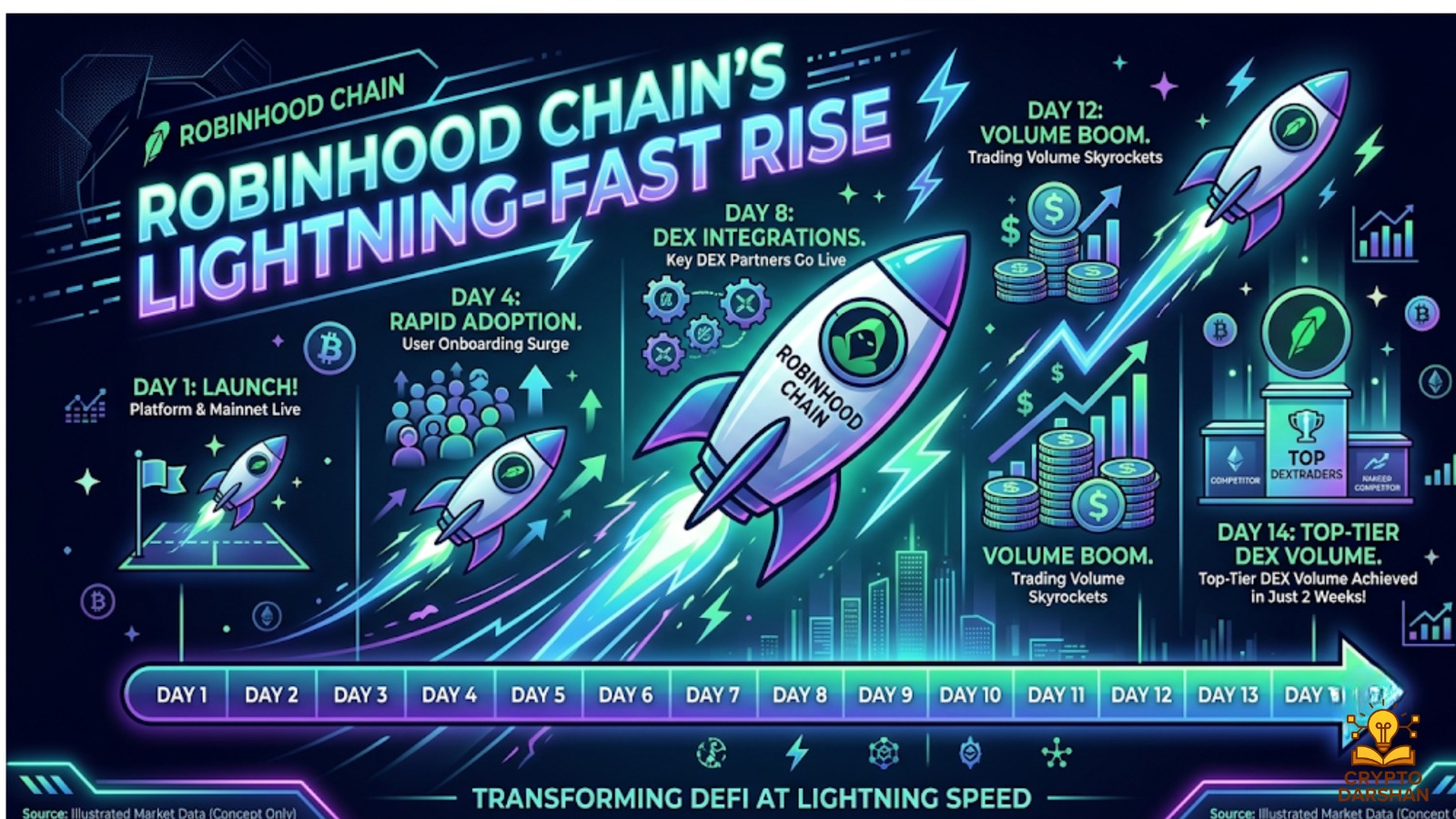
Robinhood Chain is Robinhood’s own blockchain network, designed to bring its massive brokerage user base directly into on-chain trading, DeFi, and tokenized assets. Within just two weeks of its mainnet launch, Robinhood Chain shot into the top tier of DEX volume globally, a feat that typically takes emerging chains months or even years to achieve.
Reports show that Robinhood Chain racked up around 4 billion dollars in cumulative DEX trading volume within its first two weeks. At its peak, 24-hour DEX volume on the network hit over 560 million dollars, representing roughly one-third of Solana’s DEX volume at the time, and pushing it into the ranks of the largest DeFi ecosystems by trading activity.news.
How Robinhood Chain Reached the Top Tier
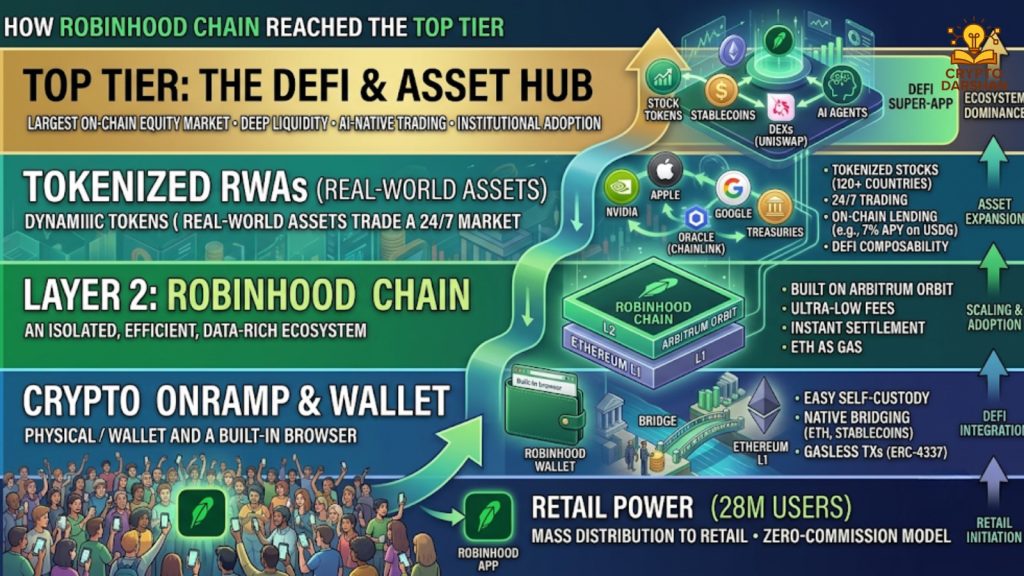
Robinhood Chain’s surge did not happen by accident; it was driven by a mix of incentives, user funnels, and narrative. The network benefited from Robinhood’s existing brand recognition in the United States, where millions of retail traders already use the platform for stocks and crypto.
Several factors helped accelerate DEX volume:
- Fee subsidies and incentives: Early activity on Robinhood Chain has been boosted by subsidized gas fees and trading incentives, making it cheap for users to swap tokens and provide liquidity.
- Fast and user-friendly experience: The chain emphasizes low-latency, low-cost transactions, making it appealing for active traders and memecoin speculators chasing fast-moving opportunities.
- Token-driven ecosystem growth: New tokens and memecoins launched on Robinhood Chain, including names like CASHCAT, attracted speculative flows and liquidity as traders hunted for high-volatility plays.
In combination, these elements created a feedback loop: more traders meant deeper liquidity, deeper liquidity meant tighter spreads and more volume, which in turn attracted even more traders.
Surpassing Ethereum in Daily DEX Volume
One of the standout milestones for Robinhood Chain was briefly surpassing Ethereum in daily DEX volume. In a 24-hour window, Robinhood Chain ranked behind only Solana and Binance Smart Chain (BSC), placing it third overall by DEX volume across all networks.
This is particularly notable because Ethereum has long been the default home for DeFi. Robinhood Chain’s ability to overtake Ethereum’s daily volume, even if temporarily, underscores how quickly trading flows can shift in a multichain environment when a new network offers aggressive incentives and a strong distribution channel.
However, it is important to understand that daily volume spikes do not automatically mean long-term dominance. Much of the early flow is likely driven by speculative trading, yield farming, and short-term campaigns, which may taper off once initial rewards decline.
TVL Growth and DeFi Adoption

Alongside DEX volume, Robinhood Chain has also seen rapid growth in total value locked (TVL), a core metric for DeFi engagement. Within weeks, the chain reportedly crossed the 400 million dollar TVL mark, reflecting liquidity locked in pools, lending protocols, and other on-chain applications.
TVL growth shows that users are not only trading but also parking capital in DeFi protocols on the network. This suggests early traction for Robinhood Chain’s broader ecosystem vision, which includes tokenized stocks, DeFi products, and other on-chain financial services built around Robinhood’s brand.
Robinhood vs. Coinbase: A New On-Chain Battle
Robinhood Chain’s launch and fast growth set up a direct on-chain showdown with Coinbase, which has been building its own crypto ecosystem with Coinbase Wallet, Base chain, and various DeFi integrations. Analysts note that Robinhood’s move into its own blockchain is part of a broader strategy to deepen user engagement and capture more of the crypto trading value chain.
By enabling users to trade directly on-chain and potentially integrate tokenized equities and other assets, Robinhood is positioning itself as more than just a brokerage front-end. This could pressure competitors like Coinbase, which has also been pushing deeper into DeFi and on-chain infrastructure with its Base network.
The competition will likely revolve around:
- Who can onboard more retail users into on-chain activity
- Which chain can host the most compelling DeFi and token ecosystems
- How regulators respond to brokerage-backed blockchains in the U.S. market
Analyst and Market Reactions

Traditional finance and crypto analysts have started to highlight Robinhood Chain as one of the standout blockchain success stories of 2026. Some banks, including major names like Morgan Stanley and Bank of America, have raised their price targets for Robinhood Markets, citing blockchain growth, AI trading expansion, and increased user monetization potential.
Research firm Bernstein described Robinhood Chain’s debut as “strong,” pointing to its quick ascent into the top five networks by DEX volume. They noted that the chain attracted billions in trading volume and significant user activity within days of launch, which is rare even in the fast-moving crypto space.
Risks and Sustainability Questions
Despite the impressive early metrics, there are valid questions about how sustainable Robinhood Chain’s DEX volume will be. Incentive-driven activity can fade once rewards are reduced, and trading volumes often normalize after the initial hype period on new chains.
Key risks include:
- Overreliance on speculative tokens and memecoins, which can see sharp boom-and-bust cycles
- Potential regulatory scrutiny given Robinhood’s U.S. footprint and the blending of brokerage services with DeFi
- Technical and security risks that any new chain faces, especially as TVL and user counts rise
For long-term success, Robinhood Chain will need to convert early traders into loyal users, attract serious DeFi builders, and maintain a compelling mix of products beyond short-term trading incentives.
What This Means for Crypto Users

For traders and DeFi users, Robinhood Chain’s rapid rise into the top DEX volume tier shows how quickly new opportunities can appear in the multichain ecosystem. The network offers another venue for trading, liquidity provision, and speculation, particularly for users already familiar with Robinhood’s brand and interface.
At the same time, users should stay aware of the usual risks around new chains: contract risk, liquidity risk, and the possibility that volumes fall as incentives change. As with any emerging blockchain, careful due diligence, risk management, and position sizing remain essential, even when the growth story looks as explosive as Robinhood Chain’s first two weeks.