

Ripple CEO Brad Garlinghouse has thrown his support behind artificial intelligence, describing it as a powerful growth accelerator as the payments and digital assets firm prepares for a record-breaking 2026. Speaking at the SALT Wyoming Blockchain Symposium on August 20, Garlinghouse revealed that Ripple is aggressively adopting AI across its operations while expecting annual revenue to more than double this year, despite ongoing market headwinds.
AI as a Growth Engine, Not a Job Killer
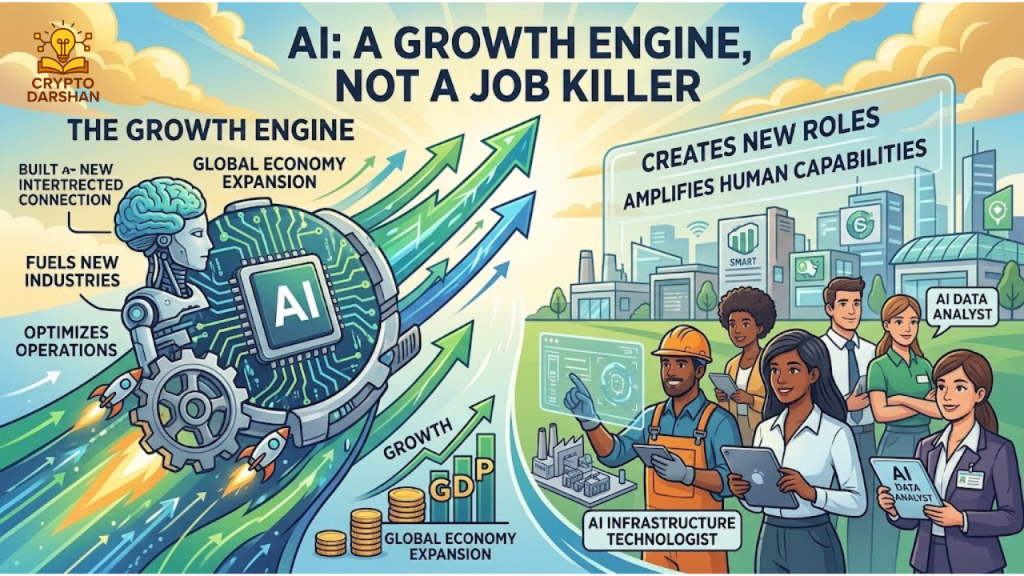
Garlinghouse positioned AI as an “enabler and an accelerant” for businesses that already have strong customer demand and growth opportunities. “AI, if you are in a business that has opportunity to grow and you’re serving customers and have compelling solutions, AI just lets you do that better and faster and stronger,” he said during the interview.
The Ripple CEO also pushed back against the narrative that AI is the primary driver of corporate layoffs. He suggested that some companies may be using AI as a convenient excuse to justify workforce reductions that were already necessary due to bloated operations. “When I see companies announce big layoffs and they say, ‘Oh, well, AI X, Y, and Z,’ that to me says, ‘Well, they were bloated before and they’re using this as an excuse,'” Garlinghouse stated.
In contrast, it is expanding its workforce. The company currently employs approximately 1,500 people globally and has around 150 open positions, with plans to continue hiring as revenue grows. Ripple’s public careers portal listed 94 available roles at the time of review, including engineering positions focused on AI-driven operations. One senior engineering role specifically calls for an “AI native operation” using agentic development methods to expand it’s payout network without relying solely on traditional headcount growth.
Revenue Doubling Amid Institutional Expansion
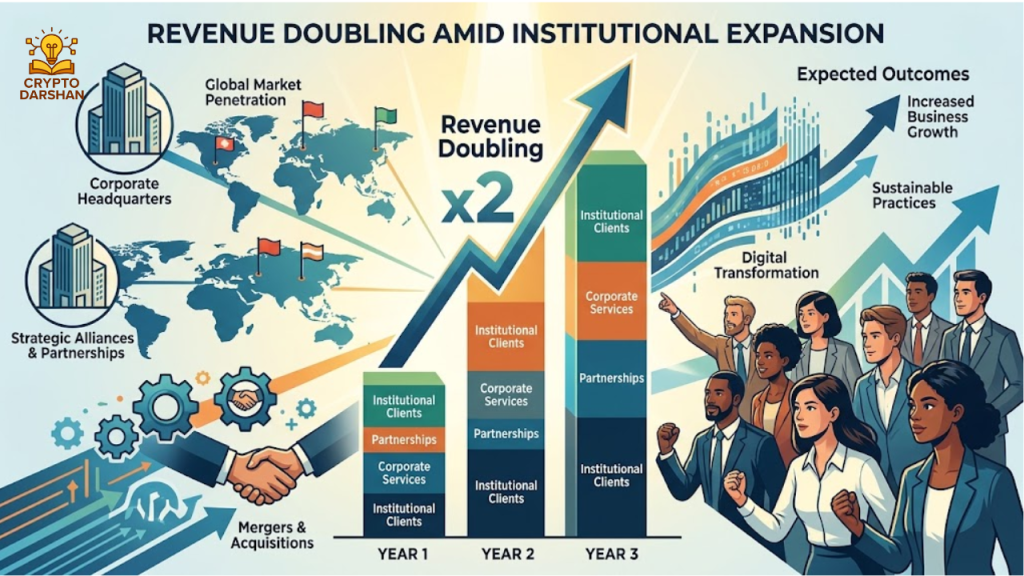
Garlinghouse’s bold revenue projection comes as Ripple continues to diversify beyond its original cross-border payments business. The company completed its $1.25 billion acquisition of Hidden Road in October 2025, rebranding it as Ripple Prime. This move expanded Ripple into global prime brokerage services covering both digital assets and traditional markets.
Ripple Prime now clears more than $3 trillion annually for over 300 institutional customers, according to the company. they previously stated that the prime brokerage business tripled in size between the acquisition announcement and its completion, though this figure has not been independently audited through public financial filings.
Beyond prime brokerage, Ripple has also moved into corporate treasury management. Following its acquisition of treasury software provider GTreasury, the company introduced an enterprise platform for managing digital assets and liquidity. These expansions support Garlinghouse’s claim that Ripple is on track for a record year with revenue more than doubling year over year.
AI Meets Financial Infrastructure
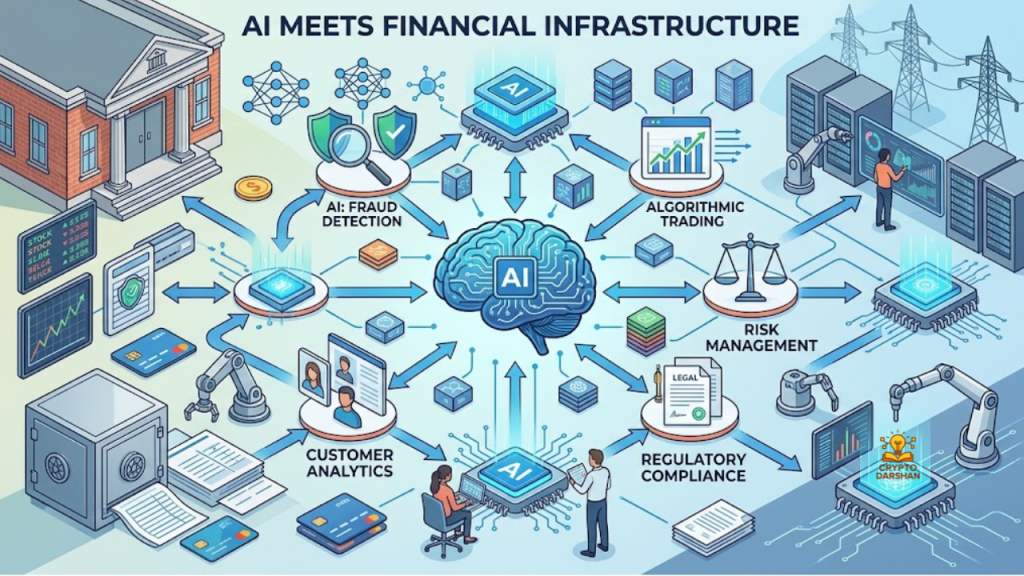
Garlinghouse connected Ripple’s AI strategy to its broader focus on institutional financial infrastructure. “More and more people are realizing that the infrastructure side, the institutional side is where it’s at,” he said, describing Ripple’s role as bridging traditional finance with decentralized financial infrastructure.
Ripple President Monica Long echoed this vision in the company’s 2026 predictions. She suggested that AI models could work alongside blockchains to automate critical financial processes such as liquidity management, margin calls, and portfolio rebalancing. The strategy does not mean plans to replace employees with autonomous systems. Instead, the company views AI as a tool to increase the output of existing teams while helping serve more customers and enter additional markets.
What This Means for XRP Holders
It’s important to note that Ripple’s commercial growth should not be automatically equated with growth for XRP, the digital asset. Ripple is a privately held company, while XRP is a separate digital asset. Many of their services can expand without creating direct demand for XRP, as the company offers payment, custody, stablecoin, prime brokerage, and treasury services to institutions.
The next measurable tests for Ripple will be its hiring activity and whether it reaches Garlinghouse’s ambitious revenue target. While an eventual initial public offering could provide independently audited financial information, the company has not announced a confirmed timetable for going public.
The Bigger Picture: AI in Crypto and Finance

Ripple’s embrace of AI reflects a broader trend in the cryptocurrency and financial services sectors. As blockchain infrastructure matures, companies are increasingly looking to AI to optimize operations, enhance security, and improve user experiences. From automated trading algorithms to fraud detection systems, AI is becoming an integral part of the financial technology landscape.
For Ripple, the combination of AI and institutional financial services positions the company to compete more effectively in a rapidly evolving market. Whether this strategy delivers the projected revenue growth remains to be seen, but Garlinghouse’s confidence suggests that it sees significant opportunities ahead.