
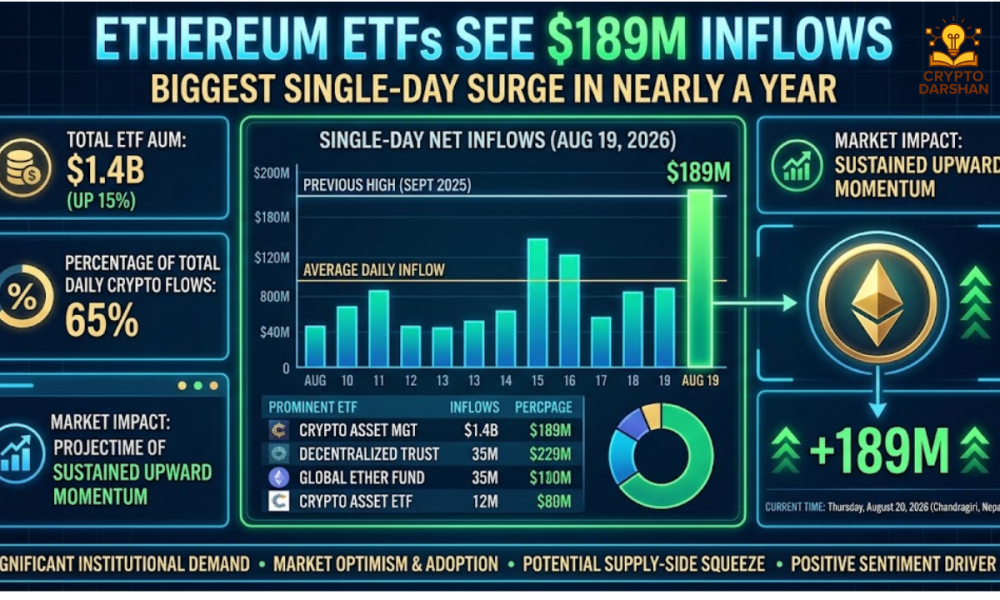
U.S. spot Ethereum exchange-traded funds (ETFs) recorded their strongest single-day performance in almost a year, pulling in roughly $189 million in net inflows on August 19, 2026. This marks a notable shift in investor sentiment, with institutional and retail capital rotating back into Ethereum-focused products after weeks of muted or negative flows.
What Happened on August 19?

On August 19 (U.S. Eastern Time), spot Ethereum ETFs saw total net inflows of about $189 million, the highest daily tally in roughly nine to ten months. BlackRock’s iShares Ethereum Trust (ETHA) led the charge with around $122 million in net inflows, followed by Fidelity’s Ethereum Fund (FETH) at about $36.5 million and Grayscale’s Mini ETH Trust with roughly $16 million.
These flows came amid a broader crypto market rally, with Ethereum itself surging double digits over 24 hours and Bitcoin also posting strong gains. The combination of price momentum and renewed ETF demand suggests growing confidence in Ethereum’s near-term outlook.
Why This Matters for Ethereum Investors
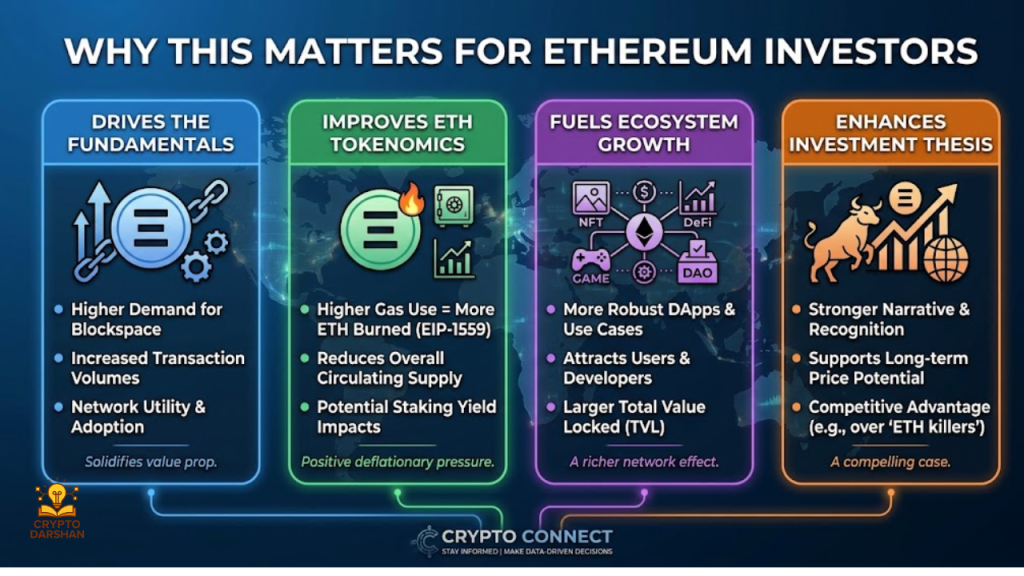
The $189 million inflow day is significant for several reasons:
- It breaks a long dry spell: Daily inflows into Ethereum ETFs had been modest or negative in recent weeks, with some days showing only single-digit millions or small outflows. A near-$200 million day signals a clear change in flow dynamics.
- Institutional participation is returning: Large-ticket products like BlackRock’s ETHA and Fidelity’s FETH are primarily used by institutional investors, financial advisors, and regulated portfolios. Heavy inflows into these funds indicate that bigger players are re-engaging with Ethereum exposure via ETFs rather than direct spot holdings.
- ETF assets under management (AUM) are growing: Reports show total net assets in U.S. spot Ethereum ETFs around $12 billion, with cumulative net inflows exceeding $11.7 billion since launch. Strong daily inflows help push that figure higher and reinforce Ethereum’s position as a core crypto asset in traditional finance.
Who’s Driving the Inflows?
The August 19 flow data highlights a familiar pattern: a few large issuers dominate Ethereum ETF activity.
- BlackRock (ETHA): With about $122 million in a single day, BlackRock’s fund remains the primary gateway for institutional Ethereum exposure. Its cumulative inflows now stand near $11.8 billion, underscoring its market leadership.
- Fidelity (FETH): Fidelity’s Ethereum fund added roughly $36.5 million, bringing its cumulative inflows to around $2.16 billion. Fidelity’s strong brand and distribution network make it a key player for both retail and institutional clients.
- Grayscale Mini ETH: The smaller Grayscale Mini ETH Trust saw about $16 million in inflows, showing continued demand for diversified Ethereum ETF options beyond the largest funds.
This concentration of flows in top-tier products reflects investor preference for deep liquidity, tight spreads, and established brand names when accessing Ethereum through regulated vehicles.
Context: Ethereum ETFs vs. Bitcoin ETFs in August 2026
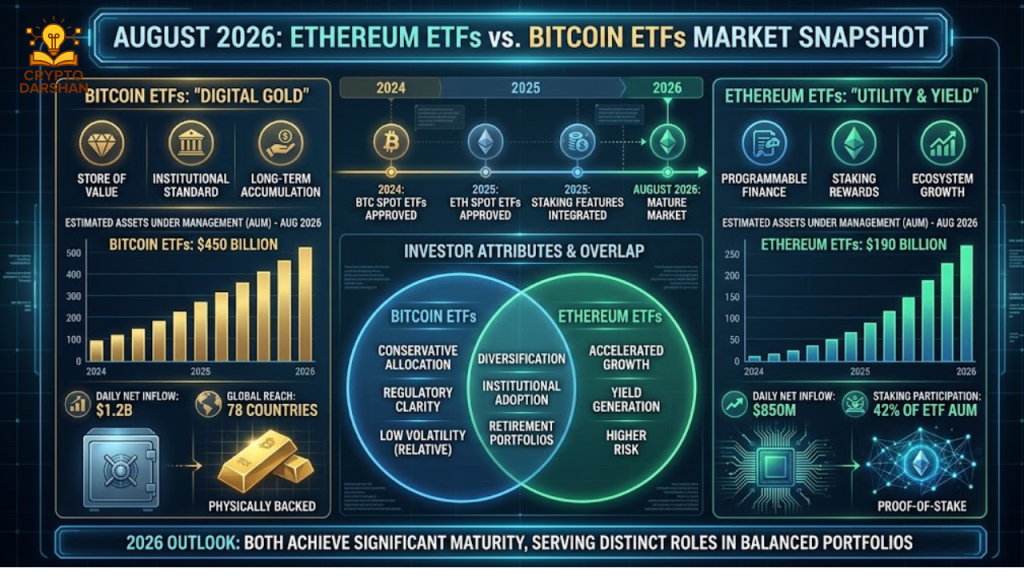
August 2026 has been a standout month for Ethereum ETFs relative to Bitcoin ETFs.
- Ethereum ETF monthly inflows: Around $3.87 billion in net inflows for the month, according to some trackers.
- Bitcoin ETF monthly flows: Roughly -$750 million in net outflows over the same period.
This marks one of the first times since U.S. spot crypto ETFs launched that Ethereum’s monthly ETF inflows have clearly outpaced Bitcoin’s. The August 19 surge is part of that broader rotation, with capital moving from Bitcoin-focused products into Ethereum-focused ones as traders price in potential upside from network upgrades, staking yields, and broader DeFi activity.
What Could Be Behind the Surge?
Several factors likely contributed to the strong inflow day:
- Price momentum: Ethereum’s sharp price increase over 24–48 hours often triggers follow-on buying, including via ETFs, as investors chase momentum with regulated products.
- Staking narrative: Growing attention to Ethereum staking yields and staking-enabled ETF structures has made ETH products more attractive to yield-seeking institutions.
- Macro and risk appetite: Improved risk sentiment in global markets, alongside positive crypto-specific news, can drive capital into high-beta assets like Ethereum, with ETFs serving as an easy on-ramp.
- Flow rotation from Bitcoin: Some capital appears to be rotating from Bitcoin ETFs, which saw outflows in parts of August, into Ethereum ETFs as investors reassess relative value and catalysts.
What This Means Going Forward

While one strong day doesn’t guarantee a sustained trend, the $189 million inflow session sets a constructive tone for Ethereum ETFs:
- Higher baseline for daily flows: If institutional interest remains elevated, average daily inflows could settle at a higher level than in previous months, supporting ETH price and market depth.
- More product innovation: Strong demand may encourage issuers to explore additional Ethereum ETF variations, including enhanced staking features, leveraged or hedged structures, and broader distribution.
- Increased mainstream visibility: Large inflow days attract media coverage and analyst attention, helping normalize Ethereum ETFs as part of standard portfolio allocation discussions.
For everyday investors, the key takeaway is simple: Ethereum ETFs are becoming a major channel for exposure to ETH, and days like August 19 show that institutional and regulated capital can move quickly when sentiment shifts.