

Raiffeisen Bank International (RBI) has joined forces with Austrian crypto infrastructure firm Bitpanda Enterprise to build a shared digital-asset framework for its Central and Eastern European (CEE) banking network. The move could eventually give up to 18 million banking customers access to crypto services through their existing bank apps, without needing separate crypto accounts or new platforms.
What the RBI–Bitpanda Deal Means
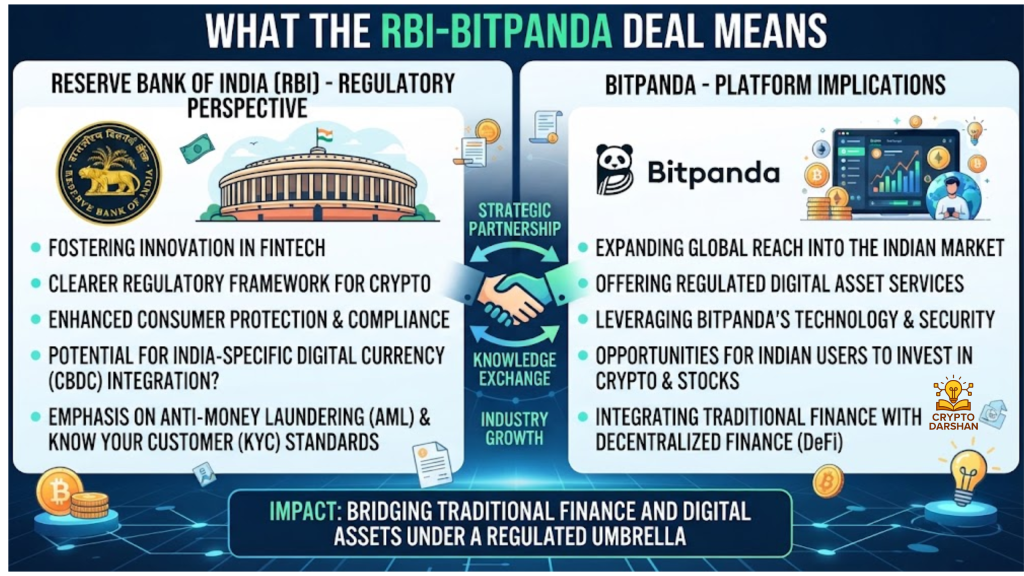
The partnership is designed to give RBI’s network banks a ready-made, regulated technology stack for digital assets. Bitpanda Enterprise will supply the core infrastructure—covering trading, custody, liquidity, payments, stablecoins, and tokenization—while each individual bank decides which products to launch and when, based on local demand and regulation.
In practice, this means:
- RBI provides the customer relationships and distribution across 11 CEE markets.
- Bitpanda runs the “engine room” in the background, handling the complex crypto plumbing.
- Customers stay inside their familiar banking app to buy, sell, and hold digital assets.
The arrangement does not mean crypto will switch on everywhere at once. Rollout will be gradual and market-by-market as each subsidiary bank aligns with its national rules and internal readiness.
Why This Matters for Traditional Banking and Crypto
This deal marks a shift from one-off integrations to a group-wide framework. Raiffeisen’s Austrian banks were early movers: Raiffeisenlandesbank Niederösterreich-Wien (RLB NÖ-Wien) became one of the first EU banks to offer crypto via its existing environment, powered by Bitpanda. Other Austrian Raiffeisen banks, such as Raiffeisen Landesbank Tirol, followed suit.
Now, that model is being scaled across RBI’s CEE footprint. For up to 18 million customers, digital assets can become part of an existing financial relationship—no extra app, no new password, and no need to onboard with a standalone crypto exchange.
For banks, the appeal is clear: they can enter the digital-asset market using a regulated, proven stack instead of building everything in-house. For crypto firms like Bitpanda, it validates the “infrastructure-as-a-service” playbook, where the real growth lies in powering institutions rather than only serving retail traders directly.
How the Framework Will Work in Practice
Under the agreement, Bitpanda Enterprise provides:
- Trading and execution connectivity for crypto assets.
- Custody solutions to securely hold digital assets on behalf of customers.
- Liquidity and market data so banks can offer competitive pricing.
- Support for stablecoins and tokenized assets as the product range expands.
Each RBI network bank then layers its own branding, compliance checks, and product choices on top. Some may start with a limited set of major coins like Bitcoin and Ethereum; others may add staking yields, recurring buys, or broader baskets of tokens over time, depending on local rules and risk appetite.
A Bitpanda spokesperson told Cointelegraph that the rollout is still at an early stage and will proceed gradually as individual markets confirm their plans. More details are expected as specific countries move from framework to live products.
RBI’s Reach and the Scale of Opportunity

RBI operates subsidiary banks across 11 Central and Eastern European markets, with around 42,000 employees and roughly 1,300 business outlets. Most of its customer base sits in CEE, giving the Bitpanda-powered framework significant potential reach compared with earlier single-bank pilots in Austria.
By creating a common setup, RBI avoids fragmented, country-by-country tech builds. Instead, participating banks can plug into a shared infrastructure layer and focus on local go-to-market, compliance, and customer education.
Bitpanda’s Push Into Institutional Infrastructure
The RBI deal fits Bitpanda’s broader strategy to grow its institutional business alongside its retail platform. Bitpanda Enterprise already works with multiple European banks and financial firms, providing white-label crypto infrastructure that integrates into existing products.
Recent examples include:
- Expanding work with BW-Bank as European lenders add digital-asset products.
- Supplying liquidity, trading connectivity, and market data to IG Europe for its crypto expansion.
- Deepening ties with Deutsche Bank, which has been providing IBANs and payment infrastructure and is preparing crypto custody services for Bitcoin and Ethereum.
Bitpanda reported €371 million in adjusted revenue for 2025, up 16% year over year, with a user base of 7.4 million. Alongside retail growth, the company has been scaling its white-label and enterprise offerings—exactly the type of business this RBI framework represents.
Regulatory Context in Europe
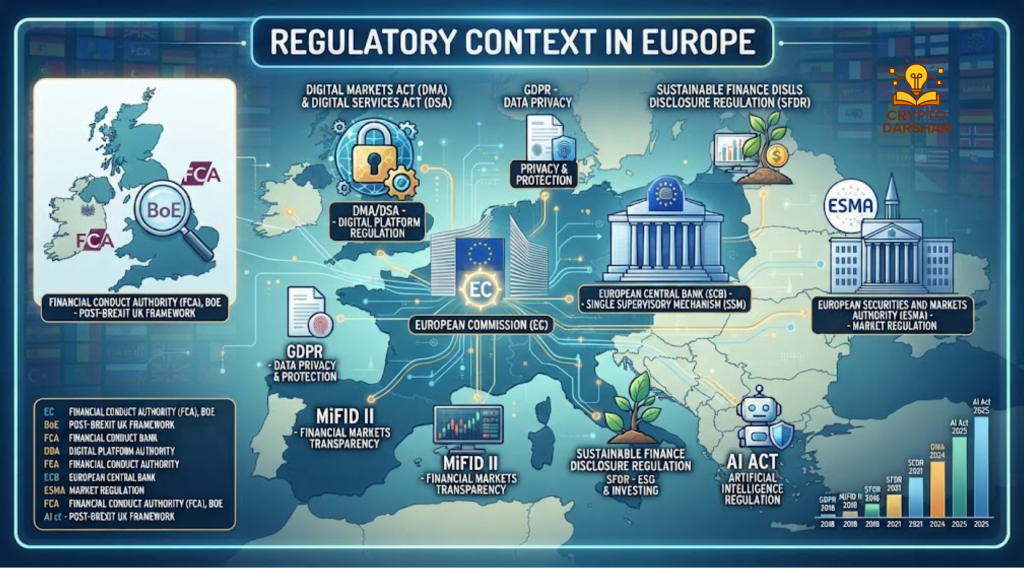
The partnership lands as traditional banks play a bigger role in the EU’s regulated crypto market under the Markets in Crypto-Assets Regulation (MiCA). By mid-September 2026, banks accounted for nearly 23% of entities on the European Securities and Markets Authority’s crypto provider register, with their numbers roughly doubling since late June.
MiCA gives credit institutions a separate route to offer certain crypto services after notifying their home regulator, while dedicated crypto firms must obtain full CASP authorization. Bitpanda operates under MiCA licenses in Europe and positions its regulated stack as a way for banks to enter the market without building trading and custody systems from scratch.
That said, regulation remains active and strict. In August 2026, Austria’s Financial Market Authority fined Bitpanda €70,000 for breaches related to crypto-asset white papers and marketing requirements—the regulator’s first published final penalty under MiCA. This underscores that even established players must keep compliance tight as they scale.
What Customers Can Expect Next
For now, the key message is “framework first, products later.” RBI and Bitpanda have built the rails; individual banks will decide which trains run on them and when. Customers in CEE should expect:
- Crypto access via their existing online or mobile banking interface.
- A phased rollout, starting with select markets and expanding as approvals and internal preparations allow.
- Product ranges tailored to local regulation, from basic buy/sell to potentially staking and tokenized assets over time.
As more RBI subsidiaries announce concrete plans, this partnership could become one of the largest bank-led crypto distribution networks in Central and Eastern Europe, bringing digital assets deeper into mainstream banking.