Polygon zkEVM is a groundbreaking technology designed to make Ethereum faster, cheaper, and more scalable without compromising security or decentralization. It combines the power of zero-knowledge proofs (ZK-proofs) with Ethereum Virtual Machine (EVM) compatibility, allowing developers to run existing Ethereum smart contracts seamlessly while benefiting from lower gas fees and higher throughput. As Ethereum continues to face scalability challenges, Polygon zkEVM emerges as one of the most promising solutions to bring mass adoption to decentralized applications (dApps).
Ethereum’s popularity has led to network congestion and high transaction costs. POL zkEVM addresses these issues by processing transactions off-chain and then verifying them on Ethereum using cryptographic proofs. This approach maintains Ethereum’s security while significantly improving performance. The result is a system that offers the same developer experience as Ethereum but with faster and cheaper transactions.
Understanding Ethereum’s Scalability Problem
Ethereum is the most widely used blockchain for smart contracts and decentralized applications. However, its base layer (Layer 1) can handle only about 15–30 transactions per second (TPS). As demand grows, this limited capacity leads to network congestion and high gas fees. For example, during periods of heavy usage, gas fees can spike to several dollars per transaction, making small transactions impractical.
The Ethereum community has long recognized the need for scalability solutions. Several approaches have been proposed, including sharding, sidechains, and Layer 2 scaling solutions. Among these, Layer 2 solutions have gained the most traction because they can scale Ethereum without changing its base layer. Polygon zkEVM is one of the most advanced Layer 2 solutions, offering both scalability and compatibility with existing Ethereum tools. Polygon zkEVM adoption could also play a major role in future POL price growth and network activity.
What Is Polygon zkEVM?
Polygon zkEVM stands for “Polygon Zero-Knowledge Ethereum Virtual Machine. Polygon zkEVM is an exciting new development in the world of Ethereum-compatible blockchains. It combines two powerful technologies, zero-knowledge proofs (aka zk-proofs) and Ethereum Virtual Machine (EVM), to create a highly scalable and secure blockchain solution.The “zk” in zkEVM refers to zero-knowledge proofs, a cryptographic method that allows one party to prove the validity of information without revealing the information itself.
In simple terms, Polygon zkEVM batches multiple transactions off-chain, generates a cryptographic proof that these transactions are valid, and then submits that proof to Ethereum. The Ethereum network verifies the proof, confirming all the transactions at once. This process drastically reduces the amount of data that needs to be processed on-chain, resulting in faster and cheaper transactions.
Polygon zkEVM is fully compatible with the Ethereum Virtual Machine, meaning developers can deploy existing Ethereum smart contracts without modification. This compatibility ensures that tools like MetaMask, Remix, and Truffle work seamlessly with zkEVM, making it easy for developers to migrate their projects.
How Polygon zkEVM Works
Polygon zkEVM operates as a Layer 2 network that sits on top of Ethereum. It processes transactions off-chain and periodically submits proofs to Ethereum for verification. The process can be broken down into several key steps:
- Transaction Aggregation: Users send transactions to the Polygon zkEVM network. These transactions are grouped into batches by the sequencer.
- Proof Generation: The zkEVM generates a zero-knowledge proof that verifies the correctness of all transactions in the batch.
- Proof Submission: The proof is submitted to Ethereum’s mainnet, where it is verified by a smart contract.
- State Update: Once the proof is verified, the state of the Polygon zkEVM network is updated on Ethereum, finalizing all transactions in the batch.
This approach allows Polygon zkEVM to achieve high throughput while maintaining Ethereum’s security guarantees. Because only the proof is submitted to Ethereum, the amount of data stored on-chain is minimal, reducing gas costs significantly.
The Role of Zero-Knowledge Proofs

Zero-knowledge proofs are the core technology behind Polygon zkEVM. They allow one party (the prover) to demonstrate to another party (the verifier) that a statement is true without revealing any additional information. In the context of zkEVM, zero-knowledge proofs are used to verify that all transactions in a batch are valid without revealing the details of each transaction.
There are two main types of zero-knowledge proofs: zk-SNARKs and zk-STARKs. Polygon zkEVM uses zk-SNARKs (Zero-Knowledge Succinct Non-Interactive Arguments of Knowledge) because they are efficient and require minimal computational resources to verify. zk-SNARKs enable Polygon to generate compact proofs that can be verified quickly on Ethereum, ensuring scalability and cost efficiency.
Benefits of Polygon zkEVM

Polygon zkEVM offers several key benefits that make it a powerful solution for scaling Ethereum:
1. Faster Transactions
By processing transactions off-chain, zkEVM can handle thousands of transactions per second. This high throughput ensures that users experience near-instant transaction confirmations, making it ideal for applications like gaming, decentralized finance (DeFi), and NFTs.
2. Lower Gas Fees
Because only proofs are submitted to Ethereum, the amount of data stored on-chain is significantly reduced. This leads to much lower gas fees compared to executing transactions directly on Ethereum. Users can enjoy the same security as Ethereum at a fraction of the cost.
3. Ethereum Compatibility
Polygon zkEVM is fully compatible with the Ethereum Virtual Machine. Developers can deploy existing Ethereum smart contracts without modification, and users can interact with dApps using familiar tools like MetaMask. This compatibility ensures a smooth transition for projects migrating from Ethereum to Polygon.
4. Enhanced Security
Polygon zkEVM inherits Ethereum’s security model. All proofs are verified on Ethereum’s mainnet, ensuring that the Layer 2 network remains secure and tamper-proof. This makes Polygon zkEVM one of the most secure scaling solutions available.
5. Decentralization
Unlike some Layer 2 solutions that rely on centralized operators, zkEVM is designed to be fully decentralized. Validators and sequencers operate in a trustless environment, ensuring that no single entity can control the network.
Polygon zkEVM vs. Other Scaling Solutions
Several Layer 2 scaling solutions exist for Ethereum, including Optimistic Rollups, sidechains, and other zk-rollups. Each has its strengths and weaknesses. Polygon zkEVM stands out for its combination of scalability, security, and compatibility.
| Feature | Polygon zkEVM | Optimistic Rollups | Sidechains |
| Proof Type | Zero-Knowledge Proofs | Fraud Proofs | Independent Consensus |
| Finality Time | Minutes | Up to 7 Days | Instant |
| Security | Inherits Ethereum Security | Inherits Ethereum Security | Independent |
| EVM Compatibility | Full | Partial | Varies |
| Gas Fees | Very Low | Low | Low |
| Decentralization | High | High | Varies |
Optimistic Rollups rely on fraud proofs, which require a challenge period before transactions are finalized. This can delay withdrawals for up to a week. Polygon zkEVM, on the other hand, uses zero-knowledge proofs that provide instant finality once verified on Ethereum. Sidechains operate independently of Ethereum, which can compromise security. zkEVM maintains Ethereum-level security while offering superior performance.
Use Cases of Polygon zkEVM
Polygon zkEVM opens up a wide range of possibilities for developers and users. Some of the most promising use cases include:
1. Decentralized Finance (DeFi)
DeFi applications require fast and affordable transactions to function efficiently. Polygon zkEVM enables DeFi platforms to offer low-cost trading, lending, and yield farming while maintaining Ethereum’s security. Projects like Aave, Uniswap, and Curve can benefit from deploying on Polygon
2. Non-Fungible Tokens (NFTs)
NFT marketplaces often suffer from high gas fees on Ethereum. Polygon zkEVM allows creators and collectors to mint, buy, and sell NFTs at a fraction of the cost. This makes NFTs more accessible to a broader audience.
3. Gaming
Blockchain-based games require high transaction throughput to handle in-game actions and asset transfers. POL zkEVM provides the speed and scalability needed for seamless gaming experiences without compromising decentralization.
4. Enterprise Applications
Enterprises can use Polygon zkEVM to build scalable blockchain solutions for supply chain management, identity verification, and data sharing. The low transaction costs and high security make it suitable for enterprise-grade applications.
5. Payments
POL zkEVM can facilitate instant and low-cost payments across borders. Businesses and individuals can use it for micropayments, remittances, and e-commerce transactions without worrying about high fees.
Polygon zkEVM Architecture
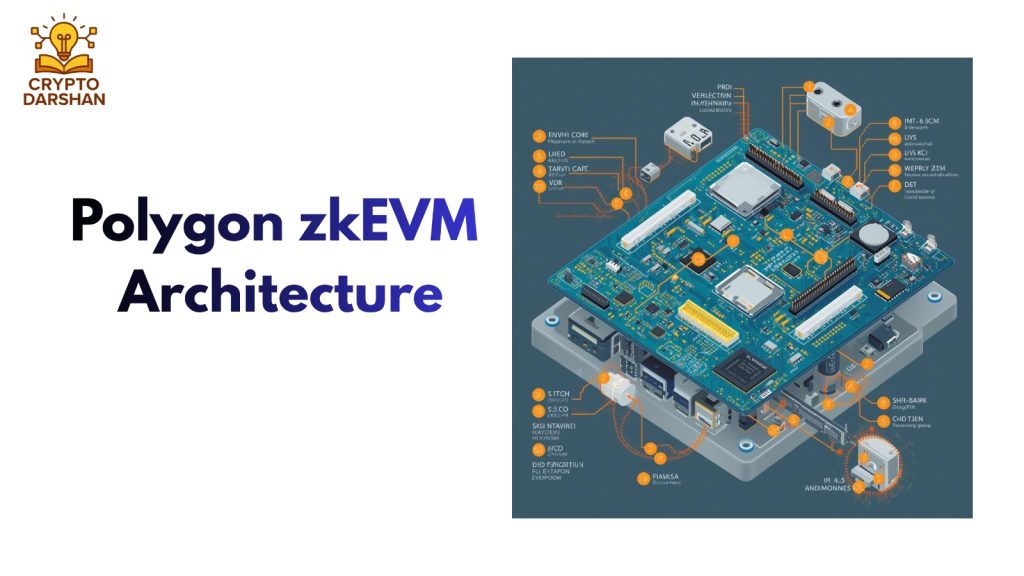
The architecture of POL zkEVM consists of several key components that work together to ensure scalability, security, and compatibility:
- Sequencer: Collects and orders transactions before batching them for proof generation.
- Prover: Generates zero-knowledge proofs for each batch of transactions.
- Verifier: A smart contract on Ethereum that verifies the proofs submitted by the prover.
- Bridge: Allows users to transfer assets between Ethereum and Polygon zkEVM seamlessly.
- Data Availability Layer: Ensures that all transaction data is accessible for verification and auditing.
This modular architecture allows Polygon zkEVM to maintain high performance while ensuring that all transactions remain verifiable and secure.
Polygon zkEVM and Ethereum 2.0
Ethereum 2.0 (also known as the Consensus Layer) aims to improve Ethereum’s scalability and energy efficiency through proof-of-stake and sharding. However, even with these upgrades, Layer 2 solutions like Polygon zkEVM will remain essential. Ethereum 2.0 increases the base layer’s capacity, but Layer 2 solutions multiply that capacity by processing transactions off-chain.
POL zkEVM complements Ethereum 2.0 by providing an additional layer of scalability. Together, they can handle millions of transactions per second, paving the way for mass adoption of decentralized applications.
Developer Experience on Polygon zkEVM
One of the biggest advantages of Polygon zkEVM is its developer-friendly environment. Because it is fully compatible with the Ethereum Virtual Machine, developers can use the same programming languages, tools, and frameworks they already know. Solidity smart contracts can be deployed it.
Developers can also use popular tools like Hardhat, Truffle, and Remix to build and test their applications. The integration with MetaMask and other Ethereum wallets ensures a seamless user experience. This compatibility lowers the barrier to entry for developers and accelerates the adoption of Polygon zkEVM.
Security Model of Polygon zkEVM
Security is a top priority for Polygon zkEVM. The system inherits Ethereum’s security by verifying all proofs on the Ethereum mainnet. This means that even if the Layer 2 network is compromised, the integrity of the system remains intact because Ethereum acts as the ultimate source of truth.
The use of zero-knowledge proofs ensures that all transactions are valid and that no malicious activity can occur without detection. Additionally, POL zkEVM employs cryptographic techniques to prevent double-spending and ensure data integrity.
Polygon zkEVM Ecosystem
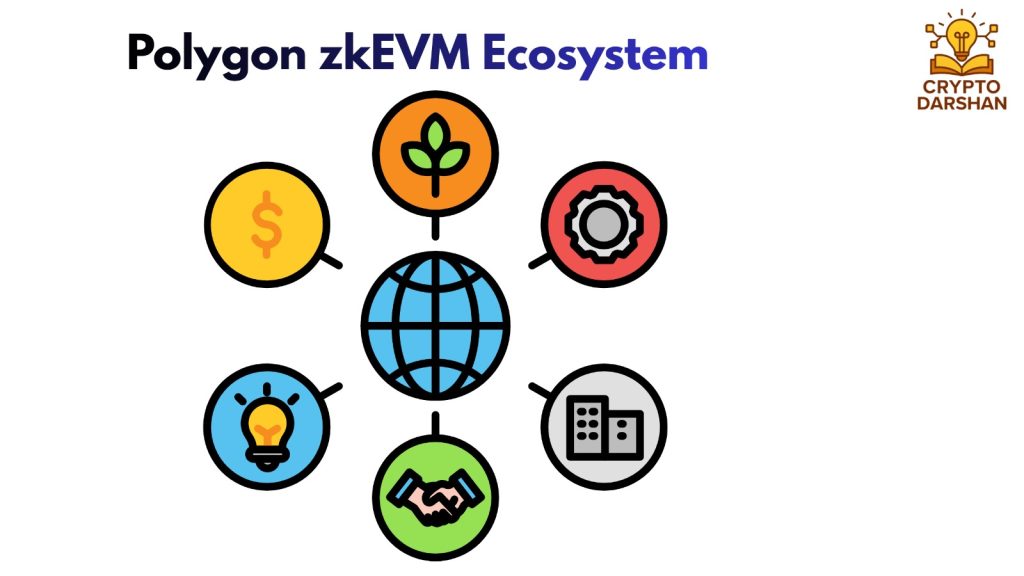
The Polygon zkEVM ecosystem is rapidly expanding, with numerous projects and partners joining the network. Major DeFi platforms, NFT marketplaces, and gaming projects are already exploring integration with Polygon. The ecosystem includes:
- DeFi Protocols: Aave, Curve, and SushiSwap are exploring deployment on zkEVM.
- NFT Platforms: OpenSea and Rarible are considering zkEVM integration for cheaper NFT transactions.
- Gaming Projects: Blockchain games like Decentraland and The Sandbox can benefit from zkEVM’s scalability.
- Infrastructure Providers: Oracles, wallets, and analytics platforms are building support for Polygon zkEVM.
This growing ecosystem ensures that users and developers have access to a wide range of tools and services.
Challenges and Limitations

While Polygon zkEVM offers many advantages, it also faces some challenges:
- Complexity of Zero-Knowledge Proofs: Generating zk-proofs requires significant computational resources, which can be expensive.
- Hardware Requirements: Running a prover node may require specialized hardware.
- Ecosystem Maturity: As a relatively new technology, Polygon zkEVM is still evolving, and some tools may not yet be fully optimized.
Despite these challenges, ongoing research and development are expected to address these limitations over time.
Comparison with Polygon PoS
Polygon PoS (Proof of Stake) is another popular scaling solution from Polygon. While both aim to scale Ethereum, they use different approaches.
| Feature | Polygon zkEVM | Polygon PoS |
| Technology | Zero-Knowledge Proofs | Sidechain with PoS Validators |
| Security | Ethereum-Level | Independent |
| EVM Compatibility | Full | Full |
| Transaction Speed | Very High | High |
| Gas Fees | Very Low | Low |
| Finality | Instant | Near-Instant |
Polygon zkEVM offers stronger security because it relies on Ethereum for verification, while Polygon PoS operates as a separate sidechain. However, both solutions complement each other within the Polygon ecosystem.
How to Use Polygon zkEVM

Using Polygon zkEVM is straightforward for both developers and users:
- Bridge Assets: Transfer tokens from Ethereum to zkEVM using the official bridge.
- Connect Wallet: Use MetaMask or another Ethereum-compatible wallet to connect to the zkEVM network.
- Interact with dApps: Access decentralized applications deployed on Polygon just like on Ethereum.
- Withdraw Funds: When needed, withdraw assets back to Ethereum through the bridge.
This simple process ensures a smooth user experience while benefiting from faster and cheaper transactions.
Polygon zkEVM and Web3 Adoption
Polygon zkEVM plays a crucial role in advancing Web3 adoption. By making Ethereum more accessible and affordable, it enables millions of users to participate in decentralized applications. Developers can build scalable dApps that reach a global audience without worrying about high gas fees or slow transaction times.
As Web3 continues to grow, PzkEVM will serve as a key infrastructure layer, supporting everything from decentralized finance to social media and gaming.
Environmental Impact
POL zkEVM is environmentally friendly because it reduces the computational load on Ethereum. Batching transactions and verifying them with zero-knowledge proofs minimize energy consumption. Combined with Ethereum’s transition to proof-of-stake, zkEVM contributes to a more sustainable blockchain ecosystem.
Community and Governance

The Polygon community plays an active role in the development and governance of POL zkEVM. Through decentralized governance mechanisms, token holders can propose and vote on upgrades, ensuring that the network evolves transparently and democratically.
Community initiatives, hackathons, and developer grants encourage innovation and collaboration within the zkEVM ecosystem.
The Future of Polygon zkEVM

Polygon zkEVM represents a major milestone in the evolution of Ethereum scaling. As adoption grows, it is expected to become a cornerstone of the Ethereum ecosystem. The technology will enable new types of applications that were previously impossible due to high gas fees and slow transaction speeds.
In the future, Polygon could play a key role in enabling Web3 applications, decentralized social networks, and large-scale enterprise solutions. Its combination of scalability, security, and compatibility makes it one of the most promising technologies in the blockchain space.
FAQ: Polygon zkEVM Explained: Faster, Cheaper Ethereum
1. What is Polygon zkEVM?
Polygon zkEVM is a Layer 2 scaling solution for Ethereum that uses zero-knowledge proofs to process transactions faster and at lower cost while keeping Ethereum-level security.
2. How does Polygon zkEVM make Ethereum cheaper?
It batches many transactions together off-chain and submits a compressed proof to Ethereum. This reduces congestion and lowers gas fees for users.
3. What does “zkEVM” mean?
“zk” stands for zero-knowledge proofs, while “EVM” refers to the Ethereum Virtual Machine. Together, zkEVM means a scaling system that is compatible with Ethereum smart contracts while using zero-knowledge technology for validation.
4. Is Polygon zkEVM compatible with Ethereum apps?
Yes. Most Ethereum smart contracts, wallets, and developer tools can run on Polygon zkEVM with little or no modification.
5. Is Polygon zkEVM a true Layer 2?
Yes. Unlike the older Polygon PoS sidechain, Polygon zkEVM is considered a true Ethereum Layer 2 rollup because transaction validity is verified on Ethereum using cryptographic proofs.
6. What are zero-knowledge proofs in Polygon zkEVM?
Zero-knowledge proofs are cryptographic proofs that confirm transactions are valid without revealing all transaction details. They help improve scalability while maintaining security.
7. Why is Polygon zkEVM faster than Ethereum?
Transactions are processed in batches off-chain instead of directly on Ethereum mainnet. This increases throughput and reduces waiting times.
Conclusion
Polygon zkEVM is a revolutionary technology that brings Ethereum scalability to the next level. By combining zero-knowledge proofs with full EVM compatibility, it delivers faster, cheaper, and more secure transactions without sacrificing decentralization. Developers can deploy existing Ethereum smart contracts seamlessly, and users can enjoy a smooth, low-cost experience.
As the blockchain industry moves toward mass adoption, POL zkEVM stands out as a key enabler of the next generation of decentralized applications. Its ability to scale Ethereum while maintaining its core principles makes it one of the most important innovations in the Web3 space.
Polygon zkEVM is not just a scaling solution, it is the foundation for a faster, cheaper, and more inclusive Ethereum ecosystem.