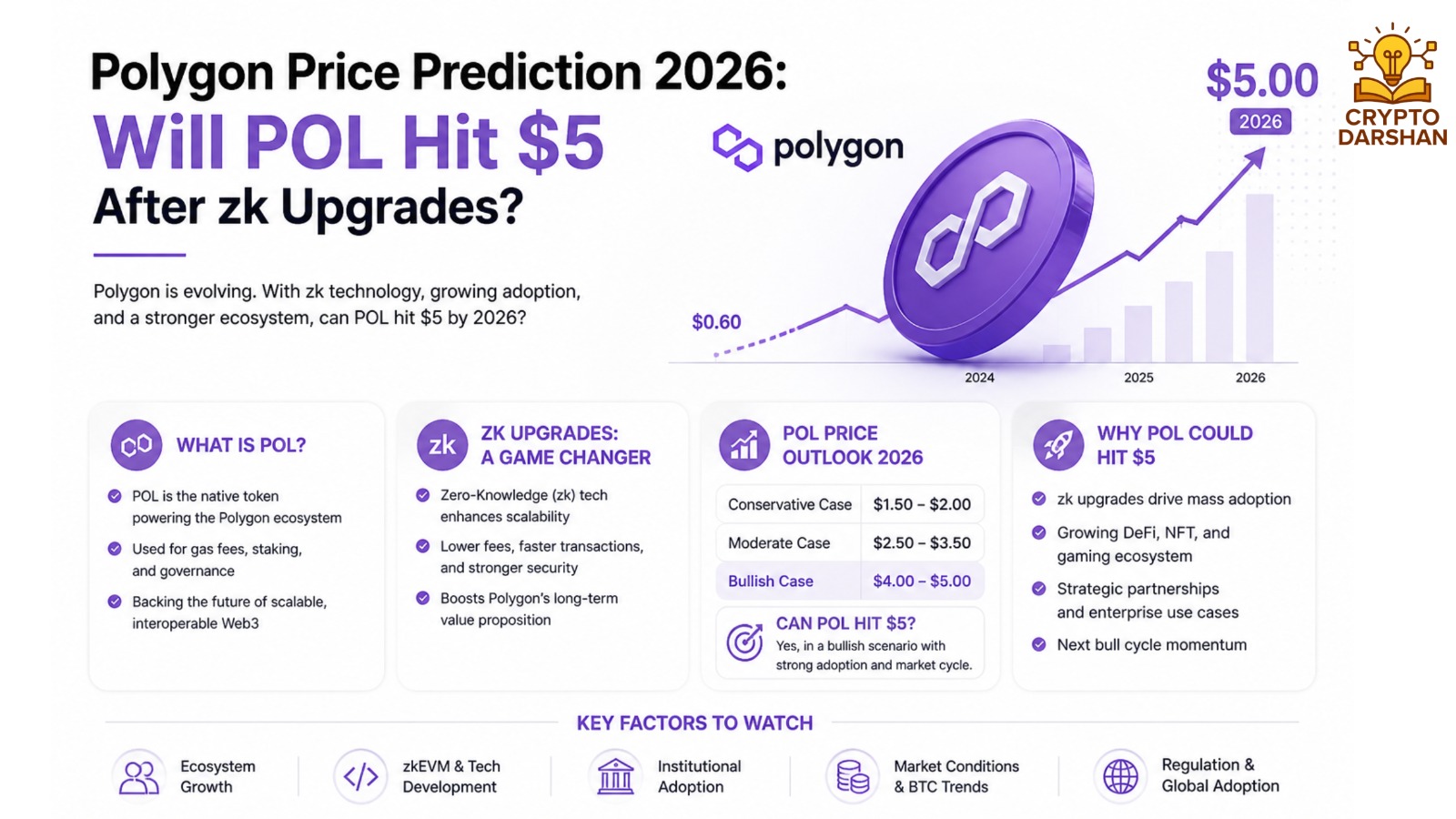
Polygon, formerly known as Matic Network, has become one of the most influential blockchain scaling solutions in the crypto ecosystem. It was designed to solve Ethereum’s scalability issues by providing faster and cheaper transactions while maintaining compatibility with the Ethereum Virtual Machine (EVM). Over the years, Polygon has evolved from a simple sidechain solution into a comprehensive multi-chain ecosystem supporting various scaling technologies, including zk-rollups, optimistic rollups, and sidechains.
The rebranding from MATIC to POL represents a major step in Polygon’s long-term vision. POL is not just a new token; it is the foundation of Polygon 2.0 , a network of interconnected Layer 2 chains powered by zero-knowledge (zk) technology. As the crypto market matures, investors are increasingly interested in understanding how these technological upgrades will affect the token’s value. This article provides a detailed Polygon Price Prediction for 2026, analyzing market trends, technical developments, and macroeconomic factors that could influence whether POL reaches the $5 mark.
Understanding Polygon’s Role in the Blockchain Ecosystem
Polygon (POL) is a cryptocurrency and a Layer 2 scaling platform for the Ethereum network. Its main goal is to connect and expand Ethereum-compatible blockchains while improving their speed, scalability, and security. . Ethereum’s popularity has led to network congestion and high gas fees, making scalability a critical issue. Polygon addresses this by processing transactions off-chain and then settling them on Ethereum, ensuring both speed and security.
The network supports multiple scaling solutions, including:
- Polygon PoS (Proof-of-Stake): The original sidechain that offers fast and low-cost transactions.
- Polygon zkEVM: A zero-knowledge rollup that provides Ethereum-equivalent functionality with enhanced scalability.
- Polygon Miden and Polygon Nightfall: Advanced zk-based solutions for privacy and enterprise use cases.
These innovations have positioned Polygon as a key player in the Web3 ecosystem. Its partnerships with major brands like Starbucks, Nike, and Reddit demonstrate real-world adoption, which plays a crucial role in shaping any Polygon Price Prediction.
The Transition from MATIC to POL

The transition from MATIC to POL is one of the most significant developments in Polygon’s history. POL is designed to be a next-generation token that powers the entire Polygon 2.0 ecosystem. It will replace MATIC as the primary staking and governance token, enabling holders to participate in securing multiple chains within the network.
Key Features of POL
- Multi-Chain Staking: POL holders can stake across multiple Polygon chains simultaneously, earning rewards from various sources.
- Enhanced Governance: POL introduces a more decentralized governance model, allowing the community to influence protocol upgrades and treasury management.
- Sustainability: The new tokenomics are designed to ensure long-term sustainability, with reduced inflation and better reward distribution.
The introduction of POL and the zkEVM upgrades are expected to strengthen Polygon’s market position, which directly impacts Polygon Price Prediction models for 2026 and beyond.
The Impact of zk Upgrades on Polygon’s Future
Zero-knowledge (zk) technology is one of the most promising innovations in blockchain scalability. It allows transactions to be verified without revealing sensitive information, improving both privacy and efficiency. Polygon’s zkEVM is a groundbreaking implementation that combines Ethereum compatibility with zk-rollup scalability.
Benefits of zk Upgrades
- Scalability: zk-rollups can process thousands of transactions per second, significantly reducing congestion.
- Security: Transactions are verified on Ethereum, ensuring the same level of security as the main chain.
- Cost Efficiency: zk technology reduces gas fees, making blockchain applications more affordable for users.
- Interoperability: zkEVM maintains full compatibility with Ethereum smart contracts, allowing developers to migrate easily.
These upgrades are expected to attract more developers and enterprises to the Polygon ecosystem, increasing demand for POL tokens. As adoption grows, the Polygon Price Prediction for 2026 becomes increasingly optimistic.
Historical Price Performance of Polygon (MATIC)
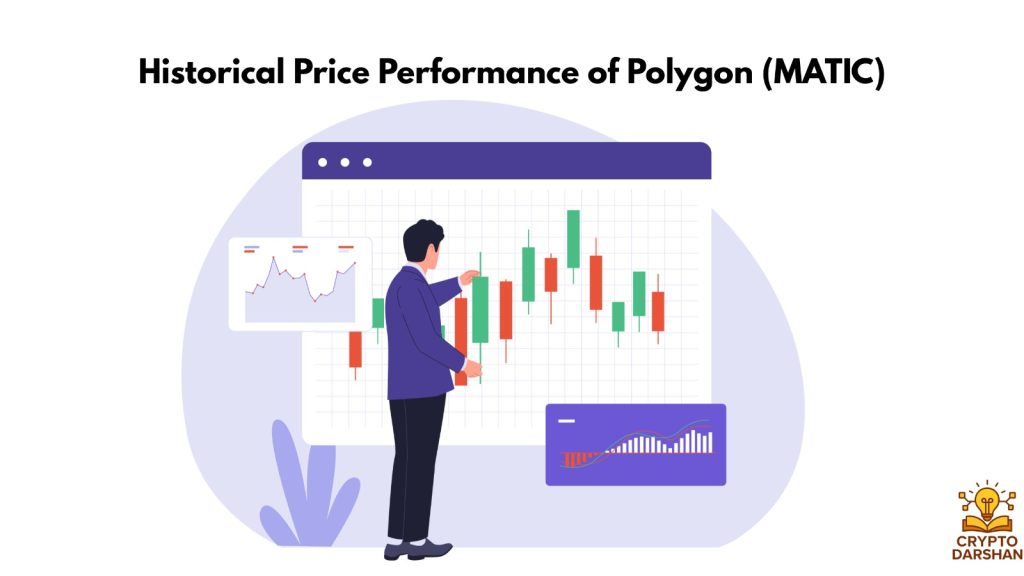
Before analyzing future projections, it’s essential to review Polygon’s historical performance. MATIC was launched in 2019 at a price of around $0.0026. It remained relatively stable until early 2021, when the DeFi boom and Ethereum congestion drove massive demand for Layer 2 solutions.
Key Milestones
- 2021 Bull Run: MATIC surged from under $0.05 to over $2.50, delivering exponential returns.
- 2022 Bear Market: The token declined along with the broader crypto market, stabilizing around $0.80–$1.00.
- 2023–2024 Recovery: Polygon’s partnerships and zkEVM launch helped restore investor confidence, pushing prices back above $1.20.
This historical resilience suggests that Polygon has strong fundamentals, which supports a positive Polygon Price Prediction for 2026.
Market Factors Influencing Polygon Price Prediction
Several macroeconomic and industry-specific factors influence the Polygon Price Prediction for 2026. Understanding these variables helps investors make informed decisions.
1. Ethereum’s Growth and Layer 2 Demand
Polygon’s success is closely tied to Ethereum’s ecosystem. As Ethereum continues to dominate decentralized applications (dApps), demand for Layer 2 solutions like Polygon will increase. The more activity on Ethereum, the greater the need for scalable alternatives.
2. Institutional Adoption
Institutional investors are increasingly exploring blockchain infrastructure projects. Polygon’s partnerships with major corporations and its compliance with global standards make it an attractive option for institutional capital. Increased institutional participation could drive significant price appreciation.
3. Regulatory Environment
Regulation remains a double-edged sword for crypto markets. Clear and supportive regulations in key regions such as the UAE, Europe, and the U.S. could boost investor confidence. Conversely, restrictive policies could slow adoption. Polygon’s proactive approach to compliance positions it well for long-term growth.
4. Competition from Other Layer 2 Solutions
Polygon faces competition from Arbitrum, Optimism, and zkSync. However, its multi-chain approach and zkEVM compatibility give it a competitive edge. Continued innovation will be crucial for maintaining market share and supporting a bullish Polygon Price Prediction.
5. Global Economic Conditions
Macroeconomic factors such as inflation, interest rates, and global liquidity affect crypto markets. A favorable economic environment with increased risk appetite could push POL prices higher by 2026.
Will POL Hit $5 After zk Upgrades?
The question of whether POL, the new token replacing MATIC, will reach $5 after Polygon’s zk upgrades is one of the most discussed topics in the crypto community. The answer depends on several factors, including technological progress, market sentiment, adoption rate, and overall crypto market conditions. Polygon’s transition to POL and the introduction of zero-knowledge (zk) technology mark a major milestone that could significantly influence its price trajectory. Below is a detailed explanation with key points that help assess the potential for POL to hit $5 after the zk upgrades.
1. The Role of zk Technology in Polygon’s Growth
Zero-knowledge (zk) technology is at the heart of Polygon’s next phase of development. zk-rollups allow transactions to be processed off-chain and verified on-chain using cryptographic proofs, improving scalability and reducing costs. Polygon’s zkEVM (Zero-Knowledge Ethereum Virtual Machine) combines Ethereum compatibility with zk efficiency, making it one of the most advanced scaling solutions in the market.
Key Impact:
- Higher Transaction Speed: zk-rollups can process thousands of transactions per second, attracting more users and developers.
- Lower Gas Fees: Reduced transaction costs make Polygon more competitive for DeFi and NFT projects.
- Enhanced Security: zk proofs ensure data integrity while maintaining privacy.
- Developer Adoption: Full Ethereum compatibility encourages migration of existing dApps to Polygon.
These improvements strengthen Polygon’s ecosystem, increasing demand for POL tokens and supporting a bullish outlook toward the $5 target.
2. Market Demand and Adoption Potential
Polygon’s success depends heavily on adoption by developers, enterprises, and users. The zkEVM upgrade enhances scalability and usability, which can attract more decentralized applications (dApps) and institutional partners.
Key Impact:
- Enterprise Partnerships: Collaborations with brands like Nike, Starbucks, and Reddit show real-world adoption.
- DeFi and Web3 Growth: More projects are choosing Polygon for its low fees and high performance.
- User Growth: As more users interact with Polygon-based applications, transaction volume and token utility increase.
If adoption continues to grow at the current pace, the increased network activity could push POL closer to the $5 mark by 2026.
3. Tokenomics and Supply Dynamics
The transition from MATIC to POL introduces new tokenomics designed for long-term sustainability. POL will serve as the main staking, governance, and utility token across all Polygon chains.
Key Impact:
- Multi-Chain Staking: POL holders can earn rewards from multiple chains, increasing staking demand.
- Reduced Inflation: The new model aims to control token supply, supporting price stability.
- Governance Utility: POL’s role in governance encourages long-term holding rather than short-term speculation.
A well-balanced token economy can create upward pressure on price, especially if demand outpaces supply after the zk upgrades.
4. Institutional and Developer Interest
Institutional investors and developers play a crucial role in determining whether POL can reach $5. Polygon’s strong reputation and compliance-friendly approach make it appealing to both groups.
Key Impact:
- Institutional Investment: Large funds and corporations are exploring Polygon for blockchain infrastructure.
- Developer Ecosystem: Continuous innovation and grants attract top developers to build on Polygon.
- Ecosystem Expansion: Growth in DeFi, NFTs, and gaming sectors increases token utility.
Sustained institutional and developer engagement can drive long-term value appreciation for POL.
5. Competitive Landscape
Polygon operates in a competitive Layer 2 environment alongside Arbitrum, Optimism, and zkSync. However, its multi-chain approach and zkEVM compatibility give it a unique advantage.
Key Impact:
- First-Mover Advantage: Polygon’s early adoption of zk technology positions it ahead of many competitors.
- Interoperability: The ability to connect multiple chains enhances network value.
- Brand Recognition: Polygon’s established partnerships and community trust strengthen its market position.
If Polygon maintains its technological edge, it can continue to capture market share, supporting a positive Polygon Price Prediction and increasing the likelihood of POL reaching $5.
6. Broader Market Conditions
The overall crypto market environment will significantly influence POL’s price. Bullish market cycles, increased liquidity, and favorable regulations can accelerate price growth, while bearish conditions may slow it down.
Key Impact:
- Bitcoin and Ethereum Trends: A strong performance from major cryptocurrencies often lifts the entire market.
- Regulatory Clarity: Supportive regulations in key regions can attract institutional capital.
- Macroeconomic Stability: Lower inflation and improved investor sentiment can boost crypto valuations.
If the broader market enters a bullish phase by 2026, POL could benefit from increased investor confidence and capital inflows.
7. Technical and On-Chain Indicators
Technical analysis and on-chain data provide additional insights into POL’s potential to reach $5.
Key Impact:
- Price Support Levels: Strong support around $1.00–$1.50 indicates investor confidence.
- Transaction Volume: Rising transaction activity reflects growing network usage.
- Total Value Locked (TVL): Increasing TVL in Polygon-based DeFi protocols signals higher liquidity and adoption.
- Active Addresses: A steady rise in active wallets shows expanding user engagement.
If these metrics continue to improve after the zk upgrades, they will reinforce bullish momentum for POL.
Technical Analysis: Polygon Price Trends
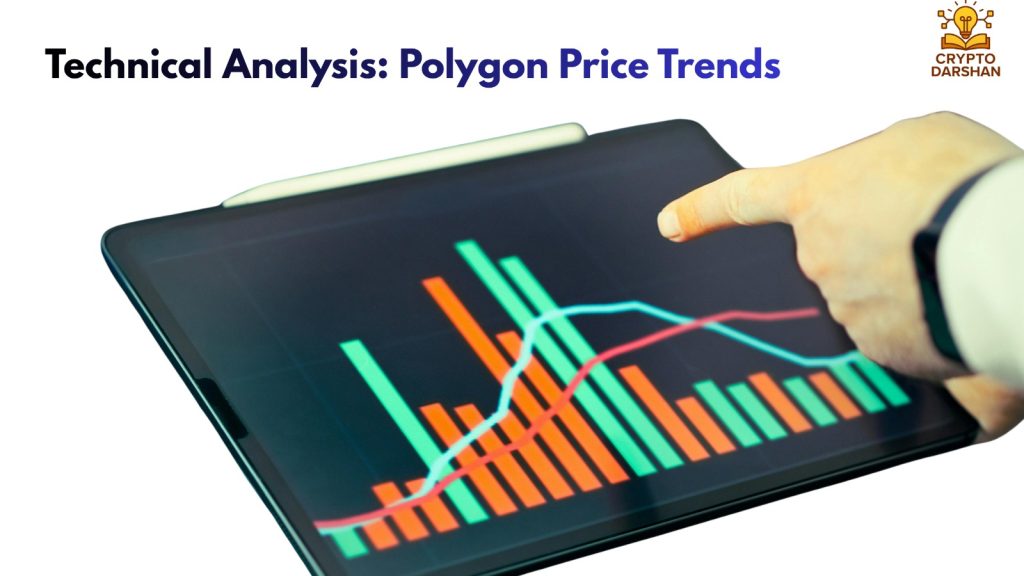
Technical analysis provides insights into potential price movements based on historical data and market patterns. Polygon’s price has shown strong support around $0.80 and resistance near $1.50 in recent years. A breakout above this range could signal the start of a new bullish cycle .Polygon’s growth is closely tied to DeFi expansion—explained in DeFi Lending Platforms Ranked by LTV and Liquidation Risk.
Key Technical Indicators
- Moving Averages: The 50-day and 200-day moving averages are converging, indicating potential upward momentum.
- Relative Strength Index (RSI): Currently neutral, suggesting room for growth before reaching overbought levels.
- Fibonacci Retracement: Key resistance levels are at $2.00, $3.50, and $5.00, aligning with long-term Polygon Price Prediction targets.
If market sentiment remains positive and zk upgrades deliver as expected, POL could enter a sustained uptrend leading into 2026.
Polygon Price Prediction 2026: Expert Opinions

Analysts and crypto research firms have provided varying forecasts for Polygon’s future value. For a deeper dive into how machine learning models predict crypto prices, check out Prediction AI for Crypto: Machine Learning Price Forecasts. While predictions differ, most agree that the zkEVM upgrades and POL token transition will be major catalysts.
Bullish Scenario
In a bullish scenario, Polygon continues to expand its ecosystem, attracting developers, enterprises, and institutional investors. With widespread adoption of zkEVM and strong market sentiment, POL could reach between $4.50 and $5.50 by 2026. This aligns with optimistic Polygon Price Prediction models that assume steady growth in DeFi and Web3 usage.
Moderate Scenario
Under moderate conditions, where adoption grows steadily but competition remains strong, POL could trade between $2.50 and $3.50. This scenario assumes gradual market recovery and consistent network upgrades.
Bearish Scenario
In a bearish case, global economic challenges or regulatory setbacks could limit growth. If adoption slows, POL might remain between $1.00 and $1.80. However, even in this scenario, Polygon’s strong fundamentals would likely prevent a severe decline.
The Role of Partnerships in Polygon’s Growth
Strategic partnerships have been a cornerstone of Polygon’s success. Collaborations with global brands and technology companies enhance credibility and expand use cases.
Notable Partnerships
- Nike and Adidas: NFT and digital fashion initiatives.
- Starbucks Odyssey: Blockchain-based loyalty program.
- Reddit Avatars: NFT collectibles for millions of users.
- Meta (Facebook): Integration for digital collectibles on Instagram.
These partnerships not only drive adoption but also strengthen investor confidence, reinforcing a positive Polygon Price Prediction outlook.
Polygon’s Ecosystem Expansion
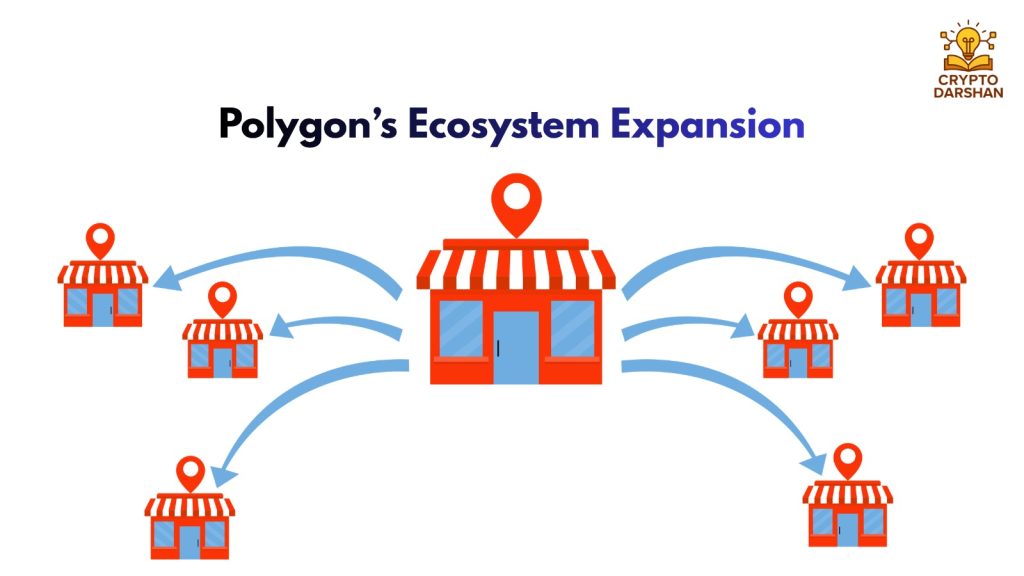
Polygon’s ecosystem extends beyond DeFi and NFTs. It includes gaming, enterprise solutions, and public sector applications. The network’s versatility makes it a preferred choice for developers across industries.
Key Ecosystem Segments
- DeFi: Platforms like Aave, Curve, and Uniswap operate on Polygon, offering users low-cost transactions.
- Gaming: Projects like Decentraland and The Sandbox leverage Polygon for scalability.
- Enterprise Solutions: Businesses use Polygon for supply chain management, identity verification, and data security.
The continuous expansion of these sectors contributes to long-term demand for POL, supporting bullish Polygon Price Prediction models.
Potential Risks to Polygon’s Price Outlook

While the outlook for Polygon is largely positive, investors should consider potential risks that could impact Polygon Price Prediction accuracy. Risk management is key in volatile markets—learn more in Crypto Insurance Protocols: Protecting Your DeFi Positions.
- Regulatory Uncertainty: Sudden policy changes could affect token trading and project operations.
- Technological Challenges: Delays or issues in zkEVM implementation could slow adoption.
- Market Volatility: Crypto markets are inherently volatile, and external shocks can influence prices.
- Competition: Emerging Layer 2 solutions could capture market share if they offer superior performance.
Mitigating these risks through diversification and continuous innovation will be key to sustaining growth.
Long-Term Polygon Price Prediction Beyond 2026

Looking beyond 2026, Polygon’s potential remains strong. As blockchain adoption accelerates globally, Layer 2 solutions will play a critical role in scaling decentralized applications. If Polygon maintains its leadership in zk technology and continues to attract institutional interest, POL could surpass $7–$10 by 2030.
Long-term growth will depend on continuous innovation, ecosystem expansion, and favorable market conditions. The transition to POL and the success of zkEVM will likely define Polygon’s trajectory for the next decade.
FAQ: Polygon (POL) Price Prediction 2026

1. What is Polygon (POL) and why is it important?
Polygon (POL) is a Layer-2 scaling solution for Ethereum that improves speed, reduces transaction costs, and supports decentralized applications. Its transition from MATIC to POL is part of a broader upgrade toward a multi-chain ecosystem.
2. What are the key zk upgrades in Polygon 2.0?
Polygon is focusing heavily on zero-knowledge (zk) technology, including zkEVM and AggLayer, which aim to unify liquidity across chains and enable faster, cheaper, and more scalable transactions.
3. How do zk upgrades impact POL’s price potential?
zk upgrades improve scalability and efficiency, which can attract developers, increase transaction volume, and boost demand for POL. However, price impact depends on real adoption, not just technology.
4. What is the Polygon price prediction for 2026?
Most realistic forecasts place POL between $0.20 and $0.75 in 2026, depending on market conditions and adoption.
5. Can POL realistically reach $5 in 2026?
A $5 target would require an extreme surge in adoption, market cap, and investor demand. Current projections suggest this is highly unlikely in 2026, as it would represent a massive multi-fold increase from current levels.
6. What would need to happen for POL to hit $5?
For POL to reach $5, several factors must align:
- Massive global adoption of Polygon’s zk infrastructure
- Dominance over competing Layer-2 solutions
- Strong bull market conditions
- Significant reduction in circulating supply
7. What are the bullish factors for POL in 2026?
- GigaGas upgrade targeting ~100,000 TPS
- Growing institutional adoption (payments, RWAs)
- Deflationary tokenomics and staking demand
- Expansion into real-world payment systems
8. What are the risks that could limit POL’s growth?
- Strong competition from Arbitrum, Optimism, and Solana
- Delays in zk or scaling upgrades
- Weak market sentiment or macroeconomic downturns
- Limited token value capture despite network usage
9. How does Polygon compare to other Layer-2 networks?
Polygon offers a broader ecosystem (zkEVM, PoS, AggLayer), but competitors may outperform in specific niches. Its success depends on execution and developer adoption.
Conclusion
Polygon has established itself as a cornerstone of the Ethereum scaling ecosystem. With the introduction of POL and the rollout of zkEVM, the network is entering a new era of scalability, security, and interoperability. These advancements, combined with strong partnerships and growing adoption, create a solid foundation for future growth.
Based on current trends, technological progress, and market sentiment, the Polygon Price Prediction for 2026 suggests that POL has a realistic chance of reaching the $5 mark. While challenges remain, Polygon’s innovation-driven approach and expanding ecosystem make it one of the most promising projects in the blockchain space.
As the crypto industry evolves, Polygon’s role as a scalable, efficient, and developer-friendly platform will continue to strengthen. Whether POL hits $5 or exceeds it, the project’s long-term potential remains undeniable, positioning it as a key player in the future of decentralized finance and Web3 innovation.