The Trump administration is moving to make it easier for Americans to put 401(k) money into crypto and private equity, but that “freedom” could add serious risk to your retirement savings.
What Is Changing With Your 401(k)?
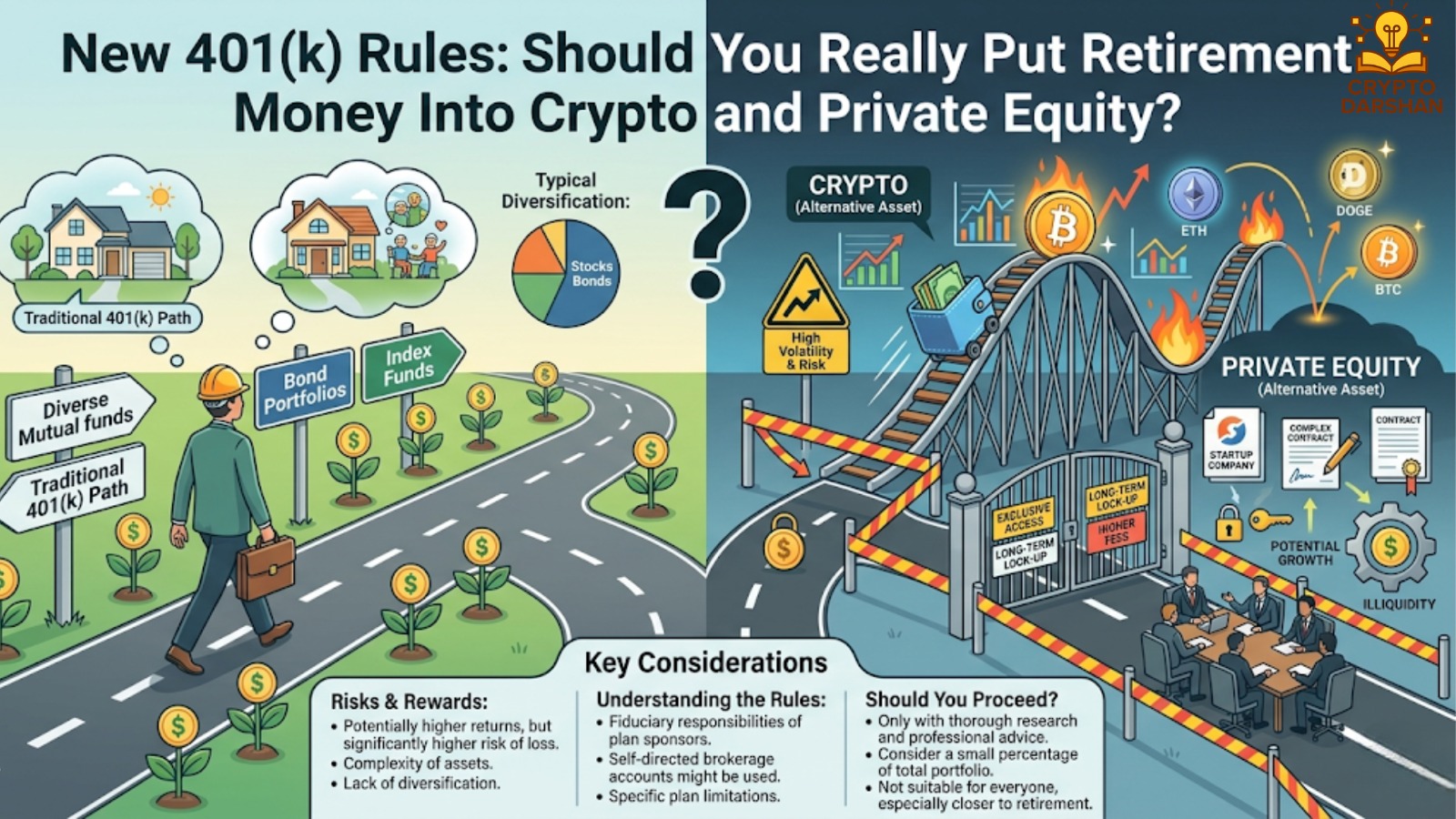
The Department of Labor has released a proposed rule that would open the door for more “alternative investments” inside 401(k) plans.
These alternatives include:
- Cryptocurrencies such as Bitcoin and other digital assets
- Private equity funds
- Private credit and other complex products
Until now, most employers have stayed away from these options, even though they were technically allowed, because they are risky, expensive, and hard to explain to everyday workers.
The new rule aims to give employers a legal “safe harbor,” making it easier to offer these investments without fearing lawsuits if things go wrong.
Before allocating retirement funds into volatile assets, understanding risk is critical. In Risk Management in Crypto: Position Sizing, Stop Loss, Take Profit, we explain how disciplined strategies can help investors protect capital, even in highly unpredictable markets.
Why Is Trump Pushing Alternative Assets?

Officials in the administration say this is about “innovation” and unlocking a “new golden age” for American retirement.
They argue that:
- Workers should have more choice in how they invest
- Alternative assets can sometimes outperform stocks and bonds
- Regulations and lawsuits have “blocked” access to these tools
Critics, including columnist Michael Hiltzik, say the real winners are not workers but Wall Street firms that have long wanted access to the trillions of dollars sitting in 401(k) plans.
Private equity, crypto platforms, and other promoters see a huge new pool of money and powerful new fees if this rule goes through.
The Big Problem With Private Equity in Your 401(k)

Private equity funds are usually built for rich and institutional investors, not everyday savers.
There are several red flags for 401(k) users:
- Very limited disclosure: Funds often reveal far less than public stock funds, making it hard to know what you own or what it is truly worth.
- No standard way to measure returns: Different funds can present performance in ways that make results look better than they really are.
- Extremely high fees: Management and performance fees are far higher than low‑cost index funds.
Even Warren Buffett has warned investors to be careful, saying some private equity return figures are not “honest” in how they are calculated.
On top of that, many private equity strategies rely on heavy cost‑cutting at the companies they buy, which can hurt workers and customers while still charging you high fees for the privilege.
Why Crypto Is Even Riskier for Retirement Money

Crypto is even more volatile and unpredictable than private equity.
Unlike stocks and bonds, most cryptocurrencies do not represent ownership of a real business or claim on cash flows; they trade mainly on sentiment, hype, and speculation.
Bitcoin’s price swings tell the story:
- It surged to around 126,000 in October.
- It later traded below 72,000.
- It has repeatedly crashed 30% or more in a matter of weeks.
Those kinds of moves might be exciting for traders, but they can be devastating for retirement savers who cannot afford to lose half their nest egg just before they need it.
Hiltzik and many other critics argue that crypto remains closer to a speculative casino than a stable long‑term investment, especially inside a 401(k).
Not all crypto assets are built the same. In Token Economics: Designing Sustainable Blockchain Incentives, we explore how supply mechanisms, emissions, and utility influence long-term value, key factors when considering retirement investments.
What This Means for Your 401(k) Choices

Even if the rule is finalized, no one will force you to buy crypto or private equity inside your 401(k).
However, you may start seeing:
- Target‑date or “managed” funds that quietly add a slice of alternatives
- New “alternative strategy” options in your plan menu
- Marketing that promises higher returns and “sophisticated” diversification
The danger is that many savers do not fully understand the extra risk, fees, and complexity they are taking on.
Because 401(k)s are often set on autopilot, workers might end up exposed to high‑risk products without realizing how much can be lost in a downturn.
So…Should You Bite?

For most people, the answer is likely no.
Here is a simple way to think about it:
- If an investment is too complex to explain in a few clear sentences, it probably does not belong in your core retirement savings.
- If fees are much higher than a basic index fund, the investment has to do far better for many years just to catch up.
- If prices can crash by 30–50% in weeks, that risk can be deadly close to retirement.
Low‑cost, diversified stock and bond index funds remain the backbone of solid retirement planning for the majority of workers.
If you are tempted by crypto or private equity, consider using a small, separate “play money” account outside your 401(k) and only with money you can afford to lose.
Key Takeaway: Private Equity

The new push to open 401(k)s to crypto and private equity is being sold as “freedom” and “innovation,” but it mainly serves the financial industry, not ordinary savers.
Before you move your retirement money into these alternatives, slow down, read the fine print, and remember: in most cases, boring is safer when your future is on the line.