
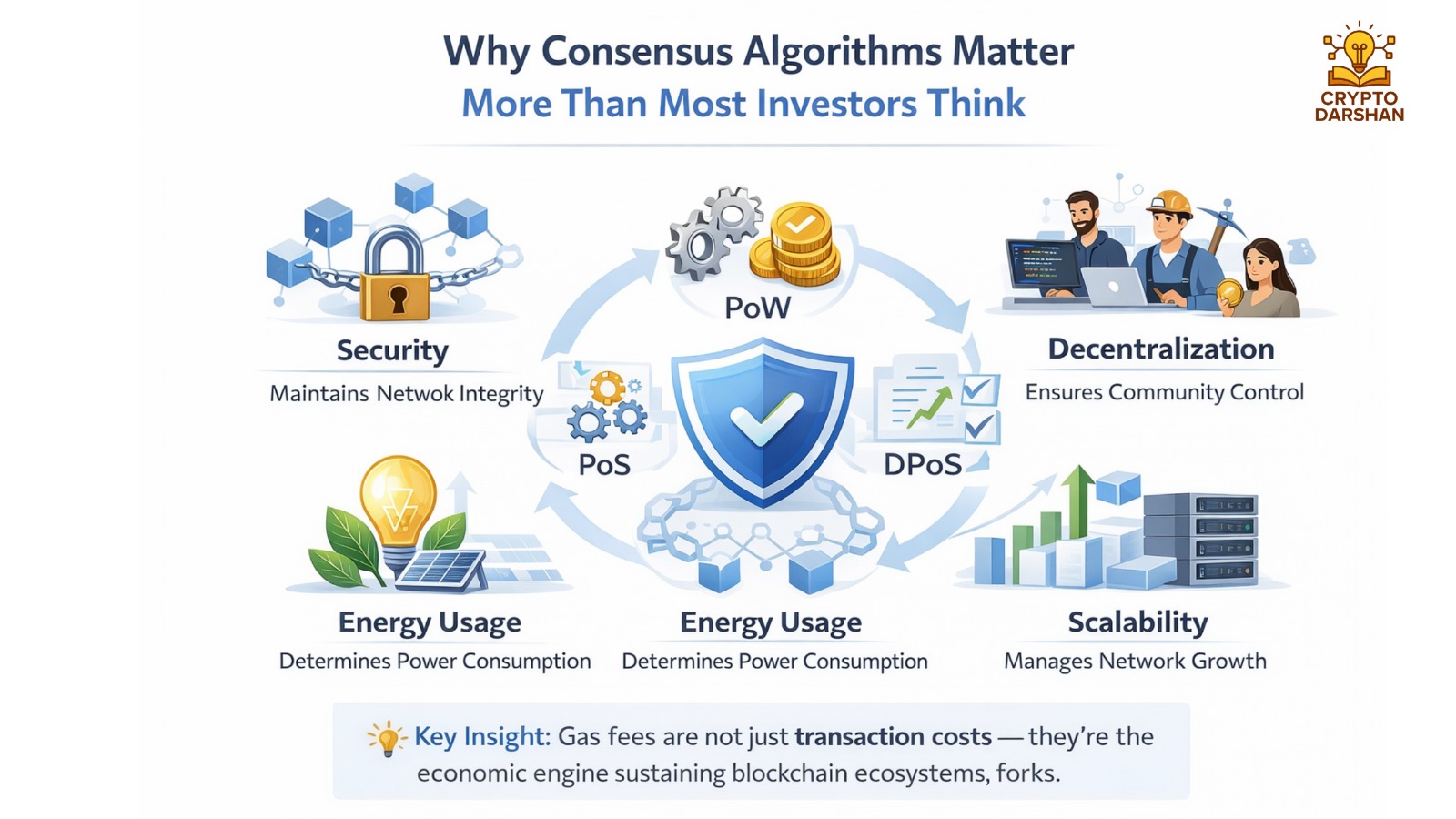
In the world of blockchain and decentralized finance, Consensus Algorithms are the invisible engines that keep everything running smoothly. They determine how transactions are verified, how new blocks are added, and how trust is maintained ia n a system without central authority. While many investors focus on token prices, market trends, or project hype, few truly understand how Consensus Algorithms shape the value, security, and scalability of blockchain networks.
This article explores why Consensus Algorithms matter more than most investors think. It breaks down how they work, their economic and technical implications, and why understanding them is essential for making informed investment decisions in the blockchain space.
What Are Consensus Algorithms?

Consensus Algorithms are the protocols that allow distributed systems, like blockchains, to agree on a single version of truth. In traditional systems, a central authority verifies transactions. In decentralized systems, Algorithms replace that authority by enabling participants (nodes) to reach agreement even if some act maliciously.
In simple terms, Consensus Algorithms ensure that all participants in a blockchain network agree on the same data, preventing double-spending, fraud, and inconsistencies. They are the foundation of trust in decentralized systems.
The Core Purpose of Consensus Algorithms

Ensuring Agreement Across Nodes
Every blockchain node maintains a copy of the ledger. Consensus Algorithms synchronize these copies, ensuring that all nodes agree on the same transaction history.
Preventing Double-Spending
Without a central authority, users could attempt to spend the same cryptocurrency twice. Consensus Algorithms prevent this by validating transactions and rejecting duplicates.
Maintaining Network Security
Consensus Algorithms make it extremely difficult for attackers to alter transaction history or take control of the network, ensuring data integrity.
Enabling Decentralization
By distributing decision-making across many participants, Consensus Algorithms eliminate the need for intermediaries, creating a trustless environment.
Supporting Scalability and Efficiency
Well-designed Consensus Algorithms balance speed, cost, and security, allowing networks to handle more transactions without compromising reliability.
Why Consensus Algorithms Are the Backbone of Blockchain

Every blockchain, whether Bitcoin, Ethereum, or Solana, relies on a Consensus Algorithm to function. Without it, there would be no way to verify transactions or maintain a shared ledger.
For investors, understanding Consensus Algorithms is crucial because they directly influence a blockchain’s performance, energy efficiency, and long-term sustainability. The choice of algorithm affects transaction speed, fees, and even the environmental footprint of a project.
They Enable Trust Without Central Authority
In traditional systems, a central authority verifies and approves transactions. In blockchain networks, Consensus Algorithms replace that authority by allowing all participants (nodes) to agree on the validity of transactions. This decentralized agreement builds trust among users without relying on intermediaries.
They Maintain Data Integrity and Security
Consensus Algorithms ensure that every transaction recorded on the blockchain is verified and immutable. Once a block is added through consensus, it cannot be altered without the approval of the majority of the network, protecting the system from fraud, double-spending, and tampering.
They Keep the Network Synchronized
Every node in a blockchain network holds a copy of the ledger. Consensus Algorithms make sure all these copies remain consistent and up to date, even when thousands of transactions occur simultaneously. This synchronization ensures that everyone sees the same version of the truth.
They Incentivize Honest Participation
Validators or miners are rewarded for following the rules of the Consensus Algorithm and penalized for dishonest behavior. This economic incentive structure encourages participants to act in the network’s best interest, maintaining fairness and stability.
They Ensure Scalability and Efficiency
The design of a Consensus Algorithm determines how quickly and efficiently a blockchain can process transactions. Efficient algorithms balance speed, cost, and security, allowing networks to scale while maintaining decentralization and reliability.
But consensus alone isn’t enough to scale blockchains effectively. Data availability has emerged as another critical factor that determines whether a network can handle large volumes of transactions without compromising security. We explore this growing challenge in our deep dive on why data availability is becoming the next battleground in blockchain.
The Evolution of Consensus Algorithms

The development of Consensus Algorithms has evolved through several generations, each addressing the limitations of its predecessors.
1. Proof of Work (PoW)
Introduced by Bitcoin, Proof of Work is the first and most well-known Consensus Algorithm. It requires miners to solve complex mathematical puzzles to validate transactions and create new blocks.
- Advantages: High security, proven reliability.
- Disadvantages: High energy consumption, slower transaction speeds.
2. Proof of Stake (PoS)
Proof of Stake emerged as a more energy-efficient alternative. Instead of mining, validators are chosen based on the amount of cryptocurrency they hold and are willing to “stake” as collateral.
- Advantages: Energy-efficient, faster transactions.
- Disadvantages: Wealth concentration risk, potential centralization.
3. Delegated Proof of Stake (DPoS)
DPoS improves scalability by allowing token holders to vote for a limited number of delegates who validate transactions on their behalf.
- Advantages: High throughput, democratic governance.
- Disadvantages: Reduced decentralization, potential for collusion.
4. Proof of Authority (PoA)
In PoA, a small group of trusted validators is pre-approved to verify transactions.
- Advantages: Fast and efficient.
- Disadvantages: Centralized control, limited transparency.
5. Byzantine Fault Tolerance (BFT) and Variants
BFT-based Consensus Algorithms ensure that a network can function correctly even if some nodes act maliciously. Variants like PBFT (Practical Byzantine Fault Tolerance) and Tendermint are widely used in enterprise and permissioned blockchains.
- Advantages: High security, low latency.
- Disadvantages: Limited scalability for large public networks.
How Consensus Algorithms Influence Blockchain Performance

1. Transaction Speed
Different Consensus Algorithms process transactions at varying speeds. PoW networks like Bitcoin handle around 7 transactions per second, while PoS and DPoS systems can process thousands.
2. Energy Efficiency
PoW consumes massive amounts of electricity, while PoS and PoA drastically reduce energy usage. Investors increasingly favor projects with sustainable Consensus Algorithms.
3. Scalability
Scalability depends on how efficiently a Consensus Algorithm can handle growing transaction volumes. DPoS and BFT-based systems often outperform PoW in this area.
4. Security
Security is the cornerstone of blockchain trust. PoW offers strong protection against attacks, but PoS and BFT models achieve similar security with less energy.
5. Decentralization
The degree of decentralization varies across Consensus Algorithms. PoW and PoS promote open participation, while PoA and DPoS may concentrate power among a few validators.
The Economic Impact of Consensus Algorithms

1. Validator Incentives
Validators or miners earn rewards for participating in consensus. The structure of these rewards influences network participation and token distribution.
2. Tokenomics
Consensus Algorithms shape token supply and demand. For example, PoW introduces new coins through mining, while PoS locks tokens in staking, reducing circulating supply.
3. Transaction Fees
The efficiency of a Consensus Algorithm affects transaction costs. Faster algorithms with higher throughput generally lead to lower fees.
4. Network Sustainability
Sustainable Consensus Algorithms attract long-term investors by ensuring that the network can operate efficiently without excessive energy or hardware costs.
Consensus Algorithms and Investor Decision-Making

Investors often overlook the importance of Consensus Algorithms when evaluating blockchain projects. However, these algorithms determine key investment factors such as scalability, security, and environmental impact.
1. Assessing Risk
A blockchain’s Consensus Algorithm reveals its vulnerability to attacks. For example, PoW networks are resistant to manipulation but costly to maintain, while PoS systems depend on validator honesty.
2. Evaluating Long-Term Viability
Projects with efficient and sustainable Consensus Algorithms are more likely to thrive as the industry matures. Investors should favor networks that balance performance with decentralization.
3. Understanding Governance
Some Consensus Algorithms, like DPoS, incorporate governance mechanisms that allow token holders to vote on network decisions. This can influence project direction and investor confidence.
4. Predicting Market Trends
As environmental concerns grow, investors are shifting toward energy-efficient Consensus Algorithms. Understanding these trends helps identify future market leaders.
Comparing Major Consensus Algorithms

| Algorithm | Energy Use | Speed | Security | Decentralization | Examples |
| Proof of Work (PoW) | High | Low | Very High | High | Bitcoin |
| Proof of Stake (PoS) | Low | High | High | Moderate | Ethereum 2.0, Cardano |
| Delegated Proof of Stake (DPoS) | Low | Very High | Moderate | Low | EOS, TRON |
| Proof of Authority (PoA) | Very Low | Very High | Moderate | Low | VeChain, Binance Chain |
| Byzantine Fault Tolerance (BFT) | Low | High | High | Moderate | Cosmos, Hyperledger |
The Role of Consensus Algorithms in Blockchain Security

Security is one of the most critical aspects of blockchain technology, and Consensus Algorithms are its foundation. They protect networks from attacks, fraud, and manipulation.
1. 51% Attacks
In PoW systems, an attacker would need to control over 50% of the network’s computing power to alter transactions. This is economically unfeasible for large networks.
2. Sybil Attacks
Consensus Algorithms prevent Sybil attacks by requiring participants to stake resources (computing power or tokens), making it costly to create fake identities.
3. Finality and Immutability
Once a transaction is confirmed through consensus, it becomes nearly impossible to reverse. This immutability builds trust and ensures data integrity.
4. Validator Accountability
In PoS and DPoS systems, validators risk losing their staked tokens if they act dishonestly. This economic penalty reinforces honest behavior.
Environmental Considerations of Consensus Algorithms

The environmental impact of Consensus Algorithms has become a major topic of debate. PoW networks consume vast amounts of energy, while newer algorithms aim to minimize their carbon footprint.
1. Energy Consumption
Bitcoin’s PoW model uses as much energy as some small countries. This has led to criticism and calls for greener alternatives.
2. Transition to PoS
Ethereum’s shift from PoW to PoS reduced its energy consumption by over 99%, setting a precedent for sustainable blockchain development.
3. Green Consensus Models
Emerging Consensus Algorithms like Proof of Space, Proof of History, and hybrid models combine efficiency with environmental responsibility.
The Future of Consensus Algorithms

The evolution of Consensus Algorithms is far from over. As blockchain technology matures, new models are emerging to address scalability, security, and sustainability challenges.
1. Hybrid Consensus Models
Hybrid systems combine the strengths of multiple Consensus Algorithms. For example, some networks use PoW for initial security and PoS for ongoing validation.
2. Sharding and Parallel Processing
Sharding divides the blockchain into smaller parts (shards) that process transactions simultaneously, improving scalability without compromising consensus.
3. AI-Driven Consensus
Artificial intelligence may optimize Algorithms by dynamically adjusting parameters based on network conditions, improving efficiency and resilience.
4. Quantum-Resistant Consensus
As quantum computing advances, new Consensus Algorithms are being developed to resist quantum attacks, ensuring long-term security.
How Consensus Algorithms Affect Blockchain Governance

Governance refers to how decisions are made within a blockchain network. Consensus Algorithms play a central role in determining who has power and how changes are implemented.
1. Decentralized Decision-Making
In PoS and DPoS systems, token holders can vote on protocol upgrades, influencing the network’s direction.
2. Validator Selection
Consensus Algorithms define how validators are chosen, through staking, voting, or reputation, impacting fairness and decentralization.
3. Protocol Upgrades
Consensus mechanisms determine how easily a network can upgrade without causing forks or disruptions.
4. Community Participation
Transparent Consensus Algorithms encourage community involvement, fostering trust and long-term engagement.
Consensus Algorithms and Real-World Applications

Beyond cryptocurrencies, Consensus Algorithms power a wide range of real-world applications:
- Supply Chain Management – Ensuring data integrity across multiple stakeholders.
- Healthcare – Securing patient records and ensuring data privacy.
- Voting Systems – Enabling transparent and tamper-proof elections.
- Finance – Facilitating cross-border payments and decentralized lending.
- Internet of Things (IoT) – Coordinating devices securely without central servers.
Each of these applications relies on Consensus Algorithms to maintain trust, transparency, and efficiency.
Challenges Facing Consensus Algorithms

Despite their importance, Consensus Algorithms face several challenges that must be addressed for blockchain technology to reach its full potential.
- Scalability Limitations
Many algorithms struggle to handle large transaction volumes without sacrificing speed or decentralization. - Energy Efficiency
PoW remains energy-intensive, prompting the search for greener alternatives. - Centralization Risks
PoS and DPoS systems can lead to wealth concentration, where a few large stakeholders control the network. - Complexity and Accessibility
Understanding and implementing Consensus Algorithms requires technical expertise, limiting participation. - Regulatory Uncertainty
Governments are still developing frameworks for decentralized systems, which could impact how Consensus Algorithms operate globally.
Why Investors Should Care About Consensus Algorithms

They Determine Network Security
The strength of a blockchain’s Consensus Algorithm directly affects how secure the network is against attacks or manipulation. A robust algorithm like Proof of Work or Proof of Stake ensures that transactions are verified honestly and that the network remains resistant to fraud. For investors, this means their assets are safer on networks with strong consensus mechanisms.
They Influence Scalability and Transaction Speed
Different Consensus Algorithms handle transactions at different speeds. For example, Proof of Stake and Delegated Proof of Stake systems can process thousands of transactions per second, while Proof of Work networks are slower. Investors should understand this because scalability affects user adoption, transaction costs, and ultimately, the long-term value of a blockchain project.
They Impact Energy Efficiency and Sustainability
Energy consumption has become a major concern in blockchain investing. Consensus Algorithms like Proof of Stake are far more energy-efficient than Proof of Work, making them more attractive to environmentally conscious investors and institutions seeking sustainable, ESG-compliant projects.
They Shape Tokenomics and Rewards
The way Consensus Algorithms distribute rewards influences token supply, inflation, and staking returns. For instance, staking-based systems lock tokens out of circulation, potentially increasing scarcity and value. Understanding these mechanics helps investors evaluate the profitability and stability of a project’s economic model.
They Affect Long-Term Viability and Market Confidence
A blockchain’s ability to evolve and maintain decentralization depends on its Consensus. Networks with efficient, secure, and adaptable algorithms are more likely to survive market shifts and regulatory changes. For investors, this translates into stronger fundamentals, higher adoption potential, and greater confidence in long-term returns.
FAQ

1. What is a consensus algorithm in blockchain?
A consensus algorithm is the mechanism that allows distributed network participants to agree on the validity of transactions without a central authority. In a decentralized, distributed network, a consensus algorithm is the mechanism that enables users or machines to coordinate, ensuring all participants agree on a single source of truth, even in the event of faults or failures.
2. Why should investors care about consensus algorithms?
Consensus algorithms directly impact a blockchain’s security, scalability, transaction costs, and decentralization—all of which influence long-term value and investment potential.
3. What are the most common types of consensus algorithms?
The most widely used include Proof of Work (PoW), Proof of Stake (PoS), and newer variations like Delegated Proof of Stake (DPoS) and Proof of Authority (PoA).
4. How does Proof of Work differ from Proof of Stake?
Proof of Work relies on computational power to validate transactions, while Proof of Stake selects validators based on the amount of cryptocurrency they hold and stake.
5. Which consensus algorithm is more energy-efficient?
Proof of Stake is generally far more energy-efficient than Proof of Work because it doesn’t require intensive computational power.
6. Do consensus algorithms affect transaction fees?
Yes, they influence how transactions are processed and prioritized, which can impact network congestion and ultimately transaction (gas) fees.
7. How do consensus algorithms impact security?
A strong consensus mechanism makes it extremely difficult for malicious actors to manipulate the network, ensuring trust and reliability.
8. Can a blockchain change its consensus algorithm?
Yes, but it is complex and often requires major upgrades or community agreement, as seen in some high-profile network transitions.
9. What is the “trilemma” in blockchain, and how is it related?
The blockchain trilemma refers to the challenge of balancing security, scalability, and decentralization—consensus algorithms play a key role in managing this trade-off.
Conclusion
Consensus Algorithms are the foundation of blockchain technology, shaping everything from security and scalability to governance and sustainability. While many investors focus on short-term price movements, the real value lies in understanding how these algorithms work and what they mean for the future of decentralized systems.
As the blockchain industry evolves, Algorithms will continue to define which projects succeed and which fade away. Investors who grasp their importance will be better equipped to identify strong, sustainable, and innovative opportunities in the ever-changing world of digital assets.
In the end, Consensus Algorithms are not just technical mechanisms—they are the heartbeat of blockchain economics, the guardians of trust, and the key to unlocking the next generation of decentralized innovation.