MARA Holdings, one of the largest publicly traded Bitcoin mining companies, reported a sharp decline in its financial performance during the second quarter of 2026. The company posted a net loss of $611.3 million, or $1.60 per diluted share, compared with net income of $808.2 million during the same period last year.
The results show how quickly Bitcoin miners can face pressure when cryptocurrency prices fall. Although MARA increased its Bitcoin production and expanded its computing infrastructure, lower Bitcoin prices and digital asset losses weighed heavily on its quarterly numbers.
MARA’s latest financial filings were published on August 6, 2026, including its quarterly 10-Q and current 8-K reports.
Bitcoin Holdings Drop to 35,577 BTC
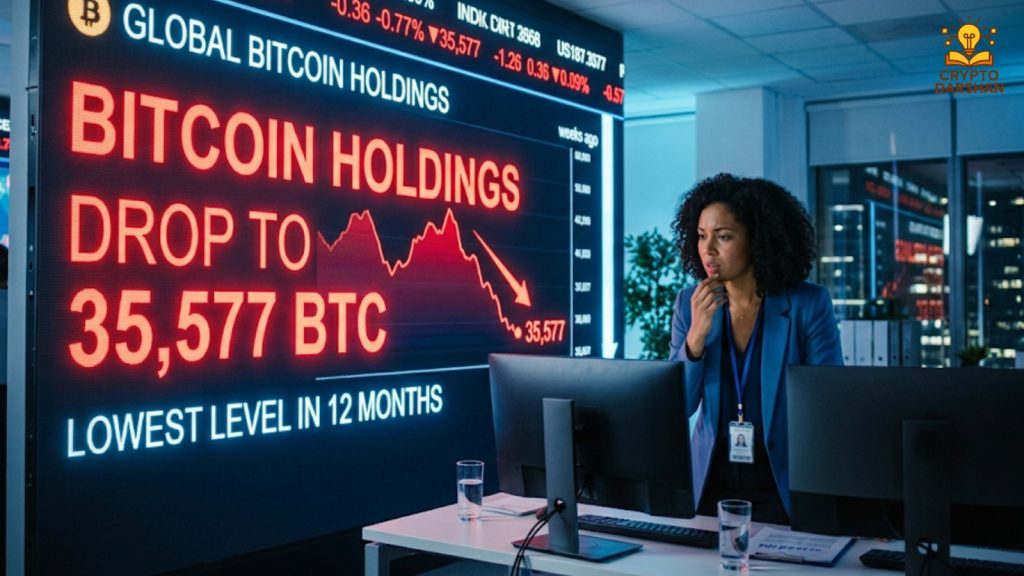
MARA held 35,577 Bitcoin at the end of June 2026. That figure represents a 29% decline from the 49,951 BTC held at the end of the second quarter of 2025.
The company’s Bitcoin holdings were valued at approximately $2.1 billion at the end of the quarter. However, not all of this Bitcoin was freely available to the company. About 9,270 BTC had been loaned or pledged as collateral, which means those coins were connected to financing or other business arrangements.
The yearly decline does not tell the entire story. MARA’s Bitcoin balance increased slightly from 35,303 BTC at the end of March to 35,577 BTC at the end of June. The larger year-over-year drop was mainly linked to Bitcoin sales made earlier in 2026.
According to reports, MARA sold 20,880 BTC during the first quarter and another 2,213 BTC during the second quarter. The sales helped fund operations, reduce debt, and support investment in new infrastructure.
Revenue Falls 27%
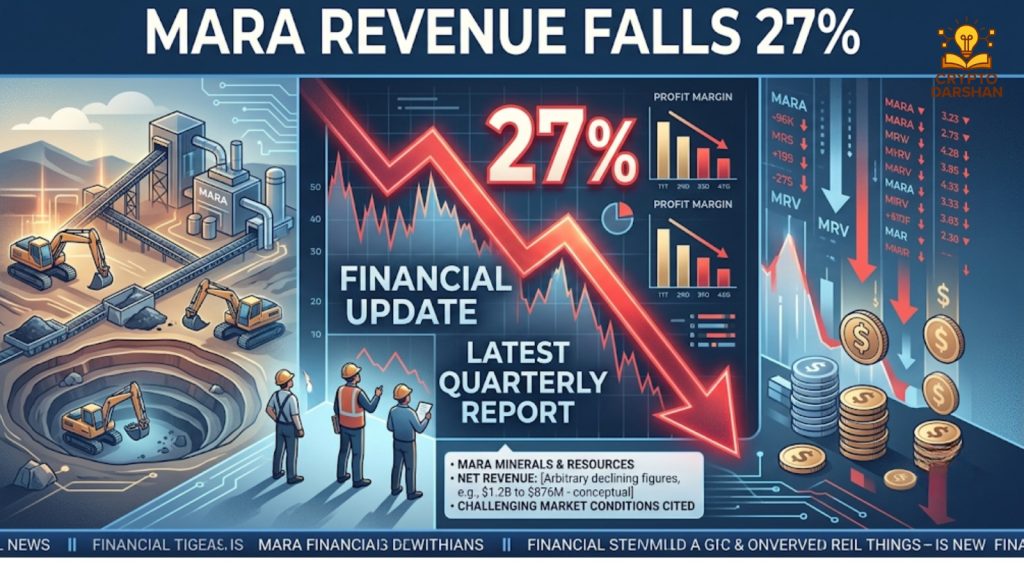
MARA generated $174.9 million in revenue during Q2 2026. This was down from $238.5 million in the same quarter a year earlier, representing a decline of roughly 27%.
The main pressure came from the lower average price of Bitcoin. Reports from the company’s earnings call indicated that the average Bitcoin price fell by about 28% year over year. The price decline reduced revenue by an estimated $65.9 million, although higher Bitcoin production added approximately $7.2 million.
This result highlights an important issue for Bitcoin miners. Producing more coins does not always lead to higher revenue. If the market price falls faster than production increases, a miner can still report weaker sales and lower margins.
Digital Asset Loss Adds to Pressure
A major part of MARA’s quarterly loss came from a $343 million unrealized fair-value loss on digital assets. This accounting adjustment reflected the decline in the value of Bitcoin and other digital assets held by the company.
An unrealized loss does not necessarily mean MARA sold all of the affected assets at a loss. Instead, it shows that the reported value of those assets fell during the accounting period. Even so, the adjustment had a significant impact on the company’s earnings.
The difference from last year was especially large. In Q2 2025, MARA recorded a major gain from changes in the value of its digital assets. That earlier gain helped the company report net income of $808.2 million. In Q2 2026, the market moved in the opposite direction, creating a substantial drag on earnings.
Adjusted EBITDA Turns Negative
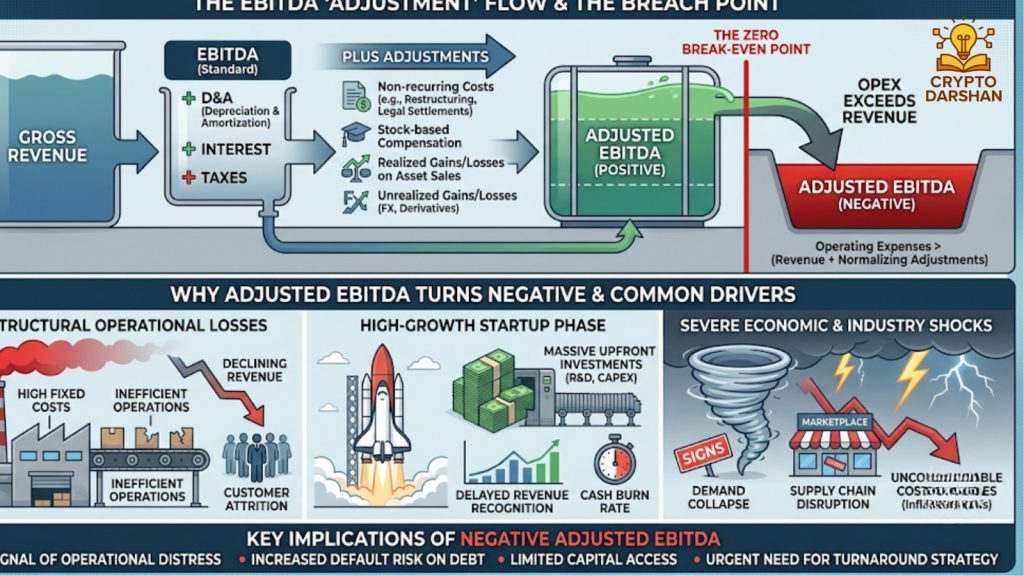
MARA’s adjusted EBITDA also weakened during the quarter. The company reported adjusted EBITDA of negative $360.9 million, compared with positive adjusted EBITDA of about $1.2 billion in the year-earlier period.
Adjusted EBITDA is often used to review operating performance before certain accounting, financing, and non-cash expenses. While it does not provide a complete picture of a company’s financial health, a negative result suggests that MARA’s business faced significant operating pressure during the quarter.
Mining companies must manage several large costs, including electricity, equipment, facility operations, financing, and network-related expenses. When Bitcoin prices fall, these costs can become harder to cover, particularly for miners with large infrastructure investments.
MARA Expands Beyond Bitcoin Mining

Despite the difficult financial results, MARA continued to build its broader digital infrastructure strategy. The company has been working to expand its power and computing capacity while developing opportunities connected to artificial intelligence and high-performance computing.
MARA reportedly doubled its power capacity to 4.8 gigawatts. The move reflects a strategy to use its energy and data center infrastructure for more than Bitcoin mining.
This shift could help the company reduce its dependence on Bitcoin mining revenue over time. AI and high-performance computing customers may provide additional sources of income if MARA can secure long-term contracts and operate its facilities efficiently.
However, the transition also creates new risks. Building AI-ready infrastructure requires substantial capital, specialized equipment, and reliable power resources. These projects may take time to generate meaningful revenue, while the company continues to face volatility in the Bitcoin market.
What the Results Mean for Investors

MARA’s Q2 performance shows the close relationship between its balance sheet and Bitcoin’s market price. The company ended the quarter with approximately $2.1 billion in Bitcoin and about $421.3 million in unrestricted cash, giving it around $2.5 billion in combined cash and Bitcoin holdings.
At the same time, its lower Bitcoin balance may concern investors who view MARA as a way to gain exposure to Bitcoin. Selling part of its treasury can provide funding during difficult periods, but it also reduces the company’s potential benefit if Bitcoin prices rise later.
The pledged and loaned Bitcoin is another factor that deserves attention. Those assets may support financing arrangements, but they are not the same as fully unrestricted Bitcoin held directly for immediate use.
Outlook for MARA
MARA’s future performance will likely depend on several factors:
- The direction of Bitcoin prices.
- The company’s mining efficiency and electricity costs.
- Its ability to control debt and operating expenses.
- The success of its AI and digital infrastructure expansion.
- Whether it can grow revenue without selling large amounts of Bitcoin.
The company’s Q2 results do not mean that its long-term strategy has failed. However, they show that MARA remains highly exposed to Bitcoin price movements while it works to develop new business lines.
For now, MARA faces a challenging balance between protecting liquidity, maintaining its mining operations, and investing in future infrastructure. The next few quarters may show whether its expansion strategy can offset weaker Bitcoin-related earnings.