
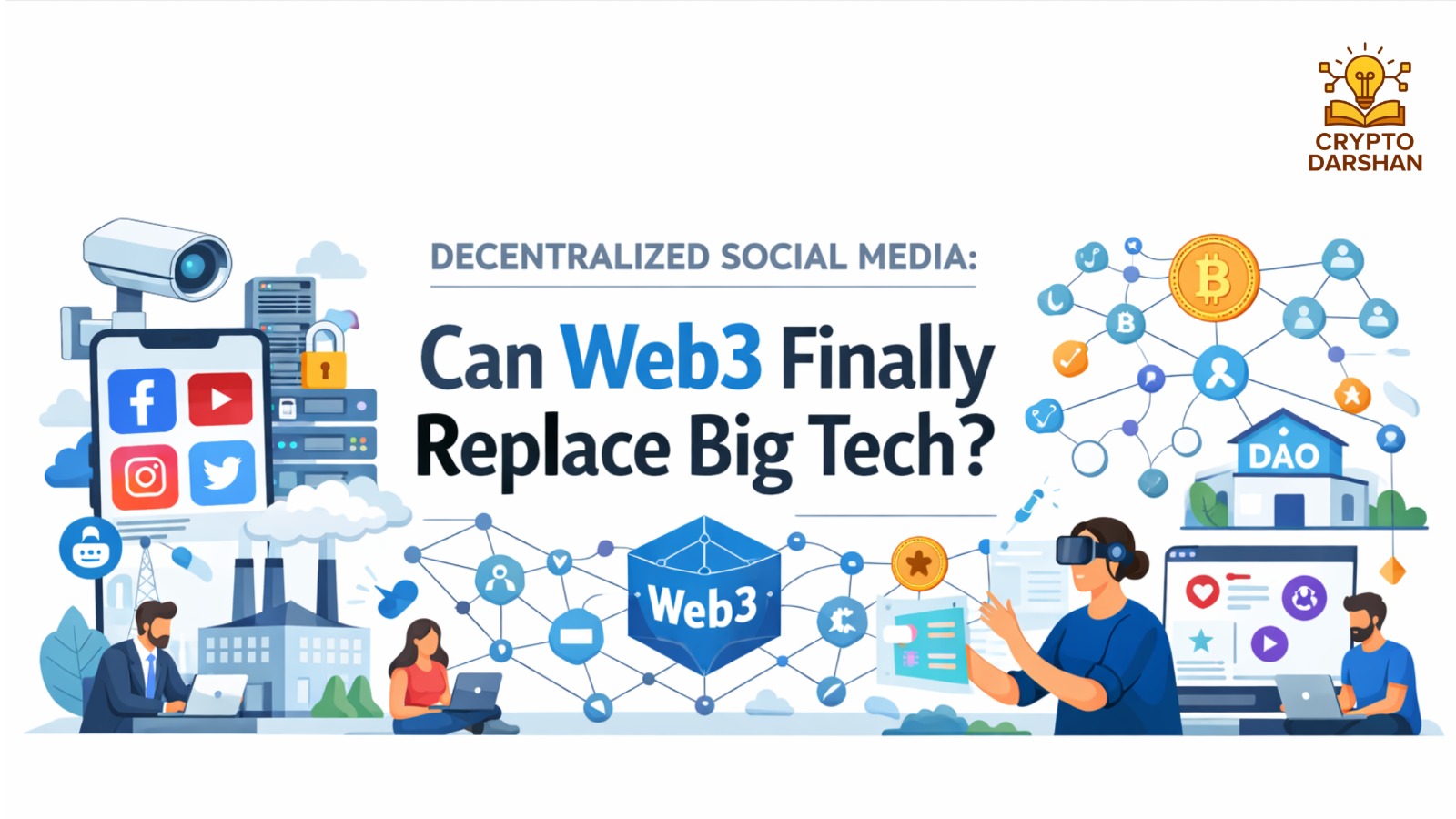
The rise of Decentralized Social Media marks a turning point in how people connect, share, and communicate online. For years, Big Tech companies like Facebook, Twitter, and Instagram have dominated the digital landscape, controlling user data, content moderation, and monetization. However, the emergence of Web3 technologies built on blockchain, smart contracts, and decentralized networks has introduced a new model that challenges this centralized control. The question now is whether Decentralized Social Media can truly replace Big Tech and redefine the future of online interaction.
This article explores the concept of Decentralized Social Media, its advantages, challenges, and potential to reshape the digital ecosystem. It also examines how Web3 technologies empower users, promote transparency, and create new opportunities for creators and communities.
What Is Decentralized Social Media?

Decentralized social media refers to platforms that do not rely on a single company or centralized authority to manage data, content, or user interactions. Instead, these platforms operate using a network of independently operated servers or nodes. Hosting, moderation, and even governance are distributed across the ecosystem, making censorship and unilateral control virtually impossible. In traditional social media, user data, content, and algorithms are managed by corporations that profit from advertising and data collection. In contrast, decentralized platforms distribute control among users, developers, and communities.
These platforms use blockchain technology to store data securely and transparently. Each user owns their content, identity, and digital assets. Instead of relying on a central authority, Decentralized Social Media uses smart contracts and consensus mechanisms to manage interactions, rewards, and governance.
Key Features of Decentralized Social Media
- User Ownership: Users retain full control over their data, posts, and digital identity.
- Transparency: All transactions and interactions are recorded on a public ledger.
- Censorship Resistance: No single entity can remove or manipulate content arbitrarily.
- Tokenization: Users can earn tokens for engagement, content creation, and community participation.
- Interoperability: Platforms can connect with other decentralized applications (dApps) and blockchains.
The Evolution from Web2 to Web3

To understand Decentralized Social Media, it’s essential to trace the evolution of the internet. Web1 was static, offering limited interaction. Web2 introduced dynamic content, social networking, and user-generated media but at the cost of centralization. Big Tech companies became gatekeepers, monetizing user data and controlling online discourse.
Web3 represents the next phase a decentralized internet powered by blockchain. It aims to return ownership and control to users. In this model, Decentralized Social Media becomes a cornerstone, enabling peer-to-peer communication without intermediaries.
Web2 vs. Web3: A Comparison
| Feature | Web2 (Centralized) | Web3 (Decentralized) |
| Data Control | Owned by corporations | Owned by users |
| Monetization | Ad-based revenue | Token-based economy |
| Governance | Centralized moderation | Community-driven |
| Privacy | Limited | Enhanced through encryption |
| Censorship | High risk | Censorship-resistant |
Why Decentralized Social Media Matters

The dominance of Big Tech has raised concerns about privacy, censorship, and data exploitation. Users have little control over how their information is used or shared. Decentralized Social Media addresses these issues by offering a transparent, user-centric alternative.
1. Data Ownership and Privacy
In Decentralized Social Media, users own their data. Instead of storing information on corporate servers, data is encrypted and distributed across a blockchain network. This ensures that no single entity can access or sell user information without consent.
2. Freedom of Expression
Censorship has become a major issue on centralized platforms. Algorithms and moderation policies often silence certain voices. Decentralized Social Media promotes free expression by removing centralized control. Communities can establish their own moderation rules through decentralized governance.
3. Fair Monetization
Traditional social media platforms profit from user-generated content without fairly compensating creators. In contrast, Decentralized Social Media introduces token-based economies. Users earn tokens for engagement, content creation, and participation. These tokens can be traded, staked, or used within the ecosystem.
4. Transparency and Trust
Blockchain technology ensures transparency. Every transaction, post, or interaction is recorded on a public ledger. This eliminates hidden algorithms and opaque moderation practices, fostering trust between users and platforms.
How Decentralized Social Media Works

Decentralized Social Media works by removing the need for a central authority like Facebook or Twitter and replacing it with a network of users connected through blockchain technology. Instead of one company owning the servers, data, and algorithms, everything is distributed across a network of computers (called nodes). This structure ensures that no single entity can control or manipulate the platform.
Let’s break down how it works step by step:
1. Blockchain as the Foundation
At the core of Decentralized Social Media is the blockchain, a digital ledger that records all actions (posts, likes, transactions) transparently and securely. Every time a user posts something, that action is stored on the blockchain. Because the blockchain is decentralized, no one can secretly delete, alter, or censor that data.
2. Decentralized Identities (DIDs)
Instead of signing up with an email or phone number, users create a decentralized identity using cryptographic keys. This means your account is not tied to a company—it’s tied to your digital wallet. You own your identity completely, and no one can take it away or ban you without community consensus.
Your decentralized identity can also be used across multiple platforms. For example, if you have a profile on one Decentralized Social Media app, you can use the same identity on another without creating a new account.
3. Decentralized Storage

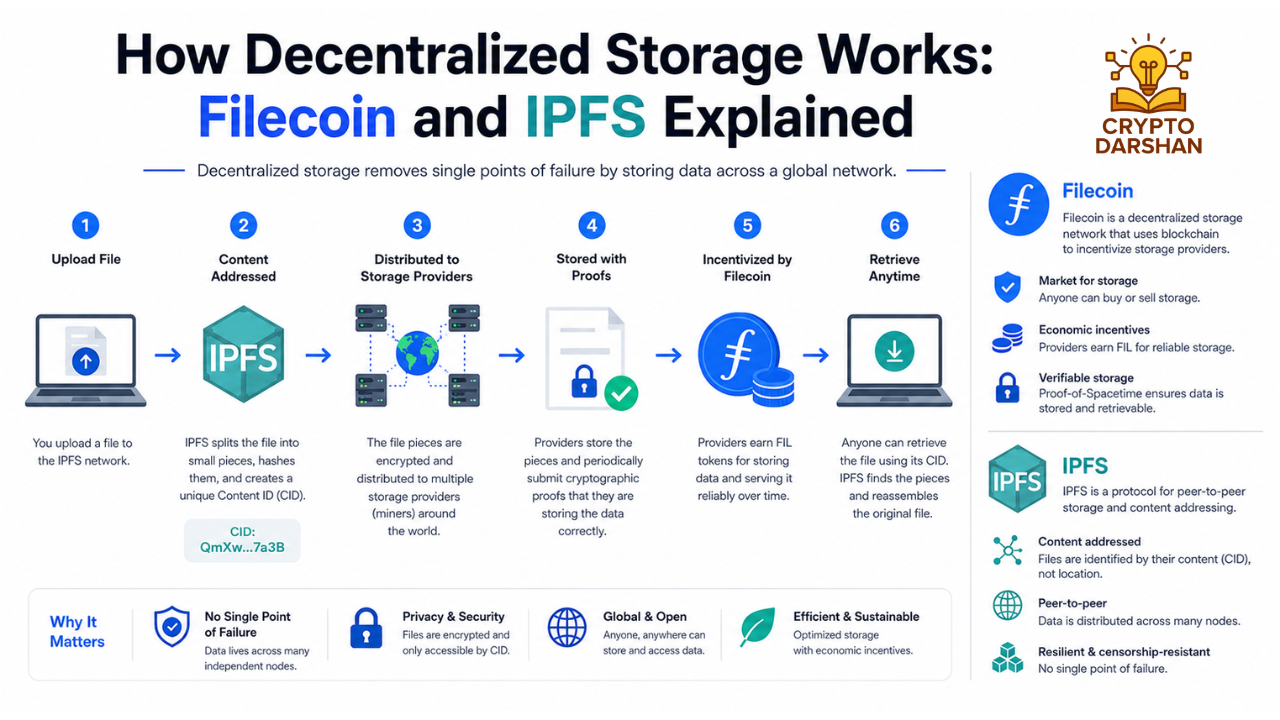
Traditional social media stores all your photos, videos, and posts on company-owned servers. In Decentralized Social Media, content is stored on decentralized storage systems like IPFS (InterPlanetary File System) or Arweave.
These systems break your data into small pieces and distribute them across many computers around the world. This ensures that your content is always available, even if one server goes offline. It also prevents censorship because no single server can remove your data.
4. Smart Contracts
Smart contracts are self-executing programs that run on the blockchain. They automatically perform actions when certain conditions are met.
In Decentralized Social Media, smart contracts handle things like:
- Rewarding users with tokens for posting or engaging.
- Managing community votes and governance decisions.
- Enforcing platform rules without human intervention.
5. Token Economy
Most Decentralized Social Media platforms have their own tokens or cryptocurrencies. These tokens are used to reward users, pay for services, or participate in governance.
- Creators earn tokens for posting quality content.
- Users earn tokens for engaging, sharing, or curating content.
- Communities use tokens to vote on platform updates or moderation policies.
This creates a fairer system where everyone benefits from their contributions instead of only the platform owners.
6. Community Governance (DAOs)

Instead of a company deciding what’s allowed or how the platform evolves, Decentralized Social Media uses Decentralized Autonomous Organizations (DAOs).
A DAO is a community-run organization where decisions are made through voting. Token holders can propose changes—like new features or moderation rules—and the community votes on them. Once approved, smart contracts automatically implement the decision.
This ensures that the platform evolves based on what users want, not corporate interests.
7. Interoperability Between Platforms
One of the most powerful features of Decentralized Social Media is interoperability. Because these platforms are built on open protocols, users can move their data, followers, and content between different apps.
For example, if you decide to leave one platform, you can take your entire social graph (friends, posts, and followers) to another without losing anything. This is impossible in traditional social media, where your data is locked inside one company’s system.
8. Censorship Resistance
Since there’s no central authority, Decentralized Social Media is resistant to censorship. No single person or company can delete your account or remove your content. However, communities can still moderate content collectively through voting or reputation systems.
This balance allows for freedom of expression while maintaining community standards.
9. Privacy and Security
Because users control their own data and identities, privacy is much stronger. Personal information is encrypted and stored on the blockchain or decentralized storage, not on corporate servers.
Users can also choose what data to share and with whom. This eliminates the risk of data breaches or unauthorized data sales that are common in centralized platforms.
Popular Decentralized Social Media Platforms

As blockchain technology expands into different industries, social platforms may become the next major adoption wave, similar to the innovation discussed in Fully On-Chain Games: Is Web3 Gaming Finally Delivering? Several platforms are pioneering the Decentralized Social Media movement. Each offers unique features and approaches to decentralization.
1. Mastodon
Mastodon is a federated social network that allows users to create independent servers (instances). Each instance has its own rules but can interact with others through the ActivityPub protocol. It’s one of the earliest examples of Decentralized Social Media in action.
2. Lens Protocol
Built on the Polygon blockchain, Lens Protocol enables users to own their social graph. Profiles, posts, and followers are stored as NFTs, giving users full control over their digital identity.
3. Farcaster
Farcaster is a decentralized protocol that allows users to move freely between apps without losing their social connections. It emphasizes interoperability and user sovereignty.
4. Steemit
Steemit rewards users with cryptocurrency for creating and curating content. It operates on the Steem blockchain and was one of the first Decentralized Social Media platforms to introduce tokenized incentives.
5. Minds
Minds combines social networking with blockchain-based rewards. Users earn tokens for engagement and can use them to boost content visibility or support other creators.
6. Bluesky
Founded by Twitter’s former CEO, Bluesky aims to create a decentralized social protocol that separates the social graph from the platform itself, allowing users to control their data and identity.
The Role of Blockchain in Decentralized Social Media

Blockchain is the backbone of Decentralized Social Media. It ensures transparency, security, and immutability. Each post, comment, or transaction is recorded on a distributed ledger, making it tamper-proof.
Benefits of Blockchain Integration
- Security: Data is encrypted and distributed, reducing the risk of hacks.
- Transparency: All actions are verifiable on-chain.
- Ownership: Users hold private keys that control their accounts and content.
- Interoperability: Blockchain enables cross-platform communication and asset transfer.
Tokenization and the Creator Economy
One of the most transformative aspects of Decentralized Social Media is tokenization. Tokens serve as digital assets that represent value within the ecosystem. They can be used for tipping, governance, or trading.
How Tokenization Empowers Creators
- Direct Monetization: Creators earn tokens directly from fans without intermediaries.
- Community Support: Fans can invest in creators by purchasing their tokens or NFTs.
- Decentralized Governance: Token holders can vote on platform decisions.
- Sustainable Ecosystem: Tokens incentivize quality content and active participation.
Governance in Decentralized Social Media

Governance is a critical component of Decentralized Social Media. Instead of corporate executives making decisions, communities govern platforms through DAOs. Token holders can propose and vote on changes, ensuring democratic participation.
DAO-Based Governance Model
- Proposal Creation: Users submit proposals for platform updates or policies.
- Voting: Token holders vote on proposals using smart contracts.
- Implementation: Approved proposals are executed automatically through code.
This model ensures that Decentralized Social Media evolves according to community consensus rather than corporate interests.
Challenges Facing Decentralized Social Media

While Decentralized Social Media offers numerous advantages, it also faces significant challenges that must be addressed for mainstream adoption.
1. Scalability
Blockchain networks often struggle with scalability. High transaction fees and slow processing times can hinder user experience.
2. User Experience
Many decentralized platforms have complex interfaces that deter non-technical users. Simplifying onboarding and improving usability are essential for growth.
3. Content Moderation
Without centralized control, moderating harmful or illegal content becomes difficult. Decentralized moderation models must balance free speech with community safety.
4. Regulation
Governments are still developing frameworks for blockchain-based platforms. Decentralized Social Media must navigate legal uncertainties around data privacy, content liability, and financial compliance.
5. Network Effects
Big Tech platforms benefit from massive user bases. Convincing users to migrate to decentralized alternatives requires strong incentives and seamless interoperability.
The Future of Decentralized social media

The future of Decentralized social media looks promising as Web3 technologies mature. With advancements in blockchain scalability, decentralized storage, and user-friendly interfaces, these platforms are becoming more accessible.
Emerging Trends
- Cross-Platform Interoperability: Users will move seamlessly between decentralized apps.
- AI Integration: Decentralized AI tools will enhance content discovery and moderation.
- NFT-Based Identities: Digital identities will be represented as NFTs, ensuring authenticity.
- Community-Owned Networks: Users will collectively own and govern platforms.
- Privacy-First Design: Enhanced encryption and zero-knowledge proofs will protect user data.
As these trends evolve, decentralized social media could become the default model for online interaction.
Can Web3 Replace Big Tech?

The question remains: can Decentralized social media truly replace Big Tech? The answer depends on several factors—technological maturity, user adoption, and regulatory clarity.
Advantages Over Big Tech
- User Empowerment: Users control their data and identity.
- Transparency: No hidden algorithms or data exploitation.
- Fair Rewards: Creators earn directly from their audience.
- Censorship Resistance: Freedom of expression is preserved.
Limitations
- Adoption Barriers: Many users are unfamiliar with blockchain technology.
- Infrastructure Challenges: Scalability and interoperability need improvement.
- Economic Volatility: Token-based economies can be unstable.
Despite these challenges, the momentum behind Decentralized social media continues to grow. As more users seek privacy, transparency, and autonomy, Web3 platforms are poised to disrupt the centralized status quo.
Case Studies: Successful Decentralized social media Projects.

Steemit’s Tokenized Model
Steemit demonstrated how blockchain could reward content creators directly. Users earn STEEM tokens for posting and curating content, creating a self-sustaining ecosystem.
Lens Protocol’s NFT-Based Identity
Lens Protocol introduced NFT-based profiles, allowing users to own their social graph. This innovation ensures portability across different apps and platforms.
Mastodon’s Federated Network
Mastodon’s federated model empowers communities to create independent servers with unique rules while maintaining interoperability. It exemplifies the decentralized ethos of Web3.
The Economic Impact of Decentralized Social Media

Decentralized Social Media has the potential to reshape the digital economy. By eliminating intermediaries, it redistributes value directly to users and creators.
Economic Benefits
- Creator Empowerment: Direct monetization through tokens and NFTs.
- Community Economies: Users can invest in and benefit from platform growth.
- Reduced Advertising Dependence: Platforms can operate without intrusive ads.
- Global Accessibility: Anyone with internet access can participate in the ecosystem.
This shift could democratize wealth distribution in the digital space, reducing the dominance of centralized corporations.
Ethical and Social Implications
The rise of Decentralized Social Media also raises ethical questions. While decentralization promotes freedom, it can also enable harmful content or misinformation. Balancing openness with responsibility is crucial.
Ethical Considerations
- Content Accountability: How to manage harmful or false information.
- Digital Identity: Ensuring privacy without enabling anonymity abuse.
- Equity: Preventing token economies from replicating existing inequalities.
Developing ethical frameworks for Decentralized social media will be essential for sustainable growth.
The Path to Mainstream Adoption

For Decentralized social media to replace Big Tech, several steps must be taken:
- Improved User Experience: Simplify onboarding and wallet management.
- Education: Increase awareness about Web3 benefits and security.
- Regulatory Clarity: Establish legal frameworks for decentralized platforms.
- Interoperability: Enable seamless integration between decentralized and traditional systems.
- Incentives: Offer tangible rewards for early adopters and creators.
As these elements align, Decentralized social media could transition from niche communities to mainstream audiences.
FAQ: Decentralized social media — Can Web3 Finally Replace Big Tech?

1. What is decentralized social media?
Decentralized social media refers to platforms built on blockchain or distributed networks in which control is not centralized in a single company. Instead, users have greater ownership of their data, identity, and content.
2. How is Web3 social media different from traditional platforms?
Traditional social media platforms are controlled by centralized companies that manage data, algorithms, and monetization. Web3 social media platforms aim to provide users with greater control, transparency, and the ability to earn tokens or rewards for their contributions.
3. Why are people interested in decentralized social media?
Many users are drawn to decentralized platforms because they promise better privacy, reduced censorship, ownership of personal data, and new ways to monetize content through tokens and digital assets.
4. Can decentralized social media really replace Big Tech platforms?
While decentralized platforms are growing, replacing major social media companies completely will be challenging. Big Tech platforms still dominate due to their large user bases, infrastructure, and network effects.
5. What are the benefits of decentralized social networks?
Benefits may include user data ownership, censorship resistance, transparent algorithms, and new economic models where creators can earn directly from their audiences.
6. What are the main challenges facing Web3 social media?
Some challenges include scalability issues, complex user interfaces, slower transaction speeds, and the difficulty of attracting large numbers of users compared to established social platforms.
7. How do creators make money on decentralized social platforms?
Creators can earn through token rewards, NFTs, tipping systems, community tokens, and decentralized monetization models that allow direct support from followers.
Conclusion
Decentralized social media represents a paradigm shift in how people interact online. By leveraging Web3 technologies, it empowers users with ownership, transparency, and freedom. While challenges remain—such as scalability, regulation, and user adoption the potential benefits are transformative.
Web3 may not replace Big Tech overnight, but it offers a compelling alternative that prioritizes user sovereignty over corporate control. As innovation continues, Decentralized social media could redefine the digital landscape, creating a more open, equitable, and user-driven internet.