
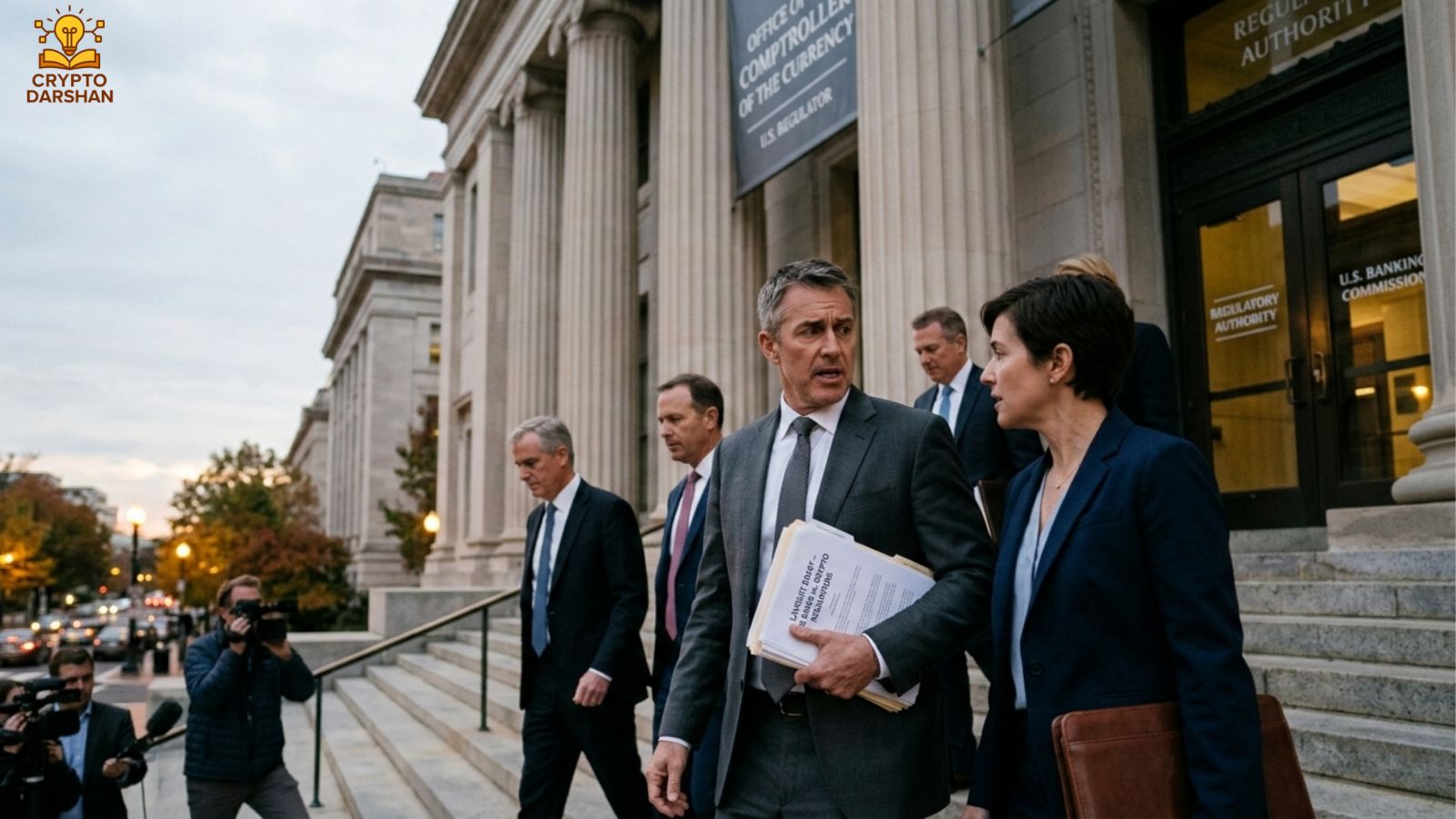
Major American banks, including giants like JPMorgan, Goldman Sachs, and Citigroup, are seriously considering a lawsuit against a key federal regulator. The fight centers on new rules that could let crypto firms and fintech companies get special crypto banking licenses, which banks say puts everyone at risk.
Why Banks Are Pushing Back Hard

Picture this: You’ve got the biggest crypto banks in the country teaming up through a group called the Bank Policy Institute (BPI). This group speaks for 40 top lenders, and they’re not happy. They claim the Office of the Comptroller of the Currency (OCC) is ignoring warnings and changing old rules to hand out “national trust charters” to crypto players like Circle and Ripple, plus payment apps like Wise.
These charters would let non-banks offer services that look a lot like what traditional banks do holding assets, making payments, and more. Banks argue this blurs the lines on what a real “bank” is. “It could create confusion, boost risks to the whole system, and weaken the trust people have in banking,” says a BPI source close to the talks.
In simple terms, banks worry that if crypto firms skip tough rules, they might take risky bets with people’s money. Remember how crypto banks had to follow strict checks after the 2008 crash? These new players might not, and that scares the established players.
The OCC’s Big Move and Growing Crypto Interest

The OCC, which oversees national banks, has been warming up to crypto lately. Under the current setup with President Trump’s administration pushing deregulation, they’re rethinking who qualifies for crypto bank-like powers. This includes letting blockchain firms custody digital assets, basically, safely holding crypto for customers.
Just last October, BPI begged the OCC to say no to those charter requests. They pointed out problems from state regulators too. Even smaller banks via the Independent Community Bankers of America (ICBA) chimed in, calling it a “huge loophole” in safety rules.
State watchdogs from all 50 states, through the Conference of State Bank Supervisors, sent a letter last month. They said approving these firms, who don’t follow core banking laws hurts fair play, protects consumers less, and shakes financial stability.
Not the First Time Banks Fight Regulators

This isn’t new for BPI. Late last year, they sued the Federal Reserve over changes to bank stress tests, those checks to see if banks can handle tough times. The Fed backed down and promised fixes coming soon.
Now, insiders say a lawsuit against the OCC is on the table. No final call yet, and BPI won’t comment. But with board members like JPMorgan’s Jamie Dimon, Bank of America’s Brian Moynihan, and Goldman Sachs’ David Solomon, it’s clear heavy hitters are involved.
Banks have mixed feelings on crypto. They’ve dipped toes in with custody services, but they want to control it under their rules. Critics call this “regulatory capture” big players twisting laws to squash competition. Understanding how governments regulate crypto also requires understanding how it is taxed. Our detailed guide, How Crypto Taxation Works: A Complete Beginner-to-Advanced Guide, explains the key rules investors should know.
Broader Picture: Crypto’s Banking Dream

Crypto firms have chased Fed access for years. Recently, Kraken got a “master account” at the Fed a first for a crypto exchange. This lets them tap into the US payment system directly.
Regulators also eased up: No extra capital hits for banks holding tokenized securities, like digital versions of stocks or bonds.
But crypto banks push back. They lobbied the SEC to limit custody to “qualified” banks only, citing investor safety. With $234 trillion in assets they manage, their voice is loud.
Past drama adds spice. US regulators accused nine big banks of “debanking” crypto customers last year closing accounts over crypto ties.
What Happens Next for Consumers and Crypto?

If banks sue and win, it could slam the brakes on crypto bank ambitions. Firms like Ripple or Circle might stick to state rules or go offshore, slowing US innovation.
For everyday folks, it’s about choice and safety. Banks say strict rules protect your savings from wild crypto swings. Crypto fans say banks just fear losing market share as digital money grows.
Under Trump 2.0, expect more pro-crypto vibes from regulators. But crypto banks won’t go down quiet they’ve got lawyers ready.
This clash shows Wall Street vs. Silicon Valley (or crypto valley) heating up. Will traditional finance hold the line, or will Web3 firms break through? Stay tuned, your wallet might feel it.